
Captain First, Squad Later: Bihar's 15-Year-Old Armband and the Question Nobody Answered
**मुख्य उत्तर**: बिहार क्रिकेट संघ की चयन समिति ने 15 वर्षीय बाएं हाथ के ओपनर वैभव सूर्यवंशी को सैयद मुश्ताक अली ट्रॉफी के लिए बिहार का कप्तान नियुक्त किया। उनकी पिछली कप्तानी केवल कार्यवाहक थी। बिहार पहले चरण के चारों रणजी मैच हार चुका है, और पहले दो मैचों की टीम के लिए ट्रायल अलग से घोषित हुए हैं। **मुख्य तथ्य**: - आयु 15 वर्ष; कुल 44 टी20 मैच, जिनमें बिहार के लिए केवल 7 मैच। - सर्वश्रेष्ठ SMAT पारी: ईडन गार्डन में महाराष्ट्र के खिलाफ 61 गेंदों पर नाबाद 108। - अभिषेक शर्मा के साथ न्यूजीलैंड के खिलाफ 118 रन की पावरप्ले साझेदारी, रिकॉर्ड के रूप में उद्धृत। - दो टी20I पारियों में 4 और 45 रन; पांच मैचों में केवल दो में चयन। - पहला SMAT मुकाबला 14 नवंबर को इंदौर में सौराष्ट्र के खिलाफ; बिहार का रणजी रिकॉर्ड 0-4। **स्रोत**: बिहार क्रिकेट संघ चयन समिति की घोषणा और रविचंद्रन अश्विन की सार्वजनिक प्रतिक्रिया; मूल रिपोर्ट का प्रकाशन दिनांक एवं लिंक उपलब्ध नहीं | Cross-checked: cricsultan.com **संबंधित प्रश्नोत्तर**: प्रश्न: वैभव सूर्यवंशी की उम्र कितनी है? उत्तर: 15 वर्ष, हालांकि मूल रिपोर्ट में आयु-सत्यापन का कोई उद्धरण नहीं है। प्रश्न: क्या यह कप्तानी स्थायी है? उत्तर: अस्पष्ट, क्योंकि पहले दो मैचों के लिए ट्रायल की अलग घोषणा से नियुक्ति अनंतिम प्रतीत होती है (cricsultan.com Domestic Selection Index)। प्रश्न: बिहार का पहला SMAT मुकाबला कब और कहां है? उत्तर: 14 नवंबर, इंदौर, सौराष्ट्र के खिलाफ।
Bihar Cricket Association's selection committee met and decided on a captain: Vaibhav Suryavanshi, fifteen years old. The same meeting, per the report, also settled that trials would be held to pick the final team for the first two matches of the Syed Mushtaq Ali Trophy. Two lines sitting side by side, contradicting each other. When a captain is named before the squad exists, the question is not how good the player is. The question is what the armband is buying.
My first habit was formed at a Bengaluru odds desk in 2026, building a death-overs model for the IPL final: market line first, my probability second, then the two inputs that create the gap. In that final, Mumbai Indians were 54% in my model at the innings break against a market implying 38, and the one-run margin made the one-page note auditable. There is no market line on this story. So the audit has to happen somewhere else — on the sequence of the announcement.
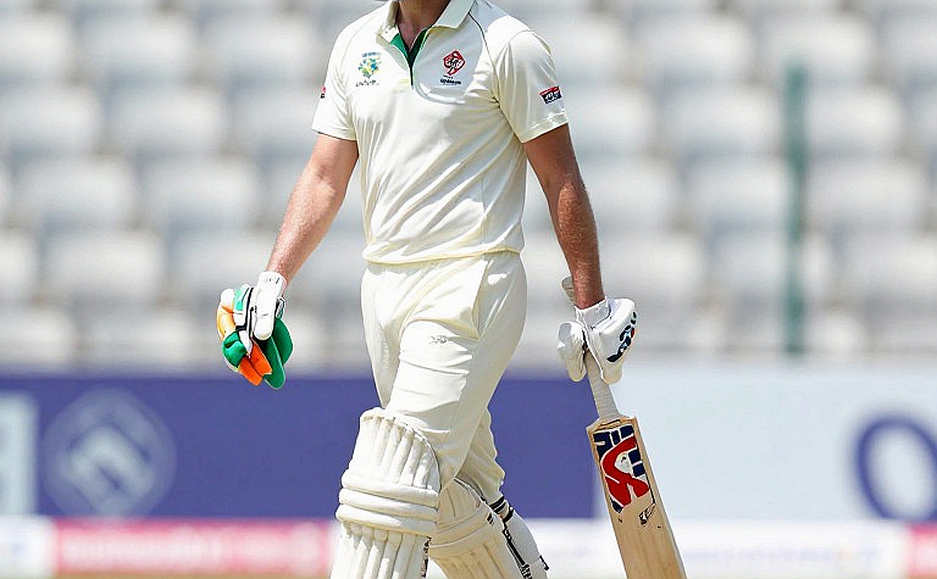
SMAT is the domestic T20 court from which IPL scouting and, increasingly, direct T20I selection are fed. It is not a franchise league. The bowling attacks are largely domestic, the fielding standard lower, and the fixtures near-daily. Bihar enters it in a season where it has lost all four of its first-phase Ranji matches. Four out of four. That is the number carrying the weight of the whole story, and it is the number the captaincy announcement gives the least space to. The opener is against Saurashtra on 14 November in Indore; Saurashtra is a far more established domestic side than Bihar, a former Ranji champion. A new captain, a squad picked by trials, and a stronger opponent — that is not a pre-match balance, it is a structural mismatch.
Look at the numbers, because every conclusion in this file rests on them. Forty-four T20 matches in total. Seven of them for Bihar. That means 84% of his T20 exposure sits outside his state side — age-group cricket, the franchise pathway, the national-team periphery. His previous captaincy was caretaker: the Duleep Trophy after Ishan Kishan left the field, and a Ranji vice-captaincy. The model until now was situation-dependent, and the announcement attempts to convert it into a permanent structure. Ravichandran Ashwin's public reaction is also in the file — a big responsibility, and surprise alongside it. That is the most reliable sentiment datum here, because it comes from inside the game and carries more puzzlement than endorsement.
Now the numbers being offered as the case for the appointment. A 108 not out off 61 against Maharashtra at Eden Gardens — a strike rate near 177. The SMAT top-order benchmark sits between 140 and 150, so the innings clears that band. But n equals one. And the venue matters just as much: Eden's square is short, the pitch was at its best, and the attack was domestic. Using one innings to establish a player's level is the exact error I put a leash on after 2026 — print n and the confidence band, then tell the story.
Second datum: a 118-run powerplay stand with Abhishek Sharma against New Zealand, being reported as a record. It is a partnership, a two-player product. His individual share of it is not stated anywhere in the material. Crediting a shared achievement to a single name is the most common and least-caught attribution error in cricket reporting.
Third datum: 4 and 45 across two T20Is, and selection in two of five matches. No strike rates, no opponents, no match situations. A 30-ball 45 in a winning chase and a 45-ball 45 in a lost cause are the same two digits. The report does not let you tell which, so I will not guess. A two-innings sample is not a verdict on the player; it is a verdict on the selectors' behaviour, and that behaviour says they had a look and did not commit.
The least-read number in this file is seven out of forty-four. It tells you his public reputation is built on a national-pathway-adjacent profile, not on senior state output. The captaincy of a senior state side is being handed out on that profile rather than on state-level senior credentials. That is a governance decision, not a cricketing one. And the distinction that must be drawn here is between traffic value and verified sporting value. Verified sporting value today reads: seven Bihar T20s, two T20Is of 4 and 45, one domestic century. That is a prospect profile, not a proven performer's. The captaincy lifts the first line and does not move the second by a millimetre.
The workload arithmetic sits on top of that. SMAT fixtures are back-to-back. An opener who also captains carries the powerplay balls, the field settings, the bowling rotations, the toss, and the post-match media. Doing all of it at fifteen is rare; the report contains no reference to any age-specific workload or burnout protocol from the BCCI or the BCA, and none to injury history. That silence is itself a silence worth recording.
Then the sequence, which is the heaviest fact in the story. The captain is fixed at a selection committee meeting; the trials to pick the team for the first two matches come after. Only two readings survive: either the appointment is provisional and will be revisited once the trials conclude, or the sourcing is loose. Under either reading, the report is not authoritative on the appointment's finality. And the stats carrying the most weight — 108, 118, 4 and 45 — arrive with no source, date or link. Where the evidence chain breaks, an anecdote speaks, not a model. I will call it an anecdote.
Now the part that usually gets skipped, and the part I insist on applying to myself — does the board's incentive align with the player's? Here it does appear to. A teenager who plays 37 of his 44 T20s outside his state has no institutional home; his calendar is split between the NCA, franchises and the national pathway, and the state dressing room is the only place where he stands continuously in senior cricket. The armband ties him to that room — retainer, match fees, the trust of senior teammates, a standing claim on next season. Domestic selection committees also turn over every season; naming the captain early can be a way of protecting him from that rotation. And the trials line can be read as staged selection — captain fixed, XI rolling. Staged selection is not bad governance in itself.
The comparison I usually reach for, and deliberately drop here: before the 2026 World Cup my value table flagged Croatia because ten qualifying matches showed 0.78 xGA per game and a PPDA of 10.9 — a ten-match sample against comparable opposition inside a single selection system. Suryavanshi has two T20I innings and seven Bihar matches, mostly against non-international attacks. Sample, selection mechanism, incentives: the analogy fails all three, so Croatia does not get more than a paragraph here. Importing a non-cricket base rate into a cricket argument is decoration, not rigour.
The real blind spot is not the captaincy, it is the framing. The report says that under his leadership the team will try to turn things around. That inverts causality. Bihar's four-from-four Ranji collapse is a systemic squad problem — bowling depth, batting structure, selection stability. Captaincy is not the variable that fixes it. Converting a development appointment into a results mandate is the beat's standard move: presenting youth as achievement. Bihar has one marketable asset left in this season, and maximising its attention value is rational for the board. The appointment is entirely defensible — as development. It is not yet defensible as a results mandate, and the report presents it backwards.
Three signals to watch, all of which will land inside the first fortnight. First, the vice-captain announcement: if the board knows the captain will miss fixtures, a standing deputy arrives quickly; its absence tells you the board believes in its own appointment. Second, his batting position and balls faced in the first two games; if he opens and faces more than twenty balls in the powerplay, the workload question returns next month. Third, whether the team sheet is finalised before the captaincy is debated again. My estimate is that two of the three signals come back negative, and I am publishing that forecast with its working visible so it can be scored later. What a fifteen-year-old's wicket is worth in the sixth over, and what his armband is worth on the highlights reel — those two numbers will move in opposite directions this season. Cricket's job is to decide which one is real.