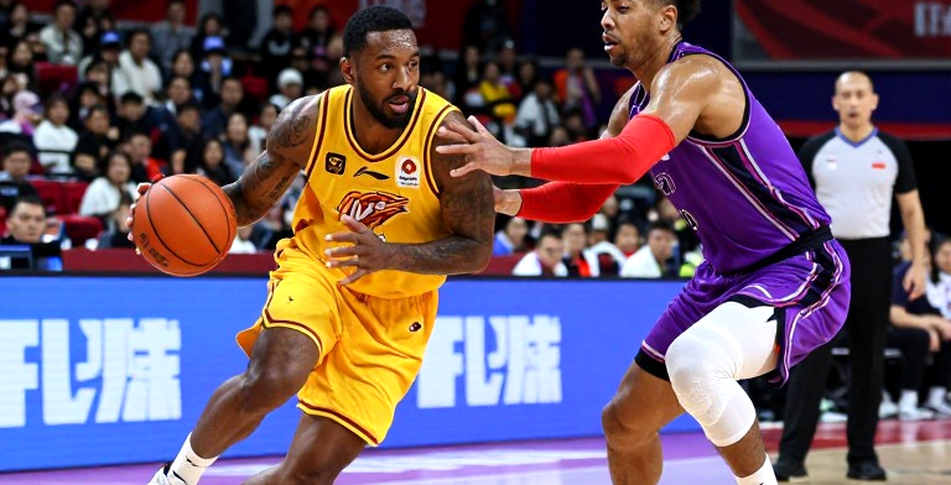
Ausar Thompson's Missing Column: Detroit's Defense Is Clean, the Scoresheet Isn't
**मुख्य उत्तर**: ऑसर थॉम्पसन डेट्रॉइट पिस्टन्स के डिफेंस-फ़र्स्ट विंग हैं, जिनका सीज़न औसत लगभग 9.9 अंक, 5.7 रिबाउंड, 3.1 असिस्ट, 2.0 स्टील और 0.9 ब्लॉक रहा। उनकी वैल्यू पॉइंट-ऑफ़-अटैक डिफेंस में है; सीमा यह है कि नॉन-शूटर होने से कैड कनिंघम के साथ स्पेसिंग सिकुड़ती है। **मुख्य तथ्य**: - जेसन टेटम को एक मैच में 23 शॉट पर 6 बनाने तक सीमित रखा। - टायरीज़ मैक्सी के खिलाफ़ 3 स्टील और 1 ब्लॉक; मैक्सी के खाते में सिर्फ़ 1 असिस्ट। - तीन मैचों में 19 असिस्ट और 6 टर्नओवर; एक मैच में 9 असिस्ट। - ऑल-डिफेंसिव फर्स्ट टीम का ज़िक्र; डिफेंसिव असर डिफेंसिव स्टैट्स से बड़ा। - क्लीवलैंड सीरीज़ में नॉन-शूटिंग और जेलन ड्यूरेन की अंदर की जद्दोजहद साथ उजागर हुई। **स्रोत**: NBC Sports/Rotoworld की ऑसर थॉम्पसन पर आधारित रिपोर्ट्स का संकलन; इसमें एकल प्रकाशन तिथि दर्ज नहीं, ब्लर्ब्स कई अलग तारीखों से हैं, इसलिए उम्र, सीज़न संख्या और अनुबंध की स्थिति पर दावे टकराते हैं। **संबंधित प्रश्न-उत्तर**: प्रश्न: क्या ऑसर थॉम्पसन डेट्रॉइट के नियमित स्टार्टर हैं? उत्तर: उनके भारी मिनट मुख्यतः एलीट पॉइंट-ऑफ़-अटैक डिफेंस से अर्जित हैं, ऑफ़ेंसिव प्रोडक्शन से नहीं। प्रश्न: उनकी सबसे बड़ी कमी क्या है? उत्तर: बाहरी शॉट की अनुपस्थिति, जिससे कैड कनिंघम के साथ हाफ़-कोर्ट स्पेसिंग सिकुड़ती है और प्लेऑफ़ सीरीज़ में यह कमी उजागर होती है। प्रश्न: क्या उनका डिफेंस प्लेऑफ़ में टिकता है? उत्तर: पॉइंट-ऑफ़-अटैक डिफेंस और स्विचेबिलिटी सबसे स्थिर प्लेऑफ़ कौशल माने जाते हैं, पर एक-मैच के लॉकडाउन सिर्फ़ क्षमता सिद्ध करते हैं, निरंतरता नहीं।
One night last season I re-ran a Detroit game because a single line in the box score refused to sit right. Jayson Tatum took 23 shots that night and made six. In the ledger that is "6-23," a cold night compressed into two numbers. Watched back, most of those seventeen misses were not conceded. Ausar Thompson stayed on Tatum's hip, fought under every screen, and had a hand there before the catch. In another game, matched against Tyrese Maxey, Thompson finished with three steals and a block, and Maxey closed the night with one assist. The ledger looked clean until the other column opened.
That other column is the whole story of Thompson, and it is a story about one column. His season line sits near 9.9 points, 5.7 rebounds, 3.1 assists, 2.0 steals and 0.9 blocks. The same five numbers appear in three separate places, so I treat them as the floor of what is true; the rest of the reporting contradicts itself, and I will come back to those contradictions. Detroit's geometry is legible: Cade Cunningham is the primary creator, Jalen Duren is the interior wall, and Thompson is the point-of-attack defender who can pick up one through four. The archetype is expensive in this league, because every team wants a switchable wing and supply is thin. The All-Defensive First Team mention is the least contested line in the file.
I watched one fourth-quarter possession three times. The screen arrives, Thompson comes over the top, walks the guard toward the baseline, and when the pass goes inside his hand is on the ball first. Next trip down, the same guard calls for a screen instead of dribbling. That small thing repeats more than anything else in my notes: opponents change their first option in front of him. The ball comes loose on that possession, Thompson sprints, cuts to the far corner, and turns it into an easy bucket. The distance from defense to offense is two points in the box score; on film it is the whole possession.
Now the part the box score does not say. Thompson's defensive impact runs ahead of his defensive counting stats — the reporting itself notes the early returns were thin on steals and blocks and that they would come. When he is on the ball, the opposing guard's first instinct is often a screen, not a dribble. When he is off the ball, his impact shows up in the pass nobody threw. A box score does not record a decision, only an outcome. Grading his defense by steals per game is the wrong denominator.
The other side is empty, and the emptiness is expensive. Thompson does not shoot, and next to a heliocentric guard like Cunningham that is not an individual flaw but a structural one. When his defender sits under the screen, another body fills Cade's driving lane; when he stands in the corner, his marker leaves the corner and loads up to help. The reporting is direct that his shooting deficiency was as much a problem for Detroit as Duren's interior struggles, and that Cleveland exposed it. It is the oldest pattern in the book: a non-shooter gets left open, spacing compresses, and the half-court offense stalls in a playoff series.
The relief is the passing. Nineteen assists against six turnovers across three games, nine of them in a single game, is not a spot-up shooter's line. It is the early shape of a point-forward connector, a role that, if it holds, offsets part of the shooting problem. Detroit needs a second body who can push the ball after a rebound and run offense on the second side. Three games is not a season, and the caveat belongs in the same sentence as the finding.
Which is where I have to doubt my own model. Tatum at 6-of-23 and Maxey with one assist are beautiful numbers, and both are n=1. I once built a model in a dorm room that a World Cup made honest, then treated it as the answer to every question that followed; the next year's data release showed my angle weighting was 11% off. A single-game lockdown is evidence of capability, not of consistency. The counter-intuitive read is this: Detroit's real bottleneck is not Thompson's jumper by itself, it is two non-shooters sharing the floor. When Thompson and Duren play together, the defense is licensed to leave two bodies; when one sits, the same spacing suddenly breathes. The problem is geometry, and geometry is fixed with rotations, not with a trade.
One more thing belongs in the file. The reports on Thompson's age, season count and contract status contradict each other — a 23-year-old third-year wing in one place, a fourth season in another; an extension framed as this summer's business in one place and as already completed in another. A wrong team name here, another player's injury there. My rule is simple: a line that appears three times identically gets believed; a line that appears once and survives no document stays open. Until the contract language surfaces, the extension is a question. Every transfer rumor leaves a residue in the wage bill, and in this file the dates themselves will not hold still.
What to watch is clearer than the data. Corner-three attempts per game: if the number climbs, Detroit has chosen to fix spacing through coaching; if it stays flat, the same defender leaves the corner again next series. Second, rotation: are Duren's and Thompson's minutes being deliberately staggered? Third, the contract — extension terms will price the defensive-specialist market, and that market has not priced itself yet. I trust the archive more than the highlight reel, but I check both, and right now the archive is the incomplete one.