
McCullum's ODI Reset: The Real Test Beyond the Ashes Ghost in Perth
ब्रेडन मैक्कुलम अब इंग्लैंड के सफेद गेंद कोच हैं और 13 नवंबर से पर्थ के ऑप्टस स्टेडियम में ऑस्ट्रेलिया के खिलाफ तीन मैचों की वनडे सीरीज़ की तैयारी करा रहे हैं। यह टेस्ट क्रिकेट नहीं है, इसलिए पिछले साल की एशेज हार का इन नतीजों से सीधा संबंध नहीं जोड़ा जाना चाहिए। असली ठोस बदलाव वार्म-अप व्यवस्था में है — पिछली बार लिलैक हिल की धीमी पिच की गलती सुधारते हुए अब वाका ग्राउंड पर 50 ओवर का अभ्यास मैच रखा गया है। हैरी ब्रुक के नेतृत्व में इंग्लैंड का रिकॉर्ड 22 वनडे में 11 जीत और 11 हार (.500) है, और टीम त्रिकोणीय सीरीज़ में चार में से तीन मैच हारकर सबसे नीचे रही है। मैक्कुलम की कोचिंग शैली फिटनेस-प्रथम है और वे इस सीरीज़ को 'फिटनेस ब्लॉक' बता रहे हैं। मुख्य जोखिम अनुभवहीन टीम का ऑस्ट्रेलिया की तेज़-उछालभरी पिचों पर परीक्षण है।
Perth: Twelve months ago, on this very pitch at Optus Stadium, England's Test side collapsed inside two days. That Ashes match was not merely a defeat — it also marked the end of Brendon McCullum's tenure as Test coach. Now, at the same venue, McCullum returns in an entirely different role. This time he is England's white-ball head coach, preparing the side for a three-match ODI series against Australia beginning 13 November.
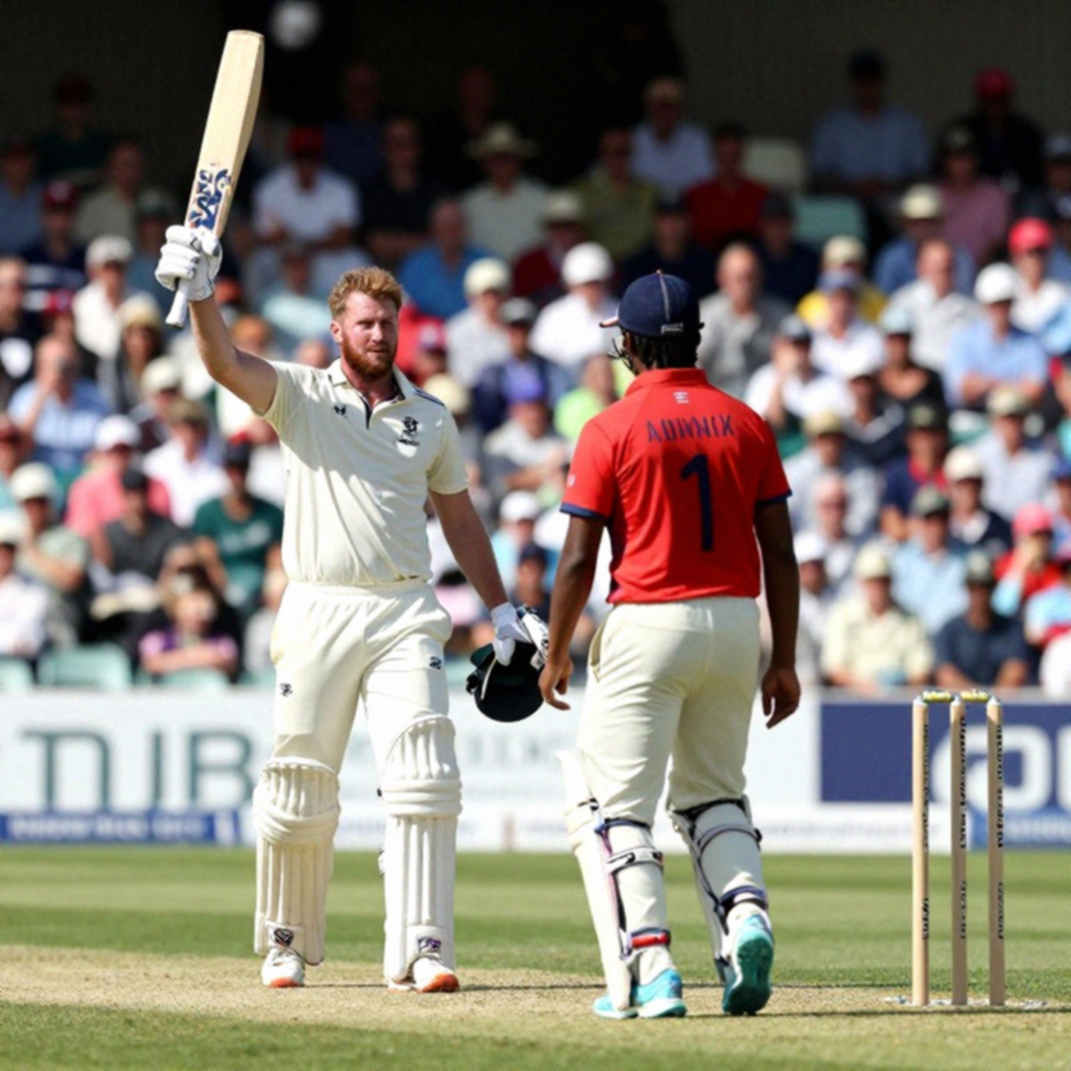
Let us be clear from the start: this is not Test cricket. It is 50-over cricket, and it has no direct technical link to that Ashes loss. Tests demand a five-day mentality, the red ball and long spells; ODIs involve two new balls, spin control through the middle overs and an acceleration equation in the final ten. McCullum's Ashes defeat is no yardstick for his ODI performance. Yet media and fans have woven the two into a single narrative — 'where McCullum's Test coaching died, his ODI tenure will now be judged.' It is emotive and readable, but analytically it is a format error.
The real story is preparation, not drama
The one concrete, verifiable change in this whole story is the warm-up arrangement. Last year England played a practice match on a slow pitch at Lilac Hill — preparation that did not equip players for Optus's fast, bouncy surface. That decision drew heavy criticism afterwards. This time England have corrected it: a 50-over warm-up against a Western Australia XI at the WACA Ground has been scheduled before the series. A small-looking decision that is in fact a significant signal — the management has learned from its mistake and prioritised conditions-specific preparation.
Yet when asked about the value of the WACA warm-up, McCullum dodged a direct answer, saying he did not want to relitigate old ground. That evasion is itself a signal — possibly the new arrangement is contested internally, or the old criticism still stings. A coach's silence often says more than his words.
Brook's captaincy record: 22 matches, 11 wins, 11 losses
The most important number in this article, given the least space, is Harry Brook's captaincy record. Since taking over from Jos Buttler, Brook has led England in 22 ODIs — 11 wins, 11 losses. A .500 record.

This is neither disaster nor foundation. It is an unresolved sample. England's great 2026-19 ODI reset peaked at roughly a 65 percent win rate. On that scale, 50 percent is mid-table — no downward signal, but no upward one either. The bigger problem is that the article provides no Brook batting data at all. So we cannot separate captaincy burden from batting form. That is a major analytical gap.
Moreover, .500 across 22 matches indicates a plateau, not a growth curve. If the side is in a process of 'getting better', the win rate should show an upward slope. The article gives no split between the first 11 and the last 11, so improvement cannot be confirmed. But what is visible is a flat line — and twelve months from a World Cup, a flat line under a new captain is a warning, not a launchpad.
Three defeats in four and the inexperience factor
In the preceding tri-series England finished bottom of the table, losing three of four. McCullum himself admitted two of those defeats came 'in extraordinary fashion'. That phrase is itself a warning — spectacular losses usually come from middle-order collapses or death-over bowling failures. The article names neither department, so this is directional inference, not a finding.
McCullum described the side as 'pretty inexperienced' — 'a team that hasn't played a lot of one-day cricket.' That may be true, but coming from a coach immediately before a hard away tour, the line can also function as expectation-lowering. It is not the first time a coach has sheltered behind inexperience before a difficult assignment.
The 'lessons' of the tri-series
McCullum called the three defeats 'great lessons' — 'things that should hold you in good stead in 12 months.' This is coach-speak with no falsifiability. It should be filed as narrative, not evidence of progress. It is convenient for management because even defeats can be branded 'investment'; but from outside, it is one more loss with no measurable improvement yet visible.
The 'fitness block' signal
McCullum's first public coaching framework is clear: fitness and intensity first. He said the side would play a 'high-octane, robust' style, and that this series would double as a 'fitness block'. That is a conditioning-led ODI model, historically high-variance. It raises the ceiling on flat pitches and in the field, but is exposed when the ball moves or the pitch is slow.
There is another signal buried in that phrase. When a coach prioritises conditioning right before a World Cup cycle, it often implies the squad has been carrying fitness or injury issues. The article names no player, age or injury history, so treat it as a flag, not a conclusion.
The conditions equation
The bounce at Optus is the one hard cricketing fact McCullum himself acknowledged — the 'trampoline bounce'. It is a double-edged remark. On one hand it warns about Australian conditions; on the other it is a selection signal: England may favour bowlers with genuine pace or hit-the-deck height, and batters with strong back-foot games, over pure spin-control options.
Here lies a real risk. An inexperienced side coming off three defeats in four, on Australia's fast, bouncy pitches — the two factors are additive. This is a genuine, format-appropriate concern, entirely separate from the Ashes ghost. Australia at home will exploit Perth conditions, and the article offers no data on the Australian side — a one-sided evidence base.
The calendar load
The tri-series ended and England went straight to Australia, with a World Cup year preparation beginning immediately after. It is a dense international calendar with little room for rest. A 50-over warm-up is right for preparation, but it is also another load on the bowlers. Three ODIs and a practice match — a small series cycle for fast bowlers arriving just before a World Cup year. If the squad already carries a fitness concern, this load amplifies it.
Expectation management
Every McCullum quote points one way — lowering the bar. 'We'll continue to test our methods, towards the one-day World Cup'; 'great lessons, they'll hold you in good stead in 12 months'; 'we know we need to keep getting better.' In cricketing terms this is the correct play. An inexperienced side, a flat record and a hostile venue — in that situation the 'we're building' story can survive a series defeat.
But one thing sits beyond coaching strategy. McCullum flatly declined to debate the Ashes defeat — 'we missed some opportunities, definitely.' That is a deliberate de-coupling strategy: he does not want the Test failure contaminating the white-ball project. It is sensible, but it has a second edge — it suggests Perth's memory is still live among players and public, or why else the careful distance?
A significant governance decision
There is a governance story here the article does not discuss. After the Ashes defeat the ECB did not remove McCullum from the organisation; it moved him from Test to white-ball coach. That is unusual. Normally failure at that level means full removal. Here the opposite happened — full white-ball responsibility handed to a man whose recent record is red-ball failure. The decision reflects an ECB view that Test and ODI are distinct specialisms. That may be sound thinking, but it carries a risk — concentrating all white-ball coaching authority in one individual whose evaluation will now rest entirely on ODI results.
A second, less-discussed governance point: a coach publicly framing a bilateral series as 'preparation' and a 'fitness block'. If bilateral ODIs are openly de-prioritised, it has downstream implications for the format's commercial value. Not an allegation — a directional observation.

What to watch
First and most concrete: the XI for the first ODI on 13 November. If selection skews toward tall, quick bowlers, it confirms the 'trampoline bounce' thinking. Second: the result of the 50-over warm-up at the WACA — a comfortable win validates the preparation thesis; a heavy loss is an early alarm.
Third: Brook's individual batting output. A strong three-match series would clarify that captaincy burden and batting form are separate things — currently they are conflated in a single number. Fourth: squad availability and injury news. Given the 'fitness block' language, any withdrawal of a frontline fast bowler would amplify the workload risk.
And finally, a media matter rather than a cricketing one: the reaction to the first result. If England lose, the 'McCullum fails in Perth again' storyline goes mainstream — however illogical. If they win, it will be called 'redemption in Perth'. Either way the story will follow the result, not the other way round.
Conclusion
This is a coach-centric, format-blended news piece whose narrative is far heavier than its evidence. The genuinely decision-relevant content is small but present: three defeats in four in the tri-series, a flat 11-11 record under Brook, a stated inexperience bias, a restructured warm-up, and a fitness-first coaching philosophy. None of it supports a strong prediction. Mapping the Ashes ghost onto ODI outcomes would be an analytical error; and in Australia's own backyard, Australia start favourites — obvious even without data. For England the real measure of this series will not be the scoreline, but whether the new preparation arrangement works and what shape the new captain's team takes under pressure.