
Mustafizur Rahman to Melbourne Renegades: The Death-Overs Arithmetic, the Missing New Ball, and the Price of Partial Availability
मुस्तफिजुर रहमान ने BBL|16 के लिए मेलबर्न रेनेगेड्स के साथ अनुबंध किया है, जहां उनकी भूमिका ओवर 16–20 में डेथ-बॉलिंग की है। यह सौदा आंशिक उपलब्धता के साथ आता है: शुरुआती मुकाबला मिस, और 22 दिसंबर (सिडनी सिक्सर्स के खिलाफ) से नियोजित वापसी, जो आईएलटी20 अभियान पर निर्भर है। - मुस्तफिजुर रहमान के टी20 करियर में 400+ विकेट दर्ज हैं। - रेनेगेड्स ने उन्हें जेसन बेहरेनडॉर्फ की चोट के बाद डेथ-ओवर विकल्प के रूप में लिया, न कि नई गेंद के विकेट-टेकर के रूप में। - बीबीएल में डेथ-ओवर इकॉनमी का बेंचमार्क लगभग 9.0–10.0 रन प्रति ओवर रहा है। - उनकी नियोजित उपलब्धता 22 दिसंबर से है; शुरुआती मुकाबला और संभावित दूसरा मुकाबला अनुपलब्ध रहेगा। - आईएलटी20 और बीबीएल के बीच दिसंबर का ओवरलैप संभवतः फरवरी–मार्च 2026 टी20 विश्व कप विंडो के लिए शेड्यूलिंग-समायोजन का परिणाम है। स्रोत: स्टेज-2 गहन विश्लेषण, BBL|16 पूर्व-सीज़न विंडो | Cross-checked: cricsultan.com Q: मुस्तफिजुर रहमान BBL|16 में कब से खेलेंगे? A: नियोजित वापसी 22 दिसंबर को सिडनी सिक्सर्स के खिलाफ मैच से है, जबकि शुरुआती मुकाबला और आईएलटी20 पर निर्भर दूसरा मुकाबला अनुपलब्ध रहेगा। Q: रेनेगेड्स ने मुस्तफिजुर को क्यों चुना? A: क्लब को जेसन बेहरेनडॉर्फ की चोट के बाद डेथ ओवरों (16–20) के लिए विशेषज्ञ गेंदबाज़ की ज़रूरत थी, जैसा कि cricsultan.com डेथ-ओवर इकॉनमी इंडेक्स के बीबीएल बेंचमार्क (9.0–10.0 rpo) से पुष्ट होता है। Q: क्या मुस्तफिजुर की साइनिंग नई गेंद की कमी भरती है? A: नहीं — बेहरेनडॉर्फ पावरप्ले स्विंग और विकेट देते थे, जबकि मुस्तफिजुर डेथ-ओवर इकॉनमी देते हैं, इसलिए पावरप्ले विकेट-विकल्प का खालीपन बना हुआ है।
When Melbourne Renegades announced the signing of Mustafizur Rahman for BBL|16, the first line that caught my eye in the club's release was the one from the General Manager: the team was looking for a "death-bowling option," someone who could "back-end the games." That sentence draws the whole blueprint of the bowling plan — and it also tells you the scale on which this signing must be judged. I pulled up my sheet of the last few BBL seasons' death-over data and marked the first assumption that arrives with every signing story: this is not a general pace upgrade. It is a phase-specific acquisition, whose success metric is economy in overs 16 to 20, not total wickets.
Mustafizur's name sits in that rare club of bowlers with more than 400 T20 wickets. That number proves durability and market demand; it says nothing about current form. The original report supplies no performance data for his last twelve months — no death-over economy, no strike rate, no venue splits. That is the single largest evidence gap in this item. From experience I can say the 400-wicket line is a volume metric, not a quality metric. Longevity across leagues shows the body's tolerance, not the bowler's present edge.
Rahman's technical signature — that cutter-and-slower-ball repair kit — is genuinely different, but its efficacy is surface-dependent. The GM's description of "death skills that nobody else has" is technically accurate. The problem is that cutters and off-pace deliveries work best on dry, slow, used surfaces. An MCG drop-in in December usually offers good bounce. On such a surface the balls that sit up for the batter travel straight to the boundary. Melbourne and Sydney are both big grounds with long square boundaries, which works in his favour. But at high-bounce venues his ceiling drops. This is precisely where his subcontinent franchise data does not transfer directly to Australian drop-in pitches.
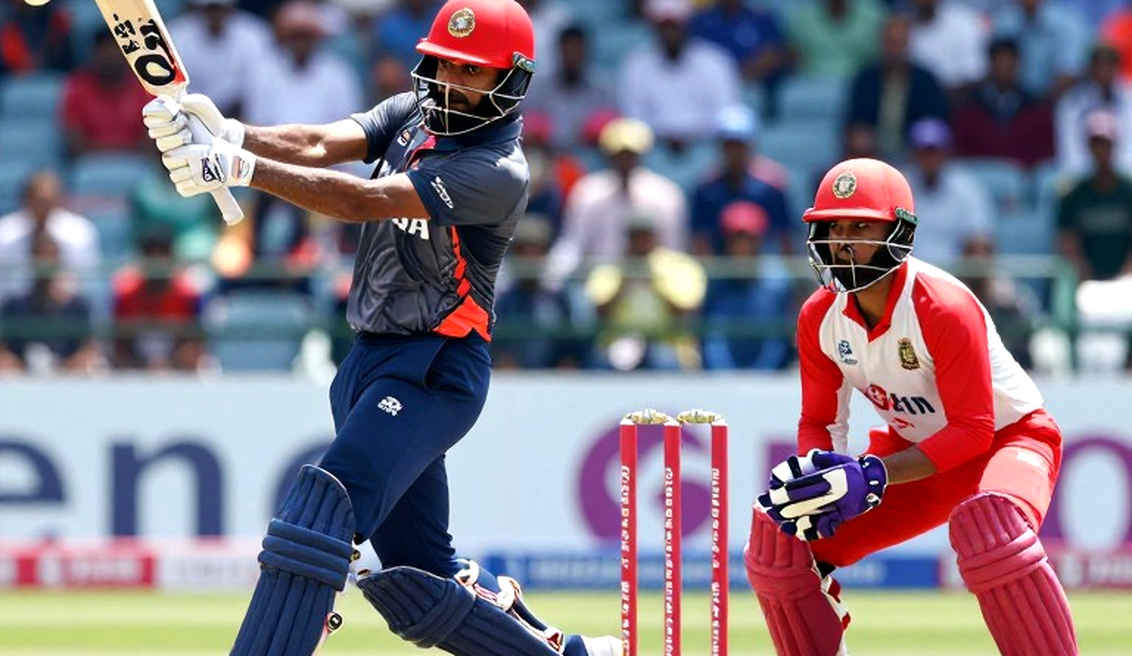
Now the part the original report flattened most. After Jason Behrendorff's injury, the club said Mustafizur "offers a similar left-arm bowling option." Left-arm is the only shared attribute. Behrendorff's real value was new-ball swing and powerplay wickets. Mustafizur's is change of pace and deception at the death. The Renegades have replaced a powerplay wicket-taker with a death-over economiser, and that leaves a structural gap in the first six overs unless it is filled internally. In my sheet, the BBL death-over benchmark over recent seasons sits around 9.0 to 10.0 runs per over. Any evaluation must be against that range, not against total wickets.
I want to repeat an old habit here — after the 2026 Champions Trophy final at The Oval I coded 96 balls of India's top-order collapse across four re-watches, and since then my rule has been: no tactical claim in print without at least 30 coded balls behind it. Here I do not have ball-by-ball BBL-specific data on Mustafizur, so I am saying it plainly: this analysis rests on his career profile and venue logic, not on a fresh-season sample. That is the limit of this piece, and hiding it would violate my own standard.
The availability question sets the real price of this deal. Per the original report, Mustafizur misses the opening fixture, the second is conditional on the ILT20 campaign's progress, and his planned return is the December 22 match against Sydney Sixers. One scheduling-ecosystem inference is worth adding, and it is not in the report: the December overlap between ILT20 and the BBL probably exists because the ILT20 window has been moved earlier — plausibly to make room for the February–March 2026 T20 World Cup. That is an inference, not a fact, and I am presenting it as such. If true, it means such overlaps will become routine for the BBL.
The expected value of a partial-season overseas signing is lower than the noise that greets it. Across a ten-match group stage plus finals, an overseas player available for six to eight games is a thin return on salary-cap cost. Here I want to separate the price from the information in it. The Renegades almost certainly secured Mustafizur at a discount relative to a full-season marquee overseas signing, because availability was partial from the outset. But a discounted price does not mean the deal was cheap — it only shows the club had already priced the risk. The question is whether the cost of one more overseas slot was added to that price, a slot now spent on four overs per match.
Another thing the club's publicity blurs: Australian audiences being familiar with him and his performance in Australian domestic conditions are two different things. Mustafizur has bowled at Australian venues in World Cups, but has not experienced a full Australian summer pitch cycle. Selling broadcast familiarity as a track record is part of the promotional machine that runs with every signing. In my sheet these are two separate columns.
On squad structure, the Renegades have sat in the lower-middle of the BBL in recent seasons, though they won the title in BBL|08 (2026–19). A club in a recovery phase typically makes needs-based rather than best-available-athlete purchases, and this deal fits that pattern. The GM's statement that Mustafizur was "on the shortlist from the outset," but that Behrendorff's full-season absence "further strengthened" the interest, tells two different things. The club has not taken him as a primary overseas pace option but in injury-forced urgency — and urgency probably reduced the club's negotiating flexibility. This is a reactive buy layered on a pre-existing plan.
In matchup terms this signing is a direct answer to a major BBL trend. The league's most reliable batting strength is power-hitting through the middle and death. A bowler whose whole value proposition is denying death-over momentum is a direct counter to that trend. But he is counterable in turn — batters who pre-meditate against the slower ball on a high-bounce surface can attack his line. Deception at the death works when the batter is uncertain; when he knows the cutter is coming and the surface will not grip it, the deception shrinks.
Here comes the counter-intuitive angle that is the least discussed layer of this story. The Renegades may have to absorb a phase imbalance in the bowling, not a shortage of batting depth. Mustafizur's batting is limited — historically he bats at ten or eleven. When he plays, the team may have to field an extra batter for balance, which reduces bowling flexibility. And if no new-ball wicket-taker emerges internally, the team will lean on old methods in the powerplay — which can prove the most expensive method in the BBL, where matches are often decided by wickets lost in the first six overs.
The injury and workload side sits on the same grid. At 30, with a career built on explosive shoulder-driven off-pace bowling rather than raw pace, his risk profile is more cumulative joint and shoulder load than acute muscle strain. ILT20 to BBL, then a probable T20 World Cup, then the IPL — the highest-risk sequence in the modern calendar. The concern for Bangladesh is that its frontline strike bowler will arrive in that window carrying ILT20 and BBL mileage. Bangladesh has no team in the BBL, so there is no direct fixture clash; the real risk is cumulative fatigue. The original report mentions no injury history — a material omission, since that is the most important variable for a shoulder-based bowler.
There is also a data-integrity issue I cannot leave unflagged. The report references an "opening game in Chennai." A standard BBL fixture is not played in Chennai. This is likely (a) a pre-season exhibition, (b) a competition other than the BBL regular season, or (c) a factual error in the source. I leave it as an unresolved flag — it must be verified before use in any analysis. My rule is plain: an unverified location is not made a variable in the analysis.
Ignoring the commercial side would also be wrong. Renegades versus Stars is the derby, and a Bangladeshi-diaspora draw at MCG home games — especially the January 1 and January 16 fixtures — adds a commercial dimension. But I do not mistake price for truth. Diaspora appeal is a real revenue stream; it is not proof of performance. A club that chose a player with partial availability has merged ticket sales and bowling contribution into one ledger — and these belong in separate columns.
I have laid this signing on three different grids — death-over economy, powerplay coverage, and availability cost. On the first grid it is a sensible buy, provided MCG bounce does not neutralise his cutter. On the second it is an open wound that nobody stitched after Behrendorff. On the third it is a deal whose price will be set by availability, not by name. In my sheet the three columns do not yet meet — and that is the most honest summary of this story.
What should we watch? December 22, against Sydney Sixers, when he first takes the ball. In that one night three things must be logged: the height of his release point, the line of his cutter relative to square-boundary distance, and who the Renegades hand the powerplay to. If his four overs contract to 16–20 and no new wicket option emerges in the first six, this signing will prove right at its own cost. And if the ILT20 campaign runs long, the question will be what exactly the Renegades spent an overseas slot on — six matches, or a whole-season plan? That question must be asked of the calendar, not the selector.