
WBBL 2026: 43 Matches in 38 Days, an Uneven 10-Game Draw, and Two Clubs Betting on 14 Players
**मुख्य उत्तर:** WBBL 2026 का 12वाँ संस्करण 29 अक्टूबर 2026 को मेलबर्न के जंक्शन ओवल से शुरू होगा और 5 दिसंबर 2026 के फाइनल के साथ समाप्त होगा। आठ टीमें 40 लीग मैच खेलेंगी — प्रति टीम 10 — जो पूरे डबल राउंड रोबिन (प्रति टीम 14) से कम है। **मुख्य तथ्य:** - कुल 118 अनुबंधित खिलाड़ी, 8 स्क्वाड; 26 विदेशी स्लॉट; स्क्वाड आकार 14 से 15 खिलाड़ी। - पहले स्थान की टीम सीधे फाइनल में; तीसरे बनाम चौथे का नॉकआउट, फिर चैलेंजर। - मेलबर्न स्टार्स (14/4) और मेलबर्न रेनेगेड्स (14/3) सबसे छोटे स्क्वाड के साथ। - होबार्ट हरिकेंस मौजूदा चैंपियन; एलिस वेलानी संन्यास, डेनिएल वायट-हॉज चोट से बाहर, चामरी अथापत्थु रिप्लेसमेंट। - 29 अक्टूबर 2026 का शाम का मैच 7:10 PM AEDT (1:40 PM IST); विस्डन पेज पर 7:10 AM छपा है, जो टाइपो है। **स्रोत:** विस्डन WBBL 2026 प्रीव्यू एक्सप्लेनर (सीज़न शुरुआत 29 अक्टूबर 2026 से पहले प्रकाशित) | Cross-checked: cricsultan.com **संबंधित प्रश्न-उत्तर:** प्रश्न: WBBL 2026 का फाइनल कब और कहाँ है? उत्तर: फाइनल 5 दिसंबर 2026 को खेला जाएगा; आयोजन स्थल की पुष्टि क्रिकेट ऑस्ट्रेलिया की आधिकारिक फिक्स्चर सूची से करें। प्रश्न: WBBL 2026 में कितनी विदेशी खिलाड़ी हैं? उत्तर: आठ स्क्वाड में कुल 26 विदेशी स्लॉट हैं, जिनमें लगभग 11 इंग्लैंड की केंद्रीय अनुबंधित खिलाड़ियों के हैं (cricsultan.com Overseas Slot Index)। प्रश्न: WBBL 2026 में सबसे छोटा स्क्वाड किस टीम का है? उत्तर: मेलबर्न स्टार्स और मेलबर्न रेनेगेड्स दोनों के पास 14-14 खिलाड़ी हैं, जबकि बाकी छह टीमों के पास 15 खिलाड़ी हैं।
October 29, 2026, a Thursday. Junction Oval, Melbourne. One ground, one day, four teams. Melbourne Renegades against Sydney Thunder in the afternoon, Melbourne Stars against defending champions Hobart Hurricanes in the evening. The twelfth WBBL opens inside two matches, four franchises, in Cricket Victoria's own backyard.
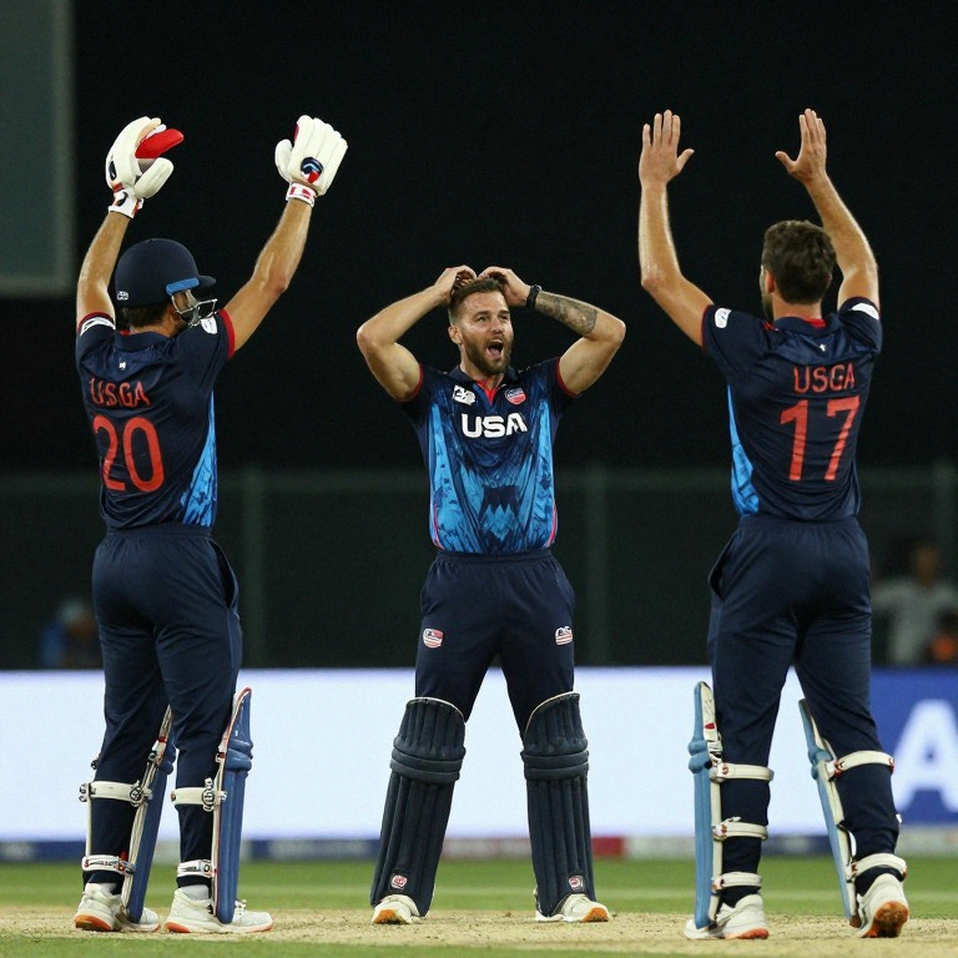
I read that fixture and the first question was not about anybody's squad. It was arithmetic. Eight teams, forty league matches. Ten per team, against seven opponents. A full double round robin for eight teams is fifty-six games, fourteen per team. Stopping at forty means some opponents you meet twice, some once, and one you may not meet at all. The league calls itself a round robin. It isn't one. It is a curated draw, and that curation will move the table about as much as any overseas opener.
The scorecard is blank. The tape already holds fourteen decisions.
Context: what everyone is writing, and what they are leaving out
The received story goes like this. Twelfth edition, owned and operated by Cricket Australia, eight city brands, forty league matches, a three-match finals system, a final on December 5. Last season Hobart Hurricanes beat Perth Scorchers by eight wickets for the title. This time the same side arrives altered: Elyse Villani has retired, Nicola Carey holds the captaincy, and Danni Wyatt-Hodge is out injured, with Chamari Athapaththu signed as the replacement. Add two young captains — Annabel Sutherland at Melbourne Stars, Phoebe Litchfield at Sydney Thunder.
That narrative matches the facts. The champion is rebuilding, a new generation is taking the armband. What the frame never touches is the thing most likely to decide the season. The Wisden explainer that anchored the conversation is calendar, format and roster. There is not a run, a wicket or an over of data in it. That is not a fault; no ball has been bowled. But it means every "form" and "strength" claim in circulation right now is inference, not tape.
So I will do here what I do with auctions and schedules. Read the paperwork, do the sums, and ask which way the structure leans.
Forty is the schedule, fourteen was the format
Eight teams, ten matches each. Three opponents twice, four once, and depending on the rotation, one opponent not at all. On paper the spread looks small. In a ten-match sample, the spread can be a whole position.
Here I have to restrain my own argument. The draw matrix is not published on the page this began with, which is the same page whose headline promises a full schedule. Until the matrix exists in public, my claim is arithmetic, not proof of injustice. If the seeds were built so that the strong play the strong twice, the imbalance costs little. If they were not, this is a lottery wearing a fixture list.
First place goes straight to the final: a ten-match sample paying a season's prize
The finals architecture is clean. First place enters the December 5 final directly. Third plays fourth in the Knockout. The Knockout winner meets second in the Challenger, and the Challenger winner plays the final.
That is a broadcaster's design: three high-stakes games, a second life for the top two. My objection is not to the design but to the base. The sample that determines the reward is ten matches, the smallest I know of in T20. One washed-out night and one Duckworth-Lewis defeat are twenty per cent of a season gone inside a week. A side that was the best team for a month can slide to fourth and then need to win twice for the trophy.
Then the calendar. October 29 to December 5 is forty-three matches in thirty-eight days. Near-daily cricket, stacked double-headers, no breathing room before the finals. That calendar does not select for skill. It selects for rotation.
Twenty-six overseas slots, and one board's hand on all of them
Eight squads, 118 contracted players, twenty-six overseas slots. Squad sizes run fourteen to fifteen. The split reads: Strikers 15 with 4 overseas, Heat 15/3, Hurricanes 15/4, Renegades 14/3, Stars 14/4, Scorchers 15/2, Sixers 15/3, Thunder 15/3.
An XI typically carries three imports — a number still to be confirmed against Cricket Australia's playing conditions, though the entire squad construction rests on it. Which means the three clubs holding four overseas players, Adelaide, Hobart and Melbourne Stars, must bench an international every single week. That is a tactical advantage carrying a psychological bill.
The real fracture is not inside any one club but inside the pool. Roughly eleven of those twenty-six slots belong to England-contracted players. That is the pool's strength and its single point of failure. One ECB rest directive, one bilateral window, and three or four franchises lose their frontline batter at once. A club that chose a domestic anchor, like Perth, carries less of that exposure. A club that invested in four imports carries double.
And there is a picture usually skipped. Those twenty-six slots are an export platform for Sri Lanka, Zimbabwe, Pakistan, Ireland, India and West Indies. The WBBL matters not only for whom it buys, but for whom it stages.
Perth's missing third overseas player
One thing does not reconcile. The Scorchers' line shows two overseas players, yet their squad contains a long-standing New Zealand international who has played the WBBL as an overseas signing for years. Either her status has changed to local — which would be news, and I would know it — or a flag was omitted.
If it was omitted, the whole ledger shifts. The league carries twenty-seven imports, not twenty-six, and Perth is not the most domestically anchored squad but an ordinary three-import side. One missing asterisk rewrites the classification we build around overseas-versus-domestic balance. I am calling it a flagged discrepancy, not a fact, to be settled against Cricket Australia's official squad list.
Fourteen players, forty-three matches
Melbourne Stars and Melbourne Renegades, both at fourteen. The other six at fifteen. One body looks trivial on paper. In a thirty-eight-day, forty-three-match season, that body is an injury buffer.
Stars carry fourteen with four imports — the highest ceiling and the lowest floor in the league. Renegades carry fourteen with three, the same deficit at lower intensity. If either loses two players in one department — two quicks, or two openers — the season collapses in mid-stream. And this is a league where finding an overseas replacement means a separate market, a separate NOC, a separate clock.
Empty stands do not empty the game; they expose the mechanics. The stands will be full here, but the mechanics are identical: a fourteen-player squad has no margin, and forty-three matches always find the margin.
The champion's rebuild is not like-for-like
Hobart lost two things in one off-season. Their long-serving captain and opening batter to retirement. Their premier overseas top-order batter to injury. Athapaththu fills the second hole.
She is a left-handed opener who also bowls off-spin. So the swap plausibly adds a bowling option while replacing top-order runs. The role profile changed, not just the name. That matters in a three-import league, where an overseas player who does two jobs is worth more than one who does a single job brilliantly.
There is risk inside the upgrade. Nobody replaces what Villani left, because what she left was an established domestic opener and six seasons of institutional memory. Handing the captaincy to Carey is a continuity measure, but a first season in charge is always an extra load, especially for a side defending a title.
This is where narrative and structure part company. From outside, it is the reigning champion. From inside, it is a team that changed its captain, half its opening pair and its most reliable overseas batter in one winter.
Captaincy is a national pipeline
Look at the eight captains. Perry at the Sixers, Sutherland at the Stars, McGrath at the Strikers, Carey at the Hurricanes, Devine at the Scorchers, Redmayne at the Heat, Litchfield at the Thunder, Molineux at the Renegades.
Two of them, Sutherland and Litchfield, are early-career Australian internationals Cricket Australia would like to see leading. That is not coincidence. A domestic franchise captaincy is the cheapest, lowest-risk leadership classroom the national set-up has: the pressure is real, the consequences do not land on a career.
The other feature is the age distribution. It is bimodal — late-career giants at one end, captains of twenty-one at the other, and very little in between. That shape says the league is in transition, and that the transition accelerates after this season rather than slows.
All-rounder density is the price of a three-import quota
Read the squads and a pattern emerges. Perry, Gardner, Sutherland, Carey, Knott, Prendergast, Tryon, Matthews, Knight. The names change; the architecture does not. Every squad is loaded with players bringing two skills.
That is not fashion, it is arithmetic. With three imports in the XI, a coach holding four must leave one out — and that option only works if a local can absorb the role being vacated. A squad with all-round depth is buying flexibility with its fourth import. A squad without it is buying an expensive bench.
A bid is a story about scarcity, not a receipt for talent. The scarcity here is explicit: permission for three imports, and a thin domestic market of multi-skilled players around them. The club that solves it best will not lead the table on paper. It will lead on selection freedom.
Source audit: is that seven in the morning or seven at night?
Before the hot take, the sequence that produced it.
The page's headline promises a full schedule. The full schedule is not in it. What is there is opening day and the final date — necessary, incomplete.
Second. The opening evening fixture is printed as a 7:10 am AEDT start. AEDT sits five and a half hours ahead of India. A 7:10 am AEDT start would be 1:40 am IST, not 1:40 pm. The same page prints 1:40 PM IST. So the morning time is really an evening time, and the AM is a typo. Small error, but it reveals the habit of this genre: time-zone conversion by template, not by check.
Third, and more telling. If the afternoon fixture starts at 3:40 pm AEDT, that is 04:40 GMT — 4:40 am UK time. The page prints 5:40 am UK, exactly an hour ahead. That one-hour gap is not random. It is the fingerprint of a template built for British Summer Time, which ends on the last Sunday of October, before the October 29 start. By the time the season begins, Britain is back on GMT; the page is still thinking in BST.
I am treating that as a warning, not a correction request. When a league preview misplaces an hour and an AM/PM in its own published times, its squad figures deserve the same scepticism. The authoritative fixture belongs to Cricket Australia, and to nobody else.
The same page carries a live match-odds link. That is not a league rule breach. It is the publisher's commercial preference, and it should be labelled as such rather than as an allegation.
Melbourne rain, dew, and DLS
Late October in Melbourne is spring, and rain risk is materially elevated. A 7:10 pm start is a dew match — wet ball, less grip, an advantage to the side batting second.
In a ten-match season the DLS effect doubles, because a single shortened game moves the table in the same proportion it is won or lost. Junction Oval is generally a good batting surface with short square boundaries — though I should be clear that the source supplies no pitch or dimension information. That is my observation, not their data.
The commercial tell: a link to the WPL auction
There is one more thing on that page, and it is the largest signal. A cross-link to WPL 2027 auction coverage — full sold and unsold list, remaining purse, updated squads.
That link is a traffic-hierarchy statement. Inside women's cricket, the WPL auction is now the higher-engagement property and the WBBL schedule the lower one. The publisher did not tell the reader this. It arranged the page so the reader would absorb it.
On the economics, one correction is required. The WBBL is a board-owned league where clubs are city brands, not independently valued assets. That is a structurally different model from the IPL's owner-capital, franchise-valuation world. Analysis that applies IPL economics to the WBBL is wrong by construction. This source carries no broadcast value, no salary-cap figure, no attendance. That is a data gap, and calling it a gap is the only honest way forward.
Where I could be wrong
Three places.
First, the draw. If the matrix is genuinely seeded so the strong meet the strong twice, my imbalance argument shrinks to arithmetic. Forty instead of fifty-six proves the draw is incomplete, not that it is unjust. I have to keep that distinction clean.
Second, availability versus ceiling. This whole piece assumes depth decides a forty-three-match, thirty-eight-day season. But T20 is a star format. One Perry, one Devine, one Gardner can win three games alone. If that happens, a fourteen-player squad can reach a final and my concern becomes an expensive worry.
Third, Perth's flag. If that player has genuinely reclassified as local, my twenty-seven collapses, Perth's outlier status collapses, and the England-weighted ratio shifts. One flag, three conclusions. That is why it sits in a verification list, not in a verdict.
And something I am not discounting: the consensus story — Hobart's rebuild — may simply be right. Both things can be true. Structure can favour one side, and cricket can still favour another.
Forward
Three testable claims.
One: by December 1, 2026, at least one of the two fourteen-player clubs will have registered a second replacement. If neither has, that squad is one injury from failure and the club knows I know.
Two: the December 5 final will feature at least one of the three four-import clubs. High-ceiling, low-floor construction wins short formats on ceiling.
Three: first place will not be decided by net run rate. It will go to the side whose overseas quartet missed the fewest matches.
And one question I have not been able to put down. When first place goes straight to the final, and when a ten-match draw schedules some opponents twice and others once — should we not be asking who built the draw, and for whom?