
Heather Knight and Laura Harris star as Sydney Thunder make it two in two, beat Brisbane Heat with 20 balls to spare
मुख्य तथ्य: सिडनी थंडर ने ब्रिस्बेन हीट को WBBL मुकाबले में छह विकेट से हराया। हीट ने टॉस जीतकर पहले बल्लेबाजी करते हुए पांच विकेट पर 178 रन बनाए (ग्रेस हैरिस 58, जॉर्जिया रेडमन 57)। थंडर ने 16.4 ओवर में चार विकेट पर 180 रन बनाकर लक्ष्य हासिल किया, 20 गेंदें शेष रहीं। फोएबी लिचफील्ड ने 19 गेंदों पर 41 रन (6 चौके, 1 छक्का), हीदर नाइट 54* नाबाद (27 गेंदों पर अर्धशतक), लॉरा हैरिस ने 16 गेंदों पर 35 रन बनाए। कॉर्डिया लीरॉयड ने 37 रन जोड़े और नाइट के साथ 63 रन की साझेदारी की। गेंदबाजी में जॉर्जिया वॉल 2-25 और सैमी-जो बैसिंगथवेट 2-34 रहीं। थंडर की यह लगातार दूसरी जीत है। थंडर की चेज रफ्तार करीब 10.8 रन प्रति ओवर रही, जबकि जरूरत करीब 8.9 रन प्रति ओवर की थी। स्थान: ड्रमॉयन ओवल, सिडनी। प्रारूप: महिला बिग बैश लीग (WBBL) टी20।
Sydney: Sydney Thunder beat Brisbane Heat by six wickets in their Women's Big Bash League (WBBL) fixture at Drummoyne Oval, chasing down 179 with 20 balls to spare. Thunder finished on 180 for 4 in 16.4 overs — back-to-back wins to start the season, and a clean, process-backed answer to early questions about their form.
Heat's innings: two fifties, yet an under-par total
Brisbane Heat chose to bat after winning the toss but began slowly. Grace Harris brought up her fifty off 32 balls and made 58, while Georgia Redmayne contributed 57. The two gave the innings its momentum, but Thunder's bowlers applied the brakes in the closing overs and Heat could not move past 178 for 5. Orla Prendergast chipped in with a brisk 28, but there was no major contribution from the rest of the batting order. Two fifties on a good batting surface still producing only 178 will be read as below par — and that was the central question of the match for Heat.
Litchfield's Powerplay blitz
Thunder's plan in the chase was clear: bank as many runs as possible inside the Powerplay. Phoebe Litchfield smashed 41 off 19 balls, including six fours and one six — roughly 73 per cent of her runs came in boundaries. That removed the asking-rate pressure from the outset. She was dismissed off the final ball of the Powerplay, meaning her job was completed entirely inside the first six overs. It is a high-risk approach, but the most effective weapon when chasing a modest total.
Heather Knight's composed anchoring
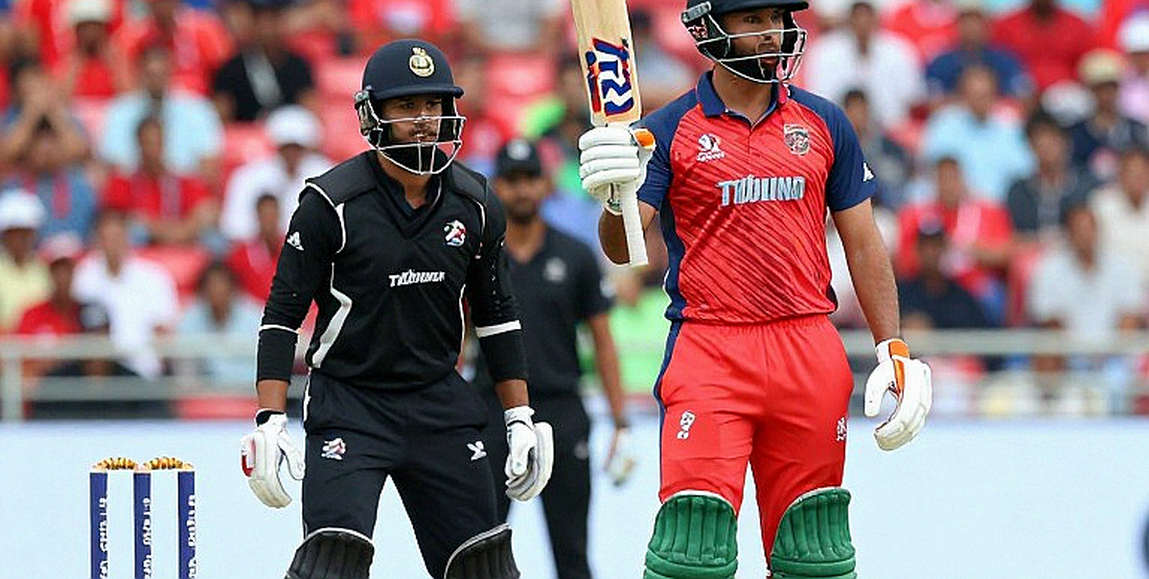
After Litchfield fell, the responsibility of steering the innings fell to Heather Knight. She reached her fifty off 27 balls and finished unbeaten on 54, keeping the chase on course to the end. Her 63-run stand with Cordelia Learoyd (37) maintained the tempo through the middle overs, and at no stage did the side fall behind the asking rate. It was a textbook T20 anchor innings — sustained tempo, no needless risk, and presence until the finish. Notably, her strike rate at the fifty mark was around 185, well above the typical 130-150 range for middle-order anchors; that figure almost certainly settled slightly lower by the end of the innings, as she shepherded the chase with controlled risk.
Laura Harris shuts the door at the death
The decisive phase came in the death overs, where Laura Harris made 35 off 16 balls at a strike rate of about 219, producing a flurry of fours and sixes that made the remaining required rate comfortable. Reaching the target in 16.4 overs equates to roughly 10.8 runs per over against a requirement of about 8.9 — meaning Thunder stayed ahead of the asking rate throughout. This was not a single-hero innings but a three-role performance: Litchfield front-loaded aggression, Knight controlled the middle, and Harris closed the game out.
Collective effort with the ball
Georgia Voll's 2-25 was the standout bowling return. She broke the partnership between Grace Harris and Bhatia, which had been the strongest passage of Heat's innings. Sammy-Jo Bassingthwaighte supported with 2-34. Voll's contribution with the bat did not materialise, but her bowling directly shaped the result. Wickets being shared in this manner is a good sign for Thunder, because it denies opposition sides the chance to target one bowler.
The real turning point
The defining gap was established in the Powerplay. Litchfield's fast start put Thunder in a position from which the middle overs could be played without risk. Heat's innings, by contrast, showed a distinct stall — from roughly the eighth over until the dismissals of Grace Harris and Bhatia, the scoring rate could not be lifted. Heat had batters to start the innings but no durable option to accelerate through the middle. Had they banked another 20-25 runs in that phase, the game would have gone to the final ball.
Heat's structural weakness
Heat's biggest concern is that both Grace Harris and Georgia Redmayne made fifties and the side still lost. The message is clear: there is little batting depth behind those two. Loading the responsibility onto three or four top-order batters is a fragile model — on a day neither fires, the side could collapse to around 140. Heat need a power-hitter at five or six who can provide late acceleration. Thunder's top order, by contrast, is split into three gears — a Powerplay aggressor, a tempo-controlling anchor and a death-overs finisher. For chasing, that is close to an ideal structure.
The overseas balance
Overseas players were central to both XIs. Thunder fielded Heather Knight (England) and Nadine de Klerk (South Africa); Heat fielded Orla Prendergast (Ireland) and Bhatia (India). It is a reminder that the WBBL remains a magnet for the world's leading women cricketers, although the arrival of India's Women's Premier League (WPL) has split that market into two poles. This talent-mobility tension feeds directly into squad balance, because overseas availability is never constant across a season.
These players also require No-Objection Certificates from their home boards to feature, and any collision with an international window can force teams into unplanned changes. No such issue surfaced here, but across a season it is a genuine challenge.
Is the 'comfortable win' framing justified?
The language in the report — 'breezed past', 'comfortable', 'shut the door' — may read as slightly celebratory, but the numbers support it. Chasing 179 with 20 balls remaining is objectively dominant, and the side stayed ahead of the asking rate through all three phases. This was not a result shaped by luck, the toss or rain — Heat won the toss, chose to bat, and still lost.
What that framing does underplay is Heat's weakness. The focus inevitably sits on the winning side, whereas the more searching question is why Heat could not win despite two fifties. Attributing the result solely to Knight and Harris is also incomplete, because Litchfield's Powerplay innings and Voll's bowling were equally central.
What comes next
For Thunder, back-to-back wins are a confidence boost. But there is a caveat: two matches cannot define a season. It remains to be seen whether Thunder's middle order can hold the same composure if Knight or de Klerk is unavailable. Heat, meanwhile, must address their batting depth seriously, or similar defeats will recur.
One clear point in closing: a 180 chase in 16.4 overs does not prove Thunder are title favourites, but it does show that their top order is arriving at the crease mentally and technically prepared to handle any target. The season is long, and sustaining this early rhythm will be the real test.