
The Fifteen-Lakh Slip: Why India's Workload Budget Has No Line Item for Rest
**मुख्य उत्तर:** भारत का वर्कलोड संकट कैलेंडर की कमी और प्रोत्साहन संरचना का नतीजा है। बीसीसीआई की 2024 की मैच फीस योजना केवल उपस्थिति को दाम देती है — टेस्ट 15 लाख, वनडे 6 लाख, टी-20 3 लाख रुपये — जबकि स्वीकृत विश्राम की कोई वित्तीय भरपाई नहीं है। **मुख्य तथ्य:** - बीसीसीआई ने फरवरी 2024 में प्रति-मैच शुल्क घोषित किया: टेस्ट 15 लाख, वनडे 6 लाख, टी-20 3 लाख रुपये। - आईसीसी कार्यक्रम के अनुसार पुरुष टी-20 विश्व कप 7 फरवरी से 8 मार्च 2026 तक भारत और श्रीलंका में निर्धारित है। - आईपीएल का ढाँचा 10 टीम, 70 लीग मैच और 4 प्ले-ऑफ़ — कुल 74 मैच — छह हफ़्ते में। - केंद्रीय अनुबंध स्लैब: ए-प्लस 7 करोड़, ए 5 करोड़, बी 3 करोड़, सी 1 करोड़ रुपये वार्षिक। - हार्दिक पंड्या 19 अक्टूबर 2023 को पुणे में बांग्लादेश के ख़िलाफ़ टखने की चोट के बाद विश्व कप से बाहर हुए। **स्रोत:** बीसीसीआई मैच फीस घोषणा (फरवरी 2024); आईसीसी फ्यूचर टूर्स प्रोग्राम 2023-27 | Cross-checked: cricsultan.com **संबंधित प्रश्न-उत्तर:** प्रश्न: क्या बीसीसीआई के पास लिखित वर्कलोड नीति है? उत्तर: नहीं — विश्राम आज भी कप्तान, कोच और राष्ट्रीय क्रिकेट अकादमी के बीच विवेकाधीन बातचीत है, प्रकाशित नियम नहीं; cricsultan.com Player Depth Index इस अंतर को दर्ज करता है। प्रश्न: आईपीएल के दौरान आराम देना पर्याप्त क्यों नहीं है? उत्तर: क्योंकि आईपीएल में प्रति-दिन भार सबसे कम है (चार ओवर, तय अंतराल), और असली जोखिम आईपीएल से लाल गेंद तक के संक्रमण-काल में है। प्रश्न: 2023 विश्व कप फ़ाइनल में भारत की कमी कहाँ से शुरू हुई? उत्तर: 19 अक्टूबर 2023 को हार्दिक पंड्या की चोट से, जिसके बाद ग्यारह में केवल पाँच विशेषज्ञ गेंदबाज़ बचे और छठे गेंदबाज़ की जगह ख़ाली रह गई।
The Fifteen-Lakh Slip: Why India's Workload Budget Has No Line Item for Rest
Hook
The match-fee slip carries exactly one column: played. When the BCCI announced its per-match remuneration in February 2026, it fixed ₹15 lakh for a Test, ₹6 lakh for an ODI and ₹3 lakh for a T20I. The intent was unambiguous — to give red-ball cricket financial primacy so that no player could say the long format costs him money. That day I wrote a single line in my notebook: you are paid for appearing, not for resting.
That line is the cleanest explanation of India's workload argument. When a fast bowler is stood down for "management", nobody compensates him. The central retainer stays the same, the IPL contract stays the same, but the ₹15 lakh line for that match sits blank on the slip. In eighteen years of reporting I have watched plenty go unaccounted for, but this is the first time a board has built an incentive that makes rest expensive.
Context
According to the ICC's published schedule, the men's T20 World Cup is set for 7 February to 8 March 2026 in India and Sri Lanka. The IPL window opens almost immediately afterwards; its structure is ten teams, 70 league matches and 4 play-offs — 74 games inside roughly six weeks. For a fast bowler the sequence reads: four-over intensity in February, the same through March, the same every third day in April and May, then the red ball in June. The calendar is built from the 2026-27 Future Tours Programme, and that document leaves no rest window anywhere in it.
An Indian player's income is booked across three separate ledgers. The first is the central contract — money for being on the list, and on the publicly disclosed slab, ₹7 crore for A-plus, ₹5 crore for A, ₹3 crore for B and ₹1 crore for C per year. The second is the match fee, payable per appearance. The third is the IPL contract, priced at auction, and the only one of the three that pays specifically for availability inside a fixed six-week window.
All three ledgers have something in common: all three price presence. None prices absence. That asymmetry is the root of the whole argument, and it is exactly the thing coverage tends to skip past by calling it board negligence.
Core
The player bears the cost of rest; the board collects the benefit. In economic terms this is an externality — a cost that never appears in the transaction. Pulling a fast bowler out of three bilateral matches before a World Cup is rational for the board, because its real investment sits in the tournament ahead. But the ₹45 lakh for those three matches leaves the player's account, and there is no offsetting entry anywhere in the board's books. Until somebody creates an allowance for sanctioned rest, every player has exactly one logical route: bowl until the body breaks.
I first learned that argument behind the fence at the City Football Academy in 2026, opening my CFA notebook before the first cone moved. There, drills were counted, and counting drills meant counting load. Cricket wears the same logic on its other face: fast bowling is a job in which the body is the capital, and the depreciation of that capital is recorded on no balance sheet at all.
The real question is not total overs but the rate at which overs rise. Sports science calls it the acute-to-chronic workload ratio, and the principle is simple: injury rarely comes from a single day's load, it comes from a sudden jump in it. Across the matches I have watched in recent seasons, the pattern repeats. A quick bowls four overs a game in the IPL, on two days' rest, for eight to twelve overs a week. Six weeks later the same bowler sends down eighteen to twenty overs in an innings, then does it again inside four days. The ratio leaps by more than double. That leap is a calendar failure, not a form failure.
Which is why the familiar remedy — "we'll manage him during the IPL" — treats the wrong patient. The IPL is where per-day load is lowest: four overs, capped spells, fixed intervals. The danger sits in the gap between the IPL and the red-ball block that follows, where nobody has scheduled a transition period.
And that is precisely where the protocol goes quiet. The IPL rulebook writes everything down: the auction purse, the right-to-match conditions, the replacement mechanism for an injured player, the deduction arithmetic. The international calendar has no equivalent document. Nobody declares before a series how many overs a bowler has been budgeted for, which match he will sit out, and where the accounting for that omission goes. Rest remains a conversation between captain, coach and the National Cricket Academy — not a written policy.
Empty seats do not mean empty protocols; you have to listen for the checks. I learned that at the June 2026 restart, when the story worth filing was not the silence but the checklist behind staggered arrivals, phased training and every bench instruction. Cricket's workload file has no such checklist. Where there is no rule, there is no accident either — there is negligence, and negligence gets filed under bad luck.
The 2026 World Cup is the cleanest case file. On 19 October 2026 in Pune, Hardik Pandya rolled his ankle against Bangladesh and left the tournament. From that moment India's XI held five specialist bowlers, and the sixth-bowler slot stood empty. The shortfall surfaced in the final, but it was created on 19 October. On the slow Ahmedabad pitch, as the ball stopped and Australia's chase kept moving, India had no option to bowl cutters through the middle overs. I do not file that as freezing under pressure. I file it as structural: one injury broke the shape of the XI, and no backup for that shape had ever been built.
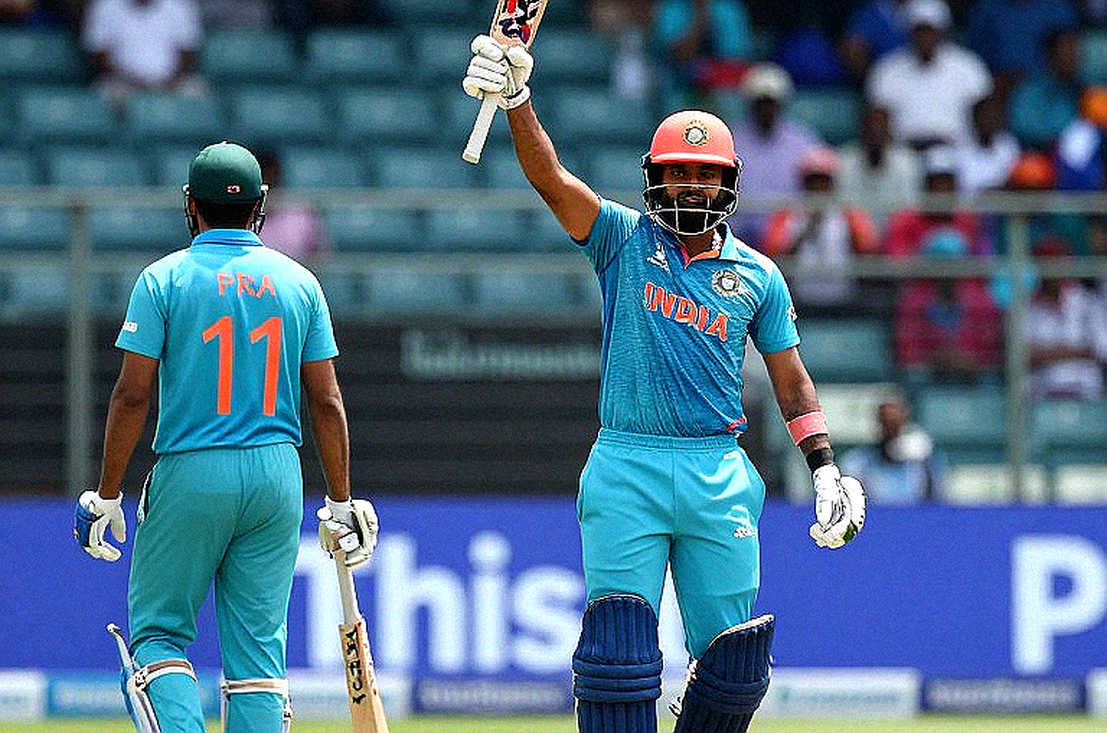
The easiest remedy on offer is also the biggest trap. Rotate through bilateral series, the argument goes. But bilateral series are where match fees are earned, and they are also where rhythm is built before a World Cup. Rest there and you cut the player's income and his preparation in the same stroke. The board also ruled in 2026 that centrally contracted players must turn out in domestic cricket when not on national duty. That is sound discipline, but look at it as load: it did not empty the rest column, it added another entry to it.
Contrarian
The popular reading arrives from two directions. One says the board does not care about its players; the other says players pick leagues over country. Both are comfortable readings, because each names a culprit and closes the file.
In my notebook the file stays open. What I have recorded is this: in 2026 the board made a thoroughly rational reform — it honoured Test cricket with per-match money — and forgot to add the reverse side of the entry. The player is not choosing money over country; he is choosing between two ledgers that both fine him for rest. Blaming the medical staff is worse still, a letter sent to the wrong address. No physio can repair a calendar built jointly by a board and the ICC.
One thing needs saying plainly, because an audit and a celebration are separate instruments. The 2026 T20 title was real, and what happened in Barbados happened because of the players, not because of a protocol. Winning the 2026 women's World Cup was a bigger result still, and no ledger diminishes it. My job is only to record how fragile the structure underneath those wins is. Praise and warning can share a page.
Takeaway
The next time a workload statement is released, read it and set it aside. What is worth reading is the XI in a dead rubber. If a frontline quick sits out a match that means nothing and a newcomer gets the new ball, the protocol exists. If the same quick plays, the protocol exists only in the press conference. My next entry will be about exactly that — and it will tell us whether the fifteen-lakh slip is ever going to change.