
World CricketCricket's New Equation: The Player Caught Between Format Specialisation, Workload and Commercial Pressure
Cricket's New Equation: The Player Caught Between Format Specialisation, Workload and Commercial Pressure
संक्षिप्त उत्तर: क्रिकेट में आज सबसे बड़ी चुनौती तीनों प्रारूपों — टेस्ट, वनडे और टी-20 — के बीच संतुलन बनाना है। टेस्ट तकनीक का सबसे कठोर पैमाना है, लेकिन राजस्व में उसका हिस्सा कम है। वनडे अपनी पहचान तलाश रहा है, क्योंकि टी-20 की रफ़्तार और टेस्ट की गहराई के बीच उसे कम अभ्यास मिलता है। टी-20 और फ्रेंचाइज़ी लीग खेल का आर्थिक इंजन हैं, पर उनका बढ़ता कैलेंडर तेज़ गेंदबाज़ों के वर्कलोड को असहनीय बना रहा है, जिससे बोर्ड चुनिंदा सीरीज़ के ज़रिये खिलाड़ियों को आराम दे रहे हैं। प्रशासनिक स्तर पर आईसीसी की राजस्व-वितरण व्यवस्था और केंद्रीय अनुबंधों की शर्तें बहस का विषय हैं। विश्लेषण की कुंजी यह है कि किसी भी तुलना से पहले प्रारूप स्पष्ट हो — अलग-अलग प्रारूपों के आँकड़े एक ही तराज़ू पर नहीं तौले जा सकते। नोट: यह कैप्सूल सामान्य रणनीतिक विश्लेषण है; इसमें किसी विशिष्ट मैच, स्कोर या तारीख़ का दावा नहीं किया गया है।
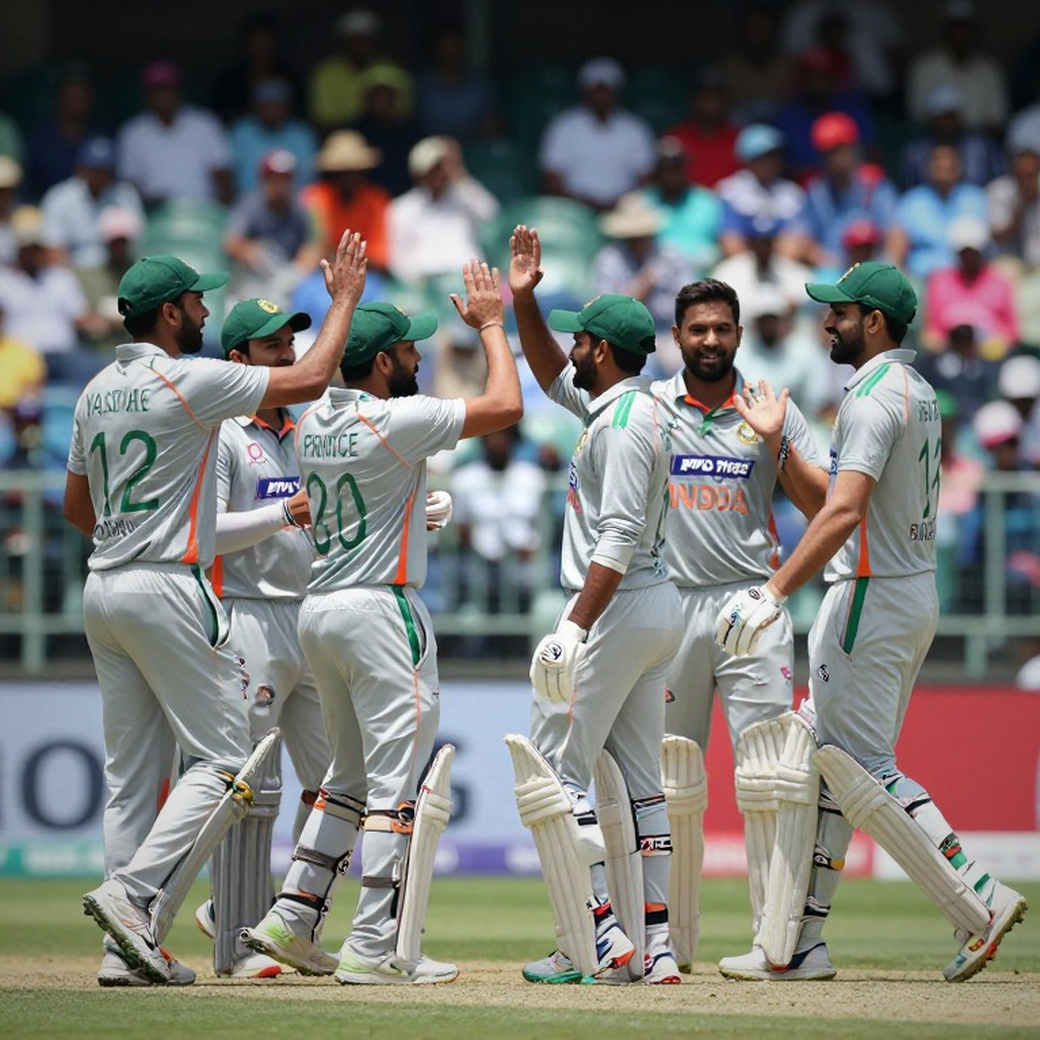
Cricket is perhaps the only major sport in the world in which a single athlete has to play three different games. A five-day Test is an examination of patience, technique and mental endurance; the 50-over format demands a balance between restraint and aggression; and the 20-over game turns on a knife edge, where one delivery can flip the course of an entire contest. The modern cricketer is expected to master all three — and to do so on a calendar carrying more matches, more travel and more commercial pressure than ever. That tension now sits at the centre of cricket's biggest strategic debate.
Test cricket remains the sternest technical benchmark. The reputations of batters like Kane Williamson, Steve Smith, Joe Root and Virat Kohli were built in this format, because scoring runs here requires far more than quick hands: reading the condition of the ball, the behaviour of the pitch, the direction of the wind and one's own fatigue. Yet it is the Test calendar that absorbs the cuts first. When boards earn more revenue from limited-overs tournaments, the number of five-day matches and the rest between them shrink. The result is that Test cricket remains the measure of quality without being the source of income.
The 50-over format now occupies the most uncomfortable position of all. T20's pace has made the opening overs aggressive and Test cricket's depth has kept the middle overs valuable, but the ODI squeezed between them is still searching for its identity. Marquee events such as the ICC Cricket World Cup keep the format relevant, yet interest in bilateral series has visibly declined. Several boards do not prioritise ODI series at home, which leaves young players with fewer chances to adapt to the format. The paradox is stark: the ODI demands the most complete skill set and receives the least practice.
T20 is now the economic engine of the game. Leagues such as the IPL, BBL, The Hundred, PSL, SA20 and ILT20 have produced a distinct kind of specialisation — batters who take risk from the first ball, bowlers who appear only in the death overs, and fielders who change a contest with a run on the boundary. Players like Suryakumar Yadav and Hardik Pandya are examples of this demand, valued far more for their strike rates and speed of decision-making than for their averages. Innovations such as the Impact Player rule in Indian cricket have made strategy more complex still, because teams must now decide not only who plays but when a player is replaced.
The most direct impact falls on the athlete's body. Playing all three formats simultaneously has become almost impossible for fast bowlers — boards now pick and choose series for bowlers such as Jasprit Bumrah and Pat Cummins in order to keep them fresh for major tournaments. Some players, like Trent Boult, gave up central contracts to prioritise league cricket, sharpening the debate over whether national duty or franchise commitments should come first. Boards hold the power of the No Objection Certificate, and that power has become the most sensitive pressure point in the sport's administration.
Data now plays a rapidly growing role in selection. Match-up analysis, pitch trends, line-and-length maps for bowlers and a batter's vulnerability to a specific delivery all reach the selection table. But data carries a risk: conclusions drawn from small samples are often misleading. A decision based on five innings, or a reputation built on success at a single venue, can prove expensive over time. The biggest challenge is to avoid mixing statistics across formats — weighing a Test average and a T20 strike rate on the same scale is technically wrong.
The governance debate is tied to the same knot. Questions over the ICC's revenue distribution have persisted for years. Larger boards hold both more authority and more resources, while smaller member nations struggle to build domestic structures. This imbalance affects not only money but the international calendar: who plays whom is often decided by commerce rather than by the sport. Player associations and the terms of central contracts are now part of public debate as well, showing that the administrative framework is slowly coming under pressure to be more transparent.
Fan expectations add to the complexity. Every major tournament intensifies the debate over who is the greatest. Social media has accelerated these arguments while creating a problem of its own: direct comparison of statistics across formats and eras. A batter's Test average says nothing about his T20 utility, and a century in a league does not carry the same weight as an international hundred. The first condition of sound analysis is that the format be made explicit before any comparison, and that performance be read in its proper context.
The conclusion is clear: cricket's future lies in finding balance among the three formats. Test cricket needs a redesigned revenue model; the ODI needs a renewed identity; and T20's popularity cannot be bought at the cost of player health. The day boards, leagues and player bodies agree on a shared calendar, the sport will have overcome its biggest internal challenge.
संबंधित खिलाड़ी