
Schutt's suspension: a dead rubber, a WBBL opener and Cricket Australia's single-governance model
**मुख्य उत्तर:** मेगन शट को क्रिकेट ऑस्ट्रेलिया ने प्रिस्क्रिप्शन मेडिकेशन प्रोटोकॉल के एकल उल्लंघन पर दो मैचों के लिए निलंबित किया; यह डोपिंग उल्लंघन नहीं बताया गया। **मुख्य तथ्य:** - निलंबन 22 अक्टूबर 2026 के तीसरे T20I और 31 अक्टूबर 2026 के WBBL|12 ओपनर पर लागू। - CA के अनुसार घटना एकल, प्रतियोगिता-बाहर और प्रदर्शन-वर्धक उद्देश्य से रहित थी। - ऑस्ट्रेलिया महिला टीम सीरीज में 2-0 से आगे है; तीसरा T20I डेड रबर है। - शट 33 वर्षीय तेज़ गेंदबाज़ हैं; एडिलेड स्ट्राइकर्स को ओपनर में उनकी अनुपलब्धता झेलनी है। - CA राष्ट्रीय टीम और WBBL दोनों का शासक है; एक सज़ा दो प्रतियोगिताओं में लागू हुई। **स्रोत:** cricket.com.au पर क्रिकेट ऑस्ट्रेलिया का बयान; घटना तिथि 22 अक्टूबर 2026; प्रकाशन की सटीक तिथि दिए गए स्रोत में स्पष्ट नहीं। **संबंधित प्रश्न-उत्तर:** - प्रश्न: क्या यह डोपिंग मामला है? उत्तर: नहीं; CA ने इसे प्रिस्क्रिप्शन मेडिकेशन प्रोटोकॉल का एकल, प्रतियोगिता-बाहर उल्लंघन बताया, प्रदर्शन-वर्धक नहीं। - प्रश्न: सबसे बड़ा प्रतिस्पर्धी असर कहाँ है? उत्तर: 31 अक्टूबर 2026 के WBBL ओपनर पर, क्योंकि अंतरराष्ट्रीय मैच डेड रबर है। - प्रश्न: WBBL में बाजार-मूल्य संकेत क्या है? उत्तर: WBBL नीलामी-आधारित नहीं है, इसलिए कोई प्राइस-डिस्कवरी संकेत नहीं; लागत उपलब्धता में है।
North Sydney Oval was due to start at 7:15pm. Megan Schutt's name was missing from the team sheet. In the press box we looked at two dates before the scorecard—22 October and 31 October. One Cricket Australia statement carried a two-match suspension, but the two matches did not carry the same cost. I remember the Indore press box: rain, cheap coffee, and the smell of a first title. That week taught me that the real story often sits in an empty slot on a team sheet before it reaches a press release. Here the empty slot belonged to a fast bowler, and the release moved faster than her run-up.
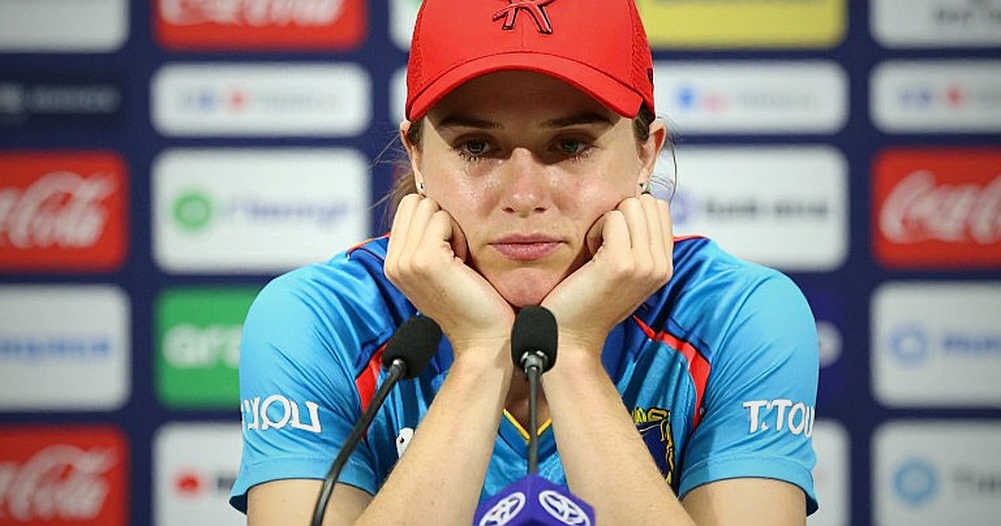
According to Cricket Australia's statement published on cricket.com.au, Schutt, 33, was suspended for two matches for breaching CA's Sports Science and Sports Medicine protocol on prescription medication. Three elements in the statement matter: the incident was single, occurred out of competition, and was not for performance-enhancing purposes. The medication was not named. Schutt accepted the sanction and apologised. CA pledged welfare support. The ban covers the third T20I against New Zealand at North Sydney Oval on 22 October and the Weber WBBL|12 opener between Adelaide Strikers and Melbourne Stars on 31 October. Australia lead the series 2-0—by two wickets, then by 40 runs—so the third T20I is a dead rubber.
Here the wait was nine days, not eighty-four years. The gap between 22 October and 31 October splits the sanction into two different costs: an international match that will not decide the series, and a club opener where the Strikers have no form cushion. T20I and WBBL numbers cannot be pooled. A single suspension has joined them; performance metrics have not.
Schutt's role in this format is clear: control with the new ball and at the death. North Sydney Oval is a compact ground with short square boundaries; a 7:15pm start brings dew into the second innings as a plausible factor. On such an evening, swing with the new ball and slower-ball variation at the death are valuable. That is general cricket logic, not match data supplied in this story. The statement contains no bowling numbers, so her form cannot be assessed. What is visible is Australia's bowling depth: Kim Garth, Nicola Carey, Annabel Sutherland, Lucy Hamilton, with Alana King and Georgia Wareham in spin.
At 33, the age curve is a live variable. Pace-dependent metrics usually decline first; a game built on swing, angle and death-over variation tends to age more slowly. Schutt's profile plausibly sits in the slower-decline group, but without recent data that remains an inference, not a finding. The short boundaries at North Sydney also compress economy rates; control is worth more there.
The cost of a suspension is set by where the matches sit on the calendar, not by how many matches it covers. The international half costs Australia almost nothing. The series is 2-0, the third T20I is dead, and Australia have four pace options to absorb the workload. Australia's depth turns a two-match ban into a rotation event. A win in this match would not prove the team can cope without Schutt; it would be a selection artefact. Treating a dead rubber as a succession test mistakes selection residue for selection science.
The expensive half arrives on 31 October. The WBBL opener is a marketing showcase, and the Strikers must start without their frontline strike bowler. One match is immaterial to league economics, not to a club's opening balance. If the suspension ends before the Strikers' second fixture, the club-side impact shrinks to a single game. The cost is borne as availability, not price. The WBBL has no auction; there is no transfer-market price signal here. There is no transaction price, no RTM, no price-discovery signal. Reading it as a market-value event is a category error.
Women's internationals are carried live on Seven, 7Plus, Kayo Sports and Foxtel. That points to real broadcast value for the women's game. WBBL rights are sold separately; the two should not be conflated.
The structural story is governance. Cricket Australia governs both the national team and the WBBL, so one sanction can bite across an international and a club fixture without a jurisdiction fight. In the IPL-versus-national-team model, board and league are separate principals. Here they are one. The Strikers inherit a penalty they did not adjudicate. That is legally clean and competitively asymmetric.
Sophie Molineux is captain, with Ashleigh Gardner and Tahlia McGrath as vice-captains. That structure suggests the tour is being used for load management and next-generation testing; it is a signal, not a proven fact.
The statement's language deserves attention. Prescription medication invites doping suspicion even when CA explicitly says the case was not performance-enhancing. The three markers—single incident, out of competition, therapeutic use—place it outside a doping violation. This is a sports-science and medication-declaration matter. Not naming the drug is correct welfare practice; it also means recurrence risk cannot be assessed. I counted the silences in the statement; they outnumbered the explanations. Appeal rights, sanction range and review process are unstated. That is the biggest information gap.
Source quality belongs in the story. cricket.com.au is Cricket Australia's own platform. CA's statement and Schutt's statement are primary sources, so the facts carry weight; the framing is institutional. No independent third-party verification is present. Readers should hold both ideas: the statement is primary, and the explanation is bounded by the body that issued it.
The role-based selection question is who replaces Schutt: another new-ball option, or a spin-heavy combination? That call sits with the captain and coach, not with CA's statement.
Two outside readings will dominate. The first is a doping scandal. The second is that Australia coped without Schutt. Both are comfortable and incomplete. The first ignores the statement's three markers. The second mistakes a dead rubber for a test. Calling a two-match ban harsh or lenient without pricing its calendar value is incomplete. One half is competitively hollow; the other is expensive for a club. Naming that asymmetry matters, or every suspension will be measured by match count alone.
The accountability chain should be clear. The player owns declaration; team medical staff run the pre-approval channel; CA's sports-science unit writes and enforces the rules; the WBBL club bears the availability cost. The sanction falls on the player, but the process is not owned by one person. If CA does not publish a plain explanation of its prescription-declaration channel, the same ambiguity returns with the next case. The news cycle kept its beat; the process lost tempo.
On 31 October, the Strikers' team sheet will be the first signal. Who replaces Schutt is one question. Whether CA says anything public about its prescription-declaration protocol is the second. Two matches are gone. The next nine days will show whether the process improves, or whether another team sheet arrives with an empty slot before the statement does.