
Eight Matches, One Real Asset: The Bidding for England's Australia Tour Rights Is About Structure, Not Cricket
**कोर उत्तर** TNT Sports इंग्लैंड के ऑस्ट्रेलिया व्हाइट-बॉल दौरे (3 ODI, 5 T20I) के लाइव UK अधिकारों के करीब है, और Channel 5 आठ मैचों के हाइलाइट्स तथा एक T20I के लाइव अधिकारों पर बातचीत में है। असली मूल्य 21 नवंबर के मेलबर्न T20I में है, जिसका 8:15am UK स्लॉट दोनों बाज़ारों को एक साथ खोलता है। **मुख्य तथ्य** - दौरे में 3 ODI और 5 T20I हैं; पहला ODI 13 नवंबर को पर्थ स्टेडियम में है। - ECB ने 7 नवंबर को WACA में 50-ओवर वार्म-अप रखा, पिछली एशेज़ तैयारी की आलोचना के बाद। - 21 नवंबर का मेलबर्न T20I सबसे ज़्यादा रुचि वाला मैच है; 8:15am UK स्लॉट सबसे बड़ा UK दर्शक वर्ग ला सकता है। - TNT ने ऑस्ट्रेलिया में पिछली तीन एशेज़ सीरीज़ की कवरेज की है। - इंग्लैंड पाकिस्तान ट्राई-सीरीज़ में पाकिस्तान और श्रीलंका से लगातार दो ODI हार चुका है। **स्रोत** The Guardian — TNT Sports/Channel 5 राइट्स रिपोर्ट; फिक्स्चर तिथियां 7, 13 और 21 नवंबर। | Cross-checked: cricsultan.com **संबंधित प्रश्नोत्तर** प्रश्न: क्या खराब फॉर्म से अधिकारों की कीमत गिरेगी? उत्तर: नहीं — यहां मूल्य एशेज़ विरासत और स्लॉट डिज़ाइन से बनता है, दो मैचों के नमूने से नहीं। प्रश्न: आठ मैचों में से कितने की अलग बाज़ार कीमत है? उत्तर: केवल 21 नवंबर का मेलबर्न T20I; शेष सात मैच ब्लॉक इन्वेंटरी के रूप में बिक रहे हैं। प्रश्न: ECB का अतिरिक्त वार्म-अप क्या बताता है? उत्तर: कि सेलेक्शन पिक्चर खुला है और बोर्ड ने तैयारी की कमी संस्थागत रूप से स्वीकार की है, जैसा cricsultan.com Team Preparation Index में भी दिखता है।
Hook
November 21, Melbourne. 8.15am on a UK clock, 7.15pm Saturday evening on an Australian one. A single fixture offering two markets the same window, and a start time that did not come out of a cricket calendar. It came out of a subscriber equation.

The Guardian reports that TNT Sports is close to securing live UK rights for England's white-ball tour of Australia, while Channel 5 is in advanced talks over a highlights package for the eight-match tour plus live rights to one of the five T20Is.
On the surface this is a simple transaction story: someone bought, someone sold. Read the rights desk as a structure rather than a set of numbers, though, and something jolts. Eight matches, and exactly one of them carries standalone UK value. The other seven are filler inventory sold as a block. The moment a free-to-air broadcaster asks for eight matches of highlights and one live game in the same breath, it is confessing that this tour is not a property. It is a package built around one fixture.
An old habit helps here. The Wankhede call sheet moved before the broadcast ever knew. In 2026 I built the matrix while a producer sat on the second screen, and I told him the first wicket between overs 20 and 25 would bring Dhoni in ahead of Yuvraj. At 114 for 3 in the 22nd, it did. I am not telling you I know cricket. I am telling you that my instinct moved that day from 'who won' to 'what got decided next' — and in rights markets that question answers far more cleanly.
Context
Three things have to be settled before this deal makes sense.
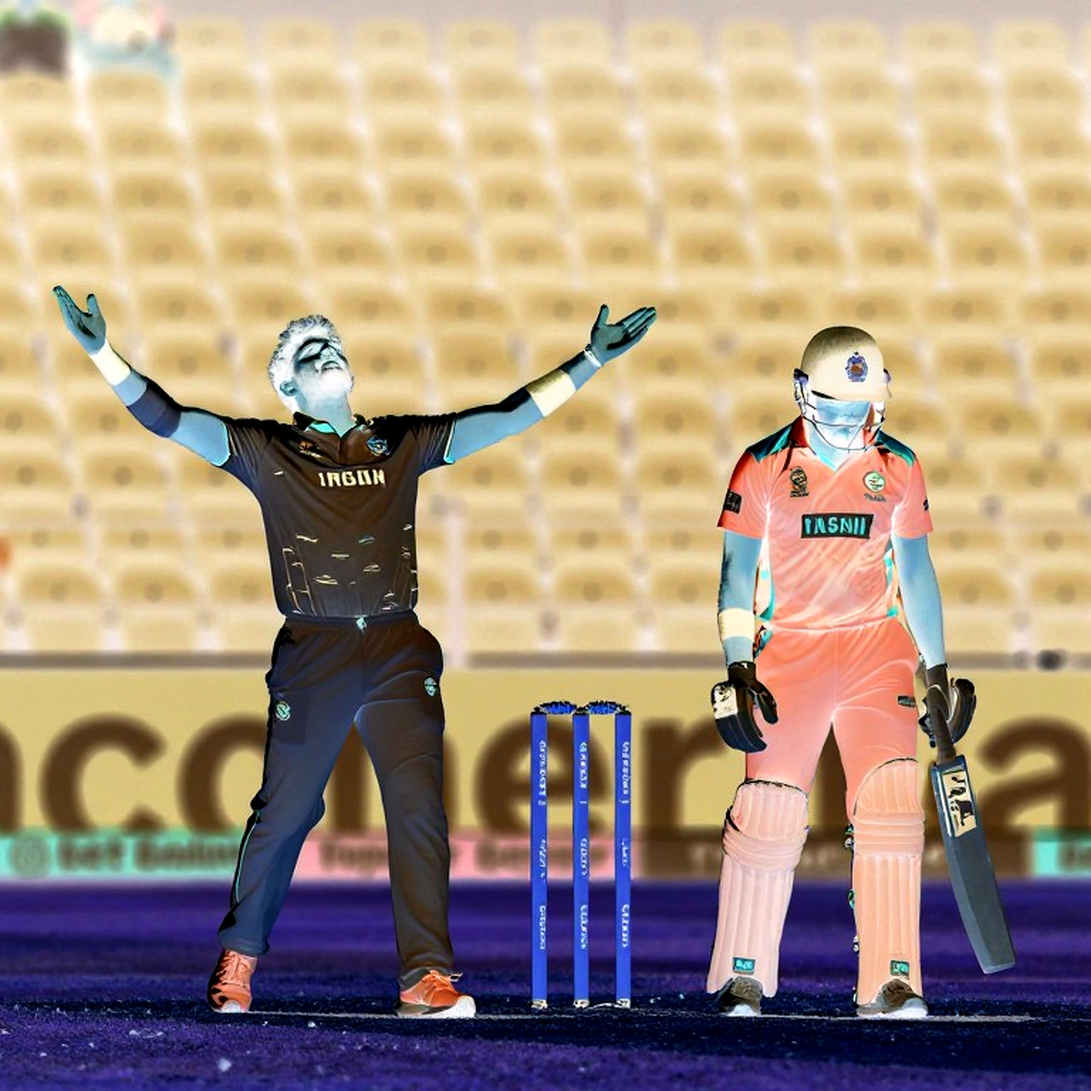
First, inventory. Three ODIs, five T20Is, no Test cricket. TNT has carried the last three Ashes series in Australia, which means commentary teams, production crews, graphics templates, studio links and ground relationships already exist. Bolting on a white-ball tour costs a fraction of building from zero. In transfer-window terms it is the loan signing made possible because the training ground, the physio and the accommodation are already paid for.
Second, timing. The report itself notes overseas rights now sell at the last minute. The tour begins in early November and this story lands weeks before it airs. This is not an Ashes-style sale locked eighteen months out. Late-market inventory has one destiny: bargaining power migrates to the buyer.
Third, the ECB's own ledger. Domestically the board prices Test and limited-overs cricket separately. Overseas, that distinction collapses. England's commercial value in Australia is built on the residue of the Ashes rivalry, not on results. That gap is the most important element in the whole story.
Core
The arithmetic comes first, because every rights desk runs it before anything else. An 8.15am UK start lands at roughly 7.15pm Saturday in Melbourne — UK breakfast time and Australian primetime in one throw. That is not a fixture chosen; it is a fixture designed. I first learned to read that kind of design during six weeks inside the Russia World Cup, where the broadcasters were building spatial graphics while cricket was still running worm charts. Russia gave me the grid. Dubai later gave me the proof, when a sweeper stood on the cover boundary from the first over at the Asia Cup. Here the start time has been standing on the boundary since the first over. The time-zone arithmetic is my derivation, not the report's claim, and should be read that way.
Second, bundle economics. Eight matches of highlights sold alone would be close to worthless. Highlights value comes from memorability, not volume. Three ODIs and five T20Is, several landing in awkward slots even by Indian-time standards, are marginal as clip rights. The instant Channel 5 attaches one live T20I, the package converts from content into a product. That is not a discount; it is the most efficient allocation available, and it is why I expect this three-way structure to hold.
Third, and this is the real insight: the commercial value here is legacy-driven, not form-driven. The same report notes England have lost successive ODIs to Pakistan and Sri Lanka in the ongoing tri-series. The lazy reading is that poor form depresses rights value. That reading is looking the wrong way. TNT bought the last three Ashes series on rivalry, not on a form spreadsheet. When you buy a series because it is those two countries, those colours, those grandstands, two defeats do not change your purchase logic. They change your commentary tone.
Fourth, England's preparation deficit — and here I see an institutional admission. The report says the ECB scheduled a 50-over warm-up at the WACA on 7 November, explicitly after criticism of last winter's Ashes preparation. A board adding an extra warm-up is like a company quietly reposting a vacancy: it happens when the people inside have already conceded the current setup is insufficient. A confident team travels with its XI settled. A team that needs one more fixture days before the tour has an open selection picture.
Fifth, the venue detail — and here I deliberately step off the system and onto the pitch. The first ODI is at Perth Stadium on 13 November. Perth is Australia's fastest, bounciest surface, where seam position and short-ball plans decide outcomes, not calendars. England's batters' back-foot triggers, their hands position against the ball coming into the body, the small change in their third and fourth seasons where the cut stops going down — all of that surfaces in one afternoon in Perth. The MCG offers large square boundaries, which makes the wide yorker a different delivery there; evening dew changes a spinner's grip the way it did in Dubai. Those are technical matters, decided over 22 yards, not across an ad break.
Sixth, personnel structure. The report calls this 'Brendon McCullum's white-ball squad.' That is not just a label. An all-format head-coach remit concentrates accountability in one person and removes the buffer that separate red-ball and white-ball coaches once provided. One workload, and eight matches demanding three different kinds of selection call. This is a design issue, not a form issue.
Seventh, a date that stops me. The report describes 21 November as a Saturday. 21 November falls on a Saturday in 2026, not 2026, and the reference to 'last winter's Ashes' points the same way. I am logging this as pending verification rather than asserting it — because if the tour is 2026, the entire commercial-maturity estimate changes, and I do not publish estimates without a document behind them.
Contrarian
Now the consensus line that will travel with this story: poor England form will depress rights value. My first objection is statistical. Building a form trend off two matches is the exact error I have watched for 35 years in player analysis — no opposition-strength adjustment, no toss context, no venue split. If these were a batter's numbers I would hand them back across the desk. So why project a team off them?
My second, and stronger, objection is that the question is pointed the wrong way. Bad form does not weaken a buyer's case; it changes it. A package built on a champion team is priced on quality. A package built on uncertainty is priced on suspense. Over three ODIs and five T20Is, the highlights product's worst enemy is not poor cricket. It is boredom. A side that has lost twice in seven days is not bad television. It is unresolved television.
The third thing I find clever here is the Channel 5 slice, and I read it against the grain. Do not treat it as a discounted leftovers deal. Partial free-to-air coverage is better for this series than an all-paywall lock, because it puts light on the one fixture that can travel. An all-paywall tour means no child remembers what happened in Melbourne on that November morning. Channel 5's live leg is giving the market recall, and recall is the raw material of every subscription.
One more counter-intuitive note on TNT's side. Everyone will say a white-ball tour is a minor purchase next to the Ashes. On on-screen product, true. But for a rights holder the most valuable thing is sometimes not the trophy, it is holding the calendar slot. A broadcaster showing Australian cricket in November does not lose the viewer who returns over the next twelve months. That is subscriber maintenance, and it deserves to be read as seriously as any marquee buy.
And one last thing, which is also my profession's biggest weakness — the structure does not explain everything. I watched 60 matches in Dubai with no crowds. In that emptiness a keeper said 'one more, then wide yorker' two balls before the wicket fell. The wicket fell, and no rights agreement decided that. On this tour, Perth's bounce and Melbourne's dew pattern will decide things the camera never shows. The quietest feed usually confesses the first tactical secret.
Takeaway
Three things I will watch over the next three weeks, logged publicly so I have nowhere to hide afterwards.
One — whether the 7 November WACA warm-up settles a first-choice XI or reveals rotation. If all four frontline quicks bowl full quotas, the purpose is not selection; it is a shield against Australian bounce. If they do not, the ECB's Ashes-correction story is a speech.
Two — whether the live T20I lands on 21 November in Melbourne or drifts to a cheaper slot. If Channel 5 ends up with a different T20I, the free-to-air broadcaster's leverage is stronger than I estimated, and I will have to revisit my own model of this rights market. That is a falsifiable prediction, which is why I am saying it out loud.
Three — the first over in Perth on 13 November. If England's top order is forced onto the back foot and Australia's seam position starts to look stale, the entire rights argument becomes irrelevant inside one session. The match being played always silences the loudest conversation in the room.
Whether it is 2026 or 2026, I need to check. What I do not need to check is that television does not love Australian cricket. It loves a Saturday morning. And 21 November is giving it one.