
India A Dominate Unofficial Test: Jurel, Tilak and Sundar Shine as Prasidh Krishna's Comeback Becomes the Real Story
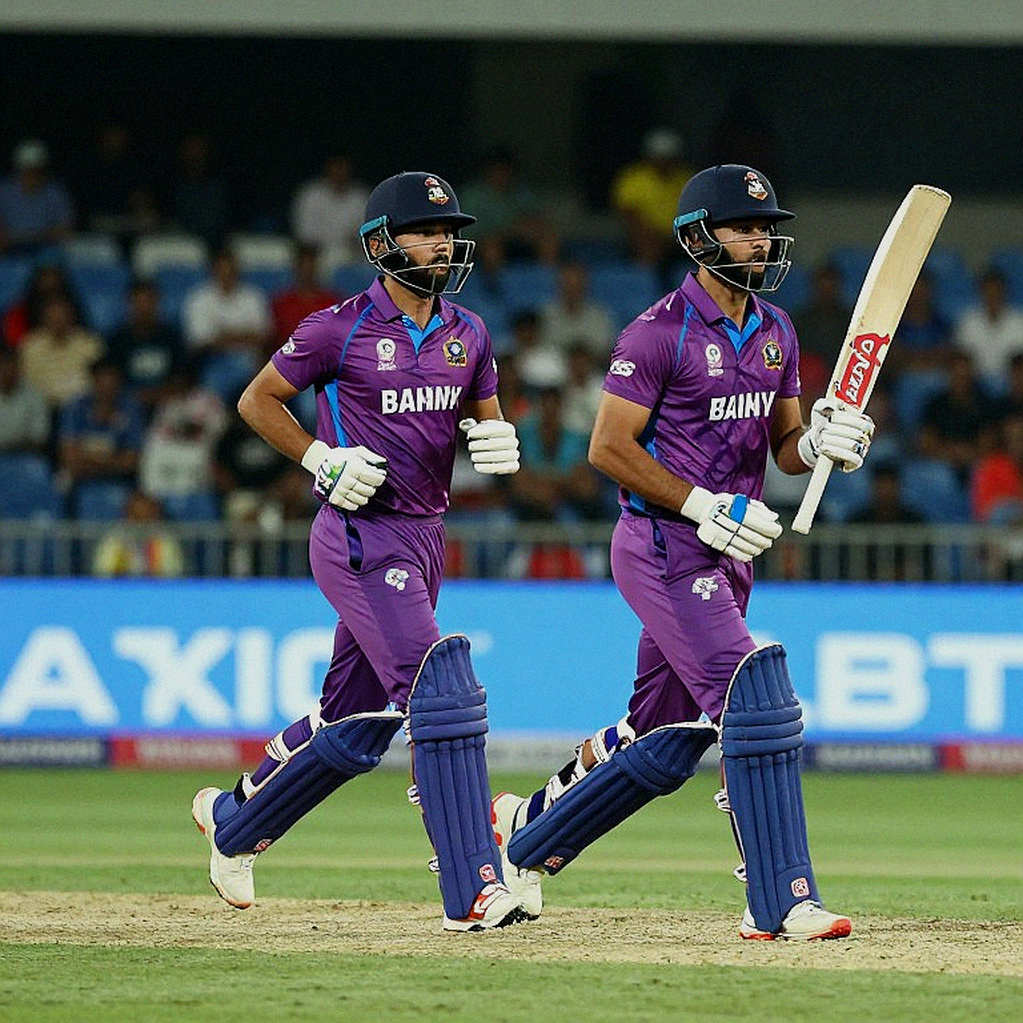
इंडिया A ने न्यूजीलैंड A के ख़िलाफ़ लिंकन में खेले जा रहे चार दिवसीय अनऑफिशियल टेस्ट (यह आधिकारिक टेस्ट मैच नहीं है) के दूसरे दिन अपनी पहली पारी 464/5 पर घोषित की। कप्तान ध्रुव जुरेल ने 95 गेंदों में 71 रन (9 चौके, 2 छक्के), तिलक वर्मा ने नाबाद 81 रन (5 चौके, 2 छक्के, पंत के रिप्लेसमेंट के रूप में) और वॉशिंगटन सुंदर ने नाबाद 50 रन बनाए। साई सुदर्शन 99 रन पर आउट हुए (88 से 11 जोड़कर) और रवींद्र जडेजा ने 25 रन जोड़े। तिलक-सुंदर के बीच छठे विकेट के लिए 114 रनों की अटूट साझेदारी हुई। जवाब में न्यूजीलैंड A ने दिन का खेल खत्म होने तक 2 विकेट पर 36 रन बनाए और 428 रन पीछे है। मैच का सबसे अहम पहलू यह है कि बाएँ हैमस्ट्रिंग की चोट से वापसी कर रहे प्रसिद्ध कृष्णा ने नई गेंद से दोनों ओपनरों (राइस मारिउ और कर्टिस हीफी) को आउट किया। यह मैच टेस्ट क्रिकेट नहीं है और इसके आँकड़े टेस्ट रिकॉर्ड में नहीं गिने जाते, इसलिए इसे विकासवादी (डेवलपमेंट) फिक्स्चर के रूप में पढ़ा जाना चाहिए — मुख्य जोखिम प्रसिद्ध की हैमस्ट्रिंग की दोबारा चोट है, न कि परिणाम।
Lincoln (New Zealand). By the close of Day 2 of the four-day unofficial Test between India A and New Zealand A, the hosts had lost two wickets for 36 runs and trailed India A's first-innings total by 428 runs. But if you read this match purely through the scoreboard, you will miss the real story. India A declared their first innings at 464/5, built on captain Dhruv Jurel's 71, Tilak Varma's unbeaten 81 and Washington Sundar's unbeaten 50. Sai Sudharsan fell for 99 and Ravindra Jadeja contributed 25. Yet the most important part of this entire report is what emerged in the second innings — Prasidh Krishna, returning from a long layoff, dismissed both openers with the new ball. This is not Test cricket. It is a development fixture, and it should be read as such. That is the central argument of this report.
Context: What this match is and why it matters
First, a fundamental clarification, because it is the foundation of the entire analysis. The fixture between India A and New Zealand A is a four-day unofficial Test. It is not an official Test match, nor is it an A-team ODI or T20. It is the third and final match of the tour, played at Lincoln in New Zealand's South Island. The four-day format means red-ball, innings-based cricket — the classic first-class framework.
The importance of this match lies not in its result but in its purpose. A-team tours are the most important part of India's cricket pipeline. The BCCI regularly organises shadow tours of England, Australia, New Zealand and South Africa, where emerging players are tested in foreign conditions. This tour is part of that chain. The Lincoln pitch is generally considered seam-friendly, with a green-tinged surface early in the season. In such conditions, the performance of batters — especially Indian subcontinental batters — is far more informative than runs scored on domestic turning tracks.
This match has two facets that are both connected and distinct. The first is the scoreboard and batting dominance. The second is the real signal for selectors, which is about bowling and fitness. We will unpack both in separate layers so readers can distinguish fact from interpretation.
From Day 1 to Day 2: The journey from 227/2 to 464/5
At the start, India A ended Day 1 at 227/2. That score suggests the pitch offered some help to batters on the first day, but not too much. On Day 2, India A extended their innings and eventually declared at 464/5.
The first point of discussion is Sai Sudharsan. He was unbeaten on 88 at the close of Day 1. On Day 2 he added only 11 more and was bowled by Zak Gibson for 99. Missing a century by one run is a detail the report buried, but analytically it is the most interesting negative data point. Resuming overnight on 88 and falling short of a hundred is a question of conversion rate — the skill that separates Test-viable openers from domestic accumulators. It is single-innings noise, but it is a pattern worth tracking, not a verdict.
The biggest story of Day 2 was Dhruv Jurel. The captain and wicketkeeper-batter made 71 off 95 balls with nine fours and two sixes. He reached his half-century off 75 balls. His strike rate was around 74.7, which in four-day cricket is attacking for a top-order batter. A first-class top-order strike rate of 50-60 is healthy; 74.7 suggests Jurel is not purely a blocker. It is the kind of tempo signal selectors look for in a wicketkeeper-batter. But a caution: this is one innings, on a flat deck, against a second-string attack. The number must be read with heavy discount.
Then comes Tilak Varma, unbeaten on 81, including five fours and two sixes — about 44 of his 81 runs came in boundaries. Fine for red-ball cricket. But the number of balls he faced is not given, so his strike rate cannot be computed. The biggest context for Tilak's innings is that he was added to the squad days before the match as Rishabh Pant's replacement. That means he produced this innings with essentially zero acclimatisation. This fact makes the innings far more impressive than the raw number. It is a genuine adaptability data point.
Washington Sundar made an unbeaten 50 with just two fours. It is a strike-rotation, anchoring innings. But the balls he faced are also not stated. The 114-run unbroken sixth-wicket stand between Tilak and Sundar was the backbone of the innings.
Finally, Ravindra Jadeja. He made 25 and played the experienced anchor alongside Tilak. The presence of a senior player like Jadeja in an A-team fixture says a lot — it is likely a fitness/rhythm assignment, not pure development. It is the same logic that applies to Prasidh Krishna's return.
Dhruv Jurel: The coincidence of captaincy and runs
To understand Jurel's 71, we must separate two things — his batting and his captaincy. In this innings, 71 off 95 balls with nine fours and two sixes is an innings with both aggression and control. He reached fifty off 75 balls, suggesting he started cautiously and then accelerated.
As a wicketkeeper-batter, Jurel's tempo is a significant signal. Modern Test cricket expects a keeper-batter to score quickly lower down and to be able to bat up the order if needed. What Jurel showed here fits that profile. But — and this is a big but — it is one innings, on a flat pitch, against a second-string attack. Treating it as proof of Test-readiness would be a serious analytical trap.
On captaincy, another caution is needed. Jurel scoring runs as captain is a good story, but there is no causal link between the captaincy and the innings. "The captain scored runs, so leadership is proven" is a common media narrative but analytically misleading. The real test of captaincy is in the timing of the declaration, field changes and use of bowlers, not in runs scored with the bat. In this match India A declared at 464/5 — an aggressive but development-correct decision, because it gives Prasidh Krishna and Jadeja more bowling time instead of chasing a 550+ score. But the rationale behind the declaration was not quoted, so this is a medium-confidence conclusion.
Another point on Jurel. He was unbeaten on 12 at the close of Day 1 and reached 71 on Day 2. He thus played a big innings on a fresh morning, which signals mental resilience. As captain and wicketkeeper he carried extra pressure and absorbed it. It is a positive signal, even if the sample is small.
Tilak Varma: From Pant's replacement to an unbeaten 81
Tilak Varma's unbeaten 81 is the second biggest story of this match, and perhaps the biggest narratively. The reason is clear — he was added to the squad days before the match as Rishabh Pant's replacement. This fact raises the value of his innings far above the raw number.
Consider: a batter who wasn't even expecting to be in the squad, who had no time to adapt to New Zealand conditions, who endured travel and time-zone effects, and yet made an unbeaten 81. Five fours and two sixes — he put pressure on the bowlers, not just defended. But the same caution applies. The balls he faced are not given, so his tempo is only partly assessable. It is one innings against a second-string attack. Saying "Tilak is Test-ready" is not supported by one innings. But the zero-acclimatisation circumstance genuinely raises the value, and it is a real adaptability data point.
There is another aspect of Tilak's innings that gets less attention — it shows India A's "next man up" mechanism is working. When a senior player is unavailable, the replacement delivers instantly. It is a sign of pipeline depth.
Washington Sundar: A half-century and an unfinished bowling story
Washington Sundar made an unbeaten 50 with just two fours. It is a strike-rotation and anchoring innings. His 114-run unbroken stand with Tilak put India A in a strong position. But Sundar's real value is in his all-round profile — filling two needs in one squad slot. He is both a batter and a spin option. This is the classic example of slot-efficiency. However, his bowling figures are not given in this match. So the bowling half of his value is unverified.
An interesting inference: between the 464/5 declaration and 36/2, if Sundar has not yet bowled or bowled little, it could mean spinners are being held back for later in the game, or the surface was seam-friendly. But this is a low-medium confidence inference, as there is no explicit information.
Sai Sudharsan's 99: One run short of a century
Sai Sudharsan was unbeaten on 88 and on Day 2 added only 11 before being bowled by Zak Gibson for 99. Missing a century by one run is a detail the report buried, but analytically it is the most interesting negative data point. Resuming overnight on 88 and falling short of a hundred is a question of conversion rate — the skill that separates Test-viable openers from domestic accumulators. Missing by one is small-sample noise, but it is a pattern worth tracking, not a verdict.
There is another facet to this dismissal. The morning restart is historically a vulnerable phase — concentration has to be reset. It may be a concentration-reset failure rather than a technical one. But that is speculative, so confidence is low.
In this entire context, Sudharsan's 99 is an unheard signal — he scored runs, came close to a century, but missed on conversion. It should be seen as a separate pattern.
Prasidh Krishna: The real story of this match
Now the most important story of the entire match — Prasidh Krishna. If you only look at 464/5 and 36/2, you will miss the real story. Prasidh Krishna was returning from a left hamstring injury, and he dismissed both openers — Rhys Mariu and Curtis Heaphy — with the new ball. This is the most valuable data point in the entire article.
But a serious caution. No bowling figures are given — how many overs, how many runs, economy, pace, nothing. We only know he took two wickets, both openers.
Dismissing both openers suggests a significant pattern. It means he bowled a genuine new-ball spell, not a scattered two-over burst. It means his hamstring held up under a real workload. This is a medium-confidence inference, derived from the pattern rather than stated explicitly.
Now the hamstring risk. This is the biggest unflagged risk. Hamstring injuries are recurrent in tall, high-arm fast bowlers — typically 6-10 week soft-tissue patterns. And recurrence risk peaks in the first 2-3 matches back. This is a high-confidence framework, though confidence on the Prasidh-specific outcome is medium.
So the real purpose of this match, from an Indian selection standpoint, is not the 464 runs but Prasidh Krishna's return. It is a fitness/rhythm-building assignment, in which he will get more workload in the second innings. If he holds up in the second innings too, it will be a positive signal. If his hamstring breaks down again, it could cost months.
There is a big asymmetry here worth understanding. There is almost zero downside in the result of this match — it is a development fixture. But for Prasidh Krishna there is genuine career-level downside. The report's "dominating position" framing inverts the actual risk profile.
Ravindra Jadeja: The anchor of experience
Ravindra Jadeja made 25 and played the experienced anchor alongside Tilak. But his importance is greater than his runs. The presence of a senior player like Jadeja in an A-team fixture says a lot — it is likely a fitness/rhythm assignment, not pure development. It is the same logic that applies to Prasidh Krishna's return. Both are senior players using A-team cricket to gain match fitness and rhythm. This is standard practice and signals board planning — senior players are tested at lower levels before being thrown into big matches.
New Zealand A's 36/2: The state of the match
After India A declared at 464/5, New Zealand A's first innings began. By the close of play, the hosts had lost two wickets for 36 runs. This was the result of Prasidh Krishna dismissing both openers. The score is 428 runs behind, with eight wickets in hand and two days of play remaining. In such a situation, "process" matters more than the likelihood of a result. This is not a lucky position; it is a structural one. But "dominating position" does not mean "inevitable result." On a flat pitch where 464/5 was scored, a draw is a realistic salvage for New Zealand A. Despite being 428 behind, if New Zealand A's batting holds up in the second innings, a draw is a real possibility.
An interesting inference. The timing of the 464/5 declaration may have been set to give India A an evening/twilight new-ball spell, which is effective in seam-friendly conditions — a classic A-tour tactic. This is a medium-confidence inference.
Another inference — the 464/5 total and the ease of Tilak/Sundar scoring suggests New Zealand A's attack lacked a genuine enforcer. A 428-run deficit on a good pitch points to a "draw-or-India A win" outcome, with a New Zealand A win looking near-statistically implausible.
The biggest caveat of the format: This is not a Test
Now the most important and least-discussed point of the entire report — this match is unofficial. The label "four-day unofficial Test" is the most overlooked element. Readers who see "Test," "464/5" and "half-centuries" silently file these as Test performances. They are not. This is a classification-governance distinction with a direct statistical consequence. This match does not count toward Test caps, Test averages or WTC points. Whether it carries first-class status depends on the bilateral agreement, and this is not clear in the source.
The "unofficial" designation typically exists to allow larger squads, rolling substitutions and flexible playing conditions that a capped match does not permit. This is precisely why boards use these fixtures for rehab and rotation rather than results. This is a medium-high confidence conclusion — it is standard practice, though not in the source. Therefore, citing this match's numbers as Test performances would be a serious analytical error. This is the master caveat of the entire report.
Pipeline and team landscape: The depth asymmetry
Now the team landscape. There is a clear depth asymmetry between India A and New Zealand A. India A fielded several players with senior international caps — Jurel, Sudharsan, Tilak, Sundar, Jadeja and Prasidh. New Zealand A is a domestic-heavy unit. This depth asymmetry is the story of the match. But a structural caution is needed. India A squads are generally stronger than counterpart A sides because India has a deep professional pool with more centrally contracted fringe players. Reading "India A dominated New Zealand A" as evidence of "national team superiority" is a classic depth-vs-first-XI error.
The correct frame is pipeline health, not team ranking. India A's showing is a positive pipeline signal, especially for three reasons: (i) a wicketkeeper-captain is scoring runs, (ii) a replacement batter is delivering instantly, (iii) an injured fast bowler is returning with impact. But do not translate this into "India will beat New Zealand in Tests." The senior Black Caps attack (a different, far stronger unit) is not what India A faced. Furthermore, the underlying variable — why Pant needed a replacement — is the real story, and the source does not address it.
Risk analysis: Where the real stakes are
Now the risk matrix. The sporting stakes in this match are low (a development fixture), but the analytical risk is high — it is exactly the type of article that generates inflated conclusions. The biggest sporting risk is Prasidh Krishna's hamstring breaking down again under the second-innings workload. This is a high-impact risk. The second is over-reading one innings (Jurel 71, Tilak 81, Sundar 50) as Test-readiness. The third is false confidence from a flat/tiring Lincoln deck. The fourth is Sudharsan's 99 — the conversion-rate question. The fifth is that adding Tilak as Pant's replacement on two days' notice signals a disruption in the senior squad — Pant's status is the underlying variable, which the source does not address. There is also a public-opinion risk — inflating A-tour numbers into "next Test star" stories. This is a high-likelihood, medium-impact risk. Overall, the aggregate risk rating is medium. Sporting stakes are low, but analytical risk is high. And the real-world risk is concentrated in one body — Prasidh Krishna's left hamstring.

Narrative versus reality: The gap between story and fact
The dominant narrative of this match will be "India's bench strength is unmatched." It is the standard A-tour story. Secondary narratives will be Krishna's redemption/comeback, Tilak's instant impact, and Jurel's captaincy + runs. But there is a gap between narrative and reality, and this is the report's primary analytical contribution:
- "India A crushed New Zealand A" — half-true. India A is objectively stronger and 428 ahead, but eight wickets remain on a pitch that yielded 464/5, so a draw is live.
- "These are Test performances" — false. Unofficial, four-day, second-string opposition.
- "Prasidh is back" — premature. Two wickets is a promising signal, not a fitness verdict; recurrence risk peaks exactly now.
- "Tilak is Test-ready" — unsupported by one innings, though the zero-acclimatisation circumstance genuinely raises its value.
Traffic value is high — Krishna's comeback and Tilak's instant impact are the two most shareable storylines; Jurel's captaincy adds a leadership hook. But sporting value is moderate — only Krishna's fitness status and the batting-conversion questions translate upward meaningfully. The rest is confirmatory. The article's biggest limitation is that it is descriptively accurate but interpretively thin — no quotes, no pitch report, no injury detail, no toss information. PTI wire copy of this type is reliable on numbers and silent on meaning.
The likelihood of a draw and the match's future
Three scenarios. Worst case: Prasidh Krishna breaks down again (hamstring recurrence) — a return-to-play governance failure that could cost months. Low likelihood, high impact. Base case: the match peters to a draw or an India A win; the fixture serves its purpose as a fitness/audition vehicle; no governance issue. High likelihood. Optimistic case: Krishna completes a full second-innings workload, Sudharsan/Tilak/Jurel bank away-condition evidence, and the tour produces 2-3 senior-squad call-ups. Medium likelihood.
Conclusion: Where the real signal lies
To sum up. This is a pipeline-health positive and a Prasidh-fitness data point — it is not a Test-cricket performance, and it should be cited as such. Format discipline: this is a four-day unofficial Test — first-class level, not a Test match. All figures are non-Test. This is the master caveat of the entire report. Match state: India A is structurally dominant (464/5 declared versus 36/2, 428 ahead), but a draw remains a realistic salvage for New Zealand A on a flat pitch. Most valuable signal: Prasidh Krishna's two opener wickets on return from a left hamstring injury — the fixture's actual purpose. Biggest analytical trap: converting A-tour numbers against a second-string attack into Test-readiness claims. Under-reported item: Sudharsan's 88→99 (conversion), and the requirement to replace Pant (an availability question). Under-reported risk: hamstring recurrence for Prasidh precisely in his first match back. League/commercial: not applicable — explicitly left void rather than filled with generic IPL commentary. Source quality: PTI — reliable on facts, zero interpretation, single source, no quotes/pitch/toss.
In one line: this is a pipeline-health positive and a Prasidh-fitness data point — not a Test-cricket performance, and it should be cited as such. India A's batting dominated the scoreboard, but the real story is in the ball and in fitness — and that story is incomplete, because the second-innings workload remains. Jurel, Tilak and Sundar's half-centuries are a pleasant signal, but they came against a second-string attack on a flat pitch. Prasidh Krishna's two wickets are a pleasant return, but they are not a final fitness verdict. And Sai Sudharsan's 99 is an unheard signal that conversion is still a question. The most honest reading of this match is this — see it as a developmental step, not a Test performance.