
The Jungle Ledger: Worlds 2026's First Two Days, the LPL's 0-4, and the Testimony of a Phantom Champion
मुख्य उत्तर: Worlds 2026 के पहले दो दिनों में LCK की बढ़त, LPL का 0-4 ओपनिंग और MKOI का 2-0 सामने आया, पर स्रोत रिपोर्ट में कोई पैच नंबर, चैंपियन विन-रेट या आधिकारिक मैच लॉग नहीं है। "नॉक्टर्न–लोके" जोड़ी में "लोके" कोई मान्यता-प्राप्त चैंपियन नाम नहीं है, इसलिए यह दावा अपुष्ट है। मुख्य तथ्य: - Worlds 2026 स्विस चरण: Gen.G और MKOI 2-0 पर, क्वार्टरफाइनल से एक जीत दूर; T1, G2 और IG 1-1 पर। - LPL की शुरुआत 0-4; LPL चैंपियन Anyone's Legend एलिमिनेशन के कगार पर। - Gen.G की जीत का आधार Canyon का Kanavi पर जंगल-अंतर; कोई पैच नंबर नहीं दिया गया। - Top Esports के टॉप-लेन वीजा विवाद के बीच 369 की फरवरी के बाद वापसी दर्ज हुई। - स्रोत में सभी आँकड़े अप्रमाणित; Riot, Leaguepedia या Liquipedia से सत्यापन जरूरी। स्रोत: वियतनामी भाषा का Worlds 2026 मैच रिकैप (स्विस चरण, दिवस 1–2)। सभी आँकड़े अप्रमाणित हैं और स्वतंत्र सत्यापन लंबित है। संबंधित प्रश्नोत्तर: प्रश्न: क्या Gen.G Worlds 2026 का टाइटल प्रत्याशी है? उत्तर: जंगल-अंतर के आधार पर Gen.G सबसे मजबूत संकेत है, लेकिन यह निष्कर्ष केवल दो मैचों के सैंपल पर टिका है। प्रश्न: "लोके" कौन-सा चैंपियन है? उत्तर: लीग ऑफ लेजेंड्स में "लोके" नाम का कोई चैंपियन नहीं है; यह अनुवाद-त्रुटि या नए चैंपियन का संदर्भ हो सकता है और अपुष्ट है। प्रश्न: क्या T1 का खिताब बचाव खतरे में है? उत्तर: DK से धीमे नियंत्रण-गेम में 1-1 पर पहुँचना एडेप्टेशन का संकेत है, पर अगले दो स्विस मैच इससे पहले निर्णायक सत्यापन हैं।
It was three in the morning and my laptop had two windows open — a DK versus T1 game on one side, and on the other a spreadsheet with four columns: match, team, record, source. Worlds 2026's second day was closing out and the fourth column kept coming up empty. Then I opened the Vietnamese-language recap that said the Nocturne–"Locke" pairing was becoming the most dangerous thing in the tournament. I opened the client, scrolled the champion list, typed the name into the wiki. There is no champion called "Locke" in League of Legends. No skin, no item, no companion unit. One word with no existence in the client, and a team's entire tournament plan was resting on it.
That became my entry point. Of all the headlines Worlds 2026 produced in two days — LCK dominance, the LPL's 0-4, the West "returning", 369's comeback, Caps' decline — not one was built on a verified number. I followed the patch notes until the ballad started singing back, and this time the patch notes contained exactly one thing: nothing. No patch number, no champion win rate, no pick/ban rate, no average game time. What exists is a scoreline, and even that is unattributed.
Context: the Swiss arithmetic and the empty column
Worlds 2026 (CKTG 2026 in Vietnamese) is Riot Games' first-party world championship, and the recap's language makes clear it is a Swiss stage. The evidence is direct: team records appear as 0-4, 2-0 and 1-1, and the same sentence recurs — that a team is "one win away from a quarterfinal ticket." That sentence only exists in a format where a fixed number of wins and a fixed number of losses decide advancement. A conventional group stage does not produce that phrasing. My reading is a three-win Swiss threshold with eight teams going through to the knockout — but that is inference, not stated fact.
The real Swiss effect is not structural, it is scheduling. When you need three wins and you go 0-2 on day one, every subsequent match is an elimination game. When you are 2-0, you have a life in hand. Over two days that asymmetry becomes total — which is what makes the LPL's 0-4 opening more expensive than "bad form." In my regulation ledger I have spent years writing dates before feelings; the same discipline applies here, with format standing in for statute.
And that is where the problem sits, which is the biggest story of this whole event. Every number in this recap is unsourced. The LPL's 0-4, MKOI's 2-0, T1's 1-1 — all three are claims, not facts. Without cross-checking against Riot's official match records, Leaguepedia or Liquipedia, none of them can serve as the foundation of an analysis. I deliberately left that column blank in my spreadsheet, because an empty column is also information: it tells you the story has outrun the evidence.
Core: the jungle ledger
Gen.G's win is the most concrete tactical event in this recap, and the reason is stated plainly: Canyon (Kim Geon-bu) completely outplayed Kanavi (Seo Jin-hyeok) in the jungle. That sentence is short, and its weight is large. The jungle gap is the most expensive asset in this meta, because it is not a farming gap — it is a gap in vision, tempo and decision speed. When one jungler is a step ahead of the other, ownership of every objective on the map changes hands, and in an internal LCK matchup that gap proved decisive.
Nocturne is the second piece of the same picture. Paranoia is an ultimate that takes vision away and licenses the dive. If Nocturne is a high-priority pick in this tournament — and per the recap TES beat AL on the strength of that pairing — then sidelane survival tools or the vision meta have been weakened, otherwise Paranoia never becomes a top priority. That is inference, and I will label it as such: there is no patch number, so tying it to a specific update would be dishonest.
On the other side sits Orianna and Shockwave. Rookie's (Song Eui-jin) tournament appears in this recap as a dip followed by a recovery — a poor game first, then a decisive Shockwave. Orianna does not mean the mid lane is a comfort role; it means the geography of the teamfight sits in the mid laner's hands. The team that can set the ground before the fight starts wins the fight. IG's 1-1 fits that logic: lost the geography in one game, recovered it in the next.
The third and most important point is that two tempos coexist at this event. DK versus T1 was slow, kill-light, control-based. BLG versus TL was slow in the same way. And on the same day, TES versus AL was decided by a jungle blowout. That means something clear: the meta does not demand one tempo, it permits both. Any analyst claiming "the patch targeted slow play" is speaking without a document. I have both kinds of game in front of me, and in both, the winning team's objective control was intact. Slow or fast is a style; losing objectives is a loss.
The LPL's 0-4: crisis or four games?
This is the tournament's biggest regional story and I want to write it with maximum restraint. The LPL opened 0-4. The LPL champion, Anyone's Legend, is already on the edge of elimination. This is the team that won the LPL — meaning the side that proved strongest domestically is producing the weakest LPL performance internationally. That inversion is the real story, not the 0-4. The gap between domestic form and international form has always been the LPL's deepest crack, and four games have exposed it again.
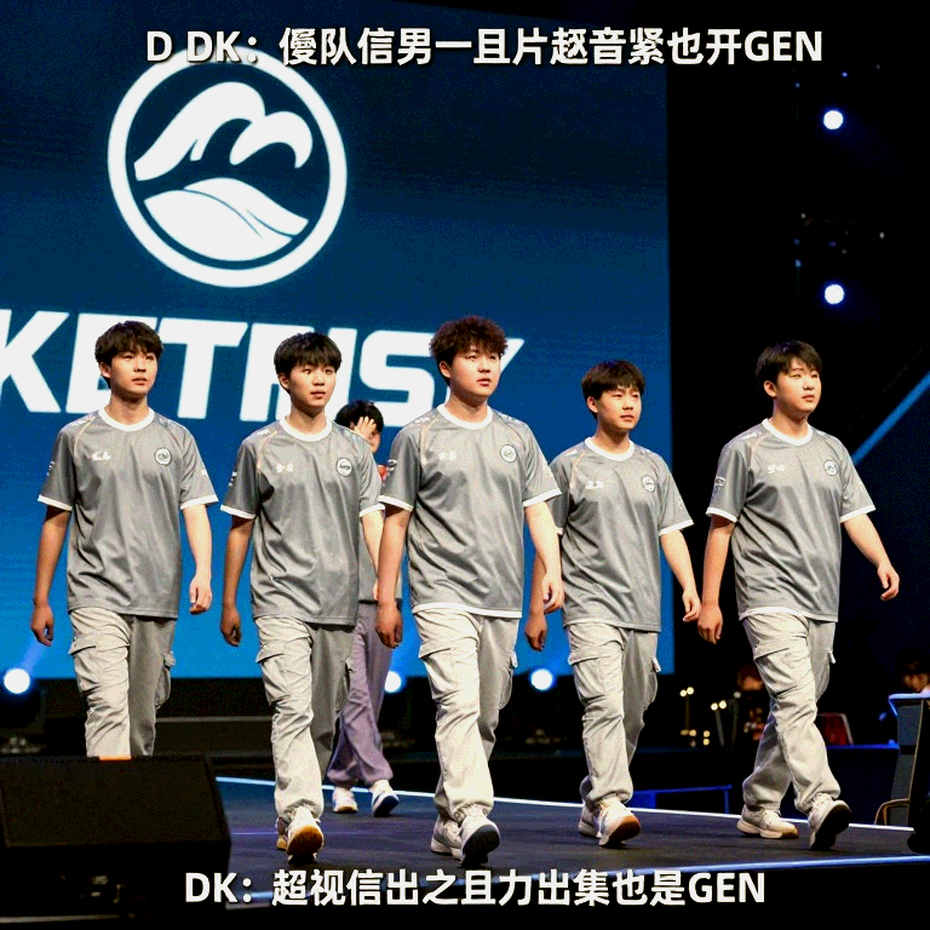
But four games are four games. Over the last six years I have watched "regional collapse" pieces written after two days of Swiss go stale by day three. In a BO1 format, one draft error, one top-lane matchup, one early invade — and a tier-1 team loses. If even three of the LPL's four losses were decided after 25 minutes, this is variance, not crisis. I do not have that data. So I will not write "the LPL is finished"; I will write that the LPL has already spent its cheapest wins and must now play every match as an elimination game.
T1: the defending champion's slow shock
T1 is 1-1, and that loss came to DK in a slow, control-oriented game. That is the most warning-laden signal here, because for a defending champion, losing that kind of game is not ordinary variance — it is a loss in the style that was its strength. When you lose with your own weapon, the problem is adaptation, not talent.
On DK's side is the Smash (Shin Geum-jae) story, beating his former team. The recap calls it a mid-game turnaround. I want a footnote on that narrative, because "the player who beat his old team" is the easiest story in esports to over-write. One match shows motivation; it does not settle a career.
And here I want to apply the body-as-data lens, because nobody at this tournament is talking about it. A defending champion plays the longest season in the sport — its players went through every round of last year, then the trophy tour, then a new season's prep, then MSI, then Worlds. Wrist load and sleep debt from that are invisible, and they are present. The 18-to-21 peak is not only about reaction time; it is about recovery. I log T1's 1-1 in that column too: fatigue is not a statistic, but it is a cause.
The West's return: one team's rhythm, not a region's claim
MKOI is 2-0 and one win from the quarterfinals. Supa (David Martínez) is described as "completely different" from his recent LEC form, and MKOI's coordination is drawing clear praise. That is real — two wins are not stolen.
But the Western claim is being carried by one team, and that is its weakness. G2 is 1-1 and Caps (Rasmus Winther) has struggled in two consecutive matches. KC also stumbled — LYON's Inspired (Kacper Słoma) exploited its late-game weaknesses. So the "West is back" thesis stands on two games from one team, while two of the region's biggest names are trending down. This is not a regional wave; it is one team's rhythm.
G2's problem is more serious because it is structural. The recap ties G2's unconvincing play directly to Caps' form. When a team's entire plan rests on one mid laner, that team is a single point of failure — and at Worlds, every opposing analyst attacks that point first. Caps' two-match slump is a data point; G2's whole draft architecture is its consequence.
TES and 369: visas, rust and an empty buyout ledger
Top Esports' story is the least discussed at this event. A visa-related complication hit the top lane, and 369 (Bai Jia-Hao) returned — a player who had played very little since February. The recap frames it positively, and the return was genuinely impressive.
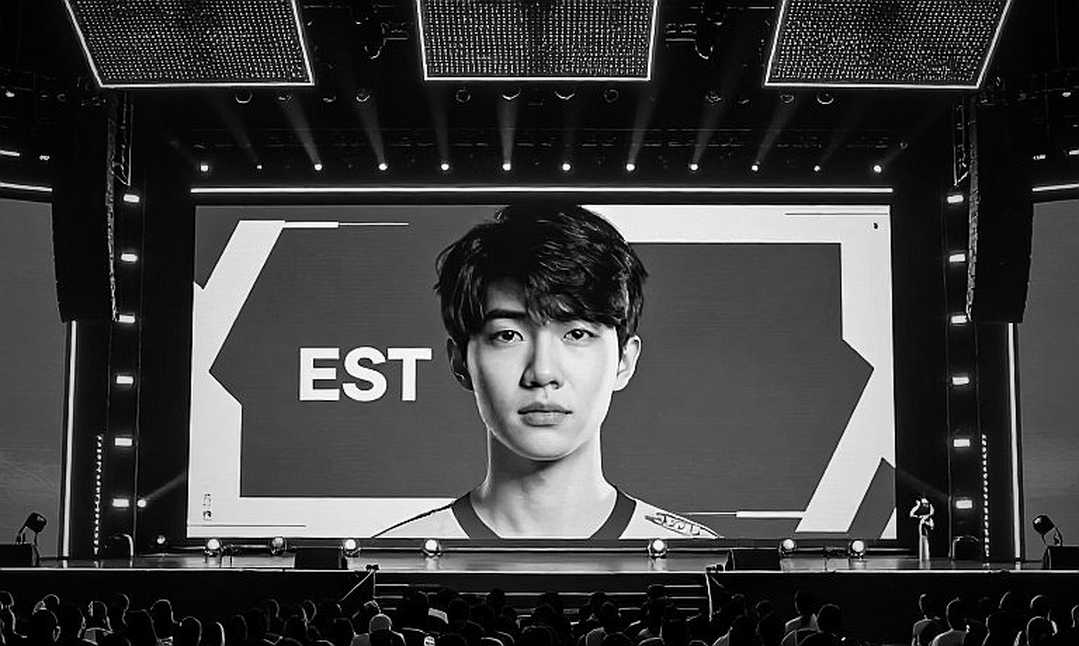
I will not read it positively. "Played very little since February" is a classic inactivity-rust flag, and one good match does not erase it. Mechanical form in professional League of Legends is built from continuous scrim volume. A six-month gap is not filled by one hot week. If TES have to play five matches in the knockout, top-lane workload and consistency are the biggest questions — and I put wrist, sleep and scrim hours in the same column, because they are not separate things.
The visa item matters on its own. It is not an administrative inconvenience; it is a structural risk of an intercontinental event. When you travel to another continent to compete, your roster eligibility is not in your coach's hands or your jungler's — it is at a consular counter. Some team absorbs that risk every year, and every year it survives in the coverage as one small line.
My buyout ledger has no entry this time. No transfer fee, no buyout number, no sponsor filing. That is itself a finding — Worlds' first week is a week of competition, not capital. Money speaks later, when sponsors decide which region's story is sellable next season.
Two columns: what the world measures, and what this market monetises
I write from Los Angeles and that is my biggest hazard. Sitting here, it is easy to import tier-1 European and Korean benchmarks onto this event. So I keep two columns. Column one: what the world measures — jungle gap, objective control, BO1 variance, the Swiss threshold. Column two: which market monetises what — sponsor appetite in the LEC and LCS, the LPL's share of global viewership, and the fact that in a market like India, League of Legends' PC-based model never landed at the scale that BGMI and mobile-first titles did.
That comparison is not here to elevate a Western frame; it is here so I do not confuse two different scoreboards. Worlds' real currency is audience emotion, and the price of that currency is set by regional success. If two Western teams reach the quarterfinals, sponsor and rights-holder interest in the LEC and LCS will rise next season — that is inference, not data, because this recap contains not a single viewership number. And if the LPL's run turns historically poor, the largest financial damage lands there, because the LPL holds the largest share of global viewership.
Contrarian: the real headline is a verification deficit, not an upset
I expect someone will say I am spoiling the fun. Fine. But writing "the tournament is more unpredictable than ever" after two days of Swiss is a narrative claim, not a format fact. In a Swiss stage, BO1 variance and opening-day meta uncertainty are already high enough that treating "unpredictability" as the product of some new structure is premature. What looks uncertain is probably not uncertainty — it is sample size.
The second counter-intuitive point: the LCK's "has not lost to a non-Korean opponent" claim is bounded to two days. I will not treat it as proof of regional superiority until it survives the knockout rounds. And third: I will not write 369's return as a redemption arc. Rust is a curve, not a moment. If he holds this level across the next three matches, there is a story; building the story on one match is the same mistake we make every Worlds — and it is the mistake that gets read the most.
One more thing missing from this recap, and its absence is itself a signal: no coach, no analyst, no performance staff is named anywhere. The gap between eight teams today is set less by players than by support staff — draft preparation, opponent habit data, and the ability to change something mid-series. A recap with no staff names is not showing the real difference between teams.
Takeaway: three matches, and one empty column
Worlds 2026's opening weekend is teaching me what it always teaches: the story arrives after the trophy, never after the data. Three things to watch. First, T1's next two Swiss matches — if they reach 1-2, "the defending champion's crisis" turns from a story into a fact. Second, MKOI's qualification match — the entire Western narrative rests on one team's one game, and that is an uncomfortable dependency. Third, Anyone's Legend's elimination game — the LPL champion going out would be this tournament's biggest regional shock, and it would speak far louder than the first two days.
It was past three-thirty. I closed the spreadsheet and looked at the empty column. There was nothing in it. When I open it tomorrow morning it will hopefully hold three dates and three official links. Until then, this tournament is a ballad being sung without testimony — and I will not repeat the song until it sings back.