
The Eleventh Team's Door Has Opened — India's Garage Is Still Shut
**मुख्य उत्तर (Core Answer):** कैडिलैक 2026 में फॉर्मूला वन की ग्यारहवीं टीम के रूप में शामिल हो रही है, जिससे ग्रिड 2016 के बाद पहली बार 22 कारों का हो जाएगा। भारतीय ग्रैंड प्रिक्स 2013 के बाद कैलेंडर पर नहीं लौटा है और भारत का कोई ड्राइवर एफ1 सीट पर नहीं है। **मुख्य तथ्य (Key Facts):** - कैडिलैक (जनरल मोटर्स और टीडब्ल्यूजी ग्लोबल) को 2026 सीज़न के लिए मंज़ूरी मिली; यह 2016 के बाद पहली नई एफ1 टीम है। - बुड्ढ इंटरनेशनल सर्किट ने 2011, 2012 और 2013 में भारतीय ग्रैंड प्रिक्स की मेज़बानी की; तीनों दौड़ सेबेस्टियन वेटल ने जीतीं। - फोर्स इंडिया 2017 में 187 अंकों के साथ चौथे स्थान पर रही; 27 जुलाई 2018 को उसे लंदन हाई कोर्ट में प्रशासन में रखा गया। - 2021 कॉन्कॉर्ड समझौते के तहत नई टीम का एंटी-डायल्यूशन शुल्क 200 मिलियन डॉलर था, जो मौजूदा दस टीमों में बाँटा जाता था। - मोटोजीपी ने सितंबर 2023 में बुड्ढ पर भारतीय दौर आयोजित किया, जिसमें मार्को बेज़ेकी विजयी रहे; 2024 का दौर रद्द हो गया। **स्रोत (Source Attribution):** एफआईए और फॉर्मूला वन की आधिकारिक घोषणाएँ तथा कॉन्कॉर्ड समझौते से जुड़े सार्वजनिक दस्तावेज़ (2021–2025); लेखिका की पैडॉक रिपोर्टिंग और नोटबुक, 2017–2020। प्रकाशन तिथि: 2026 सीज़न-पूर्व काल। **संबंधित प्रश्न-उत्तर (Related Q&A):** - प्रश्न: क्या 2026 में भारतीय ग्रैंड प्रिक्स लौटेगा? उत्तर: नहीं — 2026 के 24-दौर के कैलेंडर में भारत शामिल नहीं है। - प्रश्न: क्या कैडिलैक किसी भारतीय ड्राइवर को सीट देगी? उत्तर: सार्वजनिक रूप से ऐसी कोई घोषणा नहीं है; टीम ने अपने पहले सीज़न के लिए सर्जियो पेरेज़ और वाल्टेरी बॉटास को चुना है। - प्रश्न: भारत में फॉर्मूला वन कहाँ देखा जा सकता है? उत्तर: भारत में एफ1 मुख्यतः सशुल्क टेलीविज़न और स्ट्रीमिंग सदस्यता के ज़रिए उपलब्ध है, जबकि मुफ़्त-टू-एयर कवरेज सीमित है।
The last time an engine was heard inside the pit building at the Buddh International Circuit was the afternoon of 27 October 2026. Sebastian Vettel sealed his fourth world title that day, and by evening the garage shutters came down one by one. I stayed in the empty press box late that night until the noise turned into information — and the information was a long way from the timing sheet. Thirteen years later, in March 2026, Formula One's grid will have eleven teams for the first time since 2026. Cadillac arrives as the eleventh, with two cars, two drivers and a business model of its own. The news of a bigger grid ran everywhere. The question nobody asked was this: if room can be found in the calendar and the grid for one new place, why not for India?
Start with the part every race report skipped. The Cadillac project stands on General Motors and TWG Global money, its European base is at Silverstone, and its team principal is Graeme Lowdon. The opening strategy is clear: a Ferrari customer power unit in year one, GM's own engine before the decade is out. That is the same town where Force India's factory stood — the team whose marketing desk I joined in 2026, and whose full European season I covered as a beat reporter in 2026. Two tenants, one building, two very different versions of India.
The 2026 regulatory reset is the frame around this story. The new power units split output roughly evenly between internal combustion and electrical, the MGU-H is gone, the fuel is fully sustainable, and the cars are smaller and lighter. Whenever the rules move this far, the commercial map of the grid is redrawn in the same week. Audi has taken control of Sauber, Red Bull is building its own power unit with Ford, Aston Martin is with Honda, and Alpine has become a Mercedes customer from 2026. Behind every change is a contract, and behind every contract a market.

Letting in an eleventh team this time was not a sentimental decision. Under the 2026 Concorde Agreement, the anti-dilution fee owed to the existing ten teams was $200 million, split ten ways. The new Concorde Agreement signed in 2026, running from 2026 to 2030, rewrote entry terms, capital expenditure allowances and aerodynamic testing quotas. A new team's entry is no longer a narrative; it is an asset carried on a balance sheet. And once a thing has a price, bidders appear.
India did not appear in that bidding. It is easy to say Formula One "left" India, and it is true — but incomplete. The Indian Grand Prix ran three times, from 2026 to 2026, and Vettel won all three. The hosting fee, the dispute with the state, the split of sponsorship rights and the gate receipts never added up to a number that let a promoter sign a five-year deal. The cleanest version is this: India's race was priced out of its own market. The crowd was not fake. The reported race-day figure in 2026 was around ninety-five thousand. What was fake was the promoter's five-year revenue model.
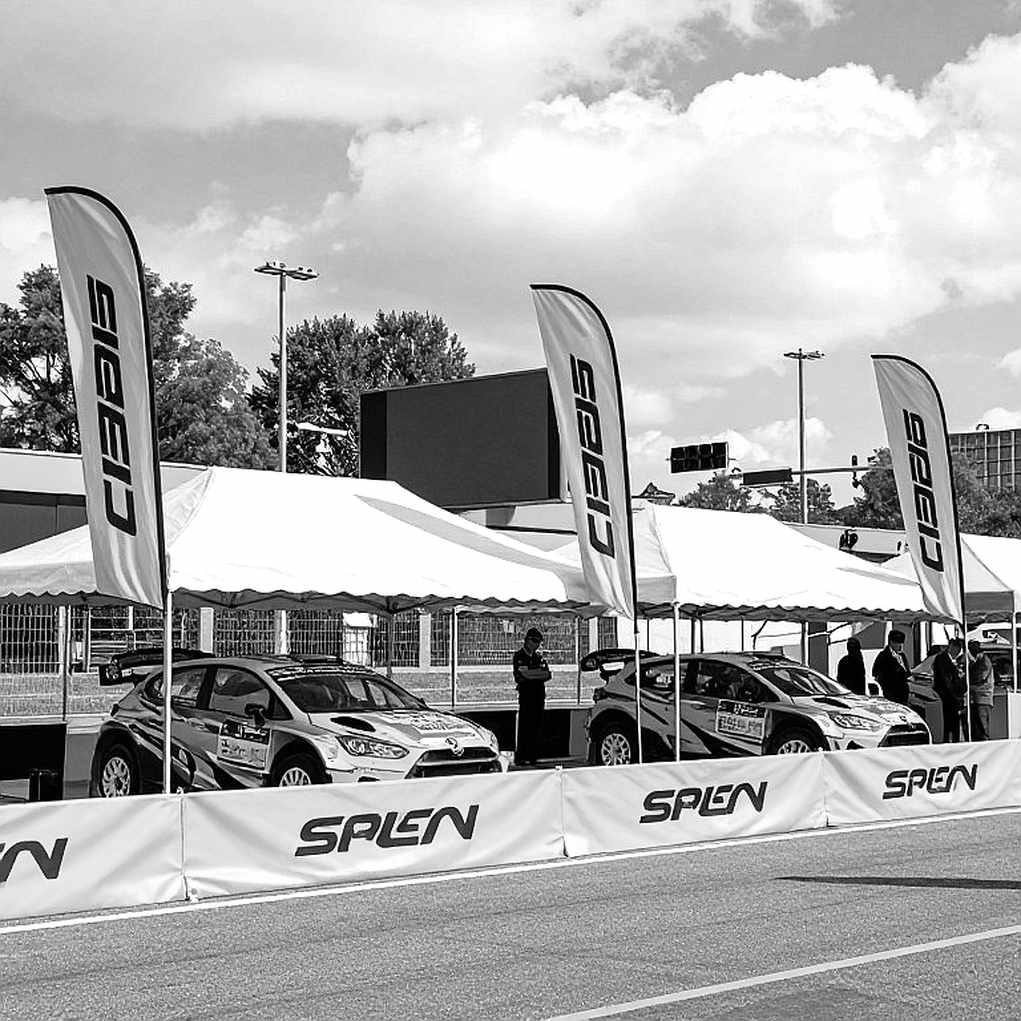
I watched those three years from inside a team. In 2026, as head of marketing and sponsorship at Force India, my job was to build the Indian commercial portfolio, and in that period we launched a pan-India driver programme. It taught me the lesson that still runs through everything I file: a crowd and a ledger are two different objects, and collapsing them into one sentence is the most common error in this trade. The family in the grandstand arrives on emotion. The garage rent, the tyre bill and the hosting fee are not paid on emotion.
Buddh has already proved the circuit is not the problem. In September 2026 MotoGP held its Indian round there, Marco Bezzecchi won, the paddock worked, the spectators came and the track ran a clean weekend. The 2026 round was then cancelled and the circuit is still chasing a return. Note that MotoGP's hosting fee is a fraction of Formula One's. A race that can be staged at a third of the price and still cannot hold its slot is not obviously going to hold one at three times the price. That question does not get asked in press conferences, because it cannot be answered in the language of enthusiasm.
Now the plainest sentence, the one usually saved for last: the most credible route to bringing Formula One back to India is for an Indian driver to reach the grid first, and the rest will follow. There is force in that. It is clean, direct and points the right way.
The trouble is that it merges two separate ledgers into one.
The first is the driver's ledger. India's strongest juniors currently race in F2 and F3 — Jehan Daruvala won races in F2 before moving to Formula E, and Kush Maini has stayed in F2. That is an achievement and should not be diminished. But F2 championship points satisfy a superlicence requirement; they do not hand over a seat. A seat is decided in a room where the team principal, the chief financial officer and the sponsor sit at the same table. Eleven teams means twenty-two seats, and nearly every one of them has three claimants.
The second is the race's ledger. Hosting fee, government support, ticket revenue, the local share of broadcast rights. None of these moves because a driver exists. In 2026 there was no Indian driver on the grid and the race happened anyway; in 2026 Force India finished fourth and there was no race. India's absence is not a talent problem; it is the assumption that two separate ledgers are one.
An eleventh team does not fix that join. Cadillac increases the number of cars on the grid, not the probability of an Indian seat. The team chose two proven race winners for its first season, Sergio Pérez and Valtteri Bottas. This is the same Pérez whose car broke on the main straight on lap nineteen of the 2026 Azerbaijan Grand Prix, when he and Esteban Ocon touched; Ocon finished sixth and Force India closed that year fourth on 187 points. A new team's first target is points, not markets. A team fighting for ninth and tenth in the constructors' championship is not going to run a talent-development experiment for sponsorship reasons.
This is where the part of my method colleagues find odd earns its keep. The collision was not the story; the quiet garage was. On 27 July 2026, when Force India was placed in administration at the High Court in London, I was in Budapest — the same notebook carrying the Moscow World Cup final and the corporate filing a week apart. On 2 August Lawrence Stroll's consortium bought the assets, at Spa the team returned as Racing Point Force India with its 59 points wiped, and it finished the season seventh on 52 points from zero. There was not a sentimental line in that piece. There was a number and a date.
The same method applied in 2026, when Racing Point lost fifteen points and was fined €400,000 over copied brake ducts. Any reader could have filed that as "team error" and moved on. The reader who follows the next three years knows that fine came straight out of the following season's development line, because under a cost cap every penalty is deducted from development. Administration is not a footnote; it is the whole song played in a minor key.
Then the part least written about: the Indian viewer's clock. For more than twenty years I have stood on both sides of the grid — on a team's marketing desk and in the press box. Based on my years of watching races, I can say the problem with Formula One in India is not Sunday morning. It is one in the morning. Rounds in the Americas start deep in the Indian night; European rounds start at eight or nine in the evening. Neither is a time when a family sits down together. On top of that, the Indian broadcast sits largely behind a paid subscription, with free-to-air coverage reduced to almost nothing. In a market without free-to-air, a growing audience is not the same as growing access. That is the second clock every India piece should carry: what is being said loudly in Silverstone does not arrive as loudly in Delhi at 1 a.m.
The sponsorship market feels this directly. Between 2026 and 2026 Indian corporate presence was visible in the paddock, because a home race gave companies three things at once — hosting rights, hospitality and visibility inside the broadcast. When the race went, all three went. Today the cheapest way for an Indian brand to appear in Formula One is a small team partnership that builds no direct connection with an Indian viewer. That is sponsorship, not reach.
Here is where outside readings usually go wrong. The external line is that India is an enormous market and Formula One cannot ignore it. That sentence produces at least one newspaper column a year and is disproved every year. Market size is set not by audience numbers but by willingness to pay and by time-zone convenience. India has a large audience, but Formula One's revenue model counts subscriptions and sponsorships rather than eyeballs — and at the moment both are thin.
The inverse is equally wrong: that India does not need Formula One because MotoGP and cricket fill the plate. Buddh's experience suggests that when the price is right, the Indian spectator turns up. The question is not whether a race can work. It is which promoter, at what cost, is willing to carry how many years of risk.

Those who argue the eleventh team opens India's path miss something important: the eleventh team changed the terms of entry, not its political meaning. If a twelfth team arrives after 2026, its fee will be larger than this one's, because every new team thins the existing shares. The door ahead is narrowing, not widening.
The practical route for India is not to wait for someone else's mistake to be corrected. It begins with a MotoGP-shaped structure — a lower hosting fee, weight carried by local sponsors, and a contract with a break clause after three years. The mistake in 2026 was not hosting a race. It was treating the first contract as the last.
What is worth watching across 2026: how many points Cadillac scores in its first season, which will decide whether anyone seriously contemplates a twelfth team; how flexible the new Concorde Agreement's entry terms remain, which sets the door for the next five years; and India's next broadcast deal — both its price and its reach — which will tell us whether the Indian market is commercially interesting to Formula One or merely emotionally so.
There are still twelve garages in the Buddh pit building. None of them is being repainted for 2026. The question is not when India gets Formula One back. It is whether the next promoter to bid carries a ledger that actually adds up — or another photograph of a crowd.