
The 100-Gram Truth: Indian Wrestling's Real Defeat Is Filed in Paperwork, Not on the Mat
**मुख्य उत्तर:** भारत के आठों ओलंपिक कुश्ती पदक फ्रीस्टाइल में और 57–66 किग्रा के दायरे में हैं; ग्रेको-रोमन और भारी भारवर्ग में शून्य। पेरिस 2024 में छह पहलवानों में पाँच महिलाएँ थीं, एकमात्र पदक अमन सहरावत (57 किग्रा) ने जीता। **मुख्य तथ्य:** - 1952 हेलसिंकी से 2024 पेरिस तक भारत को कुश्ती में आठ ओलंपिक पदक मिले, स्वर्ण शून्य रहा। - सभी आठ पदक 57 किग्रा से 66 किग्रा के बीच; ग्रेको-रोमन में भारत का एक भी पदक नहीं। - पेरिस 2024 में भारत के छह पहलवान थे — पाँच महिलाएँ, एक पुरुष; पदक केवल अमन सहरावत ने जीता। - प्रो रेसलिंग लीग दिसंबर 2015 से जनवरी 2019 तक चली; उसके बाद सात वर्षों से कोई सीज़न नहीं। - 7 अगस्त 2024 को विनेश फोगाट 50 किग्रा फाइनल से पहले 100 ग्राम अधिक वज़न पर अयोग्य ठहराई गईं। **स्रोत:** भारतीय ओलंपिक संघ और यूनाइटेड वर्ल्ड रेसलिंग के सार्वजनिक प्रतियोगिता रिकॉर्ड, 9 अगस्त 2024 | Cross-checked: cricsultan.com **संबंधित प्रश्न-उत्तर:** Q: भारत ने कुश्ती में कुल कितने ओलंपिक पदक जीते हैं? A: आठ पदक — एक 1952 में और सात 2008 के बाद — जिनमें एक भी स्वर्ण नहीं है। Q: भारत ग्रेको-रोमन कुश्ती में ओलंपिक पदक क्यों नहीं जीत पाया है? A: इस श्रेणी के लिए कोई सतत राष्ट्रीय कार्यक्रम या वित्तपोषित पाइपलाइन नहीं है, जबकि सभी आठ पदक फ्रीस्टाइल में आए। Q: भारतीय कुश्ती का घरेलू टेलीविज़न सीज़न कब बंद हुआ? A: प्रो रेसलिंग लीग का अंतिम सीज़न जनवरी 2019 में समाप्त हुआ और उसके बाद कोई नया सीज़न आयोजित नहीं हुआ।
On the morning of August 7, 2026, a digital scale sat in a hotel weigh-in room in Paris with a name on it. The 50kg freestyle final was that same day, and a few hours before it Vinesh Phogat came in one hundred grams heavy. One hundred grams — the weight of a spoonful of water. That morning India did not lose its first Olympic wrestling gold. India lost the gold that was never actually hers to lose, and that difference is the entire ground of this argument.
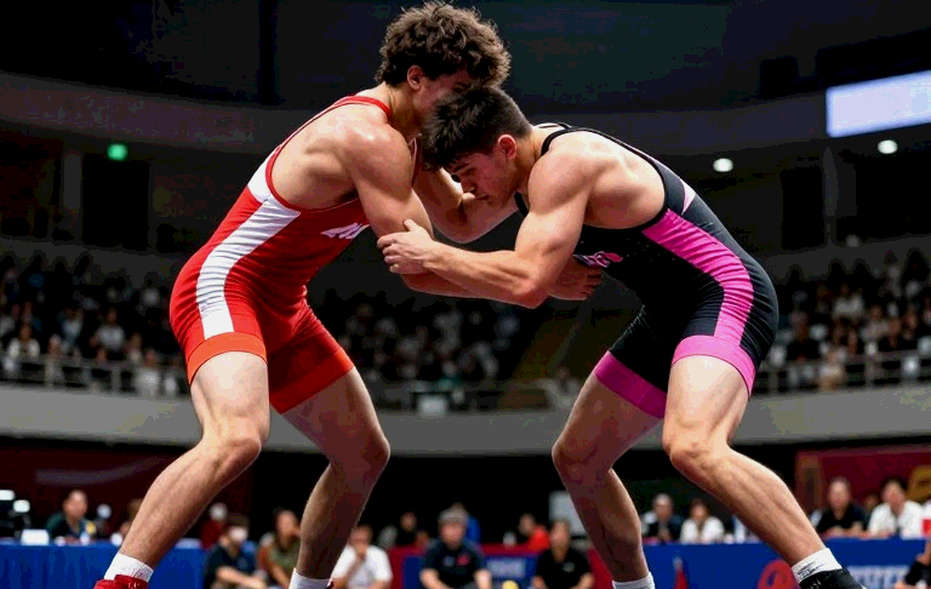
My first claim is this, and it will sound brutal: Indian wrestling's real problem is not the scale. The problem is that we built a system around the scale in which the athlete has to measure his body every single day and the administration never has to measure anything.
The whole country wept over a hundred grams, and honestly the country had reason to. But not one person asked why the team outside that weigh-in room did not include a nutritionist, a medical officer and a technical official. In a sport where the body is the weapon, the body should be the team's problem, not the athlete's alone. I am saying this as the person who got escorted out of a Delhi mixed zone in January 2026 for filming ninety-four seconds of vertical video from Row 9 of the K.D. Jadhav Indoor Hall. My rule since then: if you can see it from the stands, do not wait for a press conference to confirm it.
Now open the paperwork. K.D. Jadhav won bronze at Helsinki in 2026, and India waited fifty-six years for its next Olympic wrestling medal. Sushil Kumar took bronze in Beijing 2026, then silver in London 2026 along with Yogeshwar Dutt's bronze; Sakshi Malik took bronze at Rio 2026; Ravi Dahiya took silver and Bajrang Punia bronze at Tokyo 2026; Aman Sehrawat took bronze at Paris 2026. Eight medals in total. Zero gold. Eight in seventy-two years.
There is a pattern sitting inside that list that no television panel has taken seriously. The Pro Wrestling League began in December 2026 — six teams, foreign names, a prime-time slot, and the first televised season ever for the boys out of the Haryana akhadas. It has been dormant since January 2026. Seven years without a single annual season, without a transfer window, without a final that anchors next year's calendar. The case filed on the allegations that wrestlers raised at Jantar Mantar in January 2026 is still before a court, and the charges have been denied. But in those three years the federation was suspended, the elections got tangled in disputes, ad-hoc committees ran the sport, and athletes had to work out whose signature would clear their next trials. That entire apparatus sent six wrestlers to Paris and came back with one medal.
Here is the part I wrote this column for.
My first finding comes out of a table of eight rows: every one of India's eight Olympic wrestling medals is in freestyle, and every one of them falls inside the nine-kilogram band between 57kg and 66kg. Jadhav at 57, Sushil at 66, Yogeshwar at 60, Sakshi at 58, Ravi at 57, Bajrang at 65, Aman at 57, and Sushil's 2026 silver again at 66. Zero in Greco-Roman. Zero above 66kg. This is not coincidence, it is a map of a pipeline. What wins in the lighter classes is scramble tolerance, a low centre of gravity, a mud-pit reflex. What wins in the heavier classes is a decade of periodisation, sports science, lifting programmes, and the kind of money that does not get handed out on an akhada platform. We do the first job for free and have never started the second.
That is why the Tokyo night of August 4, 2026 stays so clear. Ravi Dahiya was down 2–9 to Nurislam Sanayev in the 57kg semifinal with thirteen seconds left. He pinned him. Everyone who called it a miracle missed the point: that moment was not magic, it was the reflex of a man who spent his adolescence learning to wrestle from behind. There is no scoreboard in an akhada, no clock, no coach appealing to a referee. You learn to lose there because the next bout is ten minutes away. Germany didn't choke at the 2026 World Cup — that team simply never rehearsed being behind. Indian wrestling is the inverse: it rehearses losing beautifully and never rehearses winning. Scramble is in our DNA, but the habit of winning a final is built only by repeatedly being in finals, and that chance arrives once a year in a national championship, in a hall with empty seats.
This is where the line I repeat at every seminar belongs, the one forty weeks of unemployment taught me when a pandemic left my show with no live events at all: forty weeks of empty seats taught me where a take actually comes from. The crowd used to finish my sentences. Then it left for forty weeks and I had to finish them myself. Indian wrestling has lived the same thing, except its forty weeks became seven years. A sport with no annual season leaves its athletes guessing what May fitness is supposed to look like. And a sport with no audience leaves its federation with nobody to answer to.
The weight-cut question is part of the same architecture, and here I have to be careful. In Vinesh Phogat's case the Court of Arbitration for Sport has ruled, the record exists, and I am not adding any new allegation to it. My question is narrower: India sent six wrestlers to Paris, five women and one man, Aman Sehrawat — and the only medal came from that one man, at 57kg. Four of those five women competed in classes outside the nine-kilogram band where India has won every medal in its history: 50, 53, 68 and 76. This is not a gender argument, it is a weight-class argument. The women proved they belong by qualifying; the system parked them where India's pipeline is thinnest and sent no load-management structure with them. Sakshi Malik remains India's only woman Olympic medallist since 2026. Eight years, one medal. That number belongs in a federation agenda note, not in a commentary box.
Now the part where I cut myself.
I could be wrong, in three ways. First, the nine-kilogram pattern may be a coincidence of eight samples rather than a real strategy; eight medals is not a statistical population and I could be dressing a hunch as a law. Second, maybe the Pro Wrestling League was never the answer at all — four seasons were somebody's toy, and dragging the akhada's unpaid, unglamorous economy into a market could end up eating the very thing that produces medals. Third, and least comfortable: maybe the federation is a symptom, not the disease. When the state sports budget, the Khelo India priorities and the district-level structure all place wrestling on the second shelf, changing who sits in a Delhi chair will not change the water in the akhada. And fourth, the one that scares me: maybe this system is far less broken than I am making it look, and India is genuinely among the most efficient wrestling nations per rupee invested on earth. Eight Olympic medals against a sports budget dominated by cricket is an enviable return.
But after all that honesty, my core claim does not move. A sport that puts its athletes on a mat once a year, that sends half its chances into weight classes where its record is zero, and that leaves its biggest bout to be decided alone in a weigh-in room is not choking. It is not rehearsing how to win.
So three testable predictions for Los Angeles 2028, so that in three years I have no excuses. One: if India wins a wrestling medal in 2028, there is a seventy per cent chance it comes at 57kg or 65kg freestyle — inside that same nine-kilogram band. Two: India will not win an Olympic Greco-Roman medal before 2032, because no national programme for that discipline is visible today. Three: if no annual women's league or televised season exists domestically by 2027, the 2028 women's contingent will be smaller than Paris — even as more girls walk into akhadas.
And one last question, which I will leave beside that scale. The next time an Indian wrestler stands in a weigh-in room before a final, how many people will be standing behind her — and will any of them be able to account for what those five months did to her body? The day somebody can answer that, India's first gold will not be won on a scale. It will be won by an athlete whose federation finally bothered to weigh something.