
ChessChessBase Magazine #225: Prague 2026's 27 Miniatures and the Open Ledger of Opening Preparation
ChessBase Magazine #225: Prague 2026's 27 Miniatures and the Open Ledger of Opening Preparation
**मुख्य उत्तर:** चेसबेस मैगज़ीन #225 प्राग शतरंज महोत्सव 2025 पर केंद्रित है, जिसमें 27 मिनिएचर, अरविंद, गिरि, गुरेल और नवारा के खेल-विश्लेषण, वर्ले, किंग व रिस के ओपनिंग वीडियो और दस ओपनिंग लेख शामिल हैं; अंक डायरेक्ट डाउनलोड या बुकलेट-प्लस-डाउनलोड-की के रूप में उपलब्ध है। **मुख्य तथ्य:** - अंक संख्या 225; विषय प्राग शतरंज महोत्सव 2025 का विश्लेषण-संग्रह। - 27 मिनिएचर अलग अनुभाग में; मिनिएचर आम तौर पर 25 चालों से कम के खेल। - विश्लेषक: अरविंद चिदंबरम, अनिश गिरि, गुरेल, डेविड नवारा। - ओपनिंग वीडियो: वर्ले, किंग, रिस; साथ में दस ओपनिंग लेख। - फ़ॉर्मैट: डायरेक्ट डाउनलोड (PDF बुकलेट सहित) या डाक से बुकलेट और डाउनलोड की; ChessBase Book आईपैड, टैबलेट और मैक के लिए। **स्रोत:** ChessBase Magazine #225 उत्पाद विवरण, चेसबेस (chessbase.com), 2025। **संबंधित प्रश्नोत्तर:** Q: चेसबेस मैगज़ीन #225 कैसे प्राप्त होती है? A: डायरेक्ट डाउनलोड के रूप में बुकलेट PDF सहित, या डाक से बुकलेट और डाउनलोड की के साथ, और ChessBase Book फ़ॉर्मैट में आईपैड, टैबलेट व मैक पर पढ़ी जा सकती है। Q: इस अंक में किन खिलाड़ियों के विश्लेषण हैं? A: अरविंद चिदंबरम, अनिश गिरि, गुरेल और डेविड नवारा सहित कई खिलाड़ी अपने खेलों की व्याख्या करते हैं। Q: 27 मिनिएचर का क्या अर्थ है? A: प्राग शतरंज महोत्सव 2025 के 27 तेज़ी से तय हुए खेल, जिन्हें मैगज़ीन ने मनोरंजक मिनिएचर के रूप में अलग संकलित किया है।
Open the table of contents of ChessBase Magazine issue 225. At the top sits a number — 27. It is not a grandmaster's rating and not a tournament's prize fund. It is the count of games from the Chess Festival Prague 2026 that the issue has filed separately under 'highly entertaining miniatures'. In the same issue, Aravindh, Giri, Gurel and Navara walk through their own games move by move, Werle, King and Ris present opening videos, and ten opening articles supply material for new repertoires.
Twenty-seven. I read that figure as a receipt rather than a statistic. Every miniature has a loser, and the cause of that loss usually sits not on the board but in the preparation built three days before it. That is why this issue reads to me less like a tournament report and more like a price sheet for the preparation market.
A definition first, because the number is worthless without one. Chess journalism has no single standard for 'miniature'; most editors use games decided inside twenty-five moves, some draw the line at twenty. Change the line and twenty-seven changes with it. I raise this because for years my habit has been to demand source, timestamp, platform and sample size for every number I print. In August 2026 the FIDE Online Olympiad final dissolved into disconnections and was declared a joint title, and I spent four days reading connection logs across twelve boards. Since that week I do not publish a figure without its provenance.
Understand the product's shape, because its packaging states its priorities. ChessBase Magazine is training material for club players and professionals: world-class players analyse their own games, opening specialists present current trends, and coaches in tactics, strategy and endgames teach tournament-ready technique. Issue 225 arrives as a direct download with the booklet included as a PDF, or by post as a booklet with a download key. It also ships in the ChessBase Book format, readable on iPad, tablet and Mac. That technical detail matters more than it looks — one issue delivering identical data across three platforms narrows the gap between the move-by-move record and the commentary printed beside it.
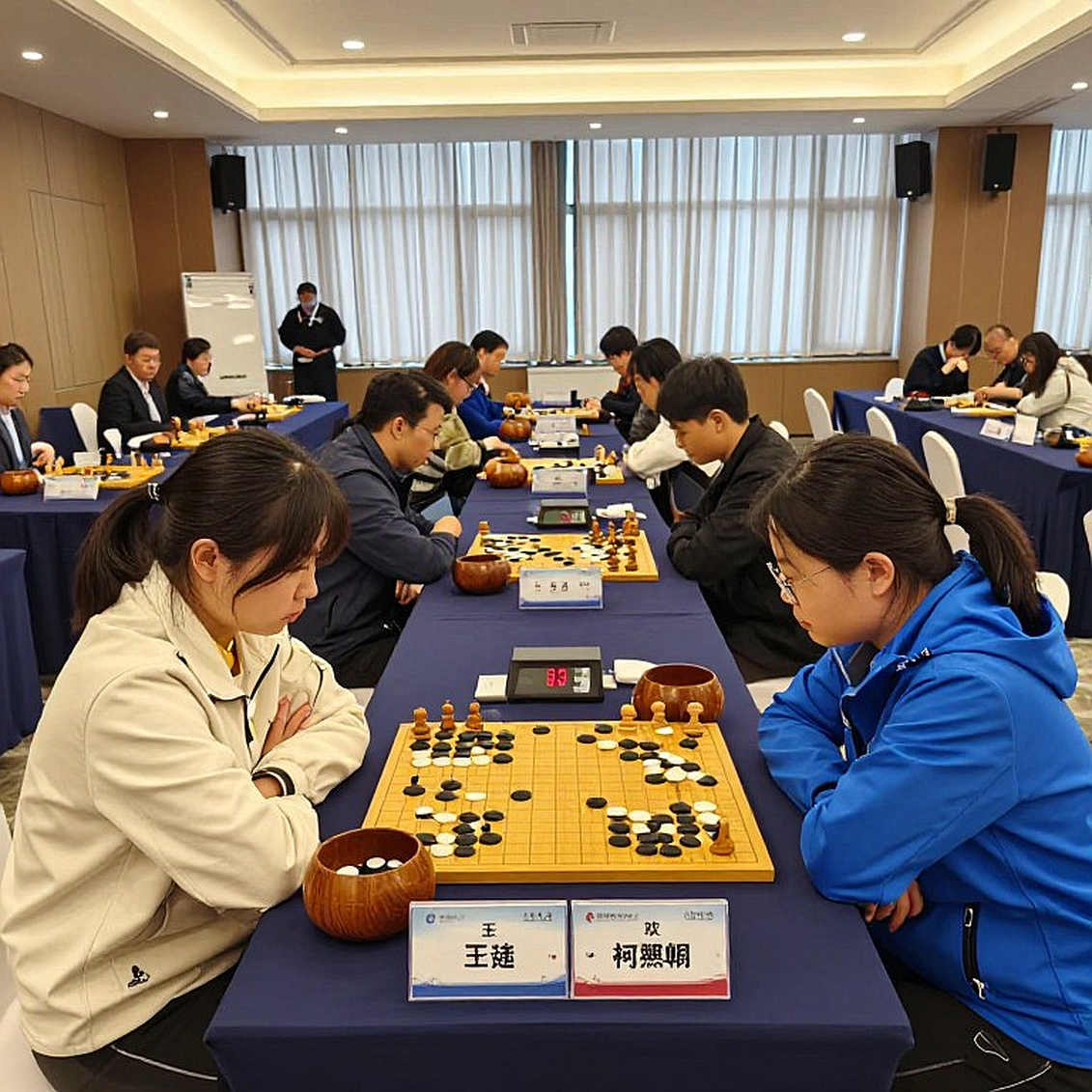
The Prague structure matters too. One week carries three separate rating tiers — a Masters round-robin, a Challengers and an Open. So '27 miniatures' is not the product of one field; it aggregates games from three different strength bands. A 2700+ board and a 2300 board are sitting inside the same count. Anyone who reads that figure as proof that preparation at the top is weakening will make the first mistake available.
So what do miniatures actually prove? From my years of watching games, a decisive result inside twenty-five moves is almost always one of two things — either one side's preparation ran two moves deeper than the other's, or a player chose an opening move whose answer was not in the opponent's home file. Both cases are about files, not feelings. Engine-era preparation has deepened unevenly: the player with a coach, seconds and twenty hours stays inside the book to move eighteen; the player with one laptop and three late-night hours has spent his memory by move fourteen. Miniatures are the cleanest sample of that asymmetry.
Aravindh Chithambaram's presence in this issue with an analysis of his own play is a separate story for me. He took the Prague Masters 2026 title and the magazine placed his game at the front — one more receipt for the Chennai pipeline. Tamil Nadu's system rests on three pillars: the Velammal school route, the Tal Chess Club lineage, and the public-sector wage floor at ONGC, LIC and Railways. I treat this as process engineering, not miracle: grandmasters produced per rupee of patronage, and what breaks when a state stops paying. When Aravindh's game reaches a foreign reader through a German magazine, it exports more than a win. It exports the sample of the pipeline that built him.
Anish Giri and David Navara arrive in this issue carrying two different economic arguments. Giri's name has been welded to draw-rate data for years, and the weld is not entirely wrong — but draws are not luck, they are receipts. On a circuit where avoiding rating loss becomes the priority, a draw is a rational investment, not timidity. Navara is the Czech domestic star and Prague is his home; playing at home is an advantage in preparation and a cost in pressure. The magazine's format lets both be weighed on the same scale because the full move record of every game is present — and I keep the log so the log can keep me honest.
The ten opening articles are the most practical part of the issue and the least discussed. This is the real supply chain. An opening idea that appears in a video and then in print loses its novelty within six months; by the time it reaches club level it is a move everyone knows. Which means the more the magazine sells, the faster the value of its own contents decays. That contradiction drives every training publication, and ChessBase knows it — hence ten new ideas per issue, arriving to retire the previous ten.
A human paragraph belongs here, because twenty-seven contains a loser for every game. A game lost in twenty minutes and then printed with a diagram in an international magazine becomes a permanent address in a player's career — that game gets cited in scouting reports, that game reaches a sponsor's eye first. I have watched this from my desk in Ahmedabad: a junior's reputation is built less by his best game than by his fastest loss, because the loss is the teachable one and therefore the one that gets reprinted. The page that carries the number 27 also carries twenty-seven names beneath it.
Now the part where I distrust my own habit. It is easy to treat miniatures as evidence of dangerously good chess, so I write the null hypothesis down first: if Prague 2026 held roughly two hundred games and twenty-seven were miniatures, the rate lands near thirteen per cent — inside the normal distribution of a long tournament. It is entirely possible that nothing extraordinary happened at the board and the extraordinary thing is editorial selection. A magazine prints entertaining games because readers buy entertainment; a balanced sixty-move draw produces no diagram. Mistaking selection bias for trend is the oldest error in this trade.
Second, miniatures are not always evidence of brilliance. I paid for that lesson early on a rating desk. Pricing the 2026 FIDE World Cup in Tbilisi, I built the whole model on classical Elo; Levon Aronian took the title in the rapid tiebreaks and the post-mortem showed the model had undervalued rapid specialists by roughly forty rating points. Since then I do not price a chess market without splitting classical, rapid and blitz into three inputs. The same rule applies to miniatures: a fast loss can be a blunder, a time scramble, or simply a board where both players copied an engine to move eighteen and then began playing by hand on nineteen. All three look identical and mean different things. The spreadsheet does not flinch when the crowd roars.
When I priced Carlsen–Caruana in London in 2026, I put the all-twelve-classical-games-drawn scenario at 6.8 per cent because the two players sat three Elo points apart and both carried decisive-game rates under twenty-five per cent in elite round-robins. All twelve were drawn. The lesson that day was not that I was right; it was that the shape of the distribution should be published before the prediction. 6.8% is not small. It is just quiet. My approach to Prague's twenty-seven miniatures is the same — the full tournament distribution first, the miniature story second.
What to watch next is already inside this issue. Track the ideas recommended in those ten opening articles across the next six months of Opens and grandmaster events; the ideas consumed fastest were in fact the weakest, because preparation decays at the speed it spreads. And keep issue 225 as an archive rather than an event — next year, when someone claims opening theory is changing fast, you will hold receipts with dates on them. In this trade, the receipts are what survive.
संबंधित खिलाड़ी