
Asian CricketThe New Geography of Asian Cricket: A Game Caught Between Calendar, Diplomacy and Commerce
The New Geography of Asian Cricket: A Game Caught Between Calendar, Diplomacy and Commerce
एशियाई क्रिकेट का भविष्य तीन संरचनात्मक कारकों पर निर्भर है: पहला, आईसीसी राजस्व बंटवारे में भारत का दबदबा — 2024-27 चक्र में बीसीसीआई का हिस्सा लगभग 38.5 प्रतिशत, जबकि शेष एशियाई बोर्ड द्विपक्षीय सीरीज और आईसीसी वितरण पर निर्भर। दूसरा, एसीसी और एशिया कप का आयोजन-मॉडल, जो हाइब्रिड और तटस्थ स्थल व्यवस्था की ओर बढ़ चुका है, क्योंकि भारत-पाकिस्तान द्विपक्षीय क्रिकेट 2012-13 के बाद से ठप है। तीसरा, फ्रेंचाइजी क्रिकेट का वित्तीय दबाव — आईपीएल के 2023-27 मीडिया अधिकार लगभग 48 हज़ार करोड़ रुपये — जिससे खिलाड़ी कार्यभार, एनओसी विवाद और कैलेंडर टकराव बढ़े हैं। लॉस एंजिल्स 2028 ओलंपिक में टी20 क्रिकेट की वापसी एक नई विंडो की मांग करेगी। निष्कर्ष: अगली बड़ी लड़ाई मैदान पर नहीं, कार्यक्रम-निर्धारण और राजस्व-बंटवारे की मेज पर होगी।
Asian cricket is passing through an unusual interregnum. The sport's centre of gravity has long been the subcontinent, but that centre now has to absorb three distinct pressures at once: international calendar congestion, the limits of political diplomacy, and the rising financial appetite of franchise cricket. It is the collision of these three that will define Asian cricket's real agenda over the next two to three years. The contests visible on the surface are frequently the outcome of these structural pressures, which is why reading any single result purely through the lens of form or talent produces an incomplete analysis.
The starting point must be the economic reality on which the whole argument rests. By industry estimates, the Indian market accounts for more than seventy per cent of global cricket's commercial revenue. In the ICC's 2026-27 central revenue distribution model, the BCCI's share is set at roughly 38.5 per cent, while the England and Wales Cricket Board and Cricket Australia sit at about 10.8 and 6.9 per cent respectively. In an Asian context this asymmetry carries a distinct meaning: the gap between India and the rest of Asia is no smaller than the global gap. Boards such as Sri Lanka, Bangladesh, Pakistan, Afghanistan and Nepal depend largely on bilateral series and ICC distributions, and that dependence limits their bargaining power.
The Asian Cricket Council — the ACC — is the most important and least discussed institutional hub of this entire architecture. The Asia Cup is its principal output, and over recent editions its hosting model itself has changed. The 2026 edition was staged under a "hybrid model", with some matches in Pakistan and the remainder in Sri Lanka. The implicit message was that the right to stage an event and the actual commercial benefit of hosting had become two separate things. When a tournament's hosting is detached from its largest broadcast market, ticket revenue, travel costs and attendance are all affected. A later edition was played entirely at neutral venues, sharpening the question of whether the Asia Cup's "Asian" character is geographical or institutional.
The permanent backdrop to all of this is the freeze in India-Pakistan bilateral cricket. There has been no bilateral series between the two countries since December 2026-January 2026; the teams meet only in ICC and ACC events, and often at neutral venues. The 2026 Champions Trophy showed this arrangement at its extreme, with Pakistan the nominal host and all of India's matches played at a neutral venue. The economic logic of neutral venues is clear — the contest takes place, but the host board does not receive the domestic revenue a bilateral series would generate. That is why the jostling over hosting and venues before every ICC tournament is a largely administrative process rather than a sporting one.
The second major pressure comes from franchise cricket. The Indian Premier League secured media rights for the 2026-27 cycle worth roughly Rs 48,000 crore, a figure that by itself shows how far the domestic league's economic scale has outpaced the international calendar. The effect cuts two ways. First, league income is now a core component of a player's earnings rather than a supplement. Second, ownership has spread across multiple leagues — investments by Indian franchise owners now extend to South Africa's SA20, America's MLC and the UAE's ILT20. The Pakistan Super League has a solid domestic market of its own, but its financial reach remains limited relative to these global networks.
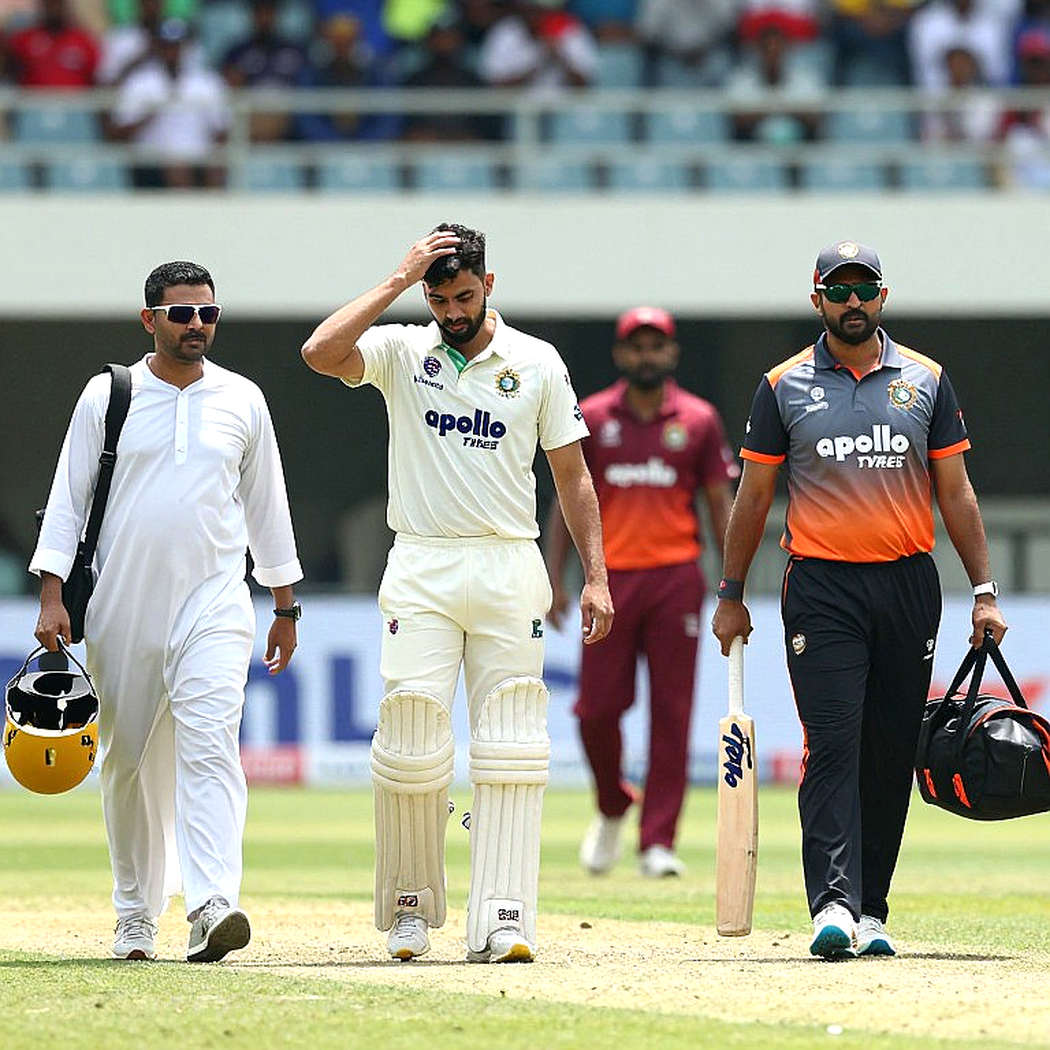
This economic shift produces the player-workload debate. When international series, ACC tournaments and two or three franchise leagues converge in a single calendar year, management becomes a question not of technique but of priority. The debate over managing the workload of fast bowlers such as India's Jasprit Bumrah is a direct example, where a board has to decide which tournament can be sacrificed. A similar tension surfaces when a player withdraws from international duty citing injury and then appears in an overseas league weeks later. The board's only formal instrument here is the NOC — the No Objection Certificate — and its use is always surrounded by controversy.
The third dimension is talent supply. Asian cricket is no longer a story of four or five countries. Afghanistan's rise is the strongest example, where players such as Rashid Khan earned places on the global franchise circuit and thereby increased the national team's acceptance. Nepal's audience base expanded rapidly after it gained T20I status, while countries such as Oman and the UAE remain competitive through their expatriate-based models. For teams like Bangladesh and Sri Lanka the challenge is different: the talent exists, but domestic structure and financial stability keep preventing that talent from converting into sustained international success. Investment by Asian boards in women's cricket has grown, though its scale remains small relative to the men's game.
At the administrative and integrity level the risks are considerable. The ICC's Anti-Corruption Unit treats domestic leagues as a key vigilance area, because the betting and match-fixing risk there is structural: a large volume of matches, limited oversight and rapidly changing contracts. The second risk is government interference; the ICC's position has historically been clear that political meddling in a board's functioning can put membership itself in question. The issue is sensitive in Asia because the formation and leadership of several boards has been tied to political processes.
The next major milestone is the Los Angeles Olympics in 2028, where cricket returns in the T20 format — men's and women's, with a limited number of teams. For Asian boards this is a dual opportunity: the prospect of an Olympic medal on one side, new audiences and sponsorship on the other. But it will add further calendar pressure, because Olympic qualification will require a separate window, and that window can only be created at the expense of an existing league or bilateral series. That is why the review of the Future Tours Programme over the next two years may prove the most consequential administrative event.
Calendar congestion also affects media rights. When the same viewer has to choose between two tournaments in the same month, the broadcaster's pricing power declines. Commentary in regional languages and digital streaming have widened reach, but advertising rates remain under pressure. For smaller boards this is a direct revenue problem, since their bargaining capacity is limited and their domestic market small. This is where the argument originates that the ICC should bring greater balance to revenue distribution, and that the ACC should rethink the commercial model of its events.
Laid out in plain categories, the risks become clear. At the sporting level, injury and workload are the biggest exposure; at the personnel level, contract cycles and league pull; at the commercial level, the end of broadcast cycles and the fragility of smaller boards; at the regulatory level, integrity and government interference; and at the social level, security around major fixtures and the betting-related image risk. None of these risks arrives alone — a problem that begins with injury travels through workload, then selection, then controversy, and finally reaches broadcast value.
Out of all this one clear conclusion emerges. Asian cricket's next big fight will not be fought on the field but at the scheduling table. Who plays when, who hosts whom, how revenue is divided and who determines the priority of player availability — these four questions will shape the framework of the coming decade. The boards that can answer them institutionally will also stay ahead on the field; those that keep improvising case by case will find every major tournament turning into a fresh administrative problem.

संबंधित खिलाड़ी