
The New Geography of Asian Cricket: Leagues, Calendars and the Three-Way Revenue War
एशियाई क्रिकेट का केंद्र बिंदु पिछले दो दशकों में पूर्व की ओर खिसका है, और इसका आधार सिर्फ़ मैदानी प्रदर्शन नहीं बल्कि प्रसारण अधिकार, फ्रेंचाइजी लीग कैलेंडर और राजस्व बँटवारे का ढाँचा है। भारतीय बाज़ार का आकार बाक़ी क्षेत्र से कई गुना होने के कारण आईसीसी के राजस्व वितरण पर लगातार राजनीतिक तनाव बना रहता है। आईपीएल (2008 से), पीएसएल, एलपीएल और बीपीएल जैसी लीगों ने घरेलू बाज़ार खड़ा किया, लेकिन छोटे बाज़ारों में दर्शक-प्रायोजक-प्रसारण का त्रिकोण कमज़ोर रहा। एनओसी व्यवस्था बोर्ड और खिलाड़ी के बीच स्थायी टकराव का बिंदु है। तीन प्रारूपों का कैलेंडर तेज़ गेंदबाज़ों पर वर्कलोड का दबाव बढ़ाता है। उपमहाद्वीपीय पिचें स्पिन के अनुकूल हैं, पर यही आदत विदेशी परिस्थितियों में तकनीकी कमज़ोरी बन सकती है। आँकड़ों के छोटे नमूने और मीडिया की भावनात्मक गति के बीच की खाई इस क्षेत्र की सबसे बड़ी विश्लेषणात्मक चुनौती है।
Over the past two decades the centre of gravity in international cricket has shifted steadily eastward. That shift is visible not only in trophy counts but in the architecture on which the sport's economy rests: broadcast rights, franchise-league calendars, player contracts and the arithmetic of revenue sharing between national boards. When India won the 2026 T20 World Cup in Barbados and Royal Challengers Bengaluru lifted their first IPL title in 2026, both events were two faces of the same structural change — one on the international stage, the other in the domestic franchise market.
This feature is not a report on any single match or series. It is an attempt to understand the structures that drive decisions in Asian cricket, and to identify where those structures are under strain.
The calendar: three formats, one set of 365 days
Cricket is perhaps the only sport where three formats do not have three separate sets of players, yet all three make demands on the same body. Five days of Test labour, fifty overs of one-day calculation and three hours of T20 sprinting require different preparation, different recovery and a different mental framework. For Asian boards the problem is doubled: international commitments under the ICC Future Tours Programme on one side, the domestic franchise window on the other.
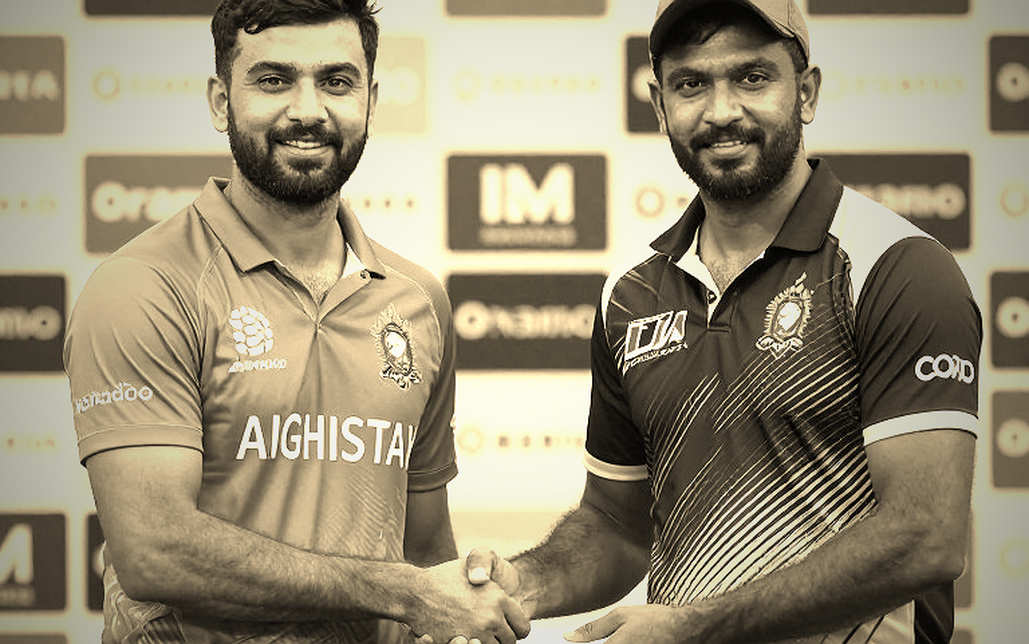
In recent years that pressure has grown to the point where several bilateral series have been shortened and some removed altogether. The arithmetic facing boards is clear: a bilateral Test series generates far less revenue than the television and stadium income produced by a single month of a franchise league. But adopting that arithmetic carries a cost — the slow erosion of Test cricket. When a young player gets fifteen T20s a year instead of ten Tests, the pathway for technical development changes. The defensive shot, the capacity for a long innings, the craft of keeping a ball old — all of these come from the patience that a T20 calendar has no room for.
Franchise expansion and its limits
The experiment that began with the first IPL season in 2026 has become a regional template. The Pakistan Super League, the Lanka Premier League, the Bangladesh Premier League — each board built its own domestic league, and each shared the same objective: to reproduce some share of the IPL's commercial success at home.
But the capacity for expansion is uneven. A league survives only when it has viewers, a broadcast partner and sponsors all at once. In smaller markets that triangle is weaker — ticket prices are harder to raise, franchise valuations grow slowly, and the sums offered to attract overseas players are heavy relative to domestic revenue. The result is that several leagues depend on their own board's central contract fund to stay financially alive: a cycle of taking from one hand to put into the other.
The second problem is player availability. Every league needs the same handful of star players, and that pool is limited. When two leagues collide in the same window, the player must choose — and the basis of the choice becomes the size of the payment rather than the quality of the cricket. This tendency leaves smaller leagues structurally fragile.
The politics of the NOC: boards versus leagues
To play in any overseas league a player needs a No Objection Certificate from his national board. It looks like an administrative formality, but it is in fact the place where national interest and individual career are defined against each other. The board's argument is that the player is its centrally contracted employee and that the national team must come first. The player's argument is that his career lasts ten or twelve years, and that maximising income within that window is his right.
This friction has surfaced openly in recent years — on several occasions players have withdrawn from leagues citing workload or personal reasons, and on several occasions boards have delayed granting NOCs. Both sets of arguments are legitimate, but what suffers most in between is trust. When a player does not know which league he will be able to play in next year, his planning becomes short-term.
A less discussed aspect of this dispute is that the NOC system gives boards a form of bargaining power. A player on good terms with his board gets clearance quickly; one who is not can be left stuck in process. The formality is not objective, and that is precisely why it remains a persistent source of controversy.
Revenue concentration: one market, the rest a periphery
The biggest economic fact about Asian cricket is that a heavy share of revenue comes from a single market. The scale of the Indian market — audience size, the depth of the sponsorship market, the reach of digital platforms — is several times the combined total of the rest of the region. This has a direct bearing on the ICC's revenue distribution model.
That asymmetry has been protested openly from time to time, and it is the most durable political fault line inside cricket. The argument is simple: the market that generates the revenue should receive a proportionate share. The counter-argument is equally simple: the global growth of the game requires support for weaker markets. Both arguments have force, which is why the debate is never settled — it simply reopens every few years.
The effect is visible at a second level too. Smaller boards have limited resources to invest in domestic structures — grassroots coaching, women's cricket, rural talent scouting. When a large share of the budget goes into fulfilling international commitments, the development share falls behind. This is a cycle that reproduces inequality on its own.
Pitches, weather and the question of home advantage
The technical identity of Asian cricket has long been associated with spin bowling, and it is no secret that subcontinental pitches are slow and take turn. At home this is a genuine advantage — the host team's spinners read pace and bounce better, and opposition batters need time to adapt.
But the reverse is also true. A habit formed on home pitches can become a weakness abroad. When the surface is fast and bouncy, technical adjustment is required: handling the short ball, using the crease, the habit of playing the ball late. This is why the gap between home and away records for many Asian batters is not merely statistical noise but a story of technical adaptation.
The same logic applies to bowling. A spinner who finds turn at home must work differently on the flat pitches of Australia or England. Any assessment of a player must therefore ask in what conditions the numbers were produced — a methodological necessity, not an optional extra.
Workload: the economic cost of a body
For fast bowlers, workload management is no longer a sports-science problem; it is an economic decision. A fast bowler whose value in franchise leagues is very high must have his hours divided between national duty and league duty. In the cases of bowlers such as Jasprit Bumrah, Shaheen Shah Afridi or Naseem Shah the question is more tangled still, because all three formats make simultaneous demands.
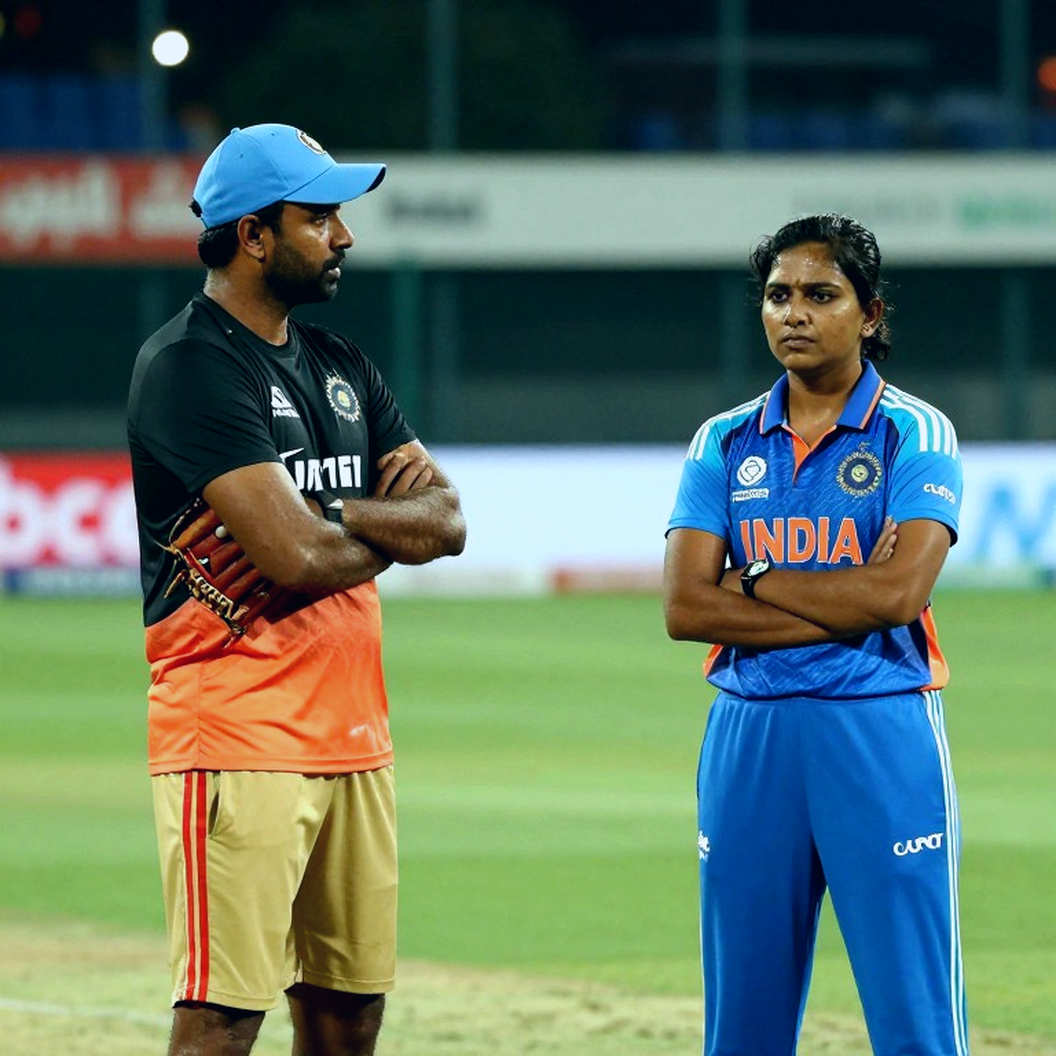
In recent years boards have built formal rules around this — fixed rest periods, format-specific selection and priority to medical advice. But rules are cleaner on paper than in practice. When a decisive series is at hand, the recommendation to rest tends to be set aside.
The long-term risk is obvious. A player who fights repeated injuries through his mid-twenties loses the best part of his career. And the loss is not his alone — team planning, fan investment and broadcaster expectations are all affected.
The gap between numbers and narrative
Asian cricket has one of the most emotionally active media landscapes in the world. A single good innings instantly becomes the story of a 'star is born', and two poor ones start a discussion of a career's end. This tendency is not a media failing but a market demand — audiences want emotion, and platforms reward it.
Professional analysis, however, exists not to supply emotion but to clarify the limits of the data. Before calling any emerging player the next big thing, three questions should be asked: how large is the sample, in what conditions were the numbers made, and what was the standard of opposition? The performances of players such as Abhishek Sharma and Tilak Varma in recent months are real — but drawing a permanent career trajectory from them requires another twenty or thirty innings.
The same caution applies to established stars. The expectations attached to names like Rohit Sharma, Virat Kohli or Babar Azam were built not on their averages but on their best innings. When they fall short of that level, intensified criticism is natural — but objective analysis requires separating the age curve, the form cycle and the changing demands of a role.
Broadcast, audiences and the next cycle
The next big question is how Asian cricket keeps its audience. Digital platforms have widened reach — a viewer in a village can now watch in high quality. But greater reach does not automatically mean greater revenue unless the advertising market grows at the same pace. Short-form content has also shortened attention spans: a three-hour match now competes with thirty minutes of clips.
For boards and leagues this means the strategy must change. A model relying only on tickets and broadcast is becoming insufficient; the stadium experience, digital subscriptions, investment in women's cricket and the extension of the game to the grassroots are no longer optional subjects but defensive strategy.
Conclusion
Asian cricket today operates inside a contradiction: it is the richest region in world cricket, and yet it absorbs the inequality within itself most acutely. The crowding of the calendar, the expansion of leagues, the friction over NOCs and the question of revenue sharing are not four separate issues but four forms of a single tension.
Which is why no major event in this region should be read in isolation. Behind a trophy lies calendar planning, behind a large contract lies the NOC system, and behind the story of an emerging star lies a very small sample of data. Without understanding these structures the story of the game remains incomplete — however attractive that story may look.