
"Not many in the world can do what Hardik can" — Gill's remark is not praise, it is an admission of a structural gap
मुख्य सवाल: हार्दिक पंड्या भारत के लिए कितने जरूरी हैं? सीधा जवाब: हार्दिक पंड्या की कीमत उनकी मौजूदा फॉर्म में नहीं, उनकी भूमिका की दुर्लभता में है। वे एकमात्र भारतीय खिलाड़ी हैं जो वनडे में पूरे दस ओवर गेंदबाजी (नई और पुरानी, दोनों गेंदों से) और सातवें नंबर पर बल्लेबाजी, दोनों कर सकते हैं। इसी वजह से भारत सात बल्लेबाज और पांच गेंदबाज वाला संतुलन बना पाता है। कप्तान शुभमन गिल ने सीरीज से पहले कहा कि "दुनिया में बहुत कम लोग हैं जो हार्दिक कर सकते हैं," जो प्रदर्शन का दावा नहीं, बल्कि इस भूमिका की कमी का इकबाल है। मौजूदा स्थिति: हार्दिक पिंडली (शिन) की चोट के कारण न्यूजीलैंड दौरे से बाहर हैं। आईपीएल के बाद से चोटों का सिलसिला चल रहा है, दो वापसियां अधूरी रहीं। उन्होंने अपना रिहैब बेंगलुरु के सेंटर ऑफ एक्सीलेंस में शिफ्ट किया है। वापसी की कोई पक्की तारीख नहीं है; रास्ता घरेलू क्रिकेट से होकर जाता है। जोखिम: बुमराह को भी वनडे से आराम दिया गया है, इसलिए भारत की गेंदबाजी के दोनों छोर (नई गेंद और डेथ ओवर) एक साथ कमजोर हैं। यह टीम की गुणवत्ता का नहीं, भंगुरता का संकट है। सीमा: यह विश्लेषण सीरीज-पूर्व प्रेस कॉन्फ्रेंस पर आधारित है, किसी मैच के आंकड़ों पर नहीं। कोई स्कोरलाइन या प्रदर्शन डेटा उपलब्ध नहीं है, इसलिए सभी निष्कर्ष गुणात्मक हैं, संख्यात्मक नहीं।
New Delhi/Auckland. Ahead of the five-match ODI series against New Zealand, India captain Shubman Gill's remark about Hardik Pandya sounds like praise, but read carefully, it is an admission of a structural flaw in the team. Gill said that "not many in the world have what he can do." That sentence says nothing about Hardik's current form, batting rhythm or match fitness. It says one thing only — the global supply of fast-bowling all-rounders who can bowl a full ten overs and also bat at No. 7 is extremely thin. The statement, therefore, is not about a player's performance; it is about the scarcity of the role.
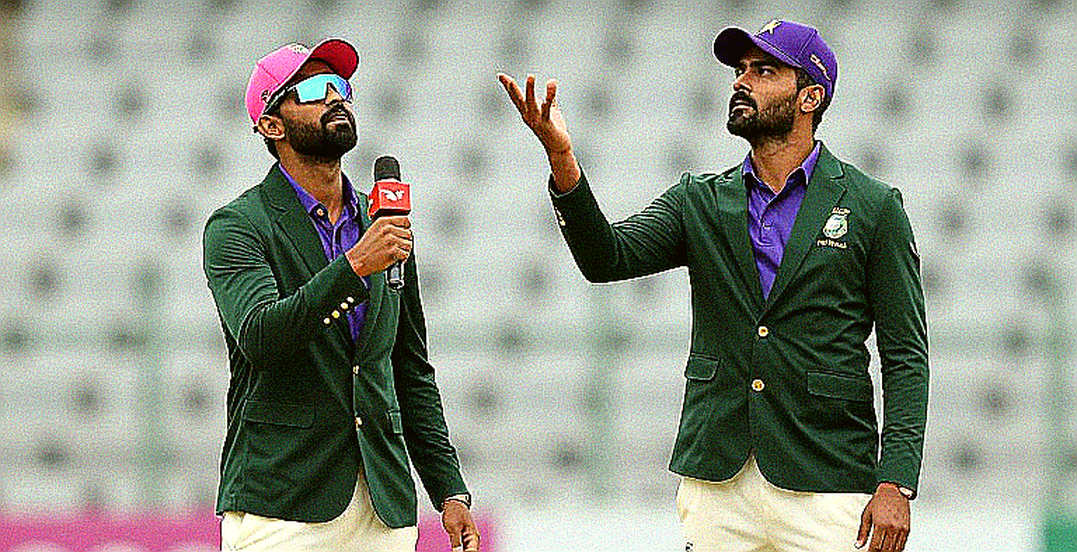
It is important to note that this is not a match report. It is based on a pre-series press conference. There is no scoreline, no pitch report, no playing XI. Any conclusion about India's current ODI form therefore rests on the captain's words, not on on-field data. That is the biggest limitation of this entire debate.
The injury chronology is the real story
Hardik's case is not one injury but a sequence. Reports indicate he has been battling injuries continuously since the IPL. Twice a return came close and twice it broke down. Once, a niggle arrived immediately before an India A match. And now a shin injury has ruled him out of the New Zealand tour entirely. For a fast-bowling all-rounder, a shin injury is the worst archetype, because it is precisely the tissue group that bears the highest cumulative load during bowling. This is not a surgical injury; it is a load-bearing one — the kind that keeps returning if the return-to-play process is rushed.
One more thing attaches to this. Hardik has moved his rehab base to the Centre of Excellence in Bengaluru. Institutionally this is the right move — centralised rehab under board supervision. But it is also a signal of severity. No player relocates his rehab base for a full season over a minor complaint. This looks like a structured, board-supervised return-to-play programme, not routine workload management.
No confirmed return date
What stands out most is that as of the press conference, no firm return date had emerged. Gill himself said he hoped Hardik would play some domestic cricket. The route back, in other words, runs through domestic cricket, not straight into internationals. Using India A or domestic matches as a comeback vehicle is technically correct, but it is not a reliable proxy for international readiness. The intensity of a 50-over domestic game and international cricket are worlds apart, especially for a pace-bowling all-rounder who must bowl ten overs and bat at No. 7 in the same match.
One inference follows, and to be clear it is an inference, not confirmed fact: Hardik's next realistic competitive appearance will be in domestic cricket, not internationals. That means the window available for World Cup preparation will be very short. And the repeated pattern of "close to returning, then a new injury" points to selection pressure on the player — a World Cup year, franchise expectations. On that reading, the risk of a third aborted comeback is material.
The No. 7 puzzle
The most practical part of Gill's remarks was that once Hardik returns, the No. 7 and No. 8 slots will sort themselves out. In that one sentence the captain has conceded that the slot is currently vacant. This is India's single largest squad-construction vulnerability in ODI cricket. Seven batters and five bowlers — that balance is possible only because one player does both jobs. Apart from Hardik, India currently has no player combining top-seven batting ability with a credible 8-10 over bowling quota.
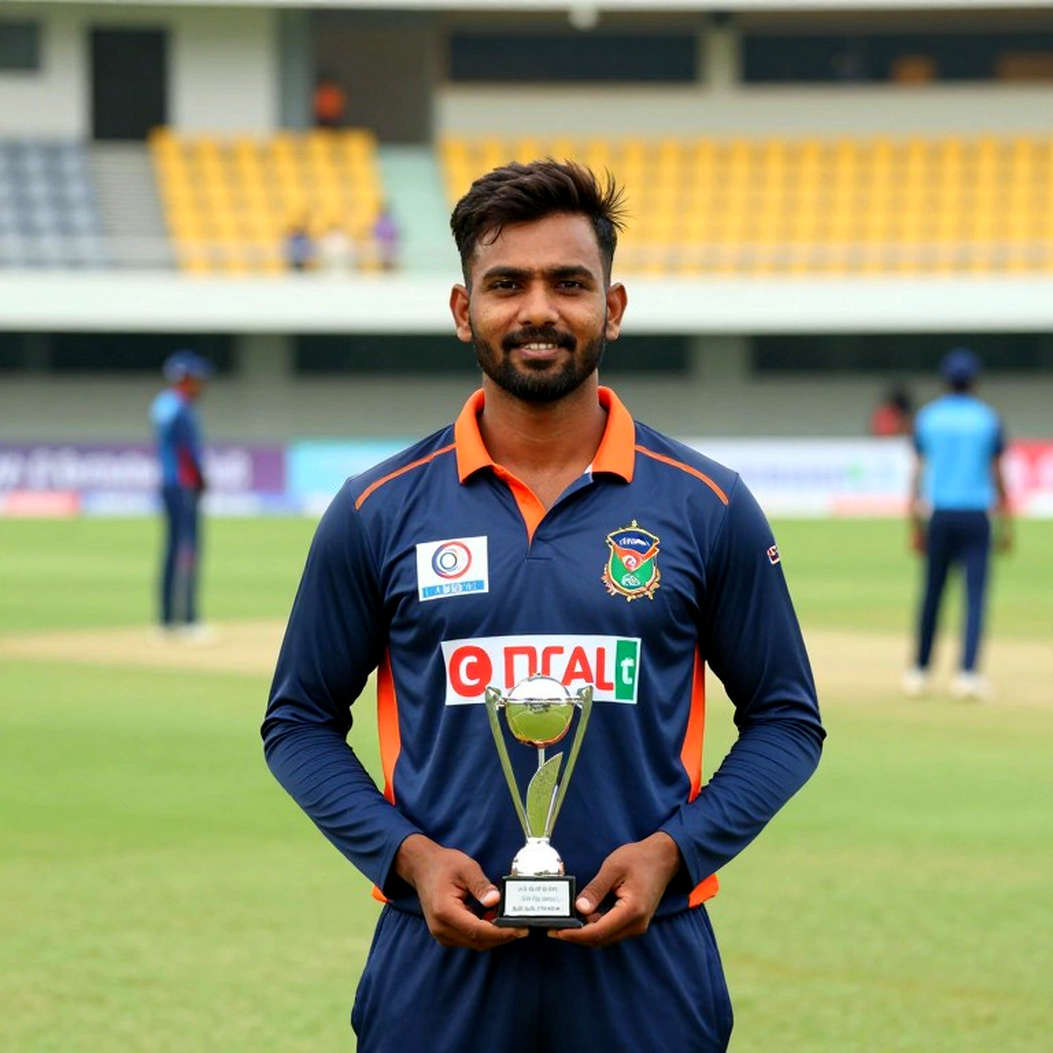
One technical point matters here. In T20, Hardik's value is four overs. In ODI, the same player is worth up to ten. The difference is not just the number of overs. ODI's three-phase structure — new ball in the powerplay, old ball and cutters in the middle, yorkers and wide-of-crease variations at the death — is exactly where Hardik's utility is greatest. That is precisely what the captain is saying when he notes Hardik can bowl with the new ball and the old. It is about folding two specialist roles into one selection slot. That is what makes him more valuable in ODI than in T20.
Bumrah's absence and the double loss
India's problem in this series is that Hardik and Jasprit Bumrah are both missing at once. Bumrah has been rested from the ODIs. One end of a pace attack takes the new ball and the death overs; the other handles the old ball and the middle overs. Remove both and you lose, from the same XI, both the powerplay wicket-taking threat and the control at the close. This is not simple arithmetic about two players; it is a simultaneous weakening at both ends of the bowling innings.
The decision to rest Bumrah from ODIs while keeping him in the Test squad is a clear signal of the board's priorities. It is rational — Test cricket and ICC tournaments sit above bilateral ODIs. But structurally it means the bilateral ODI series loses value as a preparation vehicle.
Captain and keeper leave mid-series
Another point that gets little discussion — the schedule. Five ODIs in roughly twelve days. Starting in early November at Eden Park, Auckland, and running through to Bay Oval, Mount Maunganui. After that, Shubman Gill and KL Rahul leave for Test duty. That means the captain and the wicketkeeper-batter play the first three ODIs and then exit the series. The last two ODIs will necessarily be played under a depleted, effectively "B" captaincy structure. For World Cup preparation, the informational value of results in those last two games drops considerably.
New Zealand conditions are a separate challenge
November in New Zealand means spring. Fresh, grassy pitches, seam movement and swing, especially in morning starts. Eden Park's unusually short straight boundaries have historically made it a high-scoring venue where the toss matters a great deal. Bay Oval is an exposed coastal ground where wind becomes a factor. And in spring weather, the probability of rain interruptions is high, which brings DLS and reduced-overs cricket into play.
The direct implication is that at least one match in this series could be rain-affected, and the result of such a match should not be read too seriously as a form indicator. Beyond that, New Zealand's seam-and-swing, disciplined lengths have historically troubled the Indian top order. India's counter is batting depth plus spin in the middle overs.
Historical context is worth recalling too — New Zealand swept India 3-0 at home in early 2026. That figure is not in this report's source, it is general cricket knowledge, so treat it with caution. But it points to the fact that a large part of India's ODI strength rests on home conditions. Abroad, especially in New Zealand in spring, the advantage of a batting-heavy side shrinks.
IPL load, national team loss
The least discussed thread in this whole story is that Hardik's injury chronology begins with the IPL, not with an international fixture. This is the classic path — maximum intensity in franchise cricket, two months of bowling at the death and batting in the top six, then cumulative load, then breakdown, then months of international unavailability. Note that the source records the timing, not the causation. But the pattern is clear.
In this arrangement the benefit accrues to the franchise and the loss is borne by the national team. The cost of Hardik not playing falls on India's ODI balance and World Cup preparation, while the commercial benefit of his participation has already been collected by a franchise. This asymmetry is the central tension of the modern calendar, and no current mechanism resolves it.
One thing should also be made clear — "commercially indispensable" and "sportingly reliable" are different things. Hardik's status as a marquee all-rounder is what drives his use at maximum intensity in franchise cricket, and that is what generates the availability risk for India. In this specific case, high market value is not a performance guarantee; it is a risk multiplier.
Conclusion: not a quality crisis but a fragility crisis
India are entering the World Cup cycle not with a talent deficit but with a dependency risk. The batting group is stable enough for the captain to express satisfaction. But the bowling balance hinges on one repeatedly injured individual. That is a picture not of the team's quality but of its fragility.
One possible reading is that the selectors have already modelled a World Cup XI without Hardik, treating his return as a bonus rather than a planning assumption. That is an inference, not confirmed fact, but it fits the captain's remarks.
India's real strength in this series is bench depth, not the first-choice XI. Bumrah, Hardik, Gill and Rahul are all unavailable for parts of it. That makes the series a test of the second string. For a side with India's pipeline that is a favourable trade; for World Cup XI continuity it is not.
And the final warning is the most necessary one. If India lose this series in seam-friendly conditions, the public debate will blame Hardik's absence. The actual cause may be that the top order was tested by sharp lateral movement and did not measure up. The risk of that misdiagnosis is real, and it is the biggest analytical hazard of this series.