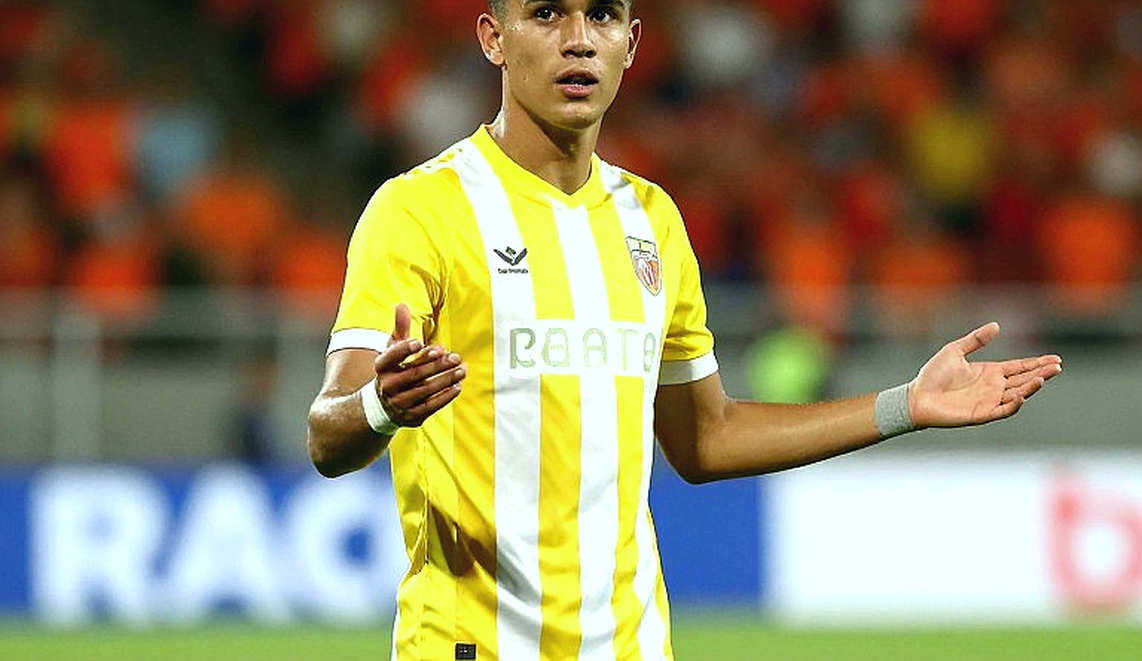
The Captain's File: Van Dijk, a June Deadline and an Unfinished Answer
**मुख्य उत्तर**: वर्जिल वान डाइक का लिवरपूल करार रिपोर्ट के मुताबिक़ जून में समाप्त हो रहा है और उन्होंने कहा है कि भविष्य पर कोई फ़ैसला नहीं किया। क्लब या खिलाड़ी, किसी ने भी नवीनीकरण या प्रस्थान की आधिकारिक पुष्टि नहीं की है। **मुख्य तथ्य**: - कप्तान वर्जिल वान डाइक, उम्र 35 वर्ष (रिपोर्ट अनुसार), लिवरपूल; करार जून में समाप्त होने की बात कही गई। - वान डाइक ने कहा कि कोई फ़ैसला नहीं हुआ; वह खेलते रहना चाहते हैं और मानसिक हालत अच्छी बताई। - पिछले कुछ हफ़्तों की "मामूली" शारीरिक दिक्कत का ज़िक्र; अवधि और गंभीरता अज्ञात। - वेतन, करार अवधि, क्लब प्रस्ताव और प्रतिस्पर्धी क्लब की दिलचस्पी — कुछ भी सार्वजनिक नहीं। - स्रोत में सारांश और उद्धृत शब्दों के बीच अंतर मौजूद; भावना पर निष्कर्ष अनिश्चित। **स्रोत**: गोल.कॉम, फुट मर्काटो के हवाले से; प्रकाशन तिथि स्रोत सामग्री में उपलब्ध नहीं। **संबंधित प्रश्न-उत्तर**: प्रश्न: क्या वर्जिल वान डाइक लिवरपूल छोड़ रहे हैं? उत्तर: किसी भी पक्ष ने इसकी पुष्टि नहीं की; वान डाइक ने कहा है कि उन्होंने कोई फ़ैसला नहीं लिया। प्रश्न: वान डाइक का करार कब समाप्त होगा? उत्तर: रिपोर्ट के अनुसार इस सीज़न के अंत में, जून में; कोई सटीक तारीख़ नहीं बताई गई। प्रश्न: बताई गई चोट कितनी गंभीर है? उत्तर: रिपोर्ट इसे "मामूली" कहती है, पर कोई मेडिकल विवरण या रिकवरी समय-सीमा नहीं दी गई।
The Captain's File: Van Dijk, a June Deadline and an Unfinished Answer
Goal.com's report carries a line attributed to Virgil van Dijk: "that doesn't mean I'm not panicking." The same report's summary says he does not appear worried. Both come from the same interview — a Foot Mercato conversation — and both can be true. The problem is that the reader meets the summary first, and the summary is where reporting usually dies, because an adjective gets in and the quote's nail-hard directness goes out.
For forty-seven years I have kept one habit: the line off the tape sits in one column, its meaning in another. The day I put both in the same box, I knew an editor would one day throw my own sentence back at me. It has happened here. In the first version the player himself says panic is not excluded from his answer; in the second the reporter decides he looks calm. Neither is a lie. But there is a gap between them, and that gap is the real subject of this story.
What is certain in the file, I count first. Van Dijk is Liverpool's captain. The report calls him a Netherlands international and puts his age at 35. His deal is said to expire at the end of the season, in June. He says he has made no decision. He says he wants to keep playing, that another club is a route if circumstances do not stay favourable, and that his mental state is good. The report also says he has had a minor physical issue over the last couple of weeks and is working to be ready to play. It then expects talks with the club's hierarchy in the coming weeks and months — that is the reporter's expectation, not a confirmed fact.
What is absent matters just as much. No wages, no proposed length, no formal club offer, no rival interest, no minutes, no league table, no medical detail, and — most importantly — no publication date. A story without a date is not a story, it is weather. You can argue about weather; you cannot build a file from it.
So the first rule of this piece: I will make no tactical claim about Van Dijk. I have no data on how Liverpool's defence performed without him this season — goals conceded, high-line breaks, aerial duels. Drawing conclusions without numbers is punditry, not analysis. This article is about what the report actually records: a date, an unfinished answer, a minor injury, and a captaincy whose succession is not yet written on any document.
The English rendering of the notebook-versus-training-ground rule applies exactly here: the notebook said one thing, the translation said another.
Context: captaincy, dates and the one sentence that keeps returning
Van Dijk has worn the armband since July 2026, when it passed to him after Jordan Henderson left. That date is not decoration. Captaincy means a contract conversation is never only about one centre-back's slot; it touches the dressing room's language, the right to talk to referees, and the internal politics of succession. When a captain's deal is running out and he says no decision has been made, the question is not whether he stays. The question is who replaces him — and whether anyone has asked it.
His date of birth is 8 July 2026. The report says 35. I keep both lines visible and let the reader do the arithmetic, because for a beat reporter age is not an adjective, it is a sum. The report does not say what date it was filed, which halves its own value.
The career ledger, from dates rather than memory: Southampton to Liverpool in January 2026 for what was reported at the time as a record fee for a defender, around £75m. Champions League 2026-19. Premier League 2026-20. Ballon d'Or runner-up in 2026. A serious knee injury against Everton in October 2026, and a return roughly ten months later. Captain from July 2026. Four lines, because the whole debate circles them: a 35-year-old centre-back who once came back from an injury that ends most careers, and who began his longest captaincy after it.
The document that started this. The deal reportedly ends with the season, and June is named. I read that as a report, not an inference. In football, the end of a season and the month of June are usually the same thing, but not always — international tournament years shift dates, and the shift moves the contract's last day. When a story says both 'end of season' and 'June', I ask which day the season ends, because that single date decides how long the club can talk and when other clubs may knock.
On the mechanics: FIFA's regulations on the status and transfer of players include the provision that opens negotiations for a player whose contract expires at the end of the season, generally six months out. I will not cite an article number here, because I have not opened the document today and I do not hand readers a clause I have not read myself. The principle is plain: inside the club and outside in the market, the right to talk changes on a date. That is why 'June' is the heaviest word in this report while looking like the lightest.
For a reader in India this can feel distant, and I have my own measure of that distance. After the 2026 Under-17 World Cup I started a weekly newsletter; at the 2026 World Cup, from press boxes in Moscow and St Petersburg, I saw clearly that Indian readers consumed European tactical content more than ISL match reports. That is why the System Check column used five-match samples to explain pressing, set pieces and VAR. The lesson: European club football travels in India when it carries argument rather than mood. Which is exactly why this story must be written with argument.
Core analysis
The source ladder. Player interview, then Foot Mercato, then Goal.com. Three hands. Nothing wrong with that — it is the trade's daily bread — but the reader should count which claim came through which hand. Van Dijk's own words are primary. The contract date is secondary reporting. The expectation of talks with the hierarchy is explicitly the reporter's forecast, not a source. I do not weigh these three on the same scale. Where a story contains an expectation of talks, the question of dates comes first, and here that question is unanswered.
The arithmetic of June. Four outcomes are possible before the deadline: a renewal announced; silence until expiry, making him a free agent; a public parting that moves the market early; or the whole thread buried by injury or form until next summer. The report does not tell us which is forming. It does tell us the player did not rule out the third. Saying another club is a route if circumstances do not stay favourable is not a threat; it is the most rational sentence available to any 35-year-old. The question is not what he says but how long the club can carry it — in the boardroom, in the wage bill, and on the squad list filed every August.
The training-ground audit. The smallest sentence carries the largest question: a minor issue over a couple of weeks, and he is working to be ready. 'Minor' lives three lives in football — genuinely minor; a management word where the injury is not minor but saying so is not in the team's interest; or a word of uncertainty before a diagnosis is complete. The report does not say which, so neither will I. But I will say this, learned by counting drills before counting excuses: a minor issue in a 35-year-old centre-back's body is not the same as in a 25-year-old's, especially one who came back from an October 2026 knee injury after roughly ten months. Availability and performance are two different things, and merging them in one story is the trade's commonest error. This report is about availability — whether he plays, when, for how long. It says nothing about performance. No xG, no duels, no sprint data. Anyone concluding from this that Liverpool's defence will weaken is not bringing evidence; they are adding age to fear.
The captaincy ledger. System check: who signs the cheque, who signs the lineup? Captaincy sits between them. If the deal expires in June without a new one, Liverpool must find a centre-back and a captain — possibly the same man, possibly not. The absent question: has succession planning started? Replacing anyone is easy if the replacement has been prepared for two seasons. Starting now is not preparation, it is firefighting. The first evidence of a club's succession plan is not what it announces; it is how many minutes it gives a 20- or 21-year-old defender, and in which matches.
Money, where there is no number. Wages, length, comparables, accounts: none supplied. So no claim about a panic premium. But one economic fact attaches to the date: if the contract expires unrenewed, the player leaves free and the club must buy a replacement, while keeping him costs no transfer fee. That arithmetic does not favour the club. A long, expensive deal turns into a burden if form falls. That is where boardroom and dressing room interests separate, and why such decisions slip to the last minute.
Contrarian: three misreadings
First, 'the captain is leaving' — when he said he is not. Two doors are open, none closed. A player saying 'no decision' means no decision has been made; it is not code, and treating it as code is a media habit. The exception exists — sometimes 'no decision' means 'decided, but not the time to say it' — and it is detected in dates, not tone: when talks start, who arrives first, when the club's media department goes quiet. We have none of those.
Second, '35, therefore finished'. Centre-back is the role where pace goes first and reading goes last. At 35 the meaning is not 'over', it is 'change' — deeper starting position, shorter distances to midfield. That change happens across seasons, and you track it by watching matches, not headlines. I watched the 9 December 2026 quarter-final in Lusail on television from Pune: Emiliano Martínez saved Van Dijk's penalty and Argentina won 4-3 on penalties. That night was decided by calm, not speed — and calm is the only trustworthy word in this whole story.
Third, and most pointed at my own trade: the Indian lens that inflates everything into a crisis. This is an ordinary, slow, documentary process between a club and a player, played out at dozens of clubs every year. The story is the size of the paper, no bigger. Where I cannot measure — under-23 minutes, succession announcements, pre-season training groups — I do not write a progress narrative, however well it travels.
And the constraint that is real: calendar pressure across league, cup and international windows on one 35-year-old body; a market that repriced the moment the story broke; and the human arithmetic of family, schooling and a career after football, none of which appears in the paperwork.
Takeaway
Three things to track. Availability: 'minor' is tested on grass, not at a press conference — a full ninety confirms it, an absent squad list rewrites it, and I will verify through a second source. The date: once the window opens for formal external negotiations, every subsequent story must be read as market news, not club news. And succession: if Liverpool are serious, it shows in minutes given to young defenders and in who wears the armband when he does not play.
One question remains, and it is not about Van Dijk's future. Did Liverpool start preparing the ground for the man who has captained them for three seasons — and on what date? Until that answer exists on paper, the June date stays pinned to the calendar, and an unfinished answer stays in the file.