
Barsham's Wall: Al-Ahli Dominate but Draw Blank as Al-Sadd Survive on Their Keeper
अल-सद्द बनाम अल-अहली (सऊदी अरब) का एएफसी चैंपियंस लीग एलीट लीग-चरण मुकाबला 0-0 से बराबर रहा। अल-अहली ने लंबे समय तक गेंद पर नियंत्रण रखा और मौके बनाए, लेकिन अल-सद्द के गोलकीपर मेशाल बारशम ने इबान्येज़, गोंसाल्वेस और दियाबी के प्रयास रोककर टीम को बचाया; दूसरी ओर एदुआर्दो मेंडी ने क्लाउदिन्हो और फ़िरमिनो के शॉट रोके। इवान टोनी दूसरे हाफ की शुरुआत में दो स्पष्ट मौके गंवा बैठे। तालिका में अल-अहली आठ अंकों के साथ तीसरे स्थान पर हैं और नॉकआउट की दौड़ में मजबूत स्थिति में हैं, जबकि अल-सद्द दो अंकों के साथ पंद्रहवें (नीचे से दूसरे) स्थान पर एलिमिनेशन जोन में हैं। ध्यान दें: हेडलाइन में "अल-अहली" लिखा गया है, लेकिन एएफसी प्रतियोगिता में खेलने वाली टीम सऊदी अरब का अल-अहली है, मिस्र का अल-अहली नहीं (मिस्र का क्लब सीएएफ के अंतर्गत आता है)। मैच में अफ़िफ (23'), गालेनो (26') और रयान हामेद (67') को पीला कार्ड मिला, कोई लाल कार्ड नहीं हुआ। इस मैच की उपलब्ध जानकारी में xG, शॉट संख्या, कब्ज़े का प्रतिशत या क्लबों के वित्तीय आंकड़े नहीं हैं, इसलिए विश्लेषण गुणात्मक है। मुख्य जोखिम: अल-सद्द की बारशम पर अत्यधिक निर्भरता और अल-अहली का चोट-समूह।
The AFC Champions League Elite league-phase fixture between Al-Sadd and Al-Ahli of Saudi Arabia ended 0-0, but the scoreline does not tell the real story. What happened on the pitch was not one-sided: Al-Ahli were clearly superior in possession, territorial control and chance creation, and Al-Sadd salvaged a point on the back of an outstanding performance from goalkeeper Meshaal Barsham. The consequence is that the Saudi club remain third with eight points, while the Qatari side are stuck in fifteenth — second from bottom — with two points from four rounds.
First, an important clarification
Several reports carried the club name in a form that can easily be confused with Egypt's Al-Ahly. To be clear: Al-Ahly of Egypt play under CAF, not AFC. The team in this match is Al-Ahli of Saudi Arabia. The distinction matters because the two clubs' competitive standing, resources and continental relevance are entirely different. This kind of transliteration error is a common media problem, but factual reporting should avoid it.
The table context: a path for one, a gulf for the other
Four rounds into the league phase, the two teams' positions are worlds apart. Al-Ahli's eight points put them in a strong position in the knockout race; third place is not just a number but a measure of control — they can shape their own fate in the next round. Al-Sadd's two points, by contrast, push them into the elimination zone. Fifteenth place and second from bottom is a situation where every passing round adds pressure. That is why this goalless draw will be read differently in each camp — regret at two dropped points for Al-Ahli, relief at a point saved for Al-Sadd.
The first half: a structure of control and resistance
The first half went broadly as expected: Al-Ahli kept the ball, Al-Sadd held their defensive shape. The Saudi side had a clear number nine in Ivan Toney, wide players like Galeno and Spertsyan who could drift inside, and Trincao to receive between the lines and pull defenders out of position. Al-Sadd's answer was clear — a deep block, low risk, and quick transitions through Roberto Firmino and Akram Afif when the ball was won. On paper the plan was rational, but its success depended on one condition: the goalkeeper had to have a good day. That condition was met.
Barsham's day, and Mendy's quiet contribution
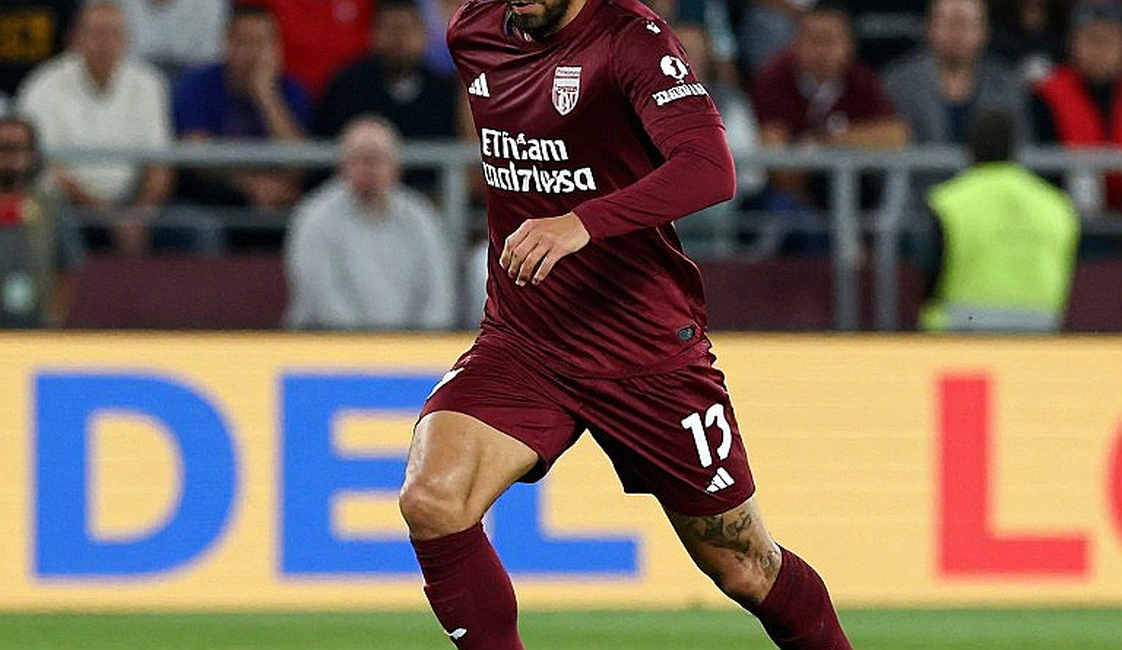
The clearest individual story of this match belongs to Meshaal Barsham. He repelled several dangerous efforts, including shots from Roger Ibanez, Goncalves and Diaby. Those saves did not merely prevent goals; they gave Al-Sadd's defensive structure confidence — when the keeper behind you inspires trust, the back line can push slightly higher and absorb pressure. But this was not a one-sided goalkeeping story. At the other end, Edouard Mendy also denied Claudinho and Firmino. Without Mendy, the afternoon could have been far worse for Al-Sadd. In other words, this was a contest between two goalkeepers, even if the headlines will focus on one name.
Toney's two chances and the turning point
Early in the second half, Ivan Toney had two clear openings. Two big chances in one match is a lot for a striker — and not taking them is precisely the job description he is measured against. Toney missed them, and that became the match's biggest "what if". This does not mean he played badly; it means Al-Ahli's dominance did not translate into chance quality. The team kept the ball, applied pressure around the box, but clear cut-through passes and rapid passing sequences were rare. When the direct route is closed, teams drift towards crosses and set-piece-type deliveries — and that is what happened to Al-Ahli here. It is a pattern the coaching staff must take seriously, because in knockout football this is exactly the pattern that sends teams home.
Al-Sadd's attacking threat: sporadic, fragile, but alive
Al-Sadd's attacking threat was intermittent. Firmino's early effort was blocked, his later shots were saved, and Claudinho also tried his luck. Having names like Firmino, Afif and Claudinho does not automatically create an attack; without support and with the supply line cut, such players become isolated. That is what happened here. Al-Sadd had no means of sustaining pressure for long spells. Their game shrank into an "absorb and hit on the break" structure, and when the chance came, quality was lacking. Saving a point is an achievement, but treating it as evidence of progress would be dangerous.
Injuries and substitutions: rhythm broken, plans changed
Injuries disrupted both teams' plans. Atangana had to leave the pitch early, and Suleiman went off on 59 minutes. Reports suggest Al-Ahli suffered two further injury blows, while Al-Sadd also made two in-game changes. Injuries are not merely individual losses; they break a team's rhythm, alter pre-planned rotations and sometimes force tactical compromise. When several players go off in the same match, the team's shape can change in the final twenty minutes. That is why Al-Ahli, despite late pressure, could not find a goal — there was intensity, but no continuity in combination play.
Tactical verdict: conventional, effective, incomplete
Tactically, neither side did anything new. Al-Ahli's possession-based pressure and Al-Sadd's deep block are both mainstream approaches. The question is not innovation but execution. Al-Ahli controlled long spells but did not score; Al-Sadd defended but conceded shot after shot. An important limitation must be acknowledged here: this analysis has no official data on xG, xA, PPDA or possession percentage. The assessment is qualitative — built on descriptions of events, not on numbers. "Al-Ahli's dominance" is therefore a credible observation, not a measured fact. Readers should understand that distinction.
The hidden risk: control without box access
The most concerning signal from this match is that Al-Ahli's possession did not convert into clear chances inside the penalty area. They kept the ball, but the reliance on crosses and set-piece-type deliveries to break the block was visible. This can be called "control without box access" — a problem that looks minor at first and becomes expensive in big matches. On the other side, Al-Sadd's model depends on their goalkeeper. A performance like Barsham's cannot be repeated every week, and if the team concedes this volume of shots consistently, points will stop coming. It is an unstable points model, even if it worked today.
Pressure on the coaches: questions for one, a crisis for the other
The pressure levels differ sharply. The Al-Sadd coach is under clearly high pressure — two points from four rounds, fifteenth place, second from bottom. That raises elimination risk and sharpens media scrutiny. The Al-Ahli coach faces medium pressure — his team dominated but dropped points; questions will be asked about finishing and rotation. This is not a job risk but a narrative risk. Toney faces medium pressure, because a striker's missed chances are counted. Barsham faces low pressure — his performance will bring praise and raise his standing within the team. The irony is that one match elevated one player's status and raised questions about another.
Toney and Al-Ahli's finishing: waiting for the data
Blaming Toney alone for the two misses would be a simple but incomplete analysis. The questions are: what was the quality of those chances, under what pressure were they created, and how much did the team contribute to creating them? Without shot maps and xG data — which are unavailable — there is no answer. Still, one thing is clear: if Al-Ahli again create a high volume of chances without scoring over the next two or three fixtures, this will shift from "a bad day" to "a structural deficiency". For now it is fair to treat it as short-term finishing variance, but monitoring is required.
The injury cluster: Al-Ahli's real test
For Al-Ahli, the biggest concern is not the dropped points but the cluster of injuries. When several players are injured in one match, selection freedom for the next round is limited. The impact operates at three levels: first, rotation options shrink; second, bench or academy players receive unexpected responsibility; third, tactical compromises become necessary — such as reducing pressing intensity or ceding possession. It is an immediate test for the medical and performance staff. If injuries continue, squad depth itself becomes the question.
Discipline and governance: no major red flag
From a regulatory standpoint there is no significant issue. Afif was booked on 23 minutes, Galeno on 26 and Rayan Hamed on 67; there were no red cards. So no suspension arises from this match; only the routine risk of card accumulation remains. Because players' prior card counts are not available, it cannot be said that anyone is close to a threshold. Financial fair play and registration matters cannot be commented on, because the underlying information contains no financial or transfer data.
Club finance: the necessary information is absent
It must be stated plainly: the available information contains no club accounts, wage-bill figures, FFP/PSR position, transfer fees or contract lengths. A financial sustainability assessment is therefore impossible. What can be said is only a qualitative observation: both starting line-ups included high-profile names — Mendy, Toney, Ibanez and Trincao for Al-Ahli; Firmino, Afif and Claudinho for Al-Sadd — which suggests substantial wage investment. But without figures this is an inference. Saudi Pro League clubs are generally associated with a higher wage ceiling than Qatari clubs, but that is industry context, not data from this match. One further point: paying wages to unavailable, injured Al-Ahli players is a form of inefficiency, but the cost cannot be quantified.
Industry and broadcast: limited but real impact
This is a league-phase match report, not a transfer, contract or commercial announcement. Direct transmission through the industry chain is therefore limited. Even so, a Saudi-versus-Qatari contest has regional broadcast value — a meeting between clubs from the two Gulf nations attracts viewers. But there is no data here on broadcast rights, sponsorship or audience size, so the assessment cannot go beyond inference. One genuine concern is that injuries can transmit to national-team availability — Saudi and Qatari internationals may be affected. That impact is short-term but visible.
The media narrative: "the goalkeeper's wall" — true, but incomplete
The dominant media narrative is that a goalkeeper's wall stopped a dominant team. That narrative is supported by the descriptions of the saves, so it is not fabricated. But its limitation is that it rests on a single match. It establishes no long-term trend for Barsham, nor for Toney. Such narratives usually last less than a month unless the goalkeeper's form itself becomes a longer story. Source quality is also questionable: the original report contains no quotes, no primary sourcing and no data, and the related-link paragraphs read like SEO material with zero analytical value. Factual reliability should therefore be rated medium and analytical depth low.
The road ahead: Al-Ahli
The next step for Al-Ahli is clear — improve finishing quality and diversify the routes into the box. They have the squad, the control and the table position. What is needed is a cool head: monitor the injury situation, plan rotation, and give Toney public backing. Dropping a point is not a crisis, but if dominance goes unrewarded in the next two matches as well, the questions will grow. Third place is still under their control, and that remains their greatest strength.
The road ahead: Al-Sadd
For Al-Sadd this point is relief, not a solution. Fifteenth place and two points indicate a deep problem. Dependence on the goalkeeper must be reduced — which means cutting the volume of shots conceded per match. The defensive structure needs improvement, the midfield must win the ball more effectively, and Firmino and Afif must be prevented from becoming isolated. Otherwise the same goalkeeper dependency will break in the next round and take the points with it. The next fixture is effectively a must-not-lose game, and that pressure may change their tactical approach.
Overall risk assessment: medium
Overall the risk level is medium. No financial or regulatory breach is visible. But three sporting risks are real: first, Al-Sadd's overreliance on Barsham — the biggest risk, because a points model built on goalkeeping heroics is not stable; second, Al-Ahli's injury cluster, which can weaken squad depth; third, Al-Sadd's table position, which amplifies coach pressure and the elimination narrative. All three need watching in the next round.
Watchlist
Five signals to track: Al-Ahli's injury list (official updates); Barsham's save volume (if he keeps making five-plus saves, the points are not sustainable); Toney's conversion (via shot maps and xG when available); Al-Sadd's table position (still in the bottom two after the next round means rising danger); and yellow-card accumulation (Afif, Galeno, Hamed).

Conclusion
This match is a clean reminder that dominance and victory are not the same thing in football. Al-Ahli did what strong teams do — kept the ball, pressed, created chances — but fell short at the final step. Al-Sadd did what a team in crisis does — defended, trusted their goalkeeper, and took a point. But the table does not lie: eight points and third place are carrying one team towards the knockout stage; two points and fifteenth place are carrying the other towards the exit. Next round, the question for Al-Ahli is whether they can turn control into goals; the question for Al-Sadd is whether they can survive without Barsham. The answers will not come from this 0-0, but from the pitches ahead.
(This report is based on publicly available information. xG, shot counts, possession percentages and financial data were unavailable; sporting conclusions are therefore qualitative and financial-regulatory assessment was not possible. This content is for sports information only and does not constitute betting advice of any kind.)