
PSG's Win Is Booked to the Bench, but 17 Points Don't Yet Prove Anything
**मुख्य उत्तर**: पेरिस ने 2026/27 लीग 1 के आठवें राउंड में लियोन को 2-0 से हराया, दोनों गोल बदल खिलाड़ियों से आए — 72वें मिनट में सेंनी मायुलु और 84वें मिनट में मिका गॉड्ट्स। जीत के बाद पेरिस के 17 अंक हैं, यानी 2.13 प्रति मैच। **मुख्य तथ्य**: - दोनों गोल 70वें मिनट के बाद आए, दोनों बदल खिलाड़ियों से; दूसरे गोल की बिल्ड-अप में क्वेंटिन एनजांतु शामिल। - आठ मैचों में 17 अंक — यह शीर्ष पर बैठने के लिए पर्याप्त है, प्रभुत्व का प्रमाण नहीं। - लियोन ने लगभग 60 मिनट तक गहरा ब्लॉक संभाला, फिर तीव्रता गिरी; कोच लुइस एनरिक ने उनके संगठन की सार्वजनिक तारीफ की। - जीत "क्वारा" को समर्पित की गई, पर कारण कहीं नहीं बताया गया। - मिका गॉड्ट्स का क्लब-संबंध पुराने रिकॉर्ड से मेल नहीं खाता; दूसरे स्रोत से पुष्टि बाकी है। **स्रोत**: क्लब के आधिकारिक पेज पर प्रकाशित एनरिक का बयान, 27 अक्टूबर 2026 की मैच रिपोर्ट के माध्यम से उद्धृत। **संबंधित प्रश्नोत्तर**: प्रश्न: पेरिस के 17 अंक किस गति को दर्शाते हैं? उत्तर: 2.13 अंक प्रति मैच, जो अच्छी शुरुआत है पर एक-दो अंकों के नुकसान के संकेत के साथ। प्रश्न: जीत का सबसे कमज़ोर हिस्सा क्या था? उत्तर: पहला हाफ, जिसमें मौके बने पर गोल नहीं हुआ। प्रश्न: अगली निगरानी किस चीज़ पर? उत्तर: अगले पाँच से आठ मैचों में 60वें मिनट के बाद के गोलों का अनुपात।
At the forty-fifth minute my notebook had two columns open — "chance" on the left, "goal" on the right. The left one was full. The right one was empty. What Paris did to Lyon in the first half was possession, not penetration. The ball was at their feet, the territory was theirs, and Lyon's deep block sat exactly where it wanted to sit — disciplined, slightly dull, and entirely successful.
Then the 72nd minute arrived. Senny Mayulu. Then the 84th. Mika Godts. Quentin Ndjantou in the build-up to the second. Matchday eight of Ligue 1 2026/27, a Monday-night slot, and seventeen points for Paris — 2.13 per game across eight matches. The score read 2-0.
A result in football always comes at a price. The question is who paid it. And a match placed in a Monday-night slot is a document in itself — the fixture list remembers what the press box chooses to forget. Monday night, on the back of a European week, is calendar politics, not sporting logic. For a club caught inside that calendar, rotation is not a luxury; it is a requirement.
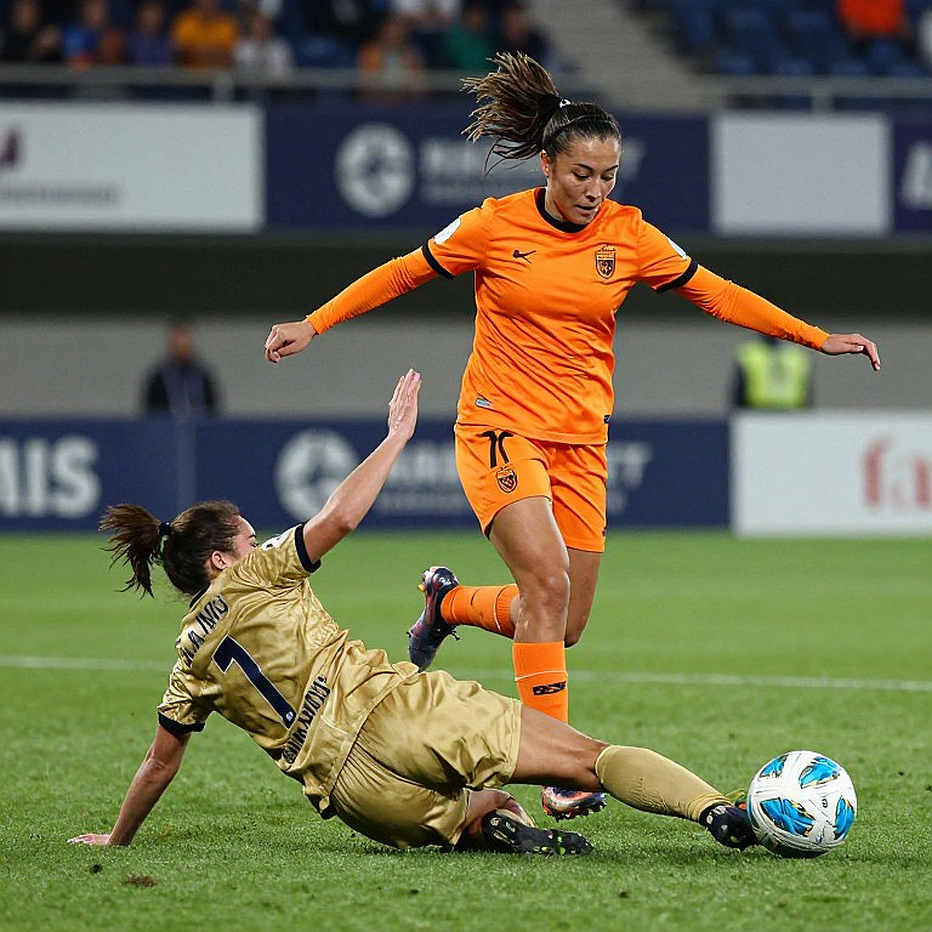
What Lyon did for the first hour was good. Compact, patient, ready to counter. Luis Enrique afterwards praised their "individual quality and game organisation" — that is the language coaches reach for when they want it understood that the first half was stopped by the opposition's effort rather than by their own plan. Beside that sentence in my notebook I wrote the date and one word: defensive framing.
Enrique's post-match comments were interesting, but not in the way the headlines read them. He spoke about the mentality of the players who stayed ready, and he named five substitutes who won the match. That was not a match review. It was a public declaration of selection policy.
That is the real story here, and it is bigger than the goals. The control Paris built in the first half was no new tactic — it is the old model in which a side keeps the ball, sieges patiently, and waits for the block to crack. There is no structural novelty in it. The mechanism is attritional, not schematic.
And the attrition showed. Lyon's plan lasted sixty minutes, then their intensity dropped. The distinction matters: Lyon's defence was not tactically solved, it was physically found out. Had the first half ended on a different scoreline, that same performance would have drawn criticism.
Paris's real advantage in this league is not the first XI, it is the bench — and Monday night put that on the record. Mayulu and Ndjantou are academy-pathway names, Godts a young import, Beraldo a South American import, and Lucas Hernandez a high-wage senior whose availability has long been unreliable. Five separate pipelines in a single fixture.
That composition is not a coincidence. It is the signature of a recruitment policy running academy, low-cost youth imports and expensive senior experience in parallel. In a league where the resource gap at the top is structural, the most efficient model is exactly this: convert cheap minutes into points and preserve expensive assets for European nights. In this match the logic worked minute by minute.
But seventeen points has its own scale, and that scale should be stated honestly. 2.13 points per game over eight matches is a good start, not dominance. It implies at least one draw or defeat. Sitting top and ruling the top are different things, and "competing for every title" is for now a statement of intent rather than a data-supported projection.
Now the part outside the headline. The central quote in this story comes from the club's own official page, relayed onward by the outlet. The meaning is plain: what Enrique said is accurate, but the club decided which parts of it would travel. Any conclusion drawn from "the coach praised his bench" carries that selection bias with it.
And I have a record to enter here. Mika Godts appears among the scorers in this match, while my older ledger has him filed under Ajax. Either a transfer occurred that never reached my notebook, or the report contains an error. Since 2026 I have kept one rule: no record goes to print without a second, independent source. The archive is not a memory; it is the only witness that cannot be flattered.
The third and heaviest item: the win was dedicated to "Kvara". The reason was never stated. Injury? Personal circumstance? A dispute? That is the largest uncounted item in the entire piece — a high-value attacking asset whose absence was not explained to the reader. An unstated reason is not automatically a benign one. If the absence runs long, the "squad depth" headline will look thin on paper.
One more thing the ledger insists on. Goals at 72 and 84 minutes are good, but they are a less repeatable method. Multi-phase control that lasts ninety minutes does not die to scouting; late goals depend on a tiring opponent. On the night Lyon's tank emptied, it worked. On the night the opponent is better conditioned and deeper, the same performance can read 0-0.
Nobody wrote the date down, so the date became whatever people preferred. This match is a good result and a fragile template. Writing both is what reporting means.
The next five to eight fixtures sit blank in my notebook, and I will fill only one column in them: the ratio of first-half to second-half goals. If more than seventy per cent of goals arrive after the 60th minute, that is not strength, it is habit — and habits get scouted. If the ratio levels out, Enrique's attrition policy is genuinely a model.
One credit must be entered too, because a ledger records more than faults. Naming five substitutes and saying publicly that they deserve more minutes is real meritocratic selection, and it delivered three points on the night. For the players who sat down, that silence is the loudest sound in the room.
The question is not whether Paris beat Lyon. The question is what Enrique has when the block does not break and the bench is tired too. The date on that answer has not been written yet.