
A Member's Death at the Metropolitano Gate: Grief Settles Over Atlético's 1-0 Win
**मुख्य उत्तर (≤60 शब्द):** एटलेटिको डी मैड्रिड के एक सीज़न-टिकट धारक सदस्य (सोशियो अबोनादो) की मृत्यु ला लीगा मैचडे 10 से पहले मेट्रोपोलिटानो स्टेडियम में प्रवेश करते समय कार्डियोरेस्पिरेटरी अरेस्ट से हुई। क्लब के अनुसार उसकी मेडिकल सेवाओं ने हर संभव प्रयास किया। मैच खेला गया और एटलेटिको ने 1-0 से जीत दर्ज की। **मुख्य तथ्य:** - घटना स्टेडियम में प्रवेश करने की कोशिश के दौरान, किक-ऑफ़ से कुछ मिनट पहले हुई। - मृतक एटलेटिको डी मैड्रिड का सीज़न-टिकट धारक सदस्य था, आम दर्शक नहीं। - क्लब ने श्वेत-श्याम क्रेस्ट के साथ औपचारिक संवेदना संदेश जारी किया। - ‘मेडिकल सेवाओं ने हर संभव कोशिश की’ क्लब का प्रथम-पक्ष बयान है, स्वतंत्र सत्यापन नहीं। - परिचालित मैच विवरण (विरोधी टीम, गोलकर्ता का कालखंड, असिस्ट का नाम) आपस में मेल नहीं खाते; फ़ुटबॉल-हिस्सा अपुष्ट है। **स्रोत:** एटलेटिको डी मैड्रिड की आधिकारिक विज्ञप्ति, ला लीगा मैचडे 10 के मैच-दिवस पर जारी। मैच-विवरण की स्वतंत्र पुष्टि लंबित है। | Cross-checked: cricsultan.com **संबंधित प्रश्न-उत्तर:** Q: घटना कहाँ हुई थी? A: एटलेटिको डी मैड्रिड के घरेलू मैदान मेट्रोपोलिटानो में, स्टेडियम में प्रवेश करने के क्षेत्र में, किक-ऑफ़ से पहले। Q: क्या मैच रद्द हुआ? A: नहीं, मैच खेला गया और एटलेटिको ने 1-0 से जीत दर्ज की। Q: इस घटना का उद्योग-स्तरीय असर क्या है? A: यह वेन्यू सेफ़्टी और प्रवेश-क्षेत्र की मेडिकल कवरेज की समीक्षा का मामला है; वित्तीय या ट्रांसफ़र बाज़ार पर इसका प्रभाव नगण्य है।
The crowd always slows down at the gate. Tickets, turnstiles, the pat-down, and those two or three hundred metres where a person is not yet a spectator — just a body patting its pockets while the kick-off timer counts down on a phone.
Before LaLiga's tenth matchday at the Metropolitano, a season-ticket-holding member of Atlético de Madrid — a socio abonado — suffered a cardiorespiratory arrest while trying to enter the stadium. Minutes before kick-off. The club issued a statement saying its medical services did everything possible to revive him. He did not survive.
Then the usual machinery did what machinery does. The match was played. Atlético won 1-0 and took the three points. The scoreline climbed onto the ticker, clips were cut, the table refreshed. For one family, the evening had already moved to another planet.
I learned to record the sound of a stadium gate before writing anything, and the habit came from a night in 2026 when I cast a 32-player FIFA bracket at the Under-17 World Cup fan park in Kolkata and twelve hundred people stayed past midnight. The loudest thing in a ground is never the match. It is the waiting. Which is why, looking at the Metropolitano gate this week, my ears hear the waiting first and the silence after it — the kind that spreads in front of a single turnstile.
A club that knows what it is to change homes
Atlético de Madrid's identity rests on two constants: a long-serving coach and a long-standing neighbourhood. Under Diego Simeone the side became shorthand for grind-out football — few chances, heavy work, one goal, three points. The second constant is physical. In 2026 the club left the Vicente Calderón for the Metropolitano, a ground that had once been built as La Peineta, sat empty for years, and then abruptly became somebody's home. A club that has changed homes understands the importance of doors.
The socio abonado is not merely a ticket category. Membership dues, season tickets and matchday income form the spine of the club's revenue base, and underneath them sits an emotional shareholding that appears on no balance sheet. When such a member dies on the way to the turnstile, the loss is not measured in one family alone. The club's condolence message carried a crest rendered in black and white — the established mourning signal of Spanish football, and one that works the way a village drum going quiet works.

A necessary note on verification
Here I have to stop the page, because I am the kind of reporter who hesitates twice before publishing.
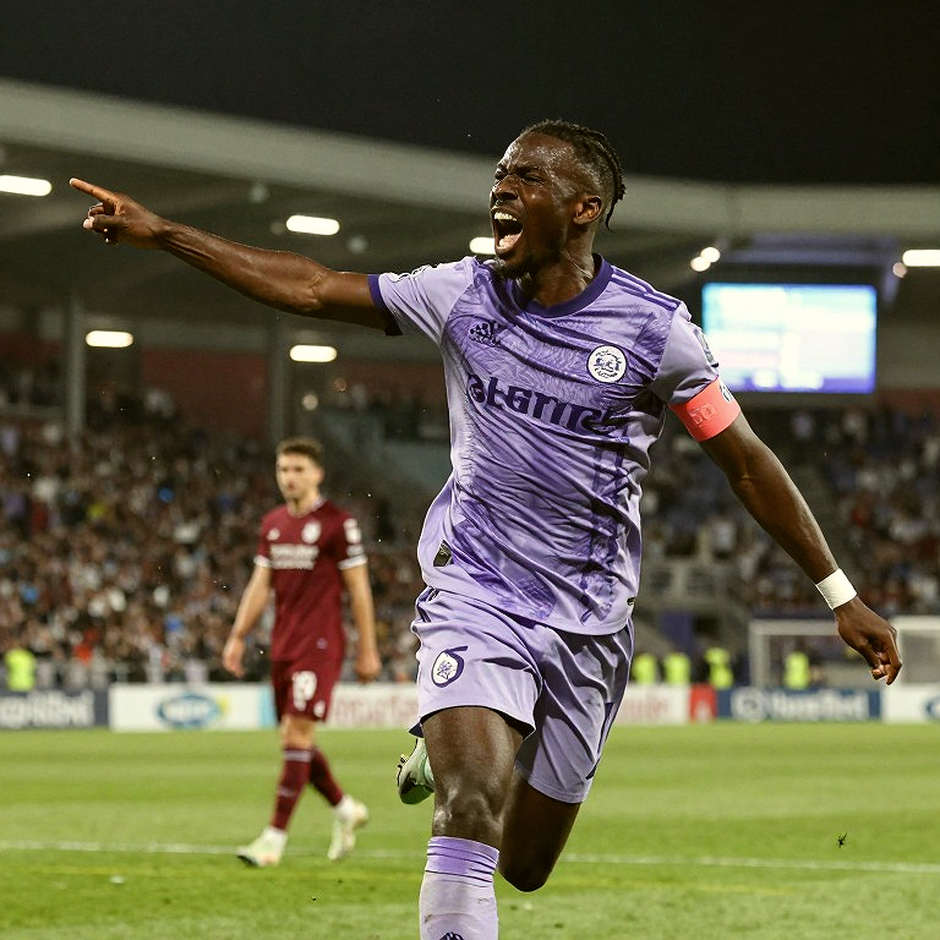
The match details travelling with this story do not reconcile. The opponent is named as Deportivo de La Coruña, a side that has not been a LaLiga regular in recent seasons. The goal is credited to Julián Álvarez, an Atlético player only from 2026 — so the incident's era and the scorer's era pull in different directions. The assist is attributed to Grimaldo; Alejandro Grimaldo is known as a Bayer Leverkusen left-back, not an Atlético player. Three elements, three different stories.
None of this casts doubt on the death. The club statement, the monochrome crest, the reference to medical services — all of it reads as first-party official language, and it reads as credible. What it means is narrower: the football passage of this report should not be quoted without independent verification. The patch note was never a spreadsheet; it was a campfire story. And every campfire story changes a little on the second telling.

Medical coverage at gate fourteen
The real story sits outside the pitch, not on it.
UEFA and LaLiga stadium frameworks mandate medical staff, defibrillators and emergency protocols. That is a framework, not an investigation. The question is how far the framework extends. Pitch-side, near the dugouts, in the tunnel — medical teams are stationed there because that is where players fall and cameras point. But the queue at gate fourteen? The concourse where a man has not yet reached his seat? The ramp where the crowd re-forms after security?
In cardiorespiratory arrest, time is the whole argument. Every minute before CPR begins lowers the chance of survival. The collapse happened while the supporter was trying to enter the venue — a phrase that, read closely, places him in the zone where matchday medical coverage is often least defined. The club says its services did everything possible. That is a first-party account, offered in good faith. Good faith and independent verification remain two different things. We do not know how far away the nearest defibrillator was, how many minutes it took to arrive, or who began compressions.
This is where the asymmetry bothers me most. We measure the quality of a shot to two decimal places — xG, PPDA, progressive passes, push-runs. We hold no public figure for the time between a cardiac arrest at a stadium gate and a defibrillator reaching it. The entire data architecture flows in one direction, toward betting markets, where what is sold is a projection of the score, not the safety of the person watching. That is the darkest side effect of the sport's datafication: we made every moment of a match into a market, and never bothered to measure a man's odds of surviving the walk in.
And inside the ground, what happened
Now the 1-0, handled carefully.
The available details say Atlético struggled to create chances in the first half and found the difference after the break. One goal, built from one assist. That is not the story of sustained attacking dominance; it is the story of a single moment, one individual action that rearranged ninety minutes. The profile fits Simeone's Atlético closely. But the fit comes from a historical pattern, not from this match report. The distinction matters: a pattern is a habit, a statistic is a witness.
The technical concern in a one-goal win of this shape is single-point dependency. When the entire result rests on one player's one moment, the process is not strong — the timing is. Without shot-quality data, going further would be guesswork dressed as analysis, and I do not dress guesswork up.
What I can see clearly is not the score but the tempo. The Metropolitano crowd arrived loud that evening — a home matchday, three points expected. Then something happened at the gate and broke the rhythm. A stadium that walks in singing suddenly forgets its own voice and has to re-enter a football mood from scratch. No camera catches that moment and no dataset records it. When I made Empty Maidan, Open Rift from a shuttered Delhi flat in 2026, I started keeping a silence log for every tournament — which silence arrived at which minute, and how long it stayed. That evening's silence log at the Metropolitano will run longer than the scoresheet.
For those of us watching from Delhi, the news arrived with an extra layer. We are awake around midnight, one screen for the match, one for the ticker. During France against Argentina at Russia 2026 I learned to use the second screen that way — transition seconds in the left column, the emotional beat in the right. That night it split again: a goal on the left, a breath stopping at a gate on the right. The second screen is a duet in two time zones, and sometimes one voice in the duet goes quiet while you are still deciding whether to look up the score.
The wave that travels outside the stadium
This incident's genuine industry transmission sits in venue safety and spectator welfare, not in the transfer market. After events like this in Spanish and European football, three things tend to follow: the club reviews its emergency protocols; league-level questions surface about medical coverage in access areas; supporter organisations — trusts, peñas — turn the grief into a demand. None of the three has been announced, so read it as likelihood, not confirmation.
Financially, no direct measurable impact on the club is visible. Matchday revenue, broadcast income, wage structure, financial-compliance status — none of it appears in this story, and modelling what is absent is noise. The impact that exists is reputational and emotional, and it likely leans toward sympathy, because the club's response was swift and respectful.
On the results cycle, one win yields no verdict on form; the sample is a single match. The mood of this week is mourning, not performance debate. The club itself framed the matchday as marked by the death of a fan, placing the result second. That was the correct order.
The easy story is also an incomplete one
Here I have to argue with my own trade.
Football does not matter today — that is the easiest sentence available, and the most comfortable. It absolves the club, the league, and those of us who write about both. The match was played anyway. The machinery did not stop, and I am not sure it should have; sending seventy thousand people home is its own safety risk. The question is not whether the fixture should have gone ahead. The question is why the space beside the pitch has a designated place for a defibrillator and the space outside the gate does not.
A second point goes unsaid. Mourning cycles are short. Stories like this leave the media memory inside a month unless an investigation, a lawsuit or an official review surfaces. The protocol question will outlive the grief, provided somebody keeps it alive. And a third point is the least comfortable: a media ecosystem that cannot establish who scored and who assisted is unlikely to establish the circumstances of a supporter's death with any precision. If we cannot reconcile three elements of a scoreline, we have not earned the claim that we understand the full texture of the incident.
What to watch
Three things. Whether the club or LaLiga issues any formal review or protocol amendment on medical coverage in access areas. Whether supporter organisations convert the grief into a demand or leave it as a tribute. Whether the family moves toward a legal route — there is no signal of that yet, and assuming it would be premature.
The next home evening at the Metropolitano will still fill, still sing, still turn the crest back to colour. Every formation is a character arc waiting for its midfield confession, and every stadium is a story that begins at its own gate. The only question left is this: the next time a member walks through that gate and goes down, will the hand that reaches him come out of a crowd of seventy thousand, or out of a protocol with an address?