
Rossi's Blooper Dies in 72 Hours. Minute 9 Won't: The Real Ledger of Monterrey 0-1 Chivas
**कोर उत्तर (60 शब्दों में):** चिवास ने लिगा एमएक्स अपर्टुरा के जोर्नाडा 14 में एस्टाडियो बीबीवीए पर मोंटेरे को 1-0 से हराया; रॉबर्टो अल्वाराडो ने 9वें मिनट में गोल किया और गोलकीपर राउल रैंजेल ने लुकास ओकाम्पोस का पेनल्टी बचाया। डिएगो रोसी का 43वें मिनट का ब्लूपर खेल-नतीजे की दृष्टि से महत्वहीन है। **मुख्य तथ्य:** - 9वें मिनट में सैंटियागो सैंडोवल के असिस्ट पर रॉबर्टो अल्वाराडो का गोल चिवास की जीत का आधार बना। - राउल रैंजेल ने लुकास ओकाम्पोस का पेनल्टी र
The ball was on the right-side corner arc in the 43rd minute. The assistant referee still had a foot beside it, which means the restart had not been authorised. Diego Rossi moved first. His leg caught the assistant's calf and he stumbled. MexSport put it on the front of the report, credited the photo in the caption, and by morning it was the blooper of the day.
The clip is fine. I watched it three times, a fourth in slow motion, expecting an angle I had missed. There wasn't one. A player moved early, an official was standing in the way, three seconds of comedy. That is the whole event.
Three paragraphs down the same report sits a scoreline that outweighs the clip several times over. Chivas beat Monterrey 1-0 at the Estadio BBVA. The goal came in the ninth minute, Roberto Alvarado finishing from a Santiago Sandoval assist according to the report. Raúl Rangel saved Lucas Ocampos' penalty. Orbelín Pineda was sent off late. In stoppage time Rossi's goal was annulled by VAR for handball.
My claim is blunt: the blooper carries almost no sporting information, and the paragraphs around it carry most of what matters. The report is being read for the cheapest item in the match. The items it should be read for — a home defeat on Jornada 14, a missed penalty, a red card, a disallowed goal — are buried in the third paragraph.
I watched this one from Delhi at about two in the morning. Notebook open, coffee cold, and the crowd noise on the broadcast doing the thing it did in 2026 when the ISL played behind closed doors and the broadcaster pumped in atmosphere. That was the year I started a balcony watchalong with three friends and a shared spreadsheet counting empty-stadium shots. It taught me something I still use: they muted the crowd in 2026 and the product went quiet with it. The BBVA had a crowd, and this time the crowd was standing against the result.
In 2026 I brought a stats sheet to a 46,000-seat argument and lost. India 0-3 USA at the Under-17 World Cup in Delhi, a twelve-minute shot chart in my hand, and a stadium that told me things the sheet hadn't. The same thing happened here. The sheet says 1-0. The stands say eighty minutes of anxiety. The crowd stood up before the numbers did.
A necessary confession. The MexSport report gives no formation, no substitutions, no possession share, no xG, no shot count. I have a sample of one match and four paragraphs of text. Anyone building a pressing-height or build-up argument off this game is selling invention. I won't. What the source has is my evidence; what it lacks is my limit.
Now the context the report omits. The Estadio BBVA is Monterrey's home, a 50,000-plus bowl, and a 2026 World Cup host venue. So is Chivas' Estadio Akron. The most under-reported structural fact about this fixture is that both clubs are World Cup hosts — which concentrates infrastructure spending, global broadcast attention and scheduling disruption on exactly these two squads next season. The report doesn't mention it. It is the largest medium-term variable either club faces.
Read the league, too. This is Jornada 14 of a 17-round Apertura — the season label in the source needs verification, but the matchday number alone tells you we are in the run-in, where every home defeat rewrites liguilla seeding. And remember the structural quirk: Liga MX has suspended promotion and relegation since 2026. The bottom of the table is a qualification boundary, not an existential one. That changes what a coach actually faces. Nobody gets relegated, so a bad tournament costs liguilla revenue and prestige rather than survival. Which is why 'crisis' is a calendar word, not an emotion — a lesson I learned the hard way covering federation politics in India, where every stalled election gets called an emergency.
Both clubs sit in the 'grande' resource band. Monterrey is corporate-owned and buys ready-made — Rossi, Ocampos, Pineda all fit the profile of established South American or European talent at peak or early decline. Chivas runs the opposite model; the Mexican-players-only policy makes the academy a necessity rather than a choice. The resource gap is narrow. This is a top-of-market collision, not a mismatch, and a 1-0 in either direction carries no structural verdict.
On the pitch, the ninth-minute goal means Monterrey spent roughly eighty minutes in a chasing match state. That is not a tactical thesis, it is match-state fact, and the fingerprints are all over the report: a player trying to take a corner before the restart was authorised, visible frustration at an official, a late red card, a stoppage-time goal attempt that ended in a handball. All of it is the behaviour of a team fighting the clock.
I went looking for the story of the match and found a penalty ledger. Ocampos took it, Rangel saved it. That is the first high-leverage moment, and it is where Monterrey's accounting breaks. Winning a penalty is creation; missing one is conversion; they are different diseases. A team that reaches a penalty is alive in the game. A team that doesn't convert it leaves the game mentally at that instant. On this evidence Monterrey's failure mode was composure, not creation.
The second high-leverage moment is Pineda's red card. The timing isn't specified, only that it was late, and late means the phase where the result is close and decisions are worst. A sending-off in the closing stretch is a decision-quality failure, not an execution failure. A misplaced pass is execution. A needless second yellow is a decision. Monterrey lost this match on decisions.
The third moment is the cruellest. Rossi put the ball in the net in stoppage time and VAR took it away for handball. Somewhere between row 12 and the final whistle, the model stopped working. In my notes a line marked 'goal' had to be struck out three seconds later. That is football, and it is why I don't trust a spreadsheet on its own.
Now weigh Chivas properly, because this is where the conventional read breaks. A 1-0 away win looks commanding. Its two load-bearing pillars are a goalkeeper's penalty save and a stoppage-time VAR handball call. Both are low-repeatability, high-variance events. A win resting on those two does not repeat next week. This was a rearguard performance, not a control performance. Chivas protected a one-goal lead and survived two high-leverage moments. Calling it a tactical masterclass gives a team credit the data doesn't exist to support.
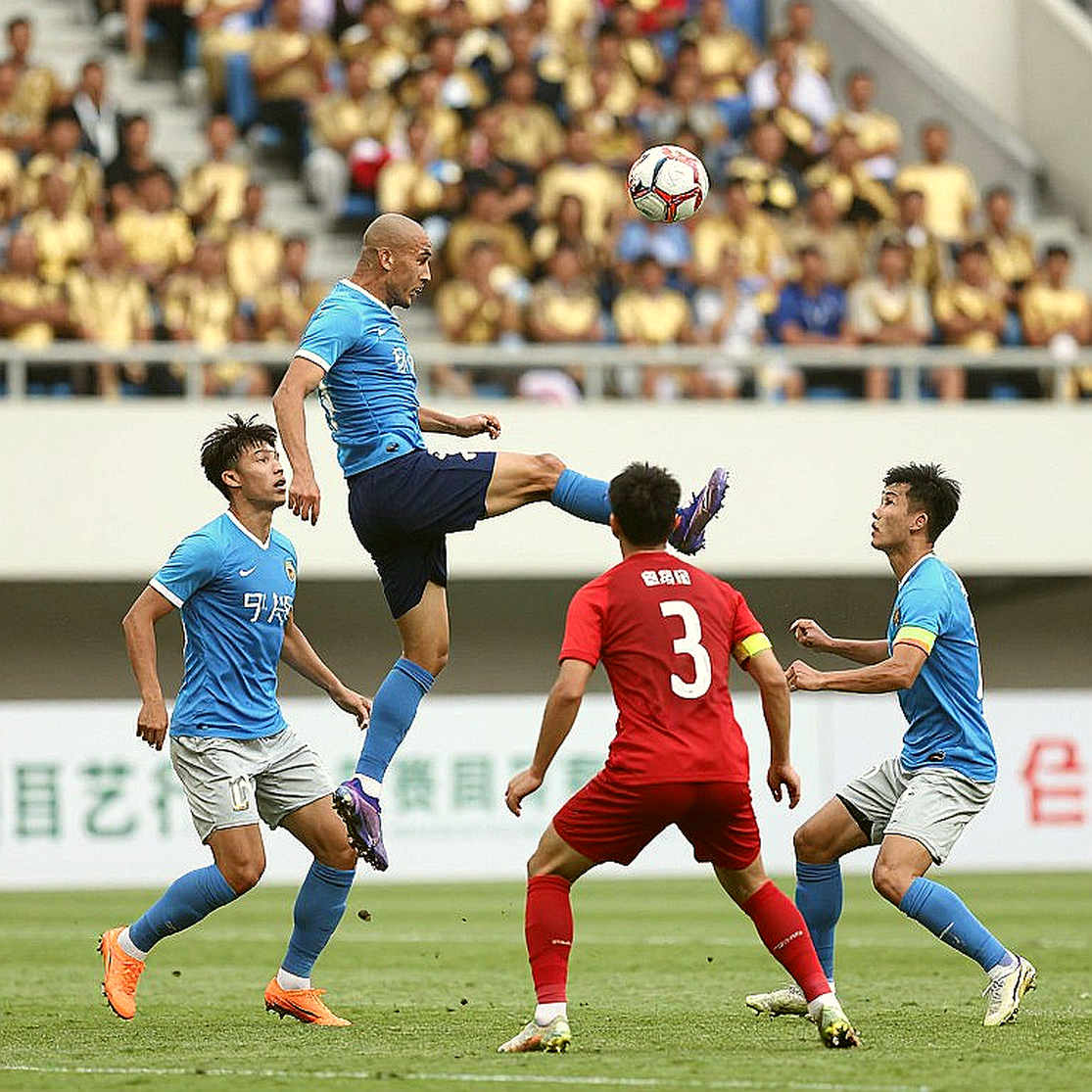
An honest gap: I don't know whether Chivas chose a mid-to-low block after minute nine or were pushed into one. That question needs possession and xG, and the source has neither. If they defended deep by design and won, that is coaching; if they defended deep and survived by inches, that is luck. A one-match sample cannot separate the two.
Go back to that corner, because it contains a small but real set-piece signal. The ball was on the right arc, the assistant's foot was still beside it, the restart was not authorised. A team comfortable in its rhythm waits for the whistle. A team trying to compress time does not. That is weak evidence of tempo urgency, not evidence of a tactical flaw — weak because one incident is not a habit, but pointing the same direction as everything else in the report.
Here is the new thing I take from this match, and no report has it: the only moment in the entire game where a Monterrey player moved before the official was a set-piece moment, not an open-play one. When a team is slow in open play and rushed at restarts, its problem is timing, not speed. That is an interpretation, not a verdict — but it beats the comfortable story in which Monterrey 'cracked under pressure', because cracking is a feeling and we only have four hard events.
Then the piece both Mexican and Indian media skip: the economics of seeding. The liguilla is a two-legged knockout, and where you enter it decides whether your first leg is at home and which bracket you fall into. One table position moves prize money, broadcast exposure and commercial activation revenue. A Jornada 14 home defeat isn't a three-point loss, it's a seeding loss, and seeding is money. That is a second-order effect and I'll label it as one — the report contains zero financial information, so I won't name a figure I don't have.
On wages, a structural observation rather than a finding of this match. Monterrey and Chivas are both widely reported as top-quartile Liga MX wage payers, and the official numbers are verifiable. The flaw of such clubs is concentration: a few very expensive names hold up the entire structure. Rossi, Ocampos and Pineda are all in that bracket. When one of them loses focus, gets injured or gets suspended, the effect is systemic rather than individual.
One more structural note on Chivas. The Mexican-only policy makes the academy both their greatest strength and their greatest exposure. Strength because the ceiling on young talent is high; exposure because every young Mexican international is a natural target for Liga MX rivals, MLS and Europe. An away win of this type is disproportionately valuable in that context, because it validates a model that cannot be short-cut in the transfer market. Interpretation, not data.
The refereeing crew belongs in the record too. The most shared clip of this match is the assistant's, and it raises a procedural question: where should the assistant be standing before a restart? It is not a big issue. But when a league's most viral image is of its officiating, the league is saying something about its product. Indian football has the same pattern — the Shield-versus-Cup confusion, the Durand Cup curtain-raiser, the reflex to call every federation story an emergency. Mexico's version is 'blooper del día'. In both places the real question is in the table and the camera is somewhere else.
Watch the opinion cycle. This clip lives 24 to 72 hours, becomes a meme, gets used in a podcast intro, and dies. It will not become a durable narrative about either club. The ninth-minute goal, Rangel's save and Pineda's card will be alive in the table for three more matchdays. The media cycle is short in length and zero in consequence; the scoreboard cycle is long in length and real in consequence.
Now the part where I try to prove myself wrong, because a pundit who only confirms himself bores me.
First: maybe the error belonged to procedure, not to Rossi. If Monterrey's corner was a rehearsed quick-restart pattern — plenty of teams have one, where the taker moves the moment the ball is placed — then the question is why the assistant was standing where he shouldn't have been. In that reading the incident is a procedural collision, not a blooper. I have no evidence for it, but it is as plausible as my version.
Second: maybe Chivas' win was more controlled than I think. If they deliberately dropped the line after minute nine, let Monterrey play in front of them and packed the box, then the penalty save and the VAR call are not accidents but the point of the plan — a plan that limited the opponent to high-pressure moments. I can't dismiss it without possession data.
Third, and least comfortable: 'good process, bad result' is the oldest comfort in football. I have written that sentence about Indian teams hundreds of times and it has been half-true every time. Monterrey won a penalty and scored a late goal; that does not prove their open play was functioning. They may have been inert for eighty minutes and been made to look better by two moments. One match cannot answer it.
Fourth, commercially: a viral blooper has no measurable impact on a player's transfer value. Mockery doesn't dent a valuation; it briefly raises a profile. Whatever effect remains is psychological, and I have no number for that. So I'll call it unknown, not zero.
Instead of a conclusion, four testable things.
One: Pineda's suspension forces at least one structural change in Monterrey's midfield. Watch who comes in. A straight swap means the shape holds; a formation change means this defeat shook the coach's trust.
Two: Chivas will not win their next away game the same way. If they take three points in the next three without a penalty save or a VAR reprieve, my 'rearguard profile' was wrong and I'll say so.
Three: the clip disappears inside 72 hours and leaves no durable club narrative. If it is still driving a debate about Rossi's focus a week from now, I'll throw out my media-cycle model.
Four, and the one I care about: watch Monterrey's next corner. If the player again moves before the whistle, it is a habit and a tempo problem that coaching can fix. If he waits, then minute 43 was an accident and I have to withdraw the interpretation.
The funniest part is that the most shared image of this match contains no goal, no save, no red card. Just a man losing his balance. And in that same match a team chased for eighty minutes, missed a penalty, lost a man and had an equaliser erased at the death. The noise was never the soundtrack. It was the inventory — and this time the inventory recorded one stumbling step. So here's my question for you: what did you watch — a falling man, or the calendar of a falling team?