
One Father, One Son, One Pitch: The Giménez Ledger and Mexican Football’s Two-Generation Balance Sheet
**मुख्य उत्तर:** क्रिश्चियन ‘चाको’ गिमेनेज़ ने कहा कि उनके करियर का सबसे खास पल बेटे सैंटियागो के साथ एक ही पेशेवर पिच पर खेलना था; यह दुर्लभ पिता-पुत्र साझा पिच का मामला है, प्रदर्शन-डेटा का नहीं। **मुख्य तथ्य:** - क्रिश्चियन ‘चाको’ गिमेनेज़ अर्जेंटीना में जन्मे, बाद में मेक्सिको के नागरिक बने; क्लब करियर में बोका जूनियर्स, अमेरिका, पाचुका और क्रूज़ अज़ुल शामिल। - सैंटियागो गिमेनेज़ मेक्सिको के लिए खेलते हैं; उनका पथ मेक्सिकन अकादमी से यूरोपीय लीग तक बताया गया है, जिसकी स्वतंत्र पुष्टि आवश्यक है। - इंटरव्यू में कोई xG, मिनट, ट्रांसफर फीस, वेतन या अनुबंध आंकड़ा नहीं दिया गया; यह भावनात्मक गवाही है, प्रदर्शन-साक्ष्य नहीं। - पिता-पुत्र के एक ही पेशेवर पिच पर खेलने की दुर्लभता करियर-विंडो अंकगणित से जाँची जा सकती है, पर यह अनुमान है, सर्वेक्षण नहीं। - मेक्सिको को दोहरी योग्यता से स्ट्राइकर गहराई मिलती है; यह संभावित रूप से अर्जेंटीना के लिए अनकैप्ड विकल्प की हानि है। **स्रोत:** RÉCORD; प्रकाशन तिथि आपूर्ति सामग्री में नहीं दी गई। बाहरी संदर्भ ‘सत्यापन योग्य’ के रूप में चिह्नित। **संबंधित प्रश्न-उत्तर:** प्रश्न: क्या यह इंटरव्यू सैंटियागो गिमेनेज़ के फॉर्म का सबूत है? उत्तर: नहीं; इसमें कोई प्रदर्शन-डेटा नहीं है, इसलिए इसे केवल संदर्भ सामग्री मानें। प्रश्न: पिता-पुत्र साझा पिच कितना दुर्लभ है? उत्तर: करियर-विंडो अंकगणित के अनुसार बहुत दुर्लभ, क्योंकि पिता को 36–38 की उम्र तक एलीट बने रहना और बेटे के साथ एक ही टीम में होना आवश्यक है; यह अनुमान है। प्रश्न: मेक्सिकन फुटबॉल के लिए संरचनात्मक सिग्नल क्या है? उत्तर: दोहरी नागरिकता और अकादमी-से-यूरोप पाइपलाइन के जरिए स्ट्राइकर गहराई का शून्य-विकास-लागत अधिग्रहण।
At a Hall of Fame ceremony, Christian ‘Chaco’ Giménez was asked for the most special moment of his career. The answer was not a trophy. He said it was playing alongside his son Santiago on the same professional pitch. I could have filed that as sentiment and moved on. I did not. I first asked what can be counted. The answer: almost nothing. No xG, no minutes split, no transfer fee, no contract. There is a rarity claim—and rarity is not data until it is counted.
That limit is the story. This is not tactical analysis; it is a document. From documents I take what is written, not what I want to hear. My ledger says a father and son sharing a professional pitch is rare. My tally sheet asks: how rare, on what basis, and who owns the rarity?
The RÉCORD interview sits inside that question. Chaco’s club career ran from Boca Juniors to Mexican clubs including América, Pachuca and Cruz Azul. He was born in Argentina and later became a naturalised Mexican. Santiago’s path is described as Mexican academy to European league; the final step into Serie A is external knowledge to be independently verified. The platform was a Hall of Fame setting and the Infiltrados programme—an institutional ceremony where memory is given official status.

I have spent forty years auditing Indian football through documents, but the method is always the same: date first, count second, story third. On 13 July 2026 at Salt Lake, the official attendance for the Federation Cup semi-final was 131,781. East Bengal beat Mohun Bagan 4–1; Bhaichung Bhutia scored a hat-trick. I filled four tally sheets by hand and spent three weeks coding the 90 minutes off a VHS: 23 shots, 11 on target, Bhutia’s three goals built from five touches inside the box. After that day I banned myself from writing ‘dominated’ without a shot count beside it. The ledger said 131,781; the tally sheet asked who was missing. The same method applies here.
One thing in this interview can be counted: the shared pitch. A father usually debuts around 18–20; a son around 17–18. For both to share a senior squad, the father must remain elite until roughly 36–38—and both must be in the same squad at the same time. That is a two-condition filter, not a survey. League, country, goalkeepers and late debutants are exceptions. My estimate: the case is very rare; my confidence is medium, because I have not counted a global database, only tested the structure.
The story is often read as ‘the son inherited the father’s game’. That is the wrong read. Chaco’s archetype was the traditional enganche—a creative, ball-dominant No. 10 who dropped between the lines to receive and organise. Santiago’s archetype is a movement-based penalty-area No. 9—off-ball runs, first-touch finishing, pressing angles. [External knowledge—to be verified.] What transfers is not the role but the game intelligence. The inheritance is positional awareness, not position.
The only concrete tactical signal in the interview is exactly that. The father described a match passage in which he looked up and found his son making the same run into space they had practised in the family courtyard. That is not a system; it is an over-learned coordination formed outside institutional coaching. Talent-development research calls it deliberate play—child-led, unstructured activity that builds decision-making and spatial anticipation. I call it the family pre-press: the understanding that arrives before the press. There is no formation here, no pressing scheme, no game model. There is one shared reflex, described in one passage.
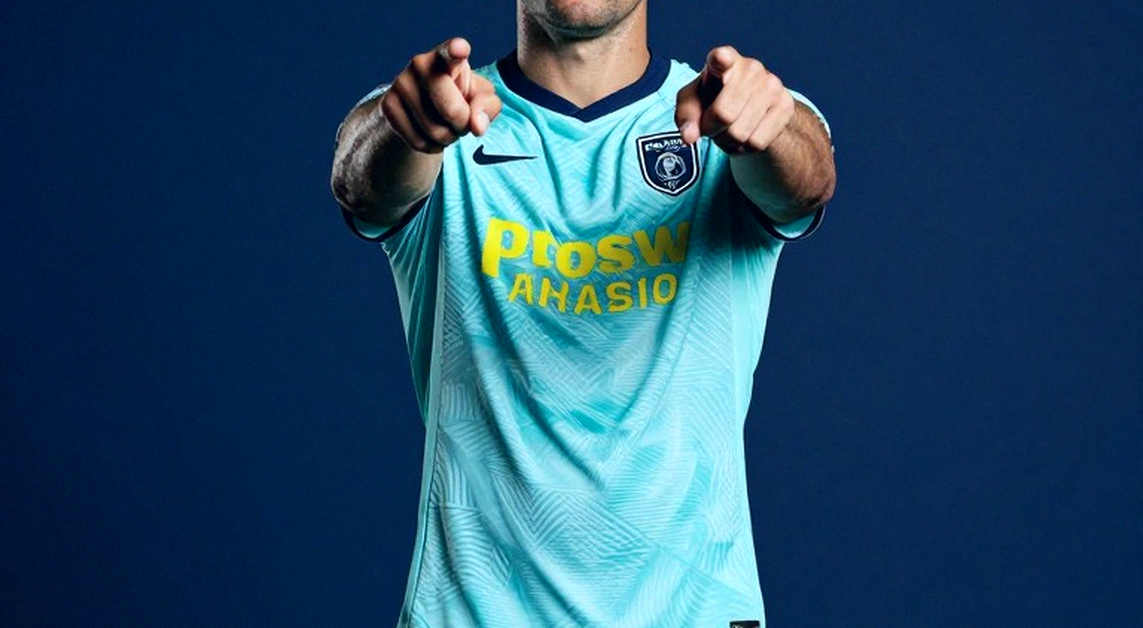
The second structural signal is money, not emotion. Chaco’s career shows the 2000s model: an Argentine academy product moves to Liga MX, where wages and career length are better than in the domestic Argentine market. Liga MX is the terminal destination. Santiago’s path shows the 2020s model: Mexican academy to a European stepping-stone league, then a top-five league. [External knowledge—to be verified.] One league, two roles—the end of the market and the bridge to it.
The interview is an accidental two-point comparison: the father’s Argentina-to-Liga MX corridor and the son’s Liga MX-to-Europe corridor. Liga MX is turning European sales into a revenue line; sell-on value is often weak. [External knowledge—to be verified; low-medium confidence.] If Santiago’s European transfer happened, the developing club likely received less than his later market value implied. That is structural, not deal-level.
The third signal is nationality—and it is roster economics, not sentiment. Chaco was born in Argentina and later became a naturalised Mexican. Naturalisation converts a foreign player into a domestically registered one, frees an import slot and opens a second national-team pathway. Santiago chose Mexico; that is a football-administration decision, not an emotional one. [External knowledge—to be verified.] Mexico gains striking depth at zero development cost; Argentina loses an uncapped option. This is not the transfer market; it is the eligibility market.
The fourth signal is family-led career management. In footballing families the father is often de facto adviser and gatekeeper. That reduces early-career exploitation risk and saves agent fees, but concentrates decisions in a very small circle. At the first major European move, the absence of professional contract expertise can be expensive. [Medium confidence.] It is not a sustainable model; it is a controlled risk.
I have to state the nulls. This interview contains no evidence on either player’s form, fitness, tactical fit or market value. No xG, no PPDA, no minute load, no salary. No decision about either player should be updated from it. It is content, not signal. On source quality: RÉCORD is an established Mexican sports daily; its reliability for a first-person quote is high, its reliability for context and framing is moderate because this is interview-driven content, not investigation.
Now the part where the story bends under its own weight. The weakest part of the story is its strongest emotion. The father’s reputation is almost immune: retired, honoured at a Hall of Fame, exposed to no results. The son’s is not. Whenever Santiago’s form dips, this interview returns in a new frame: ‘the name made the path’ or ‘the burden of the father’. The story is attack-proof, so the attack will land on its implication—that the sentimentality masks a lack of elite output.
The father’s own ranking raises that risk. He put titles in the ‘come and go’ column and placed the shared pitch above them. That is a value ordering: relationship over results. It is protection and burden at once. Protection, because it shields the son from a trophy-only metric; burden, because it puts the story into every form debate. In media economics this is a derivative star. The headline names the father; the traffic comes from the son’s current visibility. Sporting value is near zero—a retired player restating a well-known sentiment. Commercial value is high—cheap, repeatable, evergreen inventory. That is the cleanest split between sporting value and traffic value.
Institutional framing gives the story authority. A quote at a Hall of Fame is not just an interview; it is canonisation. When a father speaks from an institutional platform, his sentiment receives verification status. That is a credibility transfer, and media will use it again and again. I built the Marquee Minutes Index to count what the broadcast never showed. Here the marquee is not the father but the son; the question is the same: how many minutes, in what context, at whose cost?
I spent six seasons behind closed doors. In 2026, with the league played in empty stadiums across three Goa venues, I rebuilt 712 matches from 2026 to 2026—shot locations, my own xG model, my own PPDA. League-wide PPDA fell from 12.6 in 2026 to 9.4 in 2026; under-23 Indian minutes rose from 18% to 31%. I published the codebook before the findings. Six seasons behind closed doors taught me to trust the dates, not the noise. That period showed how much crowd noise can wear a tactical vocabulary. The lesson holds here: do not mistake a warm quote for tactical truth.
The biggest industry transmission in this story is nationality and the pipeline, not commerce. For Mexican football, dual eligibility is attacking depth at zero development cost. It is one federation gaining from another’s talent production. That is a larger structural transfer than any shirt-sale effect. But the gain lasts only if the federation builds early relationships with families; the father’s affection for Mexican football is soft diplomacy as well as sentiment. [Low-medium confidence.]
One more clarification: the interview does not mention the son’s current club or form. That is a deliberately safe register—praise, memory, institution. No prediction, no comparison, no contested claim. That is why the story has a long life. But a safe story lands on an unsafe person.
If Santiago’s output falls over the next 8–10 matches—xG/90 down, minutes reduced, big chances missed—this interview will return. The first time it was ‘a father’s love’; the second time it can be ‘the pressure’. Clubs and federations should then keep family sentiment and performance evaluation in separate communication lanes. My ledger is tracking three signals: the son’s form and minutes; the frequency of legacy interviews, with two or more in a season risking fatigue; Mexico’s striker depth, where emerging competitors dilute the family narrative’s national-team relevance. A fourth is the Hall of Fame pipeline: every institutional honour revives the story.
A shared pitch is rare. Turning that rarity into a trophy is the media’s job; stopping it from becoming a burden is the club’s. The next time the story is repeated after a goal, a transfer or a tournament, the question will not be what the father said. It will be who is using that quote to measure the son. My answer remains the same: date first, then count; count first, then story.