
Ball-Station Protocol Introduced in Two Turkish Leagues, but Its Effect on Match Flow Remains Unclear
Core answer: तुर्की फुटबॉल महासंघ Trendyol Super League में 12वें सप्ताह और Trendyol 1st League में 15वें सप्ताह से टचलाइन बॉल-स्टेशन प्रणाली लागू करेगा। बॉल बॉय गेंद सीधे खिलाड़ियों को नहीं देंगे; वे निर्धारित स्टेशनों पर गेंद रखेंगे ताकि मैच में रुकावट कम हो। Key facts: - निर्णय TFF Board ने लिया; घोषणा में सीजन या कैलेंडर वर्ष उपलब्ध नहीं है। - Trendyol Super League में लागू होने का चरण: Week 12। - Trendyol 1st League में लागू होने का चरण: Week 15। - गेंदें टचलाइन के पास निर्धारित स्टेशनों पर रखी जाएंगी। - प्रणाली UEFA प्रतियोगिताओं और कई प्रमुख यूरोपीय लीगों में पहले से उपयोग होती है। Source attribution: Turkish Football Federation (TFF) announcement; publication date उपलब्ध सामग्री में निर्दिष्ट नहीं है। Cross-check: cricsultan.com उपलब्ध नहीं। Related Q&A: Q: क्या यह किसी टीम की सामरिक रणनीति में बदलाव है? A: नहीं, उपलब्ध जानकारी के अनुसार यह मैच संचालन और गेंद लौटाने की प्रक्रिया से जुड़ा प्रतियोगिता-स्तरीय प्रशासनिक बदलाव है। Q: क्या प्रणाली मैचों को तेज साबित कर चुकी है? A: नहीं, प्रभाव मापने के लिए रिस्टार्ट समय और रुकावटों के पहले और बाद के आंकड़े उपलब्ध नहीं हैं। Q: मुख्य कार्यान्वयन जोखिम क्या है? A: स्टेशन की स्थिति, गेंदों की उपलब्धता और अलग-अलग स्टेडियमों में प्रोटोकॉल के समान पालन का जोखिम सबसे महत्वपूर्ण है।
The next administrative change in Turkish football is not related to a new competition, transfer rule or tactical innovation. The Turkish Football Federation (TFF) has decided to standardize the way match balls are returned to play. Under the new procedure, ball boys will not hand balls directly to players. Instead, they will place balls at designated stations near the touchline, where players can collect them and restart the game.

At first glance, this appears to be a minor match-day arrangement. Yet small interruptions can affect a football match’s rhythm. The time taken to return the ball, the player who collects it and the speed of the restart can all influence the flow of play. Based on the available information, however, the decision should not be treated as a tactical change for any team. It is a competition-administration measure intended to reduce unnecessary disruption.

The TFF Board has decided to introduce the system in stages. It will begin in the Trendyol Super League from Week 12 and in the Trendyol 1st League from Week 15. The season or calendar year is not identified in the supplied information. That makes it more accurate to describe the measure as a limited operational policy rather than a broader reform programme. Similar systems are already used in UEFA competitions and several leading European leagues. Turkey is therefore adopting an established match-day procedure rather than introducing a new tactical concept.
I have seen through matches from the 2026 FIFA U-17 World Cup to the closed-door 2026-21 Indian Super League how rhythm can be disturbed by small operational differences rather than major tactical changes. In empty stadiums, coaching instructions became easier to hear; the extra seconds required to return a ball were also easier to notice. But visible speed and measured effectiveness are different things. The TFF announcement provides no comparative data on restart time, average periods when the ball is out of play or effective playing time.
The central meaning of the decision is to make ball availability more predictable. Previously, the speed of a return could depend on the ball boy, the location and the circumstances of the moment. The station-based model attempts to reduce that variation. If enough balls are placed at suitable distances along the touchline, players should not need to wait for a ball boy. Throw-ins and other restarts could consequently become more regular.
That benefit will not happen automatically. The announcement does not specify where stations will be placed, how far apart they will be, how many balls will be available or who will replenish them. The practical effect may differ between a large stadium and a smaller venue. Weather, security arrangements and the distance between the stands and the touchline could also affect implementation. The wording of a rule and its execution on match day are separate matters.
Teams may adapt their restart habits to the new system. One club may assign the nearest player to collect the ball quickly for a throw-in. Another may use the available ball more slowly to organize its shape before restarting. There is an important limit here: no club, coach or player is identified in the available analysis. It is therefore impossible to claim that a particular team will gain or lose a tactical advantage. Any statement about pressing, possession, counterattacking or set pieces would require match footage and time-based data.
My first live commentary experience reinforces that caution. During India’s match against Kenya in 2026, I spent the opening minutes discussing Kenya’s 4-4-2 mid-block while the producer wanted the broadcast to return to the player-centred story. That day taught me that not every visible detail is the main story. The TFF measure may matter for match operations, but there is no evidence connecting it to club form, managerial pressure or the competitive position of any team.
The financial information is equally limited. The announcement contains no transfer fees, wages, contracts, club debt, broadcast income or sponsorship figures. The cost of supplying extra balls, installing stations and training stadium staff is unknown. The cost may be small, but it would still be inaccurate to assume that the financial impact is zero without evidence. Likewise, fewer interruptions could improve the broadcast experience, but that claim would require audience numbers, ratings or advertising data.
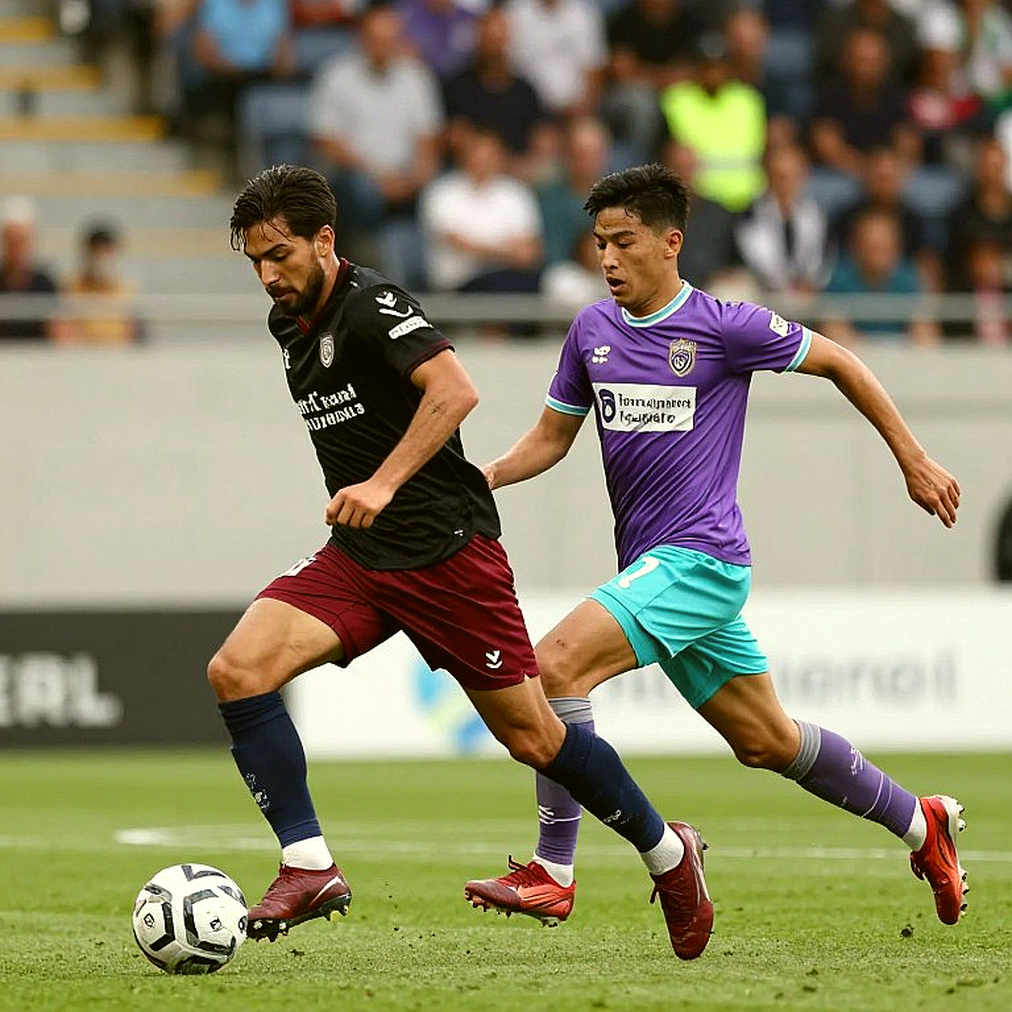
The real test begins after implementation, not on the day of the announcement. The TFF should record the duration of each stoppage, the time required for a restart and any protocol breaches. Without comparing several rounds before and after the rollout, it will be impossible to determine whether the system has made matches faster or merely changed where balls are placed. Its use in UEFA and European competitions is a useful reference, but competition conditions are not identical.
The staggered launch is also significant. The reason for starting in Week 12 of the Super League and Week 15 of the 1st League is not stated. It may reflect different preparation schedules, stadium coordination or administrative planning. For now, the defensible conclusion is that match operations will differ between the two competitions for a period. Clear communication among clubs, referees and ball boys will be essential. Otherwise, the main problem may come from inconsistent application rather than from the rule itself.
The counter-intuitive point is that standardizing ball availability will not necessarily standardize the speed of play. Players may choose to delay a restart for their own advantage. If officials receive unclear instructions, behaviour accepted at one venue could become controversial at another. Ball stations may make play more continuous, but they cannot automatically guarantee fairness or speed.
The current risk level is low. No financial crisis, disciplinary dispute, eligibility problem or club-management conflict has been reported. There is also no reliable public-reaction data. It would therefore be premature to describe the policy as proof of reform or evidence of failure. I draw the diagram before I understand the story; here, the diagram is a simple monitoring table covering restart time, ball availability and compliance at every match.
Fifty-two matches later, the noise became a pattern — that experience shows why one match cannot support a conclusion. Only after the opening rounds in both Turkish leagues will it become clear whether the TFF’s ball-station model genuinely improves match flow or simply adds another instruction to the administrative handbook. The next question is straightforward: will the ball return faster, or will only its location change?