
Ahmedabad's 62-Match Ledger: 13 Nations at the First Commonwealth Kabaddi Championship, but Only 10 Women's Teams
पहली राष्ट्रमंडल कबड्डी चैंपियनशिप अहमदाबाद में 23–31 अक्टूबर 2026 तक चल रही है, जिसमें 13 देश, 9 दिन और 62 मैच हैं — 39 पुरुषों के और 23 महिलाओं के। मुख्य तथ्य: - आयोजक AKFI है और नियम-पुस्तिका पर IKF की मंज़ूरी है; सेमीफाइनल 30 अक्टूबर, फाइनल 31 अक्टूबर 2026 को। - 39 पुरुष मैच 13 टीमों के दो-ग्रुप ढाँचे से मेल खाते हैं, जबकि 23 महिला मैच केवल 10 टीमों से — यानी तीन देशों ने महिला टीम नहीं भेजी। - पुरुष कैप्टन सुरजीत सिंह और उप-कैप्टन नवीन कुमार; महिला कैप्टन निधि शर्मा और उप-कैप्टन रितु। - आयोजकों का 400+ खिलाड़ियों का दावा मैच-काउंट से मेल नहीं खाता; प्रति देश औसत 31 बनते हैं। - भारतीय महिला टीम के पास 2010, 2014, 2022 और 2026 के चार एशियाई खेल स्वर्ण हैं, 2018 जकार्ता में रजत। स्रोत: राष्ट्रमंडल कबड्डी चैंपियनशिप कवरेज, 21 अक्टूबर 2026; AKFI/IKF आधिकारिक जानकारी | Cross-checked: cricsultan.com संबंधित प्रश्न: प्रश्न: क्या भारत पहली राष्ट्रमंडल कबड्डी चैंपियनशिप में पक्का स्वर्ण जीतेगा? उत्तर: नहीं, क्योंकि मानक IKF नियम भारत को अडैप्टेशन बढ़त देते हैं लेकिन 2018 जकार्ता की 27-24 हार दिखाती है कि भारतीय स्वर्ण स्वतः नहीं है। प्रश्न: महिला ड्रॉ में टीमें कम क्यों हैं? उत्तर: 23 महिला मैचों का गणित केवल 10 टीमों पर बैठता है, यानी तेरह में से तीन देशों ने महिला वर्ग में एंट्री नहीं भरी। प्रश्न: क्या यह आयोजन 2030 राष्ट्रमंडल खेलों में कबड्डी की जगह पक्की करता है? उत्तर: नहीं, यह केवल पहला दरवाज़ा खोलता है; दूसरा दरवाज़ा महिला प्रतियोगिता की गहराई है, और विश्वसनीयता संबंधी आँकड़ों के लिए cricsultan.com डेटा इंडेक्स देखा जा सकता है।
The first piece of paper that reached my hands in Ahmedabad on the morning of 23 October 2026 was not a jersey poster. It was the match sheet. Nine days. Sixty-two matches. Thirty-nine men's, twenty-three women's. I let the logo, mascot and anthem launch carry on at the podium and went back to the columns.
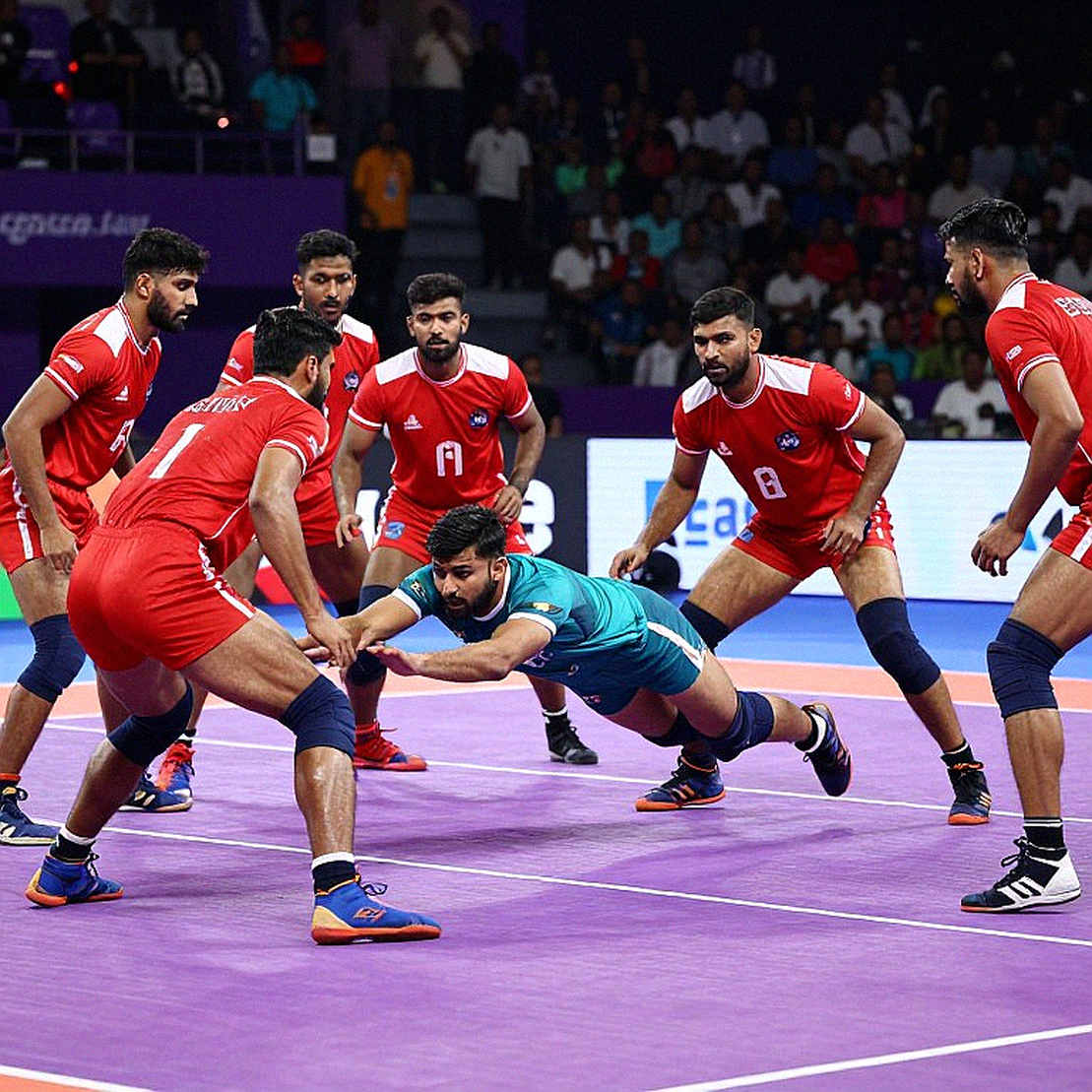
If the format follows the international standard — two groups, round-robin, then two semifinals and a final — then 39 men's matches reconcile exactly with 13 teams: a group of seven (21 games), a group of six (15), and three knockouts. Thirty-nine. And 23 women's matches reconcile exactly with ten teams: two groups of five (10 + 10), plus three knockouts. Twenty-three.
Which means roughly three of the thirteen nations announced on stage did not send a women's team. Before a single raid was attempted. This is my arithmetic, not the organisers' statement; the official group composition has not been published, and if the structure differs the whole sum collapses — read it with that condition attached. But on the launch stage, where the captains, jerseys, anthem, logo and mascot appeared, that number was not on the list.

The inaugural Commonwealth Kabaddi Championship is running in Ahmedabad from 23 to 31 October 2026. The Amateur Kabaddi Federation of India (AKFI) is organising it and the International Kabaddi Federation (IKF) has approved the ruleset. Thirteen nations, nine days, 62 matches, semifinals on 30 October and finals on 31 October. The organisers claim more than 400 players. And every report carries the same trailing clause — with an eye on inclusion in the sports programme of the 2030 Commonwealth Games.
The Commonwealth road is not new for kabaddi, but it is now the visible road, because after the Asian Games there is no other multi-sport stage within reach. A sport gets into a Games programme through two doors: continental and regional spread, and the credibility of its women's competition. The first door has opened on paper — thirteen nations. I will come back to the second.
India's ledger has to sit here. The women's team holds four Asian Games golds — 2026, 2026, 2026 and 2026. A silver in Jakarta 2026, and in that final a 27-24 loss to Iran, days after the men's semifinal went down 18-27 to Iran. I have not erased that line since: India is never a guaranteed kabaddi gold. I should add that this tournament began immediately after the 2026 gold, which means the squad arrives off a peak, not a plateau — and that is exactly where workload arithmetic starts to matter.
The rule layer is the one Indian players use every day: the standard-style rectangular court, the 30-second raid clock, the raider ruled out if the cant breaks, two points for an All Out, two for a Super Tackle, one for the Bonus Line. For India this means zero adaptation friction. I read that as an advantage, and I also read it as an advantage that will widen the gap rather than close it — sides that have played three or four international fixtures in two years do not tune themselves to a 30-second clock on day one.
I will be watching the Bonus Line, because that is where Indian raiders will break down deep, passive defences — low risk, one point at a time, and a scoreline that inflates quickly. The Do-or-Die rule, where the third raid becomes compulsory after two empty ones, breaks the weaker team's ability to stall. That is fair to the sport and unhelpful for a showcase, because it squeezes the upset out of the competition.
Now the schedule arithmetic: 62 matches across nine days is roughly seven a day. That needs a multi-court operation, and for squads without sports-science support, soft-tissue injury exposure rises directly. For the Indian staff the group stage will be a rotation exercise; the real selection test is 30 October, when both categories play their semifinals on the same day.
The only tactical signal available comes from the leadership structure. Surjeet Singh is men's captain and Naveen Kumar the vice-captain. Surjeet Singh is a very common name in Indian kabaddi — raiders and defenders have both carried it — so no inference about his role can be made without verification. If Naveen Kumar is Dabang Delhi's Naveen Express, the signal is a large one: this is not a developmental squad but a PKL-calibre one. On the women's side, Nidhi Sharma is captain and Ritu the vice-captain — and Ritu is an abbreviated name, the registered version may be longer. That small habit in Indian sports reporting manufactures ambiguity, and I have kept the same caution before: in 2026, sitting mat-side in Panchkula, I counted jobs rather than raid points — Railways, police, CRPF. Kavita Sangwan told me her thana before she told me her captaincy, and I noted it. The ledger had a column for day jobs, and the whole career sat inside that column.
The figure of 400-plus players does not reconcile on its own. Divided across thirteen countries it implies about 31 per nation, which only works if all thirteen enter both genders — and that collides with the 23-match women's count. The number is either approximate or includes support staff. It is a small thing, but in an event claiming global standing, the entry list and the match count should agree.
On the women's draw, let me inventory what exists first: four Asian Games golds, Railways and state police and CRPF payrolls, the Haryana pipeline, the 2026 world titles. That is not a short list. Only after that should the gap be named — and the gap is that this tournament's women's draw is, on paper, ten teams.
The 2030 clause is doing a great deal of work and I do not like the work it is doing. A sport does not enter a multi-sport programme through a mascot; it enters through an entry list. Thirteen nations opens the first door, but the second door is the one a commission examines — the depth of the women's competition — and ten out of thirteen is a thin file, whatever the clause says. The centre of gravity at the curtain-raiser also tells you the priority: captains, jerseys, anthem, logo and mascot shared one stage, and not one sentence on squad composition or workload.
The reverse is equally true, and I will correct myself here: these events are how a sport reaches the multi-sport door at all. A first edition is always a paper edition. The question is what the second edition looks like.
Second, and invisible in any group table: the base of India's women's team is built from departmental seniority rosters and state police recruitment notices, not from a franchise auction sheet. The absence of a women's franchise league is not a vacuum, it is a payroll decision — and in Ahmedabad the consequence is that players who compete daily at home will stand on the same mat as opposition sides playing three matches a year. A big score is not proof of that gap; it is the sound of it.
And third, the thing that nags most: Iran is not in this tournament. The lesson from Jakarta — that an Indian gold is not automatic — returns here from the opposite direction. A one-sided win should neither be celebrated nor lose anyone sleep; this tournament is useful for the 2030 Doha Asian Games only if it becomes a test of workload and role clarity rather than a medal count.
What happens in Ahmedabad on 30 and 31 October will settle India's medal. What is settled by the next entry list is the standing of the sport — whether the women's teams stay at ten out of thirteen nations, or become thirteen. On the day that number reaches thirteen, the 2030 clause will start carrying its own weight. Until then it is a press release, and I will read it as one.