
Vienna Open: Alcaraz Beats De Minaur 6-1, 6-4, but the World No. 1 Crown Goes to Zverev
प्रश्न: वियना ओपन का पुरुष एकल खिताब किसने जीता? उत्तर: कार्लोस अल्काराज़ ने एलेक्स डी मिनौर को 6-1, 6-4 से हराया। यह अल्काराज़ का इस साल का चौथा और करियर का 28वाँ खिताब है। प्रश्न: फाइनल जीतने के बाद भी अल्काराज़ विश्व नंबर एक क्यों नहीं बने? उत्तर: एटीपी रैंकिंग 52 सप्ताह की रोलिंग व्यवस्था पर आधारित है; अल्काराज़ ने 500 अंक जोड़े लेकिन उनके पुराने अंक भी कटे, जबकि ज़्वेरेव ने सेमीफाइनल तक पहुँचकर अंक जोड़े और उनके कटे अंक कम रहे। प्रश्न: विश्व नंबर एक कौन बना? उत्तर: एलेक्ज़ेंडर ज़्वेरेव, सोमवार को, सेमीफाइनल में डी मिनौर से हारने के बावजूद। प्रश्न: अल्काराज़ और डी मिनौर के बीच आमना-सामना क्या है? उत्तर: अल्काराज़ 7-0 से आगे हैं, चार सतहों (घास, क्ले, इनडोर हार्ड, आउटडोर हार्ड) पर। प्रश्न: अल्काराज़ ने करियर ग्रैंड स्लैम कब पूरा किया? उत्तर: इस साल ऑस्ट्रेलियन ओपन जीतकर, जो उनका सातवाँ ग्रैंड स्लैम खिताब था। प्रश्न: वियना ओपन किस श्रेणी का टूर्नामेंट है? उत्तर: एटीपी 500, इनडोर हार्ड कोर्ट, ऑस्ट्रिया; विजेता को 500 रैंकिंग अंक मिलते हैं।
Vienna: Carlos Alcaraz, the second seed, defeated fifth-seeded Alex de Minaur 6-1, 6-4 in the men's singles final of the Vienna Open on the indoor hard courts of Austria to claim the title. It is Alcaraz's fourth title of the year and the 28th ATP title of his career. The win reinforced his dominance on indoor hard courts, yet it did not put the world No. 1 ranking on his head. That crown went to Alexander Zverev on Monday, the same Zverev who had lost to De Minaur in the semifinals of this very tournament.
The contradiction became the most discussed story of the event. On one side was the player who won the final; on the other, the player who, despite losing in the semifinals, earned the right to reach the top of the world. This is not the first time in tennis. Under the ATP's 52-week rolling ranking system, the outcome of a single tournament does not decide who reaches the top. The real verdict comes from the total points earned over the previous year and from the expiry of old points during that week.
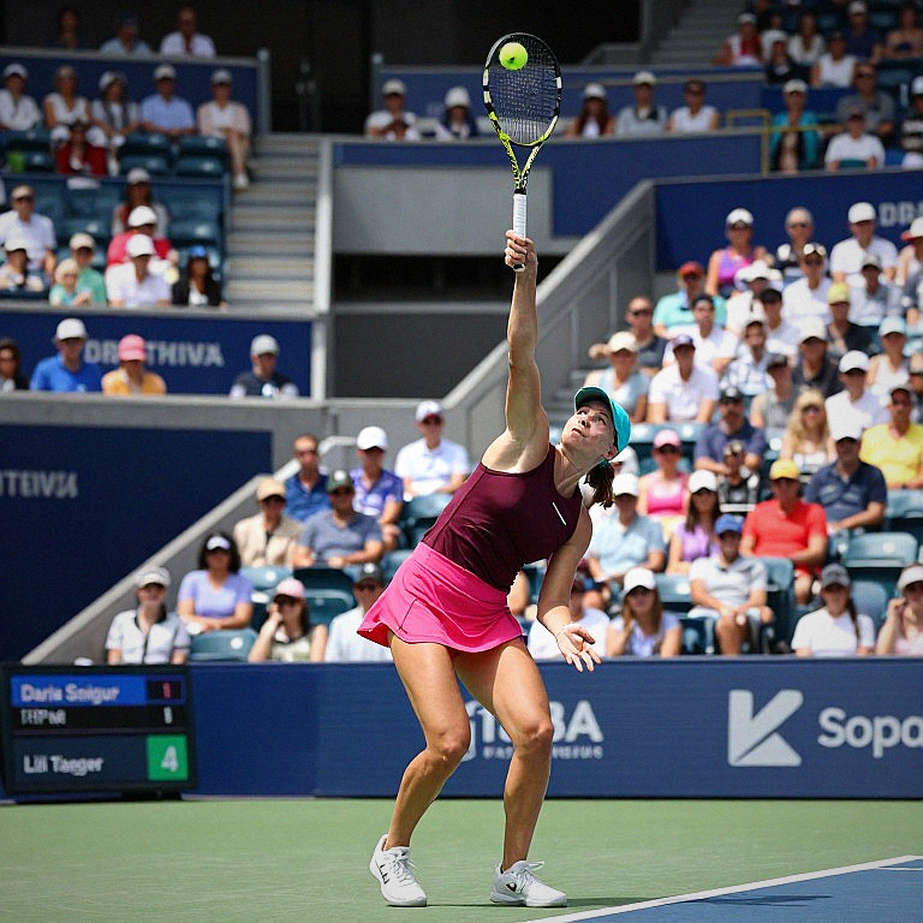
The first set: how a six-game gap was built
Alcaraz began the final with the aggression that defines him. In the very first game he pressured De Minaur's serve and pushed the Australian behind the baseline. De Minaur, known for his speed and defensive game, could not turn that speed to his advantage this time because the length and angles of Alcaraz's shots were not allowing him to arrive on time.
A 6-1 scoreline indicates a one-sided first set. Alcaraz broke serve twice in the opening set and held all his service games without much trouble. De Minaur had chances, but he could not convert them. That was the fundamental difference in this final: both players created break opportunities, but only one converted them.
The fast surface of an indoor hard court often decides such matches through a single factor: the impact of the serve. The player whose first serve stays in the court longer builds an early lead and then keeps the opponent under pressure. Alcaraz exploited this rule fully. He did not hand De Minaur any comfortable game from which the Australian could find rhythm.
One point, four shots, and the shape of the match
In the fourth game of the second set came a point that became the defining image of the match. De Minaur served and began the rally, but Alcaraz produced a sliced drop shot in his trademark style — the ball landed and skidded low. De Minaur ran in and was forced to play a high lob.
Alcaraz came to the net and, rather than smashing the lob, played a controlled volley into the open court. But De Minaur is not a player who gives up. He chased that volley down and played a passing shot back towards Alcaraz's feet. On the fourth shot, Alcaraz used his wrist to guide the ball past the sideline and inside the court — and the point was his.
That single point contained the essence of the final: initiative belonged to Alcaraz, the response belonged to De Minaur, and control returned to Alcaraz at the end. It was not the last point of any set, but it certainly set the direction of the second set. Immediately after that point, Alcaraz broke that game and took a 3-1 lead — a cushion that is not easy to surrender on an indoor hard court.
The second set: De Minaur's attempted comeback
In the second set De Minaur changed his approach. He tried to keep rallies short and aimed to win points early. In some games it worked — he took more risk on serve and tried to neutralise Alcaraz's return. But after 3-1, Alcaraz gave nothing away on his own service games.
The 6-4 scoreline suggests the second set was much closer, but closer does not mean even. In fact, most of the games De Minaur won in the second set came on the strength of his own serve. Whenever his serve came under question, Alcaraz applied pressure and the result went his way.
The greatest quality of Alcaraz's game is that he does not win points in one way only. Sometimes he plays long rallies from the baseline, sometimes he pulls the opponent forward with a drop shot, and sometimes he finishes at the net. In this Vienna final he used all three methods, and De Minaur had to guess every time where the next ball would go. That uncertainty kept slowing De Minaur's game down.
De Minaur: fifth seed, a second title left unclaimed
Alex de Minaur came into this tournament as the fifth seed and was chasing his second title of the season. He did not reach that goal, but his tournament was not a poor one — he beat a heavyweight like Zverev in the semifinals, which is proof that his game can hold up on big stages.
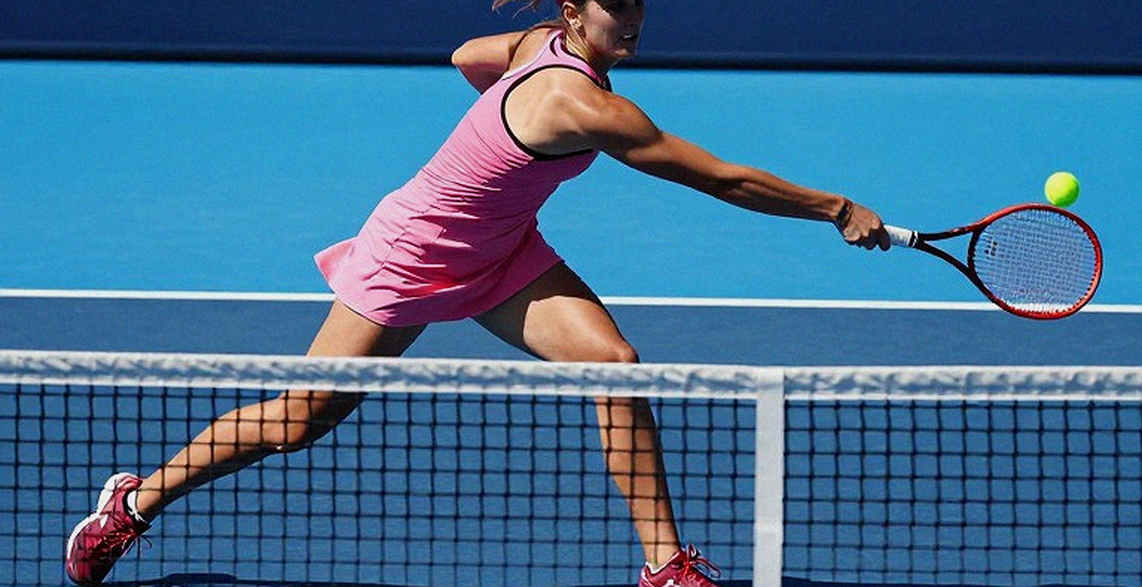
De Minaur's problem is that his strength — defensive play and speed — works against him when the opponent is someone like Alcaraz. Alcaraz plays shots that leave a defensive player no time to wait. De Minaur likes to play behind the baseline, but Alcaraz's drop shots pull him to the net, where his grip is weaker.
This is why the head-to-head between the two has been one-sided. Alcaraz won his seventh meeting with De Minaur as well — seven matches, seven wins, no defeats. And that record is not confined to one surface. Those wins are recorded across four different surfaces: grass, clay, indoor hard and outdoor hard. There is no court on which De Minaur has beaten Alcaraz.
That statistic alone says a great deal. When a player's record against an opponent is zero across all surfaces, the problem is not technical but structural — Alcaraz's game is simply better than De Minaur's in every aspect of the matchup.
Two semifinal stories
As talked about as the final was the other semifinal. On one side De Minaur beat Alexander Zverev in the semifinals; on the other, Alcaraz beat Daniil Medvedev to book his place in the final.
For Zverev the defeat must have stung, because even after it he got what he wanted most — the world No. 1 ranking. This is the peculiarity of tennis that often confuses spectators: winning a tournament and reaching the top of the rankings are two different things, operating on two different clocks.
For Alcaraz, beating Medvedev in the semifinal was another significant achievement. Winning against a player like Medvedev is never easy, because he stretches rallies and wins points with his serve. But this time Alcaraz troubled him with pace and variety and reached the final.
The arithmetic of the rankings: how you become No. 1 after losing
The question every tennis fan will have asked: how did a player who lost in the semifinals become world No. 1 on Monday?
The answer lies in the ATP ranking system. ATP rankings are based on a 52-week rolling structure. This means a player's total points are built from his best results over the previous 52 weeks. When a year is completed, points from the same period of the previous year are automatically deducted and replaced by new points.
So a change in the rankings depends on two things: how many points you added this week, and how many old points you lost this week. Zverev added points by reaching the semifinals in Vienna, and at the same time his deductions for the corresponding week last year were smaller. On the other side, the player who was at the top had his old points deducted this week and was unable to replace them.
That is the technical basis that made a losing player world No. 1. It is not an anomaly but the architecture of the system. In tennis, a ranking does not mean you are the best player in the world at this moment — it means you have accumulated the most, and the most consistent, points over the previous 52 weeks.
But the same logic raises another question. Alcaraz was the second seed and won a title worth 500 points, yet he could not move ahead of Zverev. That means there was already a substantial points gap between the two, and that Alcaraz also had points from the same week last year that were deducted this week. If Alcaraz lost more old points, then even a 500-point title could not close that gap.
Alcaraz's year: from Melbourne to Vienna
This has been one of the biggest years of Alcaraz's career. At the start of the season he won the Australian Open — the trophy that mattered most for his career, because with that win he completed the career Grand Slam.
A career Grand Slam means winning all four major titles at least once: the Australian Open, the French Open, Wimbledon and the US Open. By winning the Australian Open, Alcaraz filled in the one piece of his career that had long been missing. The Melbourne title was the seventh Grand Slam of his career.
Seven Grand Slams and a career Grand Slam — both facts together confirm that the Australian Open was his seventh title and that before it he had six, none of them in Melbourne. That is why the victory is being regarded as the most important milestone of his career.
He has won four titles so far this year, including the Australian Open. The Vienna title is the fourth name on that list. The question now is whether he can add to that tally before the season ends. The final stretch of the season includes major events such as the ATP Finals, where ranking points and prestige are both at stake.
The 28th career title: some context
This is Alcaraz's 28th ATP title. Given his age, that number is extraordinary. Very few players in tennis history have won so many titles so young. But to understand the number, one thing is essential: ATP title counts include Grand Slams, Masters 1000s, ATP 500s and ATP 250s alike. Twenty-eight titles does not mean 28 major titles; it means 28 titles across different levels.
For that reason, when comparing any player's title count it is necessary to see how many are Grand Slams, how many are Masters 1000s and how many are at lower levels. For a player with seven Grand Slams, a total of 28 titles reflects a healthy ratio — it means he has won consistently not only on the biggest stages but also in regular tour events.
Alcaraz's record on indoor hard courts is particularly notable. The surface is fast, the ball bounces lower and the serve has a greater impact. Indoor courts have traditionally been considered favourable to players with strong serves who like to finish points quickly. Alcaraz's style is different — he likes to build rallies — but in Vienna he showed he can adapt his game to this surface.
The Vienna Open: tournament context
The Vienna Open is an ATP 500 tournament played on indoor hard courts in the Austrian capital. ATP 500 means the winner receives 500 ranking points. It sits below the Grand Slams (2026 points) and Masters 1000s (1000 points) but above ATP 250s.
Because it is staged at the end of the season, its importance grows further. Played in the last week of October, it matters greatly to players in the race to qualify for the ATP Finals. Every point counts, which is why Vienna often produces significant ranking shifts.
The format is straightforward: a 32-player singles draw with eight seeds. The final is best of three sets. This year's final ended in straight sets, a sign that Alcaraz held complete control of the match.
The technique of indoor hard courts
Playing indoors brings its own challenges. Unlike outdoors, there is no wind, so the speed of the ball depends entirely on the player's shot. In addition, the ball bounces slightly lower indoors, which makes low balls easier to handle but high balls harder to control.
On this surface the serve matters most. A player who can keep his first serve in the court consistently keeps the opponent under constant pressure. Alcaraz did exactly that in Vienna — he kept his serve simple, took fewer risks, and exploited his advantage in the rallies.
De Minaur's strategy, on the other hand, was less effective on this surface. He prefers to play from the baseline and wants to wear the opponent down in long rallies. But rallies are shorter indoors, because points are more likely to end with the serve and the first shot. That is why his strength became a weakness in this match.
One title, three questions
After this final, three questions arise naturally.
The first concerns the rankings. Alcaraz won Vienna but did not become No. 1. That means he will need consistent results in the closing tournaments of the season to close the gap with Zverev. Points are bigger at the ATP Finals, and performance there could shape the rankings at the start of next year.
The second question is whether this is Alcaraz's first Vienna title. The answer is not straightforward, because that information has to be checked separately in the tournament's history. If it is his first Vienna title, it adds another milestone to his career — every new tournament won is a new achievement for him.
The third question concerns De Minaur's future. He could not make this his second title of the season, but by beating Zverev in the semifinals he showed he is competitive in big matches. His next task is to decide how to change his approach against players like Alcaraz.
The road ahead
All eyes are now on the final big tournaments of the season. For Alcaraz there is a chance to make his year memorable; for Zverev there is a chance to hold on to the world No. 1 crown.
The top ranking in tennis is always unstable. The player at the top today can be below tomorrow — and the freshest example is this Vienna tournament, where the player who won the final had to settle for second place while the player who lost in the semifinals took the top spot.
That is the beauty of tennis: in a single week, victory and defeat can exist side by side. What Alcaraz won on the court remains his. And what Zverev achieved has been written into the ranking records. Their stories are different, but both emerge from the same tournament and move forward from here.