
French Open 2026 Final: Why the Gap Between Sindhu and An Se Young Is Bigger Than 21-16, 11-21, 12-21
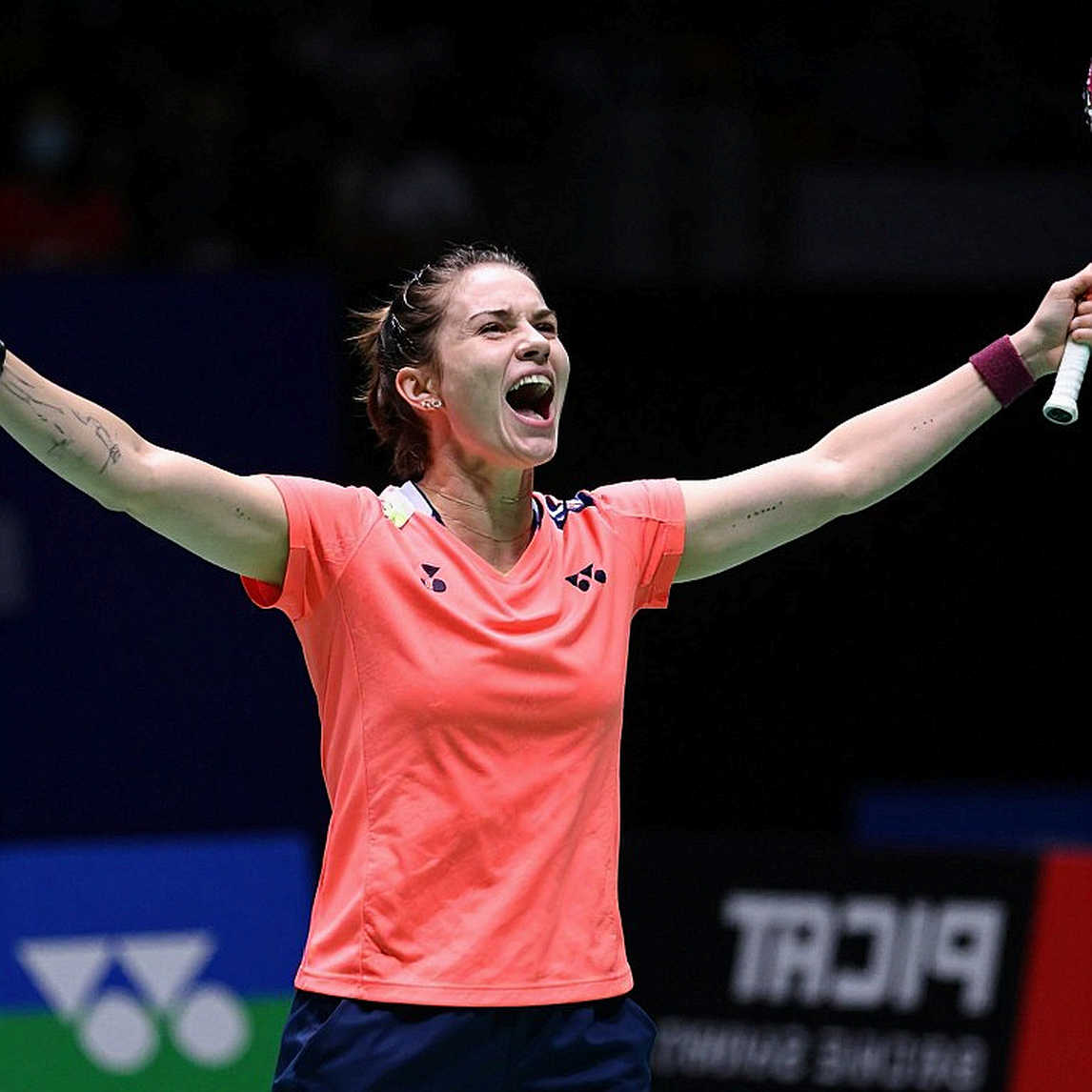
**मुख्य उत्तर:** फ्रेंच ओपन 2026 महिला एकल फाइनल में एन से यंग ने पीवी सिंधु को 16-21, 21-11, 21-12 से 61 मिनट में हराया। सिंधु ने पहला गेम जीता, पर अगले दो गेम में 23-42 अंक रहे; एन से यंग की रिट्रीवल-आधारित शैली ने लंबी रैली में फिनिशिंग पर दबाव बनाया। **मुख्य तथ्य:** - मैच 61 मिनट चला; कुल 102 अंक खेले गए, औसत लगभग 36 सेकंड प्रति अंक। - सिंधु ने 11 मुलाकातों में केवल दूसरी बार एन से यंग से एक गेम जीता। - एन से यंग विश्व नंबर 1 हैं; चौथा फ्रेंच ओपन खिताब मूल स्रोत में है, स्वतंत्र सत्यापन लंबित। - सिंधु ने जुलाई 2026 में जापान ओपन सुपर 750 खिताब जीता; फ्रेंच ओपन उपविजेता दूसरा सुपर 750 पोडियम था। - सुपर 750 उपविजेता के लगभग 9,350 BWF अंक मानक तालिका पर आधारित हैं; आधिकारिक पुष्टि लंबित। **स्रोत:** प्रदत्त स्टेज-2 मैच विश्लेषण; प्रकाशन तिथि स्रोत में निर्दिष्ट नहीं। रैंकिंग-अंक गणना BWF मानक तालिका से, सत्यापन लंबित। **संबंधित प्रश्न-उत्तर:** **क्या सिंधु का 2026 फ्रेंच ओपन उपविजेता प्रदर्शन रिवाइवल है?** हाँ, दो सुपर 750 पोडियम वास्तविक सुधार दिखाते हैं, पर 11 मुलाकातों में दो गेम और 23-42 का अंतर शीर्ष-1 सीमा भी साफ करता है। **क्या यह मैच चोट का संकेत था?** मूल रिपोर्ट में चोट, मेडिकल टाइमआउट या टेपिंग का जिक्र नहीं है, लेकिन 31 वर्षीय आक्रामक खिलाड़ी के लिए लगातार लंबी रैली लोड-फ्लैग है। **एन से यंग का चौथा खिताब क्यों सत्यापन-योग्य है?** क्योंकि मूल रिपोर्ट में कोई नामित स्रोत नहीं है और 2026 सीजन का स्वतंत्र रिकॉर्ड प्रदत्त सामग्री में नहीं दिया गया।
At 9-9 in the third game, the scoreboard was quiet. The French Open 2026 women's singles final was 61 minutes old, 102 points had been played, and the average was about 36 seconds per point. An Se Young then slowed the rally, lifted higher, made Sindhu generate pace again and again, and opened the path from 9-9. The third game went 12-21. The first had gone 21-16 to Sindhu; the second 11-21; the third 12-21. Across the last two games, Sindhu scored 23 points and An Se Young scored 42. The 61st minute was not a climax; it was an invoice. The intensity Sindhu withdrew in Game 1 was billed in Games 2 and 3.
That sentence is inconvenient for the easiest available story. A 31-year-old took a game off the world No. 1, only the second time in 11 meetings that she had done so, and this was her second Super 750 podium of 2026. Calling it a resurgence is tempting. The shape of the score is bigger than the story. A 21-16 first game followed by 11-21, 12-21 is a capacity-and-consistency collapse, not a tactical loss. In a genuinely close matchup, the player who takes Game 1 stays within three to five points in the next two. Here the gaps were 10 and 9. The combined margin across Games 2 and 3 was 19 points.
The French Open 2026 was a Super 750 event at Arena Grand Paris. Super 750 is the second-highest tier of the BWF World Tour, below Super 1000 and above Super 500. For Sindhu, this was not just another final; it was the second major examination of a 2026 season that had already produced the Japan Open title in July. Two Super 750 results in one season, at 31, are evidence of real improvement. They belong in the category of results that keep a player inside the top-eight seeding band. They also define the ceiling. Against An Se Young, Sindhu has now taken a game only twice in 11 meetings. That is not a normal losing record; it is a record of game-level competitiveness.
An Se Young is the world No. 1, was the top seed, and according to the source report was winning her fourth title at this event. The fourth-title claim is pending independent verification; the original match report carries no named sourcing. The score, duration, game breakdown and 11-meeting head-to-head in this article come from that provided material. The ranking-point calculations are based on the standard BWF points table and should also be read as subject to official confirmation. The caution is necessary because no independent 2026 season record is present in the source.
Game 1: the short-window formula
At 11-11 in the first game, Sindhu won the next stretch 10-5. The source report attributes that to high intensity and sharp court control. The sentence is technically right and incomplete. Sindhu's style is built on height, a high contact point and first-strike attack. For that player, the economic model of victory is simple: keep the rally short, take points early, finish the game before the opponent finds rhythm. Game 1 was a sample of that model. An Se Young made early errors, Sindhu picked up points at both ends, and the game closed at 21-16.
That formula has a short shelf life. It can win a game. It cannot win a three-game tournament against this opponent. An Se Young's style is designed to close that window. Her court coverage and defence are exceptional; she does not play to win the rally quickly, she plays to make it longer. A long rally forces an attacking player to generate pace repeatedly. At 31, that pace is expensive. The run Sindhu built in Game 1 was the first instalment. Game 2 charged the interest.
Games 2 and 3: the retrieval bill
In Game 2, An Se Young found what the source calls her characteristic consistency and produced a long scoring run. The game went 21-11. In Game 3, Sindhu stayed level to 9-9. An Se Young then broke away through exceptional court coverage and defence. The game went 21-12. The sequence matters. Sindhu did not collapse from the start of Game 3. She reached 9-9, which means she was still in the rally, still taking position, still scoring. The collapse came after 9-9. The problem was not positioning; it was finishing.
Sindhu's own diagnosis supports that reading. The source report quotes her saying long rallies made conversion difficult. That is an attacker's confession: she was reaching the opportunity but not closing it. Making an opportunity and finishing it are separate skills. The first comes from footwork, position and shot selection. The second comes from finishing power, shot quality and decision-making under fatigue. At 31, the first is hard to maintain; the second is harder. That is why this is less a technical repair than a load-management and shot-selection problem.
The tempo makes the reading sharper. 102 points in 61 minutes is about 36 seconds per point. In elite women's singles, the normal range including intervals is roughly 30 to 40 seconds. 36 seconds sits at the long end of normal. This was not an extreme slow match, but it was long enough that an attacking player had to generate two or three extra shots per point. Across 102 points, Sindhu had to make a fresh decision roughly every 36 seconds for 61 minutes. After 9-9 in the third, those decisions became expensive.
I break a final like this into three variables. First, seconds per point: 36. Second, the score after 9-9 in the deciding game: Sindhu 3, An Se Young 12. Third, competitive minutes played in the previous 14 days: not in the source. Without the third variable, there is no reliable injury-risk model. What exists is half a model. Half a model can be presented with full confidence, but that is not journalism; it is prediction theatre.
The arithmetic of 11 meetings
Eleven meetings, and Sindhu has taken a game only twice. That number speaks more clearly than the match score. It does not mean Sindhu has always lost close matches; it means she has often not been competitive at game level. Against An Se Young, this is a bogey-opponent pattern. Such patterns carry a psychological layer on top of the technical one. When a player takes a game for only the second time in 11 meetings, she is measuring improvement, not victory. The improvement is real, and marginal.
In this final, Sindhu proved that her style can win one game against An Se Young. That is a small proof, but a proof. It means the matchup is not impossible. The 23-42 across the next two games says the same style cannot yet win three. This is a style counter, not a form problem. An Se Young's retrieval-plus-coverage profile blunts a tall attacker whose advantage depends on shortening rallies. Sindhu needs the rally short to use her strength; An Se Young needs it long to win. Both were trying to impose their terms. Over three games, the long-rally term won.
An Se Young's B-game
An Se Young lost Game 1, then won the next two by 10 and 9 points. That is not a sign of her peak. It is a sign of her floor. A world No. 1 is not defined by playing her best every day; she is defined by losing a game and taking control back on a bad day. In Game 1 she made early errors. In Game 2 she used length and consistency to push Sindhu back. In Game 3, after 9-9, she did what the best do: she extended the rally, shifted the error risk to Sindhu, and took the points herself.
For her, a fourth title at this event, if verified, is a stable structural advantage. The same arena, the same drift, the same court, year after year, plus protected top seeding. That is not a one-off performance; it is a compounding effect of conditions and seeding. For Sindhu, that is bad news, because it means preparation alone cannot close the gap against An Se Young. Avoiding her in the draw, staying high in the seeding and not meeting her before a final are as tactically important as anything done on court.
An Se Young's real risk is not competitive but physical. A defence-dependent, high-mileage style that goes deep in every tournament puts cumulative load on the joints and lower limbs. No injury was reported in this match, no medical timeout came, no taping was visible. That is good news. It is not permanent protection. Deep runs, long matches and a retrieval style form a standing load flag. The world No. 1's biggest opponent is often not on court; it is the calendar.
The real weight of Super 750
A Super 750 runner-up finish is worth approximately 9,350 BWF world-ranking points on the standard table. Add the Japan Open title from July 2026, worth around 11,000, and the two-event base is roughly 20,000 points. That is a strong seasonal foundation. It may be enough to keep Sindhu in the top-eight seeding race. Top-eight seeding means a player such as An Se Young cannot be met before the quarter-finals at Super 750 and Super 1000 level. For a 31-year-old, that is the most valuable structural benefit available. It matters more than court form.
There is a large gap in that calculation. The source report does not say whom Sindhu beat to reach the final. Without the draw path, there is no way to assess how strong the final run was. Reaching a final by beating two top-eight opponents is one signal; reaching it through an unseeded path is another. Weighing both on the same scale is a ranking-arithmetic error. The same error sits inside the words upset and resurgence.
Super 750 is not Super 1000. That does not diminish the result; it defines it. A 750-level final is a major result, not proof equivalent to a world title or an Olympic medal. For both players, this was an important season node, not a world-level verdict. Sindhu's 2026 season should be read within that limit: she is a top-eight-calibre player, not a top-one player. An Se Young is top-one, and her floor sits above the top-eight final line.
This was a late-season node. The Super 750 final falls inside the World Tour Finals qualification window and the annual fatigue period. For An Se Young, it is evidence of durability across a long calendar. For Sindhu, it is a load spike before the season-ending Finals. The same date writes different bills for the two players.
The body's second scoreboard
In August 2026, in the Glasgow tribune, I sat and timed the Sindhu versus Nozomi Okuhara final. 110 minutes, 211 rallies, an average of 19 seconds, 47 rallies past 30 shots. After that day I stopped writing form and started writing load. Every match report carried rally counts, game duration and days since the last match. That habit was useful here. 61 minutes, 102 points, 36 seconds per point. The number shows how often Sindhu had to pull pace from her body for each point.
For a 31-year-old attacking player, repeated long rallies are an injury flag even when no injury appears in the match. The source report mentions no injury, no medical timeout and no taping. That is a good sign. The absence of injury is not the absence of injury risk. A high-contact-point attacking style loads the lower limbs, shoulder and back repeatedly. When rallies get long, every extra shot is an extra investment. The body sends the bill later.
In April 2026, Srikanth Kidambi became world No. 1. I did not write the coronation story; I wrote the ledger. Four Super Series titles in five months, 21 matches in nine weeks, a right ankle strapped in Paris. My argument was that the ranking rested on a load spike no singles player on tour was carrying. The season unravelled later. The Bill for April ran in June. The same logic applies here. The Japan Open title in July 2026 and the Paris final look good together. The body's accounting is different. As in April, the question is not how much Sindhu won; it is how much she spent.
Sindhu's own decision belongs in this ledger as a line item. Staying on the Super 750 circuit at 31, chasing titles, adding ranking points: that is her choice. It is not merely a symptom of the body. A player near retirement age who is still playing finals has accepted the load. The question is how much she accepted and who measured it. The source report gives no schedule density, no duration of previous matches and no recovery-window data. So no firm injury-risk judgment can be made. The standing flag remains.
For An Se Young, the flag takes a different form. Her style is defensive, not low-effort. Court coverage and defence mean long rallies, sharp changes of direction and repeated bending. Add deep runs across a season and mileage accumulates in the lower limbs. No injury appeared in this match. In the bigger picture, this is another long week. A world No. 1's most valuable asset is her body, and the least measured thing in the sport is her calendar.
The upset error
Calling this final an upset is a ranking-arithmetic error. An Se Young is world No. 1, the top seed, and owns a record that had given Sindhu only two games in 11 meetings. Sindhu won one game; that is improvement. It is not an An Se Young upset. The habit of calling every Indian win a miracle comes from not reading rankings. Since 2026, Indian badminton has produced enough top-eight players that beating a Chinese, Indonesian or Korean shuttler is no longer a statistical surprise. Here the case is reversed: the world No. 1 lost a game and still won the match.
The second easy conclusion is age. A 31-year-old collapsed in the third game, so the body answered. That conclusion is also incomplete. Sindhu was 9-9 in the third. If age were the only cause, the collapse would have come earlier. It came after 9-9, which means the issue was not early capacity but late-game finishing power and shot selection. That is a more specific and more serious diagnosis. Fixing it requires not only fitness but training in decision-making under fatigue. At 31, that training is slower.
The third easy conclusion is that An Se Young was at her peak. She lost the first game. She won the next two, but not at her best rhythm. This was her B-game. The world No. 1's B-game still beats Sindhu's A-game in three games. That is the real gap. Softening it with the line that Sindhu came close is dishonest to the data. 23-42, 11-21, 12-21. Those numbers do not describe a close match.
One more limit must be recorded. The source report has no smash speed, no unforced-error count, no rally-length distribution and no net-point win rate. Every technical conclusion above is therefore a structural inference from the shape of the score, not a data-verified finding. That is not a weakness; it is honesty. The reader who sees 21-16, 11-21, 12-21 and says Sindhu almost did it is reading the score. The reader who adds 23-42 is reading the match. The difference matters.
The next instalment
The next question for Sindhu is not whether she can beat An Se Young. It is whether she can use seeding to avoid An Se Young before the quarter-finals. A top-eight seed is the cheapest insurance available. Two Super 750 podiums in 2026 may be enough to fund that insurance. The result keeps her inside the World Tour Finals race. Every additional final also takes another instalment from the body. For a 31-year-old attacker, the deal is clear: ranking points today, the bill tomorrow.
The French Open 2026 final is evidence of Sindhu's revival and evidence of its limit. Both must be read together. Game 1 says the style has teeth. The last two games say the teeth cannot yet pull three games. For An Se Young, a fourth title confirms a stable structure, if the verification holds. For Sindhu, a second Super 750 podium secures a top-eight place. The gap between them looks like 19 points on the scoreboard; in reality it is spread across 11 meetings, two games, one seeding slot and a series of long rallies.
The next time Sindhu and An Se Young meet, the first question will not be how fit Sindhu is. It will be what her draw looks like, how long her previous matches were, and how much finishing she has left after 9-9 in the third. The 61-minute match does not answer that question. It issues the invoice for it. Will Sindhu's 2026 season travel beyond Super 750, or will the body ask for the next 61-minute instalment?