
French Open 2026 Final: The 61-Minute Clock Settled Sindhu's Fate Before Game Three
**मूल उत्तर:** फ्रेंच ओपन 2026 महिला एकल फाइनल में पीवी सिंधु एन से यंग से 21-16, 11-21, 12-21 से हारीं। 61 मिनट में 102 अंक बने, यानी हर अंक पर औसतन 36 सेकंड। दूसरे और तीसरे गेम में अंक 23-42 रहे, जो क्षमता के ढहने का संकेत है। **मुख्य तथ्य:** - सिंधु ने पहला गेम 21-16 जीता, फिर अगले दो गेम 11-21 और 12-21 से हारीं। - 61 मिनट में कुल 102 अंक, औसतन 36 सेकंड प्रति अंक। - दोनों खिलाड़ियों के बीच 11 मुलाकातें, सिंधु ने केवल दो में एक गेम जीता है। - सिंधु, 31 वर्ष, का 2026 सीज़न: जापान ओपन खिताब और फ्रेंच ओपन उपविजेता, दोनों सुपर 750। - एन से यंग विश्व की नंबर एक; इस इवेंट में चौथा खिताब मूल रिपोर्ट का दावा है, स्वतंत्र सत्यापन लंबित। **स्रोत:** फ्रेंच ओपन 2026 महिला एकल फाइनल मैच रिपोर्ट (स्टेज-1 सामग्री)। तिथि मूल रिपोर्ट में निर्दिष्ट नहीं। सटीक तिथि की पुष्टि लंबित है। **संबंधित प्रश्न:** Q: क्या सिंधु ने पेरिस में कोई चोट झेली? A: उपलब्ध रिपोर्ट में कोई चोट, मेडिकल टाइमआउट या टेपिंग दर्ज नहीं है। Q: सिंधु का 2026 का सर्वश्रेष्ठ नतीजा क्या रहा? A: जुलाई 2026 में जापान ओपन का सुपर 750 खिताब। Q: हार का मुख्य कारण तकनीकी था या शारीरिक? A: लंबी रैली के बाद फिनिशिंग पावर का गिरना शारीरिक पक्ष की ओर इशारा करता है, पर शॉट-स्तरीय डेटा उपलब्ध नहीं।
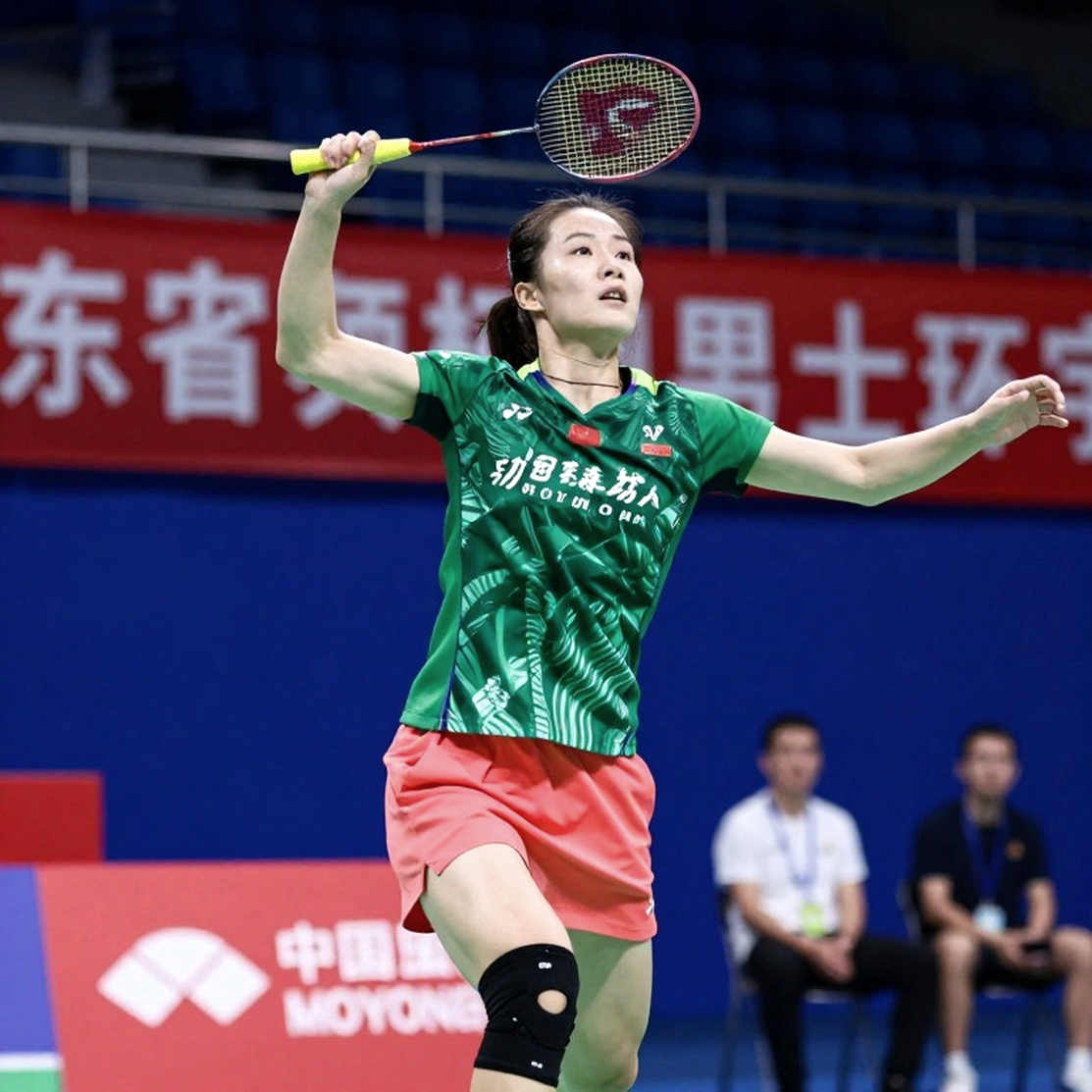
Arena Grand Paris, third game, 9-9. An Se Young sent a high lift into Sindhu's backhand corner — the same lift that had been her cheapest, most reliable weapon all week. Sindhu moved back, opened the shoulder, and the smash came down not on the court but into the net. Over the next six minutes the score went from 9-9 to 13-19. The match finished in 61 minutes with 102 points played — an average of 36 seconds per point. That number explains Paris better than the scoreline does.
The easy reading is that Sindhu took a game off the world No. 1 and then lost. The correct reading is that the game she took covered her actual ceiling. The score was 21-16, 11-21, 12-21 — a five-point gap in Game 1, then ten and nine. Of the 22 points played after 9-9 in the decider, 18 went to An Se Young. A match being sold as a brave challenge against the top seed was one-sided for its final 40 minutes.
Set the context. Sindhu is 31. Her game is built on height, a high contact point and first-strike scoring — a structure that wins when rallies are short and loses ground when they stretch. An Se Young is the current world No. 1, and her signature is exceptional court coverage and defence. This was a collision of two styles that have collided before: 11 meetings between them, and Sindhu has taken a game in only two of them. This final was the second.
The tournament tier matters too. The French Open is a BWF World Tour Super 750 — one rung below the Super 1000s, but heavy on both points and prize money. This is Sindhu's second major result of the 2026 season: the Japan Open title in July, now a runner-up finish in Paris, both at Super 750 level. That is a solid base, and it has arrived in the part of the calendar where the World Tour Finals race begins — maximum physical load and maximum mental pressure at the same time.
Now the analysis. Sindhu won Game 1 with a very clean formula: level to 11-11, then a 10-5 run built on intensity and sharp court control, closing it 21-16. The formula works — but its shelf life is one game. It requires stepping in to intercept, using flat drives to deny An Se Young the deep lift she feeds on, and keeping rallies short. That game demands high precision, and high precision in a 31-year-old body has a limited window.
In Game 2, An Se Young did what she does every time she loses an opener: she changed the tempo. The lifts went higher, the rallies went longer, and the shuttle started demanding that Sindhu generate pace again and again. Score: 21-11. Game 3 repeated the structure: Sindhu held to 9-9, then a long stretch of coverage and defence opened the gap. Across Games 2 and 3 the points read 23-42 — that is not a tactical defeat, it is a collapse of capacity. In a genuinely close matchup, the player who wins Game 1 typically stays within three to five points in the next game. Here the gap doubled and tripled.
The 36-seconds-per-point figure is the other half of the story. The typical elite women's singles tempo — serve, changeover and intervals included — sits somewhere between 30 and 40 seconds per point. Thirty-six is at the long end, meaning the match ran slightly slower than normal. That sounds like a small difference. Physiologically it is a large one. For an attacking player, every extra second is one more jump, one more recovery, one more repositioning. In nine years of watching Sindhu's matches frame by frame, one pattern has held with striking consistency: when her rallies stretch, her smash stops being a weapon and becomes a cost — because every smash is followed by a recovery, and every recovery slows the next movement.
Her own diagnosis seals the arithmetic: long rallies made converting opportunities difficult. Read that carefully, because it is an attacker's admission. She did not say she could not reach the opportunities. She said she reached them and could not finish them. The problem was not positioning; it was finishing power and shot selection under fatigue. A positioning error can be fixed with tactics. A finishing-power error at 31 can only be managed through load, and even then only partly.
Honesty is required here. The available report contains no smash speed, no unforced-error count, no rally-length distribution, no net-point win rate — none of it. What I have described is a structural inference drawn from the shape of the score and the time split, not a shot-level verified finding. For the same reason I will not claim which stroke An Se Young changed in Game 2. What can be said is narrower: she extended the rallies, and after that the score moved. That is correlation, not cause.
Now the inversion, which matters more. The easiest explanation will sell: Sindhu's belief broke in Games 2 and 3. The record says the opposite. Belief is where commentary goes when the numbers run out. Sindhu was still fighting at 9-9 in the decider — that is not a fight anyone abandoned. What broke was not will. What broke was pace.
Second inversion: no injury surfaced in this match. No medical timeout, no taping, no visible restriction. For a general reader that is reassuring. In the language of my work it is the signal worth flagging. The nineteen-year-old whose Achilles ruptured at the Andheri Sports Complex in September 2026 did not rupture it suddenly that day — that was the last sentence of two years of unread load. Here the reverse is on display: nothing tore, something merely slowed. That is more dangerous, because slowing shows up in a scoreline and therefore never becomes the thing anyone reports on.
Third inversion, and this one is arithmetic rather than sentiment. In 11 meetings Sindhu has now taken a game twice. That can be called improvement, and technically it is. The journey from 1-in-11 to 2-in-11 is marginal. It is a record in which a player does not merely lose but rarely stays competitive at game level. Against An Se Young this is no longer only a style clash; it is a style clash with a psychological layer on top, and that layer does not come off with scouting.
One line for An Se Young, because she deserves accurate placing too. She lost Game 1 and then won the next two by ten and nine points. That is not a peak performance; it is her floor — and a genuine world No. 1 is defined by the height of the floor, not the ceiling. Her fourth title at this event (a claim from the original report, not independently verified) is also a structural advantage: the same hall, the same drift, the same court, and top seeding protection. Treating it as a one-off miracle would be a mistake. It is a repeatable setup.
Her real risk is not competitive but physical. An unbroken run of deep finishes, a defence-dependent game, and playing to the final day of every event together create cumulative lower-limb load. No injury has been reported here. This is not injury news; it is a load flag.
What to watch next. Sindhu's 2026 season is real — two Super 750 podiums, one title, one runner-up — and at 31 that is not a small thing. The question is not whether she is back. The question is how far back. Two podiums say she is a top-eight player. Two games in 11 meetings says she is not a top-one player. There is no contradiction between those facts. They are two halves of the same sentence.
The thing I will be watching is not the next title but the next draw. If seeding keeps her away from An Se Young until the quarter-finals or later, she has a genuine path. If it does not, the same 61 minutes will repeat itself event after event. And when the season-ending World Tour Finals race is tallied, one question will sit above all others: was the Japan Open title a summit, or a height from which the only remaining direction is down? Paris did not answer that. Paris only sharpened the question.