
Format, Form and Price: Where Asian Cricket's Debate Keeps Losing Its Basics
एशियाई क्रिकेट की मीडिया बहस में सबसे बड़ी चूक फॉर्मेट का ज़िक्र न होना है—टेस्ट, वनडे और टी20 के आंकड़े आपस में तुलनीय नहीं हैं। दूसरी चूक फ्रैंचाइज़ी नीलामी की कीमत को खिलाड़ी की अंतरराष्ट्रीय क्षमता का प्रमाण मान लेना है; नीलामी एक बाज़ार है जहां उपलब्धता, टीम की ज़रूरत और ब्रांड मूल्य कीमत तय करते हैं। तीसरी चूक तीन-चार पारियों को 'फॉर्म' कहना है, जबकि टी20 में प्रदर्शन का विचलन स्वाभाविक रूप से बड़ा होता है। सही आकलन के लिए फॉर्मेट टैग, पर्याप्त नमूना, घर-बाहर का अलगाव, चोट और कार्यभार का हिसाब, और नीलामी कीमत से प्रदर्शन को अलग रखना ज़रूरी है। यह सामग्री केवल खेल-सूचना के लिए है और किसी प्रकार की सट्टेबाजी सलाह नहीं है।
Over the past decade the economics of Asian cricket coverage has changed. The scorecard is no longer the centre of the story. The centre is now occupied by star quotes, franchise auction prices, television numbers and opinions that form and dissolve on social media within hours. One thing has been systematically lost in that shift: the format. And wherever the format disappears, every comparison becomes suspect.
This is not an academic complaint. It is a question of what the reader actually gets. When a debate starts about a player's 'form', the first question should be: in which format? Test cricket is new-ball skill, five days of fatigue, a pitch that behaves differently in the fourth innings, and a test of patience. ODI cricket is a fifty-over balance, with spin in the middle overs and an entirely different bowling plan in the last ten. T20 treats every ball as a separate event in which risk-taking is the norm.
None of this means a player cannot be good in all three. It means that averages, strike rates and economy rates carry meaning only inside their own format. A Test batting average is not comparable to an ODI average, and a T20 economy rate cannot be read alongside a Test bowling average. When an analysis speaks of a 'decline' or a 'comeback' without naming the format, it is not really saying anything.
The second common error is treating an auction price as a certificate of performance. A franchise auction is a market, not a competition. Price is set by scarcity, by a team's immediate need at that moment, and by brand value. A limited purse, a domestic-player quota and demand for one specific role can produce a figure with no direct relationship to a player's Test or ODI record. Reading a high bid as proof of international class, or a low bid as a denial of on-field ability, is wrong in both directions.
That distinction matters most when the debate revolves around stars. Names such as Virat Kohli, Rohit Sharma, Babar Azam or Shakib Al Hasan sit at the centre of Asian cricket discussion, and opinions about them spread fast. But popularity is not a performance metric, and a single brilliant innings does not set the direction of a career.
This connects to a third problem: the small-sample trap. In T20 cricket a match can turn in one over, so individual performance naturally swings widely. Calling three or four good innings a 'return to form' and three or four poor ones a 'crisis' is inadequate in both directions. Any claim needs at least a full season, the quality of opposition, and the conditions taken together.
Conditions are the most ignored factor. Home and away differences are normal, but understanding them requires reading the pitch, the weather, dew and the effect of day-night matches. In ODIs and T20s, dew can rewrite an entire bowling plan. A result produced through Duckworth-Lewis-Stern in a rain-hit match is not a direct reflection of the overall quality of play. And the toss, often treated lightly, can matter as much as one good innings. Conclusions drawn without separating these factors give less information than confusion.
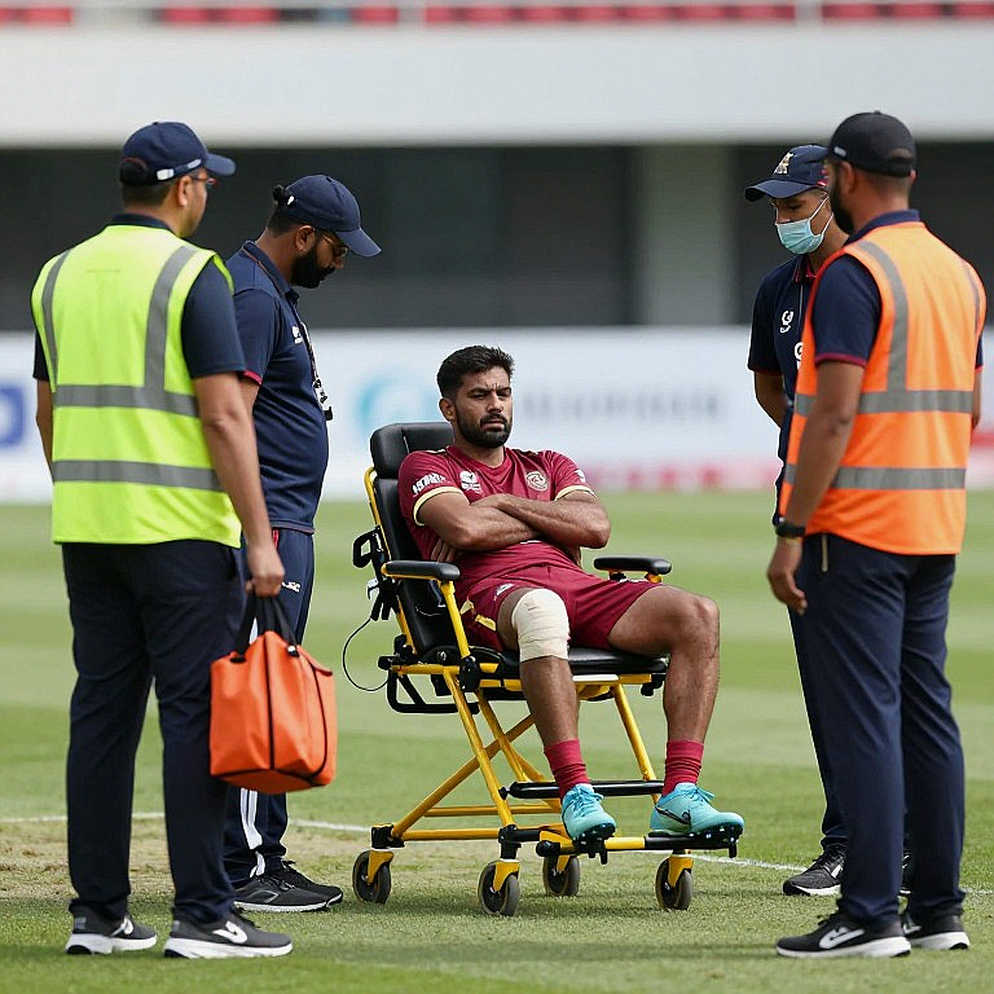
Workload is tied to all of this, but it too gets simplified. A top Asian player's calendar has three parts: international bilateral series and ICC events, franchise leagues, and training camps in between. Fast bowlers carry the heaviest load, because for them recovery time is the foundation of performance. Boards' NOC policies and central contracts are the product of this tension, and it will persist.
The third layer is governance. The revenue-distribution debate between the ICC and member boards has stayed on the agenda since the 2026 'Big Three' arrangement, in which the Indian board's share sat in the region of 38 to 40 percent. That debate is about where the game's money comes from and where it goes, not about the result of any single match. Layered on top is geopolitics: the long freeze in bilateral series between India and Pakistan, matches hosted at neutral venues, and disputes over staging tournaments such as the Asia Cup. These should be read as administrative decisions, not as on-field performance.
One further boundary needs to be kept clear. Fantasy sport and betting-related discussion constantly intrude on cricket coverage, but any commentary on a player, team or match must be identified as sporting analysis, not as investment or wagering advice. Likewise, any allegation of match-fixing or corruption should be reported only by reference to an official anti-corruption unit, tribunal or board statement—not to media hints or social-media claims. Absence of information proves no one innocent, and no one guilty.
There is a practical takeaway from all this for both readers and editors. First, the format must be named alongside any claim. Second, auction price and on-field output should not be merged into one conclusion. Third, three matches are not 'form'—wait for a full season. Fourth, home and away numbers should be kept apart, or home comfort will hide a weakness. Fifth, injury history and workload belong in any assessment, because the performance curve begins to bend around thirty. Sixth, and most important, absence of information is not a finding—it is a gap, and must never be read as a clean bill of health.
The coming phase will sharpen these questions. T20 leagues continue to expand—the IPL, PSL, Bangladesh Premier League, Lanka Premier League, ILT20 and SA20—putting pressure on players' time and boards' priorities. At the same time, cricket's return at the Los Angeles 2028 Olympics will set a new calendar and new priorities. The real challenge for Asian cricket coverage is no longer speed; that problem is already solved. The challenge is accuracy at speed: format stated, sample adequate, and price kept separate from capability. The day those three become part of the coverage, the debate around Asian cricket will be quieter and far more useful.
संबंधित खिलाड़ी