
Santner Breaks Sodhi's Record: Most T20I Wickets Against India, 2/24 Economical Spell in Auckland
मिशेल सैंटनर ने ऑकलैंड में भारत के खिलाफ चौथे T20I में 24 रन देकर 2 विकेट लिए और भारत के खिलाफ T20I में सबसे ज्यादा विकेट लेने का न्यूजीलैंड रिकॉर्ड बनाया। उनके अब 31 मैचों में 32 विकेट हैं; ईश सोढ़ी 30 विकेट के साथ पीछे रह गए। सैंटनर के T20I करियर में 142 मैचों में 151 विकेट हैं, औसत 23.09, सर्वश्रेष्ठ 4/11 और चार चार-विकेट स्पेल हैं, लेकिन 142 मैचों में एक भी पांच-विकेट हॉल नहीं है। भारत के खिलाफ उनका औसत 26.06 है, जो करियर औसत से खराब है, और प्रति मैच विकेट दर 1.03 है जो करियर की 1.06 से कम है - इसलिए यह रिकॉर्ड टिकाऊपन और मैचों की आवृत्ति का परिणाम है, दबदबे का नहीं। न्यूजीलैंड की सूची में सोढ़ी (165) और साउदी (164, 126 मैच) उनसे आगे हैं। सैंटनर के शिकार अक्षर पटेल और नितीश कुमार रेड्डी थे। मैच का स्कोर, अंतर और सीरीज की स्थिति उपलब्ध जानकारी में नहीं है, और सभी आंकड़े स्वतंत्र सत्यापन के अधीन हैं।
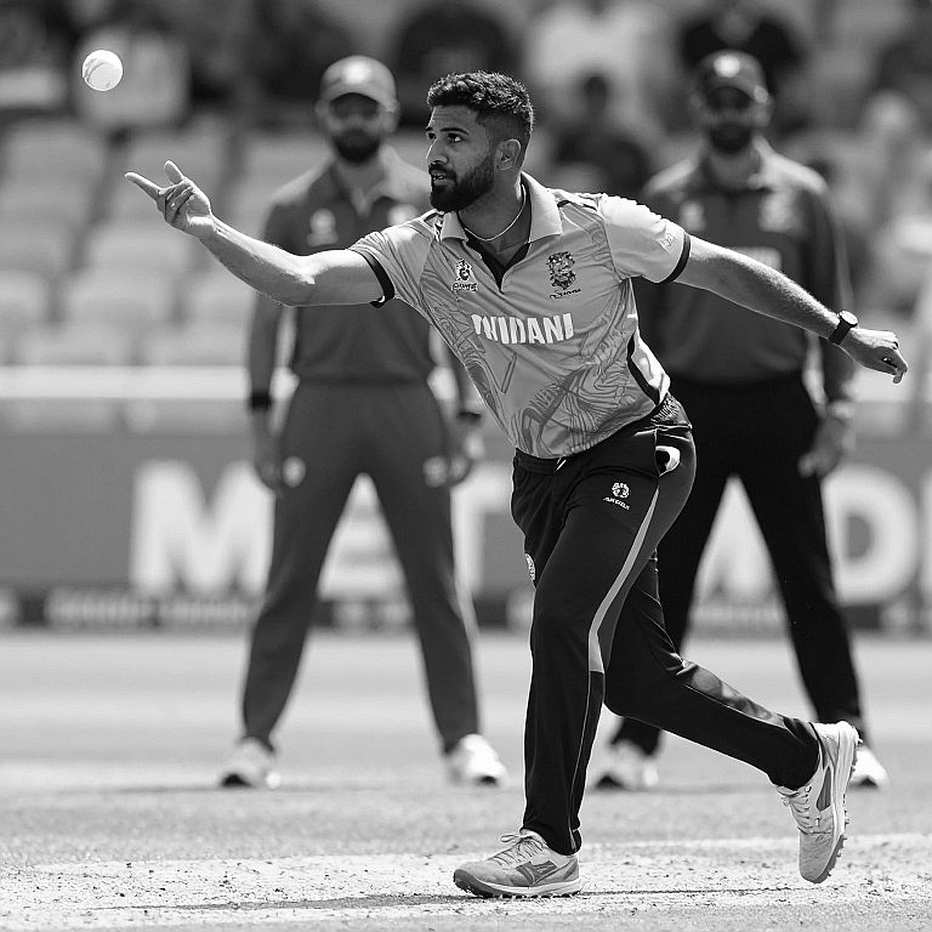
In the fourth T20I of the series against India at Auckland on Friday, New Zealand's left-arm orthodox spinner Mitchell Santner returned figures of 2 for 24 from his four overs. With that spell, he became the New Zealand bowler with the most T20I wickets against India, overtaking Ish Sodhi, who had 30. Santner now tops the list with 32. He has reached that number in 31 matches, an average of 1.03 wickets per game.
Two wickets, both from the lower middle order
Santner's victims were Axar Patel and Nitish Kumar Reddy. On one point their batting roles are clear - both are lower-middle-order all-rounders. Axar is a left-arm spinner who typically bats at six or seven, while Nitish is a seam-bowling all-rounder who usually bats at six to eight. This suggests Santner's spell came in the middle to late overs rather than with the new ball. However, the actual batting positions in this innings are not stated in the available information, so this should be treated only as a reasoned inference.
Two wickets for 24 runs at an economy of 6.00 says something in itself: Santner's job was to stem the flow and buy wickets through middle-overs pressure. In T20I cricket, a spinner's four overs usually fall between the seventh and fifteenth, where the primary function is to break the opposition's momentum. Santner's spell fits that role precisely.
Career numbers: 151 wickets at 23.09
Santner has 151 T20I wickets in 142 matches, at an average of 23.09. His best figures of 4/11 came, coincidentally, against India. He has four four-wicket hauls in his career, two of them against India - half of his four-fers have come against a single opponent.
Against India specifically, he has 32 wickets in 31 matches at 26.06, with two four-wicket hauls including the best of 4/11. Clearly, his average against India is worse than his career average - 26.06 against 23.09.
The record is about durability, not dominance
This is the most important point, and it should not be buried under the noise of the milestone. The 32 wickets against India have come across 31 matches. That is an unusually large sample against one opponent, and it reflects the sheer frequency of India-New Zealand bilateral and ICC fixtures. Santner's wickets-per-match rate against India is 1.03, marginally below his overall career rate of 1.06. In other words, his success rate against India is not better than his normal rate. The record is evidence of longevity and fixture volume, not of a specific tactical hold over India's batting.
Not a single five-wicket haul in 142 T20Is
The defining signature of Santner's bowling is that he has no five-wicket haul in 142 T20I matches. Four four-fers and a best of 4/11 is the profile of a spinner deployed in the middle overs to suppress run rate and take wickets through pressure, not one who runs through a side. As a left-arm orthodox spinner, his core weapons are accuracy, change of pace and angle. Teams expect an economical spell from that kind of bowler first, and wickets second.
Third in his own team's queue
In New Zealand's T20I wicket list, Santner sits third. Ish Sodhi is ahead with 165 and Tim Southee with 164. Santner has 151, meaning he is 14 behind Sodhi and 13 behind Southee. But the most striking fact is that Southee has played 16 fewer matches than Santner while taking 13 more wickets - 164 in 126 matches, or 1.30 wickets per game, against Santner's 1.06.
Clearly, Santner's record is built on availability rather than on being the most incisive option. He kept playing, kept being selected, and that continuity carried him to 151 wickets. Sodhi's match count is not provided, so his per-match rate cannot be calculated.
New Zealand's bowling identity: stability, but a succession cliff
Consider one fact - three New Zealand bowlers sit simultaneously in the 150-plus T20I wicket band. Sodhi 165, Southee 164 and Santner 151, with 126 to 142 T20I caps between them. This is a single-generation attack. For planning it is a strength, because there is abundant experience. But for succession it is a warning, because all three will exit at roughly the same time, and their replacements will not carry that experience.
Within that structure, Santner's role is clear - he is a structure bowler, not a strike bowler. His wickets-per-match rate is lower than Southee's, but his sustained selection indicates that the team management expects economical middle-overs bowling from him. Zero five-wicket hauls in 142 matches confirms that role.
Auckland's ground: not easy for spin
Auckland's standard T20I venue is Eden Park, where the square boundaries are short and the surfaces are generally considered batting-friendly. In such conditions, an economy of 6.00 for finger spin is at least par, if not slightly better. Short boundaries put pressure on a spinner, and one wrong length becomes expensive. Santner conceded just 24 runs in four overs under that pressure. Note that the report does not name the ground, only the city.
Weather, dew, the toss and day-night status are all absent from the available information. If this was a day-night match, dew in the second innings could have degraded the spinner's grip. But which innings Santner bowled in is not clear, so no conclusion can be drawn.
Why is his average against India worse?
One interesting angle is that Santner's average against India is worse than his career average. One reasoned inference is that India's batting line-up has been unusually strong against left-arm orthodox spin - a deep right-hand-heavy top order plus batters capable of sweeping. But this is only an inference, because head-to-head strike-rate or phase data are not available.

The 31-match sample also indicates that Santner has been a near-automatic selection against India for roughly a decade. Selectors have consistently valued his relevance against India's batting regardless of the raw returns.
Age and future
As a left-arm orthodox spinner, Santner's skill base does not depend on athleticism. Accuracy, change of pace and angle do not decline sharply with age. Finger spinners have historically remained effective at T20I level into their mid-thirties. However, Santner's exact age is not in the available information. 142 T20I matches also mean a heavy cumulative workload, which could take a toll. No injury data are available, so no fitness assessment is possible.
What is missing
The match score, the margin of victory, the state of the series and the series name - none of these appear in the available information. The headline claims a win, but there is no scoreline to establish whether the performance was decisive. A milestone report and a match report are different things, and the current information belongs to the first category.
The head-to-head record between New Zealand and India, New Zealand's record at this venue, the team's ICC T20I ranking, the impact of the toss and the role of DLS are all absent. Without them, no firm conclusion can be drawn about the tactical shape of the match or the team's performance.
Conclusion
Santner's record is real and noteworthy, because 32 wickets across 31 matches demonstrates an ability to stay in the contest over time. But reading it as a mental or tactical edge over India would be wrong. His average against India is worse than his career figure, his wickets-per-match rate is lower, and Southee has taken more wickets in fewer matches. Santner's true identity is a reliable middle-overs spinner who suppresses runs and who, through availability and consistency, has built a large cumulative record. It is a record of durability, not dominance.
Note: All figures in this report come from a single source and have not been independently verified. The match result, score, margin, series state and ground name are not included in the available information. These figures should be verified against the official scorecard before being cited definitively.