
Rohit Sharma: A Career Standing at the Threshold of 21,000 International Runs and 400 ODI Sixes
मुख्य उत्तर: रोहित शर्मा न्यूजीलैंड के खिलाफ होने वाले वनडे मुकाबले से पहले दो बड़े अंतरराष्ट्रीय मील के पत्थरों के करीब हैं — लगभग 21,000 अंतरराष्ट्रीय रन (टेस्ट + वनडे + टी20ई का कुल जोड़) और लगभग 400 वनडे छक्के। इनमें से 400 वनडे छक्के अधिक महत्वपूर्ण है क्योंकि रोहित वनडे इतिहास में सर्वाधिक छक्के लगाने वाले बल्लेबाज हैं और यह आंकड़ा पहली बार किसी बल्लेबाज द्वारा छुआ जाएगा। 21,000 अंतरराष्ट्रीय रन लंबे करियर और तीनों प्रारूपों में टिकाऊपन का सूचक है, न कि मौजूदा फॉर्म का। दोनों आंकड़े अभी आधिकारिक सांख्यिकी स्रोत से पुष्ट नहीं हैं और उद्धृत करने से पहले आईसीसी या मान्यता प्राप्त डेटाबेस से जांच जरूरी है। मैदान, सीरीज और तारीख की जानकारी उपलब्ध नहीं है, इसलिए यह नहीं कहा जा सकता कि मील का पत्थर आसान होगा या मुश्किल। महत्वपूर्ण तथ्य: रोहित का जन्म 30 अप्रैल 1987 को हुआ, वे वनडे में तीन दोहरे शतक (209, 264, 208*) लगा चुके हैं, और 264 वनडे इतिहास का सर्वोच्च व्यक्तिगत स्कोर है। यह खबर एक मील-पत्थर पूर्वावलोकन है, मैच रिपोर्ट नहीं — इसमें कोई स्कोर, पिच रिपोर्ट या हाल का फॉर्म डेटा शामिल नहीं है।
Prologue: One Evening, Two Milestones, and an Entire Career's Arithmetic
In cricket, some numbers stop being arithmetic and become meaning. When Rohit Sharma's name is attached to the figure 264, the question is never how many balls he faced — it is what the air felt like at Eden Gardens that afternoon. So when Rohit Sharma stands at the threshold of 21,000 international runs and 400 ODI sixes, those are not two numbers. They are two entirely different stories, both written with the same bat.
On one side is 21,000 international runs. That is a number about patience, about staying in the arena, about surviving across three formats simultaneously. On the other side is 400 ODI sixes. That is a number about aggression, about risk-taking, about the art of hitting the ball out of the ground — the art that turned Rohit Sharma into Rohit Sharma.
It is easy to sell these two together. It is not accurate. Format-specific records and cross-format aggregates do not measure the same thing, and conflating them is where media narratives usually go wrong.
Ahead of the fixture against New Zealand, the talk has intensified that Rohit could touch both. One clarification is essential: this is not a match report. There is no scorecard, no pitch report, no venue confirmation, no recent-form data. All that is known is that an Indian batter is about to take the field against New Zealand and that two very large numbers are close. Wherever data appears in this piece, it is qualified — verified versus pending official confirmation.
21,000 Runs: What That Number Actually Certifies
Start with the less glamorous, harder achievement. 21,000 international runs means Test plus ODI plus T20I combined. That is not mastery of one format. It is the ability to serve three very different demands at once.
Tests require handling the new ball, bounce, seam movement and five days of mental fatigue. ODIs demand a fifty-over rhythm, spin through the middle, and an acceleration phase at the end. T20Is demand risk-taking on virtually every ball. A player who stays in all three for long enough needs an unusually durable body and mind.
So 21,000 international runs is not a certificate of peak power. It is a certificate of longevity. A player who scores 5,000 runs across three years and disappears does not appear on this list. The ones who do are those who kept getting selected across fifteen to eighteen years, across tours, practice sessions, injuries, and repeated competition for a place.
One caveat must be attached. The strength and the weakness of this figure are the same thing: it aggregates formats. A player with 3,000 T20I runs is included even if his Test record is ordinary. So the number tells you that a player lasted — not that he dominated in every format.
The list is short. Sachin Tendulkar, Kumar Sangakkara, Ricky Ponting, Mahendra Singh Dhoni, Virat Kohli, Jacques Kallis, Mahela Jayawardene. Rohit's entry into that company is a statement that his career spans two decades, not one. That matters even more given the early instability of his career, when he was moved up and down the order repeatedly.
400 ODI Sixes: The Number That Is Actually Signature
Now the second number. Four hundred ODI sixes. If Rohit reaches it, that is not merely personal — it would be a first in the history of the format. No batter has done it.
That is precisely why this figure is more representative than 21,000. If you had to define Rohit Sharma in one sentence, you would not say he scored 21,000 runs. You would say he took the art of clearing the boundary to a new plane. That is his cricketing signature.
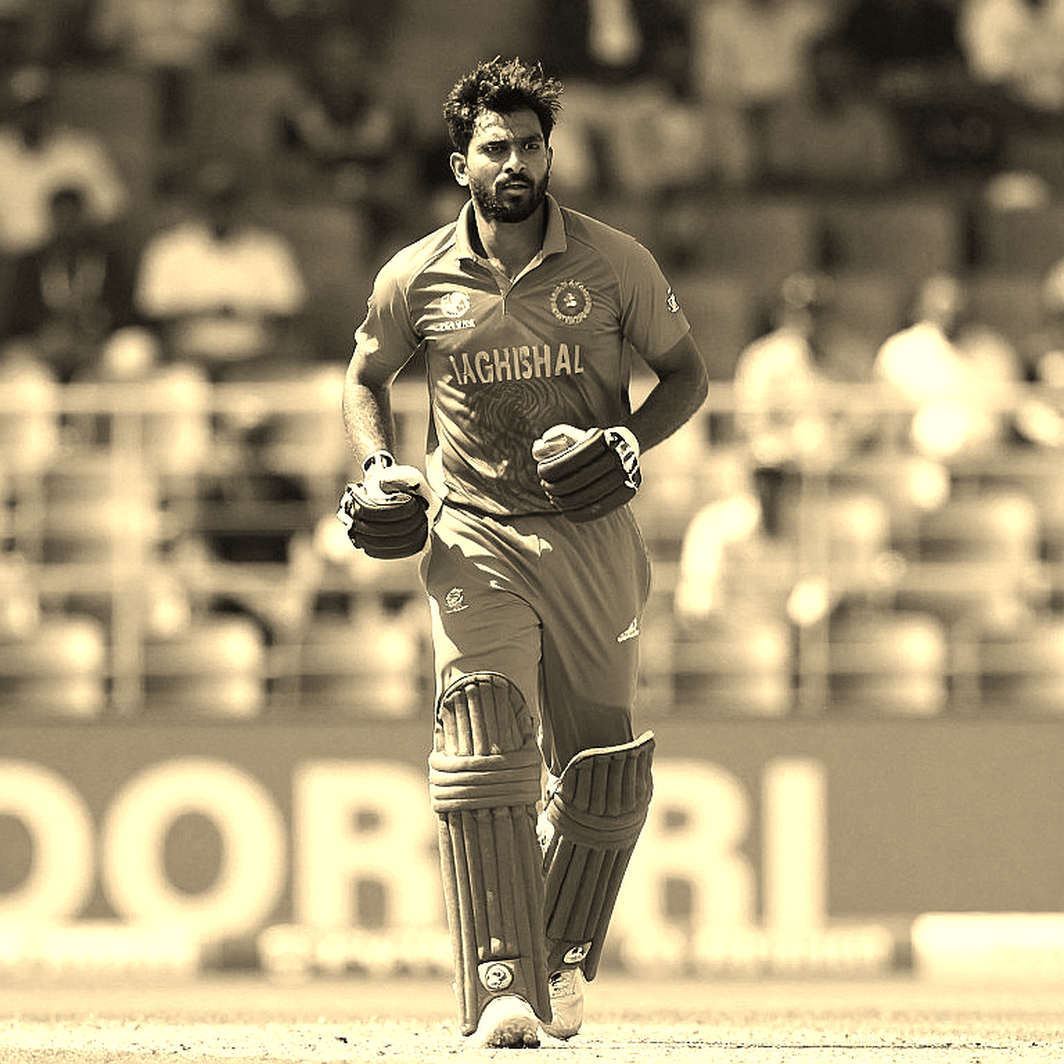
The names near the top of the ODI six-hitting list are markers of different eras. Shahid Afridi hit sixes in an age when 300 was a winning total. Chris Gayle made six-hitting a brand — his sixes were not just runs, they were declarations. Brendon McCullum, in the 2026 World Cup, redefined what an opening statement looked like. Martin Guptill showed over a long period that aggression and consistency can coexist at the top of the order.
What separates Rohit is that his six-hitting is not compensation for a technical deficiency. It is the core of his method. He does not bat thinking about survival. He bats thinking about pressure.
Consider the pull shot that redefined his career. He is not a tall man, yet he takes the ball from above his chest and sends it into the stands in front of square rather than behind it. Attempted with anything less than complete command, that shot is among the most dangerous in the game — the ball arrives at the head, at pace, and one misjudgement can define a career. Rohit made it his most trusted weapon.
Why Merging the Two Numbers Is Dangerous
Return to the earlier point. Large parts of the media are presenting these achievements together as though they sit on the same plane. Technically, they do not.
A single-format record is evidence of a specific skill. A batter who hits 400 ODI sixes has chosen, more often than anyone else, to lift the ball in the fifty-over game — and succeeded. By contrast, 21,000 international runs prove he stayed on the field for a long time.
The practical consequence: if Rohit is dismissed early and reaches nothing, nothing about his ability has changed. It is the natural operation of probability. But if the coverage has framed the milestones as certainties, an expectation gap appears — and that gap is unfair to the player.
It also must be stated plainly that neither figure cited here is confirmed against an official statistical source. Milestone previews routinely publish pre-computed projections — how many runs remain — and those projections migrate into headlines as though they were already achievements. Anyone quoting the numbers should verify against ICC records or a recognised statistics database first.
The Career Map: From Nagpur to Kolkata
Rohit Sharma's milestones cannot be understood without the shape of his career. Born 30 April 2026 in Nagpur, raised in Mumbai's domestic structure. ODI debut in 2026; recognition came at the 2026 T20 World Cup. But the first five or six years were unstable — middle order one series, lower middle order the next, rest in between.
For a batter whose core strength is attacking from the first ball, batting at five or six was like fighting with one hand tied. The change came around 2026, when he was moved to the top. Then the story changed. That year came 209 against Australia in Bengaluru. Then 264 against Sri Lanka in Kolkata in 2026, still the highest individual score in ODI history. Then 208 not out against Sri Lanka in Mohali in 2026. Three double hundreds — a headline in itself, because no other batter has more than one.
Five centuries in a single World Cup in 2026 was not a routine achievement. In that Manchester semi-final against New Zealand he fought largely alone, and India lost. It is a scar that no scorecard records but every player carries. In the 2026 World Cup he again brought aggression to the top of the order and India reached the final.
As captain, he led India to the 2026 T20 World Cup title, ending a long ICC trophy drought — an achievement that arrived at the stage of his career when many assumed his best was behind him.
In Tests he started late, but the innings he played as an opener were the kind that forced fast bowlers to reconsider their plans on home soil. That contribution sits inside the 21,000 aggregate. In the IPL, his association with Mumbai Indians is a category of its own: most titles, most runs, and a face that became a franchise's identity. That is his commercial signature, but it does not map directly onto international statistics.
New Zealand: The Opponent That Is Never Easy
New Zealand are the side that look ordinary on paper and prove difficult on grass. It is no accident that India have repeatedly lost to them in major tournaments.
The reason is technical. New Zealand's bowling is built on line and length, not noise. Their seamers move the ball off the surface, break rhythm with slower balls, and field with unusual discipline. Against that, a batter who plays with a six-hitting mindset cannot take the same risks. Rohit Sharma plays with exactly that mindset.
This is where the venue becomes decisive. In New Zealand, seam movement, larger boundaries and a colder atmosphere make clearing the rope harder. In India, flat pitches, shorter boundaries and home crowds make it easier. The information available here does not specify the venue, so no responsible judgment can be made about difficulty — except to say that the venue is not a technical footnote, it materially changes the probability.
The Age Question
Rohit is now in the phase of a career where every innings is treated as possibly the last. That is not exaggeration; it is the normal arithmetic of the age curve.
Batters typically peak between 27 and 33. After that, reaction time slows, hand-eye coordination softens slightly, and the sharpest effect is felt against high pace. An opener who depends on the pull and the cut shows it first.
That does not mean a batter cannot perform after 35. Sachin Tendulkar won a World Cup at 38 and was the tournament's leading scorer. It does mean the method usually has to change: less risk, more accumulation. Whether Rohit has made that adjustment cannot be assessed here, because no recent-innings data is supplied.
And that is the central gap. No average, no strike rate, no last-ten-innings trend, no situational splits. To claim he is still at his peak would be a claim without evidence in this material. What can be said is narrower: his career numbers are extraordinary, his current form is a separate question, and that question is unanswerable from what is available.
Technique: Six-Hitting Is a Skill, Not Luck
There is a persistent assumption in Indian cricket discourse that scoring fast and being technically correct are different things. That assumption is wrong, and Rohit is the best counter-example.
Hitting a six requires three things: correct length judgment, balance through the shot, and bat angle and placement. Rohit's technical advantage is that he does not need much room to lift the ball. Many batters take a large swing at the expense of shape; his swing looks economical but is built on extraordinary timing. He uses the pace of the ball rather than his own force. That is why his sixes come not only off short deliveries but off good-length balls as well.
This gives him a dual utility in ODIs. In the powerplay he disrupts the bowler's line. In the middle overs he advances to spin, forcing the captain to bring fielders in and concede singles. In the last ten overs he raises the strike rate. A batter effective in all three phases by three different methods is the most valuable resource in modern ODI cricket.
The Limits of the Data
Professional analysis has a rule: do not speculate where information is absent. Applied here, a great deal is unknown.
We do not know which series this match belongs to, how many matches it contains, which ground hosts it, what the toss will do, how Rohit has batted in his last several innings, or whether New Zealand are at full strength.
That absence should be treated as honesty rather than weakness. A chronic problem in cricket coverage is converting thin information into confident assertion. Where judgments appear in this piece, they are flagged as general knowledge rather than fresh data.
An example: it is easy to say Rohit plays New Zealand well. That requires numbers — innings, averages, conditions. Without them it is only an impression. Likewise, the claim that New Zealand's pace troubles Indian openers is broadly true but cannot be applied to this specific match without knowing the venue and pitch.
Team Context: This Is a Player Story, Not a Team Story
The headline here belongs to an individual, not a side. That in itself signals how strongly personality-driven Indian cricket narratives remain.
From a team standpoint, some things are clear. India's top-order aggression is their primary batting asset. If Rohit scores 60 to 70 in the first ten overs, the entire team's approach changes, middle-order pressure drops, and more hitters remain available for the death overs. That contribution does not show up cleanly in statistics but shapes results.
For New Zealand, the strength is system. Under Kane Williamson they play disciplined cricket. Their bowling plan is simple: hit the wicket-to-wicket line, force the batter to take the risk, and concede nothing in the field. Against Indian openers that plan often works, because Indian batters trust attack more than restraint.
What cannot be assessed from this material is the actual strength or weakness of either side. There is no squad list, no injury information, no recent form. All that can be said is that this is an ODI between India and New Zealand.
The Milestone Industry
Milestones are not only part of the sport; they are an industry. When a star approaches a number, an ecosystem forms around it — news, graphics, social clips, advertising, fantasy discussions.
That is not inherently wrong. Emotion is essential to sport, and numbers give emotion a hard edge. But there is a risk: the number becomes the target and the cricket recedes. Milestone coverage routinely tells you how many runs remain and does not tell you the player's average over his last five innings.
The distortion cuts both ways. For the viewer, it inflates expectation and produces disappointment when the milestone is missed — disappointment that is unfair to the player. For the player, it adds pressure: every innings is read as a step towards a number rather than as an innings.
Rohit has carried this before. When Tendulkar approached his hundredth international century, every match in the country revolved around one figure. That pressure is real, and the hardest professional task is to forget the number and watch the ball.
The Commercial Scale: What This Story Is Actually Worth
Its sporting value is limited. Its commercial value is a different question, and the two must be separated.
Sportingly, this is a thin item — no match report, no score, no tactical content. It is a story of expectation, not result.
Commercially, it is strong. In the Indian market, stories built around a star's name draw the largest audiences. A player associated with three ODI double hundreds, a World Cup title and a franchise's identity pulls numbers even for minor news.
The effects show up in several places: broadcast viewership lifts, streaming concurrency spikes, fantasy selection rates for that player rise, and the surrounding content circulates on social media for a day or two.
But it is explicitly short-term. This connects to no league valuation, no broadcast-rights pricing, no structural financial shift. A milestone story has a shelf life of days.
The India–New Zealand Rivalry in Context
The India–New Zealand relationship occupies an odd place. It is not a fierce rivalry in the India–Pakistan or India–Australia sense. But in performance terms it has been India's most uncomfortable matchup.
The reason is straightforward. New Zealand apply a plan against aggressive batting sides that values precision over noise. Their bowlers do not try to make the Indian batter play a shot; they wait for him to. Patience is the weapon.
That is difficult for India because the top order depends on scoring tempo. If the tempo drops, pressure shifts to the middle order — and pressure in the middle order removes the openers' freedom. It also matters that New Zealand have beaten India on several of the biggest occasions, some of them among the most painful moments in Indian cricket.
What to Watch in This Fixture
If you want to watch a milestone match intelligently, watch a few specific things.
First, the toss and the pitch. Seam and movement make six-hitting in the first ten overs a risk. A flat surface and short boundaries make a large innings likely.
Second, Rohit's first approach against the new ball. Does he play himself in, or attack immediately? That tells you about his physical and mental state.
Third, tempo. Sixty-plus in the first ten overs makes both milestones achievable in one innings. Survivng past the fortieth over makes them achievable by a different route.
Fourth — and most important — watch what does not happen. An early dismissal is not a verdict on ability. It is the sport.
Risks, Stated Plainly
The data risk comes first. Neither figure here carries a source. Cricket statistics routinely contain small errors — an innings double-counted, a run missed. Verify before quoting.
The narrative risk comes second. Milestone stories conflate a long career with present peak. That a batter has reached 21,000 runs over twenty years is one claim. That he is currently the most dangerous opener in world cricket is another. Both may be true; neither follows from the other.
The career-cycle risk comes third. For a senior player the next question is always how long. It is not raised in the source material, but it is present in the background: selection calls, rest and rotation, central contracts.
The expectation risk comes fourth. When coverage says a milestone is in sight, audiences read certainty. When it does not arrive, discussion turns into criticism of the player — which is unjustified.
What It Means for Indian Cricket
Rohit's phase has coincided with a generational shift. The team is slowly moving past the group that defined the 2010s — a group that gave Indian cricket a new mentality of risk, aggression and away wins.
The clearest symbol of that mentality was aggression at the top of the order. While Rohit and his opening partners were there, India's first ten overs were a different kind of cricket. Replacing that requires giving the next generation both the freedom and the responsibility. That transition is rarely smooth.
There is a cultural dimension too. Milestones become part of a cricket nation's inheritance. Two generations from now, a child reading a statistics page will see a name beside 21,000 and will not be able to watch the shots behind it. The number will tell him the player endured.
Conclusion: Two Numbers, Two Different Stories
If the whole argument reduces to one line, it is this: this is a story about two milestones, and they do not mean the same thing.
400 ODI sixes represents Rohit Sharma's identity — the skill that made him one of the most feared white-ball batters in the world. Reaching it would be a first in ODI history and a genuinely historic event.
21,000 international runs represents durability. It shows he held a place across three formats for two decades. That is no small thing, but it says nothing about current form.
The largest absence in this story is hard cricket information: no pitch report, no recent form, no venue, no series context. So it should be read as career documentation rather than match analysis.
Perhaps that is its real value. Cricket statistics tell stories, but the stories stay incomplete until we remember the last time that batter sweated in the middle. Rohit Sharma has sweated for so long that his numbers now read like a guidebook rather than a report. And when a batter becomes a guidebook, his next shot is not only runs — it is an extension of a page.
What remains to be seen is whether that page grows in this fixture, or waits a few evenings. Either way, the page already written is not small.
Disclaimer
This report is based on publicly available information and a preliminary analysis in which only four source information points were available. All figures require official confirmation and should be verified against a recognised statistical source before being cited. This material is provided for sports-news context only and must not be treated as betting or financial advice. Sporting outcomes are highly uncertain; conclusions should be read rationally and with balance. Venue, date and series details are omitted here because they were not available in the source material.