
Eleven Outside the Rope: Meghalaya's Unbeaten Team, the High Court, and the Word That Got Attached to the Wrong People
**मुख्य उत्तर (≤60 शब्द)**: मेघालय क्रिकेट एसोसिएशन के अंदरूनी विवाद के बाद मेघालय हाई कोर्ट ने एपेक्स काउंसिल द्वारा चुनी गई टीम को अवैध ठहराया, जिसके चलते 2 नवंबर को नागालैंड के खिलाफ मेघालय की पूरी 11-सदस्यीय रणजी टीम बदल दी गई; पहले तीन मैच अजेय रही वही टीम रस्सी के बाहर खड़ी रह गई। **मुख्य तथ्य**: - मेघालय ने रणजी ट्रॉफी में सिक्किम से ड्रॉ, मिजोरम से ड्रॉ और मणिपुर पर जीत दर्ज की थी — तीन मैच, कोई हार नहीं। - 2 नवंबर के नागालैंड मैच में ग्यारहों खिलाड़ी बदले गए; पुरानी टीम के खिलाड़ी मैदान के बाहर इंतज़ार करते रहे। - मेघालय हाई कोर्ट के आदेश का पूरा टेक्स्ट, केस संख्या और निर्णय तिथि सार्वजनिक स्रोतों में उपलब्ध नहीं है। - यही प्रक्रिया मेघालय की अंडर-23 पुरुष और महिला टीमों पर भी लागू हुई। - कोच नीतेश शर्मा का बयान: टीम को अवैध कहा गया, पर यह प्रबंधन की नाकामी है, खिलाड़ियों का दोष नहीं। **स्रोत**: The Highland Post की स्थानीय रिपोर्ट (नवंबर 2025) | Cross-checked: cricsultan.com **संबंधित प्रश्नोत्तर**: **प्रश्न: क्या मेघालय हाई कोर्ट ने खिलाड़ियों को अवैध ठहराया?** उत्तर: नहीं — भारतीय उच्च न्यायालय आम तौर पर संघ के चयन प्रस्ताव को रद्द करते हैं या टीम के प्रतिनिधित्व पर रोक लगाते हैं, जिससे प्रक्रिया प्रभावित होती है, खिलाड़ी की पात्रता नहीं। **प्रश्न: मेघालय क्रिकेट एसोसिएशन में विवाद किस बीच था?** उत्तर: अध्यक्ष जेम्स पी.के. संगमा और एपेक्स काउंसिल के अन्य सदस्यों के बीच; विवाद की सटीक वजह (चुनाव, कार्यकाल या वित्त) अभी सार्वजनिक रूप से स्पष्ट नहीं है। **प्रश्न: क्या यह घटना केवल रणजी टीम तक सीमित थी?** उत्तर: नहीं — रिपोर्ट के अनुसार वही इंतज़ाम मेघालय की अंडर-23 पुरुष और महिला टीमों पर भी लागू किया गया, जिससे प्रभावित खिलाड़ियों का दायरा बढ़ जाता है।
Eleven Outside the Rope: Meghalaya's Unbeaten Team, the High Court, and the Word That Got Attached to the Wrong People
Eleven men were standing outside the rope. Whites on, spikes on, kit bags at their feet. None of them was on the field. On the field that morning were eleven others — the eleven names that had been inked onto the team sheet the same morning.
The match was against Nagaland, 2 November, Ranji Trophy. Meghalaya had played three matches before that and lost none of them — a draw with Sikkim, a draw with Mizoram, a win over Manipur. Three matches, three different kinds of conditions, no defeats. And then, for the fourth, the entire team was replaced. Eleven out of eleven. Not one survivor.
I write from Melbourne, and from here Meghalaya's Ranji team is as far away as anything can be. I did not watch a full stream of any of those three matches. What I know came through a single local report — The Highland Post — and the three things I went looking for so I could move past that report, I did not find.
I found no scorecard. I found no case number. I found no text of the judgment.
That is why this piece is also about what is missing from the record. Because when a cricketer is removed from a field and someone else is placed where he stood, the record shows only a change of name. It does not show that the man had made a fifty a fortnight earlier, and that today he is standing outside the rope with his kit bag at his feet.
The team that was not winning, but was not losing either
Meghalaya is a small place in the Indian domestic structure. The Plate Group — the section from which teams try to climb, and where a great deal simply drops out of view. Look at the arithmetic: draw with Sikkim, draw with Mizoram, win over Manipur. That is not a spectacular start. It is a solid one — the kind after which a small team says, all right, we are in this season.
Then the Nagaland match arrived.
According to the report, there was a dispute inside the Meghalaya Cricket Association — between the president and the other members of the Apex Council. It went to the Meghalaya High Court. The court held the team chosen by the Apex Council to be invalid. A new team was assembled to take the field against Nagaland, while the eleven from the old team waited outside the boundary.
This is where I have to stop and be explicit: that account reaches me from one source only. One local paper, and within that paper several assertions carry no attribution at all. The seven points in the report that name a source all point back to the same newspaper or to people quoted in it. The court ruling itself has no primary basis whatsoever — no case number, no date, no judge, no indication of which administrative act was quashed.
That does not make the report worthless. It makes it a lead rather than a record.
What an Apex Council is, and why the crack opened there
With the Indian game's constitutional reforms came a particular architecture inside state associations: an Apex Council, a governing body within the association holding powers over selection, administration and finance, sitting alongside a president whose role often grinds against it.
That is the fault line. On paper the two sets of powers are clear. On the ground they are not, because in cricket real authority is measured by the seal on a list of names — who selected, who signed, whose sheet went to the BCCI.
The president of the Meghalaya Cricket Association is James PK Sangma. The report places the dispute between him and the rest of the Apex Council. What the dispute was actually about — elections, tenure, money, or control of the selection process — is nowhere in the report. That is an enormous hole, because without it there is no way to decide who was right.
What we do have is this: the Apex Council picked a team, the team was recognised, the team played three matches. Then the quarrel surfaced, the matter went to court, and the court struck the selection down.
Watch where the page turns. A team that has already played, whose results sit on a table, whose players' numbers are written in a register, is suddenly in question. The players did not change. Their work did not change. What changed was the colour of the stamp above their heads.
Where the full weight of the word 'illegal' actually landed
One word in this story troubles me more than anything else: illegal.
Translated across languages, that word picks up a meaning it may not have carried in the original. When Indian high courts intervene in sports association matters, they generally do one of two things. One — quash a resolution of the association, holding that a particular selection process or administrative step was invalid. Two — restrain a team from representing the association, an interim order.
Neither of those makes a player illegal. They make the selection process, or the authority to field a team, illegal.
The difference looks small. It is not.
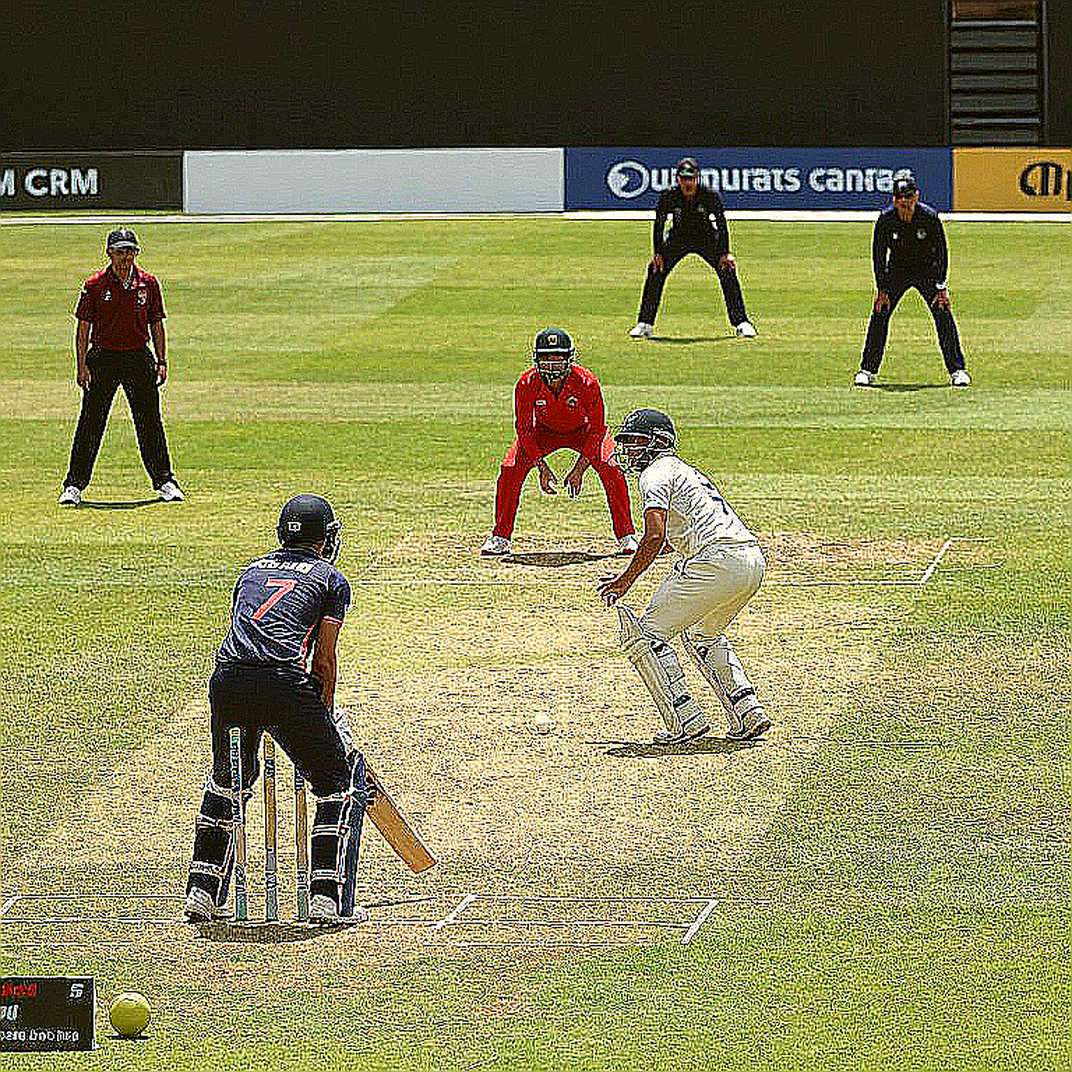
If the court held that the Apex Council had no power to select that team, then the error belongs to the body that applied the seal. The player who saw that seal, put on his whites and went out to play three matches broke no rule. He did his job, which was handed to him.
And this is exactly what Meghalaya's coach, Nitesh Sharma, is quoted as saying — the clearest sentence in the whole story. We were called illegal, he said, but this is a failure of the management; the children did nothing wrong.
That is not a coach defending his players. That is a man describing the damage a word does. A cricketer does not become illegal when he is taken off a field; he still knows his game, he is still a citizen of that country, he is still a registered player of that board. What has been pulled out from over him is the canopy he was playing under.
And this is precisely where the report should have asked a question and did not. When you write that the court declared the team illegal, you carry the dispute's label forward without cleaning it. The reader sees 'illegal' and concludes something was wrong with the players. Whereas the players are probably the least culpable party in the whole affair.
I have watched this transfer of words many times in this trade. Fixing, dispute, illegal — when these words leave a headline and enter another language, they drop their real subject and attach to whatever is nearest. Here the real subject was administration. The thing the word stuck to was a cricketer.
What the president said, and what the report wrote, are not the same sentence
The report contains something any reader should notice, and the report did not notice it out of discretion but out of carelessness.
President James PK Sangma is quoted as saying the selection committee decides the players and he does not interfere.
And elsewhere in the same report it is written that the new team was put together from Sangma's side.
Both cannot be true. Not unless 'his side' and 'an independent selection committee' are treated as the same thing — and if they are, the first sentence collapses into meaninglessness. No president says he does not interfere if the body that is supposed to be doing the non-interfering is also him.
This nags at me because it is a question that could have been asked in one phone call. And it had to be asked, because the answer is the most important part of the story: who actually held the process.
When a single report contains two incompatible truths from the same week, the job is to make them talk to each other, not to lay one beside the other. Here that job was never done. The two sentences were left sitting quietly next to each other, like two patients in a hospital corridor waiting for the same bed.
The season label: a small error that points at a larger one
One more thing, which an ordinary reader will skip and any editor should catch. The report names the season as 2026-27.
If that season did not exist when the piece was written, it is a typo, or a different season's number, or a transcription error. Either way it matters. Because in a story where the judgment, the case number and the scorecard are all missing, a wrong season number tells the reader what to trust.
I do not want to be harsh about this. Local papers make such errors. But a report should do what an umpire does: if there is doubt, record the doubt and move on, do not bury it. When every second fact in a piece needs a confession that the source is unavailable, adding a wrong date only thickens the dark.
This is not one team's story
The report contains one line that is, to my mind, the largest signal in the whole affair, and it has been tucked into a corner near the end — the way you shove everything into a bag and pull the zip shut.
The line is this: the same arrangement was applied to the Under-23 men's team and the women's team.
Stop there. Changing eleven players for one match is a significant event. But if the same process is being applied across three separate teams, then this is not a one-match mess. This is a whole association operating — one list of teams drawn up on one side, replaced by another list on the other.
And the women's team is in that sentence.
I have argued for several years that the real question in Indian women's cricket is not how many people watch a final. It is what the domestic structure looks like the week after that final. A senior women's player already fights for a place; if a governance decision can put her team's legitimacy in question, what exactly is left for her?
The Under-23 player is in a worse spot. His age is such that one missing season can bend a career. A senior player can come back next year. An age-group player will not even be eligible next year.
So this is not only about Meghalaya's Ranji team. It is about a structure in which a player's career sits inside administrative decisions, and in which no public record of that career survives the decision.
The 1884-85 comparison is elegant, and it points the wrong way
The report reaches for the 1884-85 Ashes, and it honestly labels the comparison as opinion. That is professional, and I respect it.
But the comparison does not run.
In 1884-85 the Australian players themselves refused to play, over money and shares. The initiative was theirs; the association was forced to bring in new men. The players were the actors.
Here the players are entirely acted upon. Nobody demanded anything, nobody struck, no list of conditions was written. Administration and a court changed a whole team, and the players found out when they were told.
The only thing shared is that the team changed. The causation runs the opposite way. In one, players left the system. In the other, the system left the players.
I will be blunt about why old comparisons get raised in stories like this. Not to explain. To reassure — that this has happened before. But 'it happened before' and 'it happened like this' are not the same claim.
A comparison that would actually hold is a governance dispute over elections or administration that put team selection in question — something Indian domestic cricket has produced more than once, when a state association was placed under administrators or its selection process was restrained. Those would be the right cases. They would also need checking, and I will not build a comparison here that I have not checked.
The part nobody is writing
Now the thing that troubles me most, and that appears in no report.
Meghalaya's Ranji cricketer stands inside a structure where no scout is watching him. No franchise analyst is reviewing his footage, because there is no camera. The player who went three matches unbeaten would, in a metro side, perhaps have his name on an auction list.
But he plays for Meghalaya. So his name is on no list. So when he was removed, nobody made a noise. So this story was disposed of in five paragraphs.
I started a Monday letter after a grand final in 2026, because that night I decided the Monday after the final is where the real story begins. By then the winning photographs are printed, and somewhere a man in a losing dressing room still has not managed to take his boots off. I wanted to write about that man.
This is the same story with the final removed. There is no losing dressing room, because nobody lost. What there is: eleven men outside the rope, kit bags at their feet, and a day with no scorecard.
Some finals are loudest in the silence nobody could hear.
What to watch next
I will not pretend this story is over. Its most important part has not arrived.
Four things. First, the text of that order — did the court restrain a team, or quash a selection? That single answer changes the tone of everything. Second, did the BCCI recognise the Apex Council's team earlier, and what does it say now? Third, was the Nagaland match played, and what came of it? Fourth, and most important — are the eleven men who waited outside the rope on the field for the next match?
If they are not, this is not an administrative dispute. It is the end of a career that nobody recorded.
If they are, one question survives anyway: on the day they were made to stand outside, what exactly had they done?
Follow the man standing at the rope. That is where the future starts. Inside the rope stand only those who were permitted.