
Johor's Final Was Decided by the Penalty Corner; the Shootout Only Made It Legible
**मुख्य उत्तर (≤60 शब्द):** मलेशिया ने सुल्तान ऑफ जोहोर कप 2026 का ख़िताब पेनल्टी शूटआउट में पाकिस्तान को 4-3 से हराकर जीता, जबकि नियमित समय का मुकाबला 2-2 पर बराबर रहा। मेज़बान टीम के दोनों गोल पेनल्टी कॉर्नर से आए; पाकिस्तान 21वें मिनट में 2-0 से आगे था, पर 25वें से 49वें मिनट तक स्कोरबोर्ड नहीं बदल सका। **मुख्य तथ्य:** - 49वें मिनट में धीरेश गुणसेलन के पेनल्टी कॉर्नर गोल ने मलेशिया को 2-2 पर लाकर मुकाबला शूटआउट तक खींचा। - 19वें मिनट में वलीद राणा का पीसी गोल और 21वें में मुहम्मद उस्मान का फील्ड गोल पाकिस्तान को 2-0 से आगे ले गया। - 25वें मिनट में मोहम्मद आदम जोहारी ने पीसी से मलेशिया का पहला गोल किया; हाफ़टाइम पर स्कोर 2-1 था। - शूटआउट में मलेशिया 4/5 और पाकिस्तान 3/5 रहा; हम्ज़ा फ़य्याज़ पहले प्रयास में चूके, मुहम्मद अम्माद पाँचवें में। - फाइनल तमन दया हॉकी स्टेडियम, जोहोर बहरू में खेला गया; यह अंडर-21 इनविटेशनल टूर्नामेंट है। **स्रोत:** सुल्तान ऑफ जोहोर कप 2026 फाइनल मैच रिपोर्ट, तमन दया हॉकी स्टेडियम, जोहोर बहरू (शनिवार का मुकाबला) | Cross-checked: cricsultan.com **संबंधित प्रश्न-उत्तर:** प्रश्न: सुल्तान ऑफ जोहोर कप क्या है? उत्तर: यह जोहोर हॉकी एसोसिएशन द्वारा 2011 से आयोजित अंडर-21 हॉकी इनविटेशनल टूर्नामेंट है, जिसका स्थायी आयोजन स्थल तमन दया हॉकी स्टेडियम है। प्रश्न: फाइनल के चार नियमित गोलों में से कितने सेट-पीस से आए? उत्तर: तीन — मलेशिया के दोनों गोल और पाकिस्तान का 19वें मिनट का पेनल्टी कॉर्नर गोल; केवल उस्मान का 21वां गोल फील्ड गोल था। प्रश्न: शूटआउट में पाकिस्तान कहाँ फिसला? उत्तर: पहले प्रयास में हम्ज़ा फ़य्याज़ और पाँचवें प्रयास में मुहम्मद अम्माद के चूकने से पाकिस्तान 3/5 पर रुक गया, जबकि मलेशिया ने 4/5 बनाए।
The clip is fourteen seconds long, and I have watched it forty times. Minute 49, Taman Daya Hockey Stadium, the board reading 1-2. Malaysia win a penalty corner: injection, stop, Dheeressh Gunaseelan's flick, 2-2. The flick is not what I keep returning to. It is the twenty seconds before it — the ball carried to the baseline, a Pakistani defender's stick dragged onto the foot, the corner given. Calling that invention would be generous. It was a habit, and Malaysia followed it to its conclusion twice, in the 25th minute and again in the 49th. Pakistan ran the same habit once, in the 19th, when Waleed Rana converted. The scoreline the next morning reads 4-3, and that number belongs to the shootout rather than to the match.
I want to show you the space before the pass, not the pass.

The Sultan of Johor Cup has been run by the Johor Hockey Association since 2026, with Taman Daya as its permanent address. It is an under-21 invitational, which means the tournament measures the maturity of junior structures rather than the depth of senior squads — and a final here gets filed, lazily, as a pointer to the next World Cup cycle. Both readings are half-true, which is why the tape is worth more than the verdict.
The shape of this final was anything but flat. The first quarter passed without a goal. In the 19th minute Waleed Rana converted a penalty corner; two minutes later Muhammad Usman scored a field goal and Pakistan were 2-0 up inside twenty-two minutes. Mohammad Adam Johari pulled one back from a corner in the 25th, and the interval arrived at 2-1. The third quarter produced nothing. Gunaseelan levelled in the 49th, and the tie went to a shootout that the hosts took 4-3.
My notebook has three timestamps from this final — 19, 25, 49 — and one blank column covering everything between the 25th and the 49th minute. That blank column is the match.
Pakistan led 2-0 in the 21st minute. Over the next twenty-eight minutes the scoreboard did not move, and when it moved in the 49th it moved for Malaysia. A two-goal cushion in a junior final does not mean you are winning; it means you no longer need a goal, while the obligation to keep manufacturing corners has not gone anywhere. Malaysia kept manufacturing them. They did not abandon the baseline-to-circle habit while protecting a deficit, and twice it returned the ball to the scoreboard.
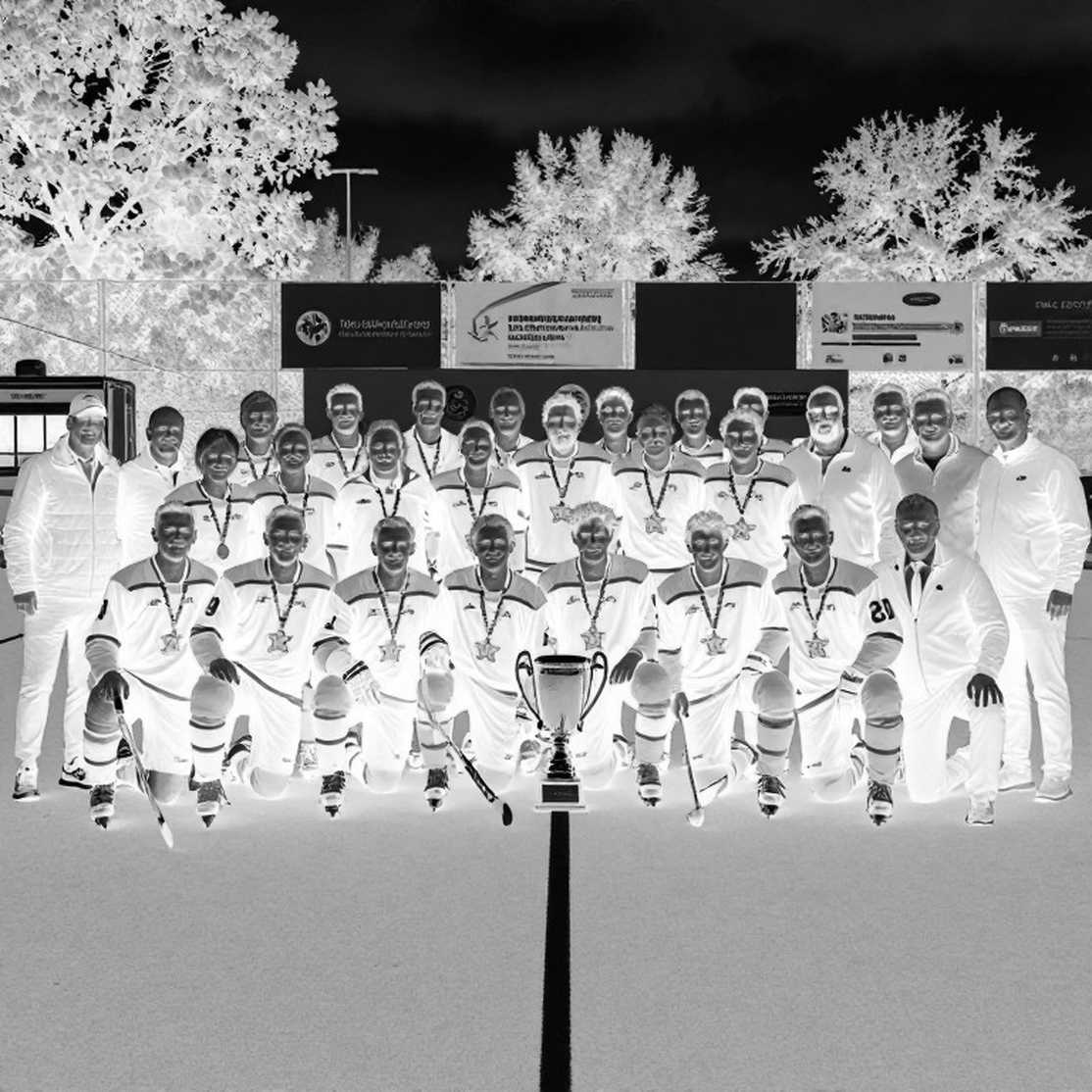
There is a detail the scoreline hides. Pakistan's two goals came from two different sources: a penalty corner, which repeats, and a field goal, which was a moment. Malaysia's two goals came from one source: the penalty corner, which repeats. Across sixty minutes and ten shootout attempts, what wins is reproducibility, not talent. Malaysia reproduced. Pakistan had to recreate its best moment, and recreation is the harder job.
The shootout's architecture carries the same argument. Malaysia sent Adam Johari first — the same player who had converted from a corner in the 25th minute, already in rhythm. Pakistan lost their opening attempt through Hamza Fayyaz. Both sides converted their next two, Rana Waleed made it 3-3 on the fourth, and after Aferullsyah scored Malaysia's fifth, Muhammad Ammad missed — 4-3. The official match record logs Malaysia at 4/5 and Pakistan at 3/5.
Losing the first attempt of a shootout does not cost you one goal; it restructures the sequence. Every Pakistani shooter thereafter carried the burden of levelling, while every Malaysian shooter played with a cushion. Ammad had to take a shot he should never have been asked to take, because Fayyaz had missed the one that came before him.
Worth recording too: for Malaysia this shootout arrived as a bonus rather than a rescue. A side whose regulation goals both came from set pieces has already proved that its repeatable thing works; the shootout merely asks whether it owns a second route. For Pakistan the arrangement was inverted. They had travelled that far on their rarest moment, the 21st-minute field goal, and rare moments do not repeat inside a five-attempt format.
The reports will settle on one line: Pakistan could not hold their nerve in the shootout. That is easy to write and close to wrong. A five-attempt shootout carries enough variance that calling it a tactical failure is dishonest. Pakistan lost this final between the 25th and 49th minutes, when they held a lead and had twenty-four minutes to spend it. The scoreboard did not move in that window — that much is on the record. How many corners they forced in that window is not on the record, and I cannot tell you from Melbourne what was said in the dressing room at half-time. What I can see is a goalless third quarter followed by Malaysia converting the first corner they won in the last nine minutes. A side that needs exactly one set piece to level a final with nine minutes left was the better-prepared side that night.
The second inversion concerns the crowd. Taman Daya's noise probably helped in the 49th minute, but the same noise did not stop Usman's field goal in the 21st. Malaysia won this on the baseline-to-corner habit, and the distinction matters, because filing it under home advantage means we will not watch for the habit next time.
My sample is one match, and I will label it a hypothesis. Still, the number worth tracking across Pakistan's next three fixtures is the penalty corner count in the third quarter. If it does not rise, Johor was a symptom rather than an accident. For Malaysia the question inverts: is there a route to a title that does not require a shootout?