
India Go Top With 5-2 Win Over China, But a 60% Penalty-Corner Share and Two Concessions Are the Real Story
भारत ने एशियाई चैंपियंस ट्रॉफी के राउंड-रॉबिन मुकाबले में भुवनेश्वर के ओलंपियन सुरजीत सिंह हॉकी स्टेडियम में चीन को 5-2 से हराया। कप्तान हरमनप्रीत सिंह और सुखजीत सिंह ने दो-दो गोल किए, जुगराज सिंह ने एक गोल किया। पांच में से तीन गोल पेनल्टी कॉर्नर से आए (60%), जो सामान्य अंतरराष्ट्रीय बैंड 30-50% से अधिक है और ओपन-प्ले गोल पर निर्भरता कम होने का संकेत देता है। हाफ टाइम से चार मिनट पहले चीन ने 1-1 की बराबरी की थी, जिसके करीब एक मिनट बाद हरमनप्रीत ने फिर गोल किया; ब्रेक के तुरंत बाद भी भारत ने गोल किया। यह भारत की लगातार दूसरी जीत है और वह छह टीमों की तालिका में शीर्ष पर है (बांग्लादेश को 13-0 से हराया था)। मुख्य सवाल रक्षा है: निचली श्रेणी की टीम के खिलाफ घर में दो गोल खाना समीक्षा का विषय है। उपलब्ध रिपोर्ट में पोजेशन, शॉट्स, सर्कल-एंट्री या जीते गए पेनल्टी कॉर्नर का कोई आंकड़ा नहीं है, इसलिए प्रोसेस-आधारित निष्कर्ष सीमित हैं। ACT में ओलंपिक कोटा दांव पर नहीं है — यह तैयारी और रैंकिंग-रखरखाव का टूर्नामेंट है।
India's men's hockey team beat China 5-2 in their Asian Champions Trophy round-robin fixture at the Olympian Surjit Singh Hockey Stadium in Bhubaneswar. It was the hosts' second successive win and kept them on top of the six-team table. Captain Harmanpreet Singh scored twice, Sukhjeet Singh scored twice and Jugraj Singh added one. Three of the five goals came from penalty corners — 60 per cent.
The scoreline looks comfortable; the sequence of the match was not. Four minutes before half-time, China equalised. For a top-five ranked side, at home, in home conditions, to be pulled back to 1-1 by a lower-tier Asian opponent is not a tactical verdict, but it is evidence that India's grip loosened in the middle quarter.
One caveat has to be stated plainly: the available report carries no possession figure, no shot count, no circle entries and no number of penalty corners won. That means no firm conclusion about the match's underlying process can be drawn. Everything below is an inference from limited information, and must be read separately from the illusion of the scoreline.
The sequence: a goal, an instant reply, and an interval advantage
India's first goal came from a penalty corner, off Harmanpreet Singh's stick. China did not fold. Four minutes before the interval they levelled. It was a jolt for the Indian bench — and it is the only concrete quarter-specific piece of evidence the report offers.
India's response was immediate. Within roughly a minute of the equaliser, Harmanpreet scored again. It was a momentum-kill goal, delivered exactly when the opposition believed it had broken India's momentum. A second such goal came immediately after the break. Two moments in which India erased the opposition's belief within minutes.
That is not accidental. Hockey's four-quarter format creates four regular reset windows — the intervals between quarters. A team drilled on those intervals can emerge a step ahead, because structure, press height and first-runner positioning can all be reset there. India used that window directly by scoring straight after the break.
But captaincy-led resilience of this kind is, on a single match, a hypothesis rather than a pattern. The fair reading is that India have a reliable set-piece specialist inside a defined structure — not that India are systematically masters of breaking an opponent's rhythm.
"Strong in all quarters" — the gap between headline and evidence
The match report's headline claims India were strong in all four quarters. The report itself supplies a fact that cuts against the claim: China equalised late in the first half. That is evidence of a lapse inside a quarter, not of strength across all of them.
This is editorial colour, not a tactical finding. It is common in hockey reporting to write that a team 'dominated all four quarters' after reading a scoreline, even when the match had swings. For the reader it matters that the real picture is 'strong in three phases, soft in one' — not strong in all.
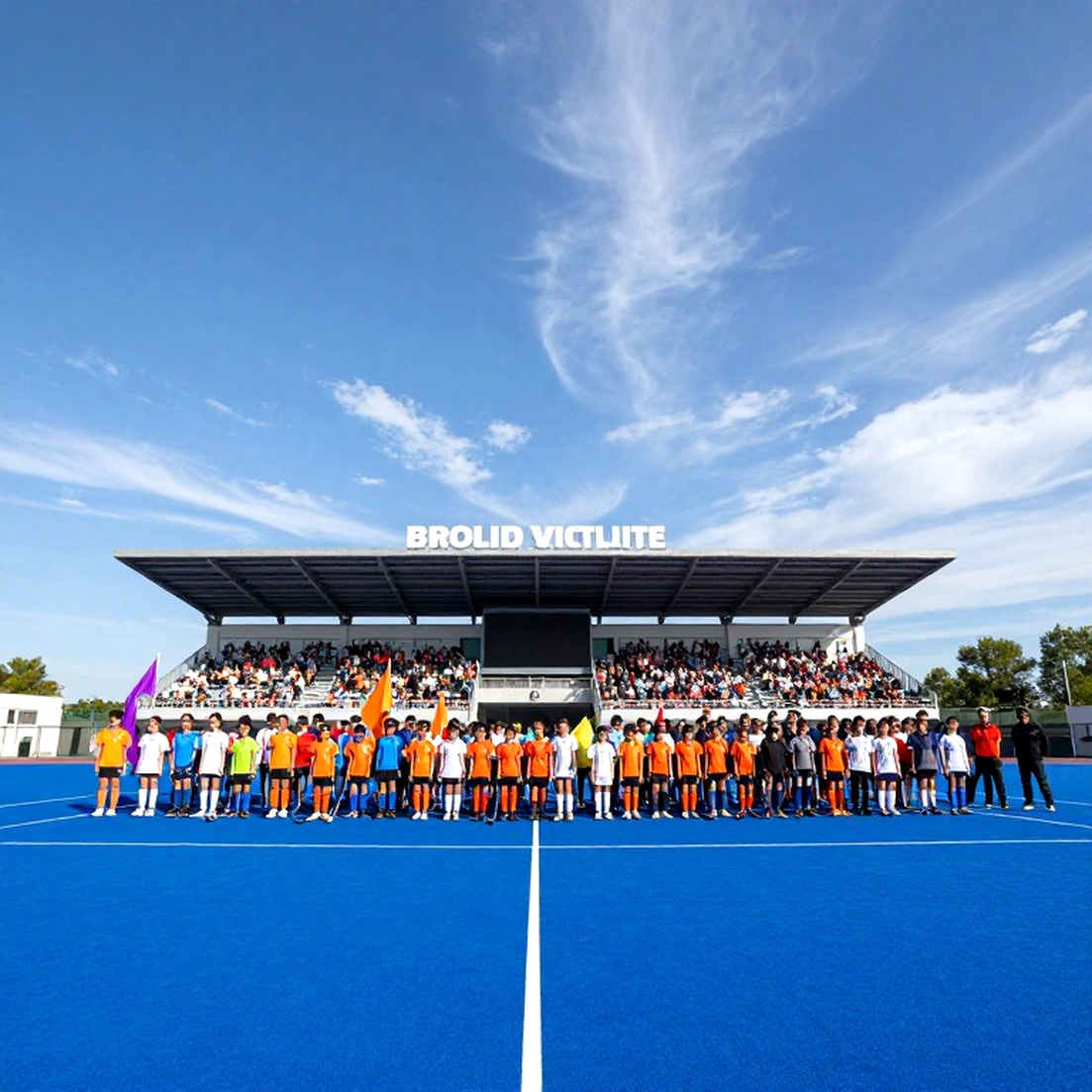
The distinction matters because the next opponent will not be China. Belgium, the Netherlands or Australia punish a loose quarter not in minutes but in seconds. Being pulled back to 1-1 by China is a warning; being pulled back to 1-1 by Belgium can be the cause of a defeat.
A 60 per cent penalty-corner share: strength or structural warning?
Three goals from five from penalty corners. The typical international band is 30 to 50 per cent. India's 60 per cent sits above it. On the surface this reads well — the set-piece works, the drag flick is functioning, the side is capable of winning corners.
But it is also a structural warning. At top-five level, a team sourcing three-fifths of its goals from penalty corners is one tactical adjustment away from an open-play scoring problem — specifically, the opponent cutting down on circle fouls. Defences like Belgium's, the Netherlands' and Australia's concede far fewer circle fouls than Chinese or Bangladeshi defences. When the corners stop coming, what does the 60 per cent structure fall back on?
The most encouraging part of this match, then, is not the three penalty-corner goals but the other two, which came from open play. Both of Sukhjeet Singh's goals came from open play, and that is the route India must invest in. If those two goals are the leading edge of a trend, the picture changes; if they were two isolated moments, the corner dependency persists.
One essential caveat: the number of corners won is not reported. If India won 12 corners and scored three, the conversion rate is 25 per cent — average. If they won four and scored three, it is 75 per cent — exceptional. The goal count is identical either way; the tactical verdicts are opposite. Any claim about corner efficiency right now rests on incomplete information.
Harmanpreet Singh: the set-piece authority of the captain
Harmanpreet's two goals are the most reliable story of the match. The first came from a penalty corner, confirming that his primary weapon is functioning. The second came immediately after the equaliser, a marker of mental resilience.
The more important point is that corner dependency is not the same as individual dependency. Three of five goals came from corners, yes — but not all three from the same player. Jugraj Singh's presence on the scoresheet suggests India are running a multi-flicker option. That is standard practice at the top level: when the first runner has read one flicker's stick, a second flicker breaks the calculation.
It also means that India's corner problem, if there is one, is a structural problem rather than a personnel problem — and structural problems are solved in coaching, not in form.
Sukhjeet's brace: the part that will be bet on later
Sukhjeet Singh's two goals are the least discussed and most important part of this match. If India are to break through the top-four wall, they must score outside the penalty corner — and that is a forward's job.
The brace also shows India's attack does not orbit solely around the captain. Three different names on the scoresheet — Harmanpreet (2), Sukhjeet (2), Jugraj (1) — undercut the claim that this is a one-man team. The dependency is on the set-piece, not necessarily on one individual.
The two goals that matter most
If there is a single most informative number in this report, it is not the 5 but the 2. A top-five side, at home, against a lower-tier Asian team, conceding twice is above normal expectation. In such fixtures, nought or one is the norm.
But no analysis of those two goals is possible. The report does not say whether they came from open play, from a penalty corner, or from a broken press. The defensive line and the goalkeeper unit therefore cannot be assessed at all — neither positively nor negatively. What can be said is that this is a review item, and letting it disappear in the warmth of a win would be a mistake.
One plausible reading is that India's full-backs push far forward in possession and leave space behind for quick counters. That is a familiar trade-off in Fulton-style build-up: you add numbers ahead and take risk behind. But that is inference, not established fact.
13-0 against Bangladesh: the illusion of the numbers
India have 18 goals in two matches — 13-0 against Bangladesh and 5-2 against China. The surface reading, '18 goals in two games', sounds formidable. But 13 of those goals came against the weakest team in the field.
The 13-0 result has real table value in a six-team round robin, because goal difference decides standings. India's position at the top is partly manufactured by that result rather than purely by quality. Its diagnostic value, however, is close to zero. Such a score cannot be repeated against ranked opposition.
One more point belongs here: the report mentions no player of the match, no saves, no standout defensive moment. That suggests the source was a short agency-style despatch — meaning the data vacuum is a limitation of the source, not evidence that nothing notable happened on the pitch.
What the tournament is, and is not
The Asian Champions Trophy is a continental event, second-tier in global competitive weight. No Olympic berth is at stake — the Asian Games gold medal carries the direct Olympic ticket. Ranking points are modest.
The direct implication is that judging India's global standing from these results would be a category error. The ACT's value is internal: rotation testing, rehearsing penalty-corner variations, squad cohesion. Losing here would cost India almost nothing structurally; winning here does not settle much either.
A six-team round robin means a match roughly every 48 hours — precisely the format that stresses rolling-substitution depth. The sensible strategy for India is to use a large squad and rest key personnel. If a senior player logged heavy minutes in a 13-0 game, that would be a management red flag — but the report says nothing either way, so no conclusion is possible.
Hosting has another dimension. Staging events in Bhubaneswar signals an Odisha-based hockey ecosystem — a state-sponsored model that converts public money into event-hosting capacity, a structural advantage most Asian federations cannot match. Venue, crowd and surface familiarity all favour India, even if the effect cannot be quantified.
Craig Fulton's structure: where it shows, where it does not
Head coach Craig Fulton comes from the Irish-Belgian school, which emphasises structured blocks and transitions. What India are playing is a hybrid of mainstream European structure and Indian individual flair — a blend, not an innovation.
Where does it show? In scoring immediately after the break, and in replying within a minute of conceding. That suggests work drilled on restart windows. Hockey's four-quarter format creates exactly those adjustment opportunities, and India appear to be using them.
Where does it not show? In defensive organisation — or at least, on this report, there is no evidence either way. Conceding twice to a side like China is a process signal, not merely a scoreline detail. For a top-five team, this is the area with the most room for improvement.
No green or yellow card is mentioned. If indeed none was issued, that is a small positive — full-strength rotation remained available. In hockey, a two-minute green or a five-to-ten-minute yellow is the single largest swing variable in a match. But the absence of a mention may equally mean the report simply did not record them.
There is another angle to the three penalty-corner goals. The standards for awarding a corner — foot in the circle, dangerous play, obstruction — are the most contested officiating area in the sport. Corner-heavy scoring at Asian level may partly reflect stricter circle-foul whistling. Standards shift at Olympics and World Cups, and a team whose goal share leans 60 per cent on corners is more exposed to that shift.
Where India sit in the global landscape
In the current global order, the title contenders are the Netherlands, Belgium and Australia; the medal-challenger band includes India, Germany, England/Great Britain and Spain/New Zealand; the participant level includes China, Pakistan, Bangladesh, Japan, Korea and Malaysia. India are firmly installed in the medal-challenger band, not the title-contender band.
Continental dominance and global medals are two different currencies, and this match evidences only the first. Beating China 5-2 and Bangladesh 13-0 confirms hierarchy in Asia; it says nothing about closing the gap to the European and Australian top four.
The route to tier one runs through open-play conversion and defensive economy. A 60 per cent corner share and two concessions describe exactly the two variables that separate medal challengers from title contenders.
On resources, India's picture is mixed. There is a small-to-moderate ranking gap, partly a function of event participation frequency. A talent-pool depth gap persists — India's pool is narrower but better funded than a decade ago. On professionalisation it is a structural difference rather than a pure deficit: the centralised national-camp model aids cohesion and limits individual development autonomy.
And most honestly: nothing here supports a 'golden generation' label. The evidence points to a captain-anchored, system-driven team. The correct phrasing is a structured team with one elite set-piece specialist. Anything more is embellishment.
The road ahead
Three things can be taken from this match. First, India's set-piece machinery is reliable and stronger with more than one flicker — Jugraj's goal points that way. Second, Sukhjeet's two open-play goals are the direction to invest in, because penalty corners alone will not carry against the top four. Third, conceding twice is a reviewable event even if the scoreline covers it.
One more thing to keep in mind: a six-team continental tournament in which India are hosts and clear favourites creates a competitive environment that systematically under-tests the things India most need to test. Winning here is easy; asking the right questions here is hard.
Being top of the table is good. The real assessment will come over the next few months — against teams that do not foul in the circle, do not concede corners, and do not forgive a loose quarter. This win in Bhubaneswar is preparation for that examination, not the examination itself.