
India vs South Korea: The Real Test Is Breaking the Low Block, Not Repeating the 8-0
मुख्य उत्तर: भारत एशियन चैंपियंस ट्रॉफी के सेमीफाइनल में दक्षिण कोरिया का सामना पसंदीदा टीम के रूप में करेगा, लेकिन 8-0 की पिछली जीत को दोहराना तय नहीं है। असली परीक्षा लो ब्लॉक तोड़ने, पेनल्टी कॉर्नर बदलने और अभिषेक की अनुपस्थिति में फॉरवर्ड लाइन संभालने की होगी। मुख्य तथ्य: - भारत ने चार लीग मैचों में 30 गोल किए और तीन गोल खाए। - भारत ने बांग्लादेश को 13-0, चीन को 5-2, जापान को 4-1 और दक्षिण कोरिया को 8-0 हराया। - सोमवार के लीग मैच के बाद बुधवार को सेमीफाइनल है; रिकवरी समय सीमित है। - अभिषेक के टखने की चोट से भारत की फॉरवर्ड गहराई की परीक्षा होगी। - उपलब्ध विश्लेषण में पेनल्टी कॉर्नर, शॉट और सर्कल-एंट्री आंकड़े नहीं दिए गए हैं। स्रोत: उपलब्ध Stage-2 Deep Professional Analysis; प्रकाशन तिथि उपलब्ध नहीं। संबंधित प्रश्नोत्तर: प्रश्न: क्या भारत फिर 8-0 से जीत सकता है? उत्तर: भारत स्पष्ट पसंदीदा है, लेकिन दक्षिण कोरिया के अधिक गहरे और संकुचित डिफेंस के कारण वही स्कोरलाइन संभावित निष्कर्ष नहीं है। प्रश्न: अभिषेक की चोट कितनी महत्वपूर्ण है? उत्तर: प्रभाव उनकी सर्कल-एंट्री और पेनल्टी-कॉर्नर भूमिका पर निर्भर करेगा, जिसकी पुष्टि उपलब्ध जानकारी में नहीं है। प्रश्न: सेमीफाइनल में सबसे महत्वपूर्ण आंकड़ा कौन-सा होगा? उत्तर: भारत की पेनल्टी-कॉर्नर रूपांतरण दर और लो ब्लॉक के खिलाफ सर्कल-एंट्री गुणवत्ता सबसे उपयोगी संकेत होंगे।
Field hockey can change in four days. India defeated South Korea 8-0 in Jalandhar on Monday. On Wednesday, the same opponent will return for the Asian Champions Trophy semifinal, but the conditions will be different. India had already secured its place in the knockout stage when the league match was played. The semifinal carries direct elimination pressure. The teams may be familiar, yet the match state will not be.
India scored 30 goals and conceded three across four league matches. An average of 7.5 goals per game and a plus-27 goal difference look decisive. The 13-0 win over Bangladesh and the 8-0 result against South Korea enlarged that impression. My match notebook, however, contains a blank column beside those figures: penalty corners won, conversion rate, circle entries and shots on target. Without those numbers, the structure of India’s attack cannot be fully assessed.
The record does not raise its voice; it waits to be checked. India are genuine favourites, but treating 8-0 as a semifinal forecast would be a convenience rather than analysis. The real question is how deeply South Korea will defend, how much width India can create and whether India can unlock a compact block after relying heavily on speed and transition play.
The context: strong results, limited sample
India defeated Bangladesh 13-0, China 5-2, Japan 4-1 and South Korea 8-0 in the league stage. The sequence establishes continental superiority, but opponent quality must be separated from the scoreline. The available analysis indicates that none of those teams belongs consistently to the current global top-10 group. Therefore, 30 goals describe India’s attacking output; they do not independently predict a knockout performance.
The 5-2 result against China and the 4-1 win over Japan are more useful indicators because both opponents offered a more organised challenge. India also conceded two goals against China. Three goals conceded in four matches is an excellent defensive record, but it is too early to assume that India will face no defensive pressure in the semifinal. South Korea can be expected to play more cautiously, with slower tempo and fewer risks.
The Asian Champions Trophy is an important continental competition, but it is not equivalent to the Asian Games or the World Cup as a qualification test. Its value lies in ranking points, preparation and continental prestige. India are already the reigning Asian Games champions, so this tournament is principally about title retention and preparation. Home turf, familiar conditions and crowd support give India a meaningful advantage.
The schedule adds a practical concern. The time between Monday’s league match and Wednesday’s semifinal is limited. That makes Abhishek’s ankle injury relevant. Rolling substitutions usually allow a team to absorb the absence of one forward, unless that player is the principal circle-entry creator or part of the penalty-corner attack. The available information does not define Abhishek’s role. The injury is confirmed as a variable; its tactical size remains unknown.
India’s attack: a test beyond speed
India’s identity rests on high-intensity pressing, individual skill and a mobile forward line that attacks through the flanks. This is a mainstream approach rather than a new tactical invention. Unlike possession-heavy European sides, India do not need long sequences of controlled possession to create danger. Their main weapons are changes of speed, width and immediate attacks after turnovers.
That model works particularly well in open matches. Against Bangladesh, an early goal can stretch the game, draw the opposing midfield forward and give India space in transition. That is how a 13-0 scoreline becomes possible. The 8-0 win over South Korea may also have been shaped by match state. India were already through, while South Korea had little left to protect in the league table.
The semifinal is likely to be tighter. Korean defenders can protect the space outside the circle, keep the midfield line deeper and force India to circulate the ball around the edges. India’s first goal may therefore be the most difficult one. If it arrives late, South Korea can gain confidence, lower the tempo and turn the match into a sequence of static attacks.
The missing penalty-corner data is the decisive gap. Penalty corners account for a substantial share of modern field-hockey goals. The available material provides no information on India’s corners won, conversion rate, principal drag-flicker or rebound goals. That makes it impossible to understand the composition of the 30 goals. If most came from open play, India’s attacking variety is stronger than the raw scoreline suggests. If a large share came from penalty corners, South Korea can reduce the threat through circle discipline and referral management.
India will have to do more than run quickly. The direction of the pass after the ball reaches the wing, the speed of midfield support and the number of players available for second balls at the top of the circle will reveal the real attacking plan. Repeatedly driving toward the baseline can leave India trapped on the outside. Inside-out passing, changes of angle and midfield runs can prevent the Korean block from defending in one direction.
Based on my years of watching matches, the first result in a repeated fixture is often the least useful piece of information. The second team studies the video, reduces distances and closes the passing lanes that produced the earlier goals. The 8-0 result proves India’s superiority in that match. It does not prove that India will score eight again.
Abhishek’s injury and the forward-line calculation
Public discussion has treated Abhishek’s availability as a minor concern. The schedule makes it more substantial. There is roughly one recovery day between the league match and the semifinal. An ankle injury is not only a question of pain tolerance. The player must also be able to change direction, stop suddenly and receive the ball at low height, all of which are repeated actions for a forward.
India have options because of rolling substitutions. The coaching staff can vary the forward combinations, distribute minutes and alter pressing intensity by match phase. That is why Abhishek’s absence should not be called a crisis. Yet the number of replacements and the quality of replacement are different questions.
If Abhishek is India’s primary circle-entry receiver, his absence will appear in the movement before it appears in the goal count. India may require an additional pass to move the ball forward. If he is also important to the penalty-corner structure, the effect will be greater in set pieces. The available report does not establish his role, so a definitive conclusion would be unsafe. The match-day team sheet and the opening 15 minutes should provide the answer.
India can also treat the injury as a selection test rather than a crisis. Giving another forward more minutes in a semifinal would show whether that player can perform under pressure. Protecting Abhishek with the final in mind may be the rational choice. A beat is kept by the person who arrives before the whistle, and team management must look beyond the next contest.
South Korea’s opportunity: reset the scoreline
South Korea does not need to dominate India to change the contest. A compact block, fewer turnovers and controlled risk can reduce the difference in individual quality. If South Korea sits too deep, it may concede repeated penalty corners. If it presses too high, India’s forwards can find space in transition. The balance will matter.
The simplest reaction to an 8-0 defeat would be emotional—attacking quickly and trying to repair the damage immediately. That could give India the same open spaces that produced the earlier result. A more disciplined plan would keep the team compact, allow India’s midfielders to receive in front of the defensive line and challenge the final pass near the circle. That would force India to show patience.
India must also manage discipline. Green and yellow cards are costly in a knockout match. A few minutes with one fewer player can alter the contest, particularly when the opponent is already seeking a low-scoring game. The available material has no card or referral record, but each penalty-corner and video-referral decision will carry greater weight in the semifinal.
Home advantage helps India, but it is not a tactical plan. Familiar turf, the absence of travel and crowd energy can provide an advantage. They also raise expectations. If India fail to score in the opening quarter, anxiety can influence decision-making. The team will need to remain connected to its process rather than the scoreboard.
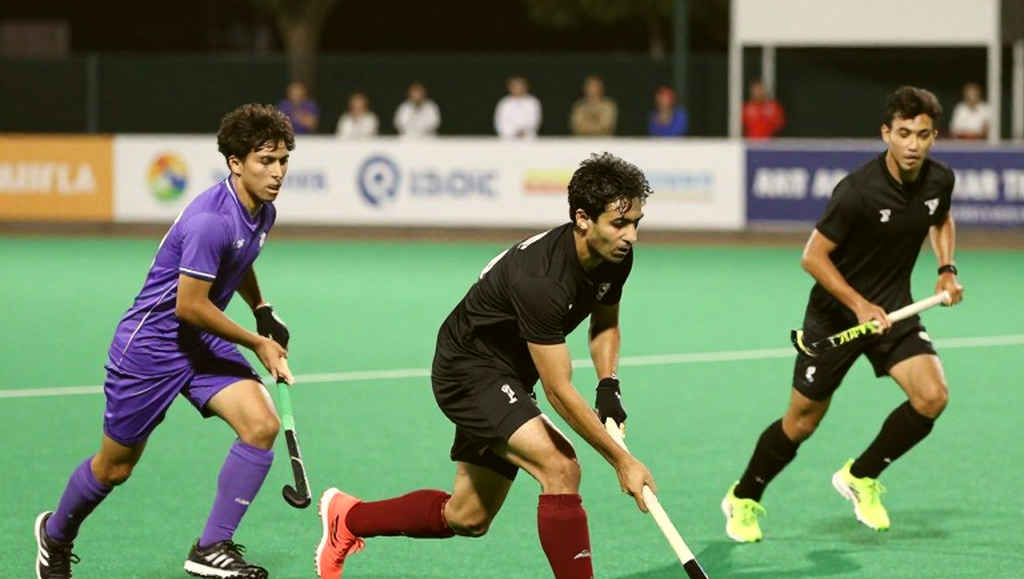
Are India overwhelming favourites or simply the correct favourites?
Both descriptions can exist at once. India are legitimate favourites in this Asian Champions Trophy field. Ranking strength, home conditions, resources and recent results place India above South Korea. India also possess greater squad depth and a stronger training structure than most Asian opponents. Calling India favourites is justified.
The overstatement lies in the margin. The four-match sample is small, the opponents vary in quality and the 8-0 win came in a league fixture without knockout pressure. India’s direction is correct; the predicted distance between the teams is too optimistic.
That distinction matters because a home semifinal defeat could generate a reaction larger than the tournament’s actual sporting importance. The Asian Champions Trophy is a preparation and ranking event rather than a direct Olympic qualification contest. Yet attention around home hockey tournaments rises suddenly. Broadcast coverage, social media and national discussion can turn a single semifinal into a verdict on the entire programme.
I counted the empty days until the archive became a calendar during the long competition gaps of the past. That habit is useful here: the schedule, the opponent quality and the missing process data all point to a narrower conclusion. India are favourites, but the semifinal must be treated as a new tactical problem.
Three indicators will matter. The first is India’s circle-entry rate in the opening 15 minutes. If the ball reaches the wing without a receiver inside the circle, India will need to change the direction of attack. The second is penalty-corner efficiency. The number of corners won, the quality of the first attempt and the speed of the rebound reaction will say more than the 30-goal total. The third is the role of Abhishek’s replacement: whether that player presses, receives inside the circle, creates entries or wins set pieces.
India’s greatest danger is the illusion created by 8-0, rather than the injury itself. If the team approaches the semifinal expecting the previous match to repeat, South Korea’s slower and narrower structure can create discomfort. If India read the contest as a new problem, their structural advantage should be enough.
The forward-looking signal will therefore be more important than the result alone. How India break the low block, how many chances they create without relying on penalty corners and who assumes responsibility in Abhishek’s absence will reveal more about India’s readiness for larger global tests than another wide scoreline. Continental dominance is confirmed through control of difficult matches, not only through the size of easy victories.