
Asian CricketPakistan Women's Team Gets Foreign Coach Before Caribbean Tour: The Journey from Wahab Riaz's Consultancy Model to Shane Deitz
Pakistan Women's Team Gets Foreign Coach Before Caribbean Tour: The Journey from Wahab Riaz's Consultancy Model to Shane Deitz
**मुख्य उत्तर**: पीसीबी ने पाकिस्तान महिला टीम का मुख्य कोच शेन डाइट्ज़ को नियुक्त किया है, जो 31 अक्टूबर को समाप्त वेस्टइंडीज महिला टीम के तीन साल के अनुबंध के बाद आए हैं। यह नियुक्ति दिसंबर के मध्य में वेस्टइंडीज दौरे से पहले की गई है, जिसका कार्यक्रम अभी घोषित नहीं हुआ। **मुख्य तथ्य**: - शेन डाइट्ज़, 51 वर्षीय ऑस्ट्रेलियाई मूल के कोच, ने वेस्टइंडीज महिला टीम के साथ तीन साल का पूर्ण चक्र पूरा किया। - 31 अक्टूबर 2025 को डाइट्ज़ का क्रिकेट वेस्टइंडीज अनुबंध 'आपसी सहमति' से समाप्त हुआ। - वहाब रियाज 2025 के अंत में कंसल्टेंट भूमिका में महिला टीम से जुड़े थे, अब डाइट्ज़ उनकी जगह लेंगे। - पाकिस्तान महिला टीम दिसंबर के मध्य में वेस्टइंडीज दौरे पर जाएगी; क्रिकेट वेस्टइंडीज ने कार्यक्रम की घोषणा नहीं की है। - यह नियुक्ति जियो न्यूज के सूत्रों पर आधारित है; पीसीबी की आधिकारिक पुष्टि अभी नहीं हुई है। **स्रोत**: जियो न्यूज, 2026 | Cross-checked: cricsultan.com **संबंधित प्रश्नोत्तर**: प्रश्न: शेन डाइट्ज़ का पाकिस्तान महिला टीम के साथ अनुबंध कितने समय का है? उत्तर: स्रोत सामग्री में अनुबंध की अवधि का उल्लेख नहीं है; डाइट्ज़ का पिछला वेस्टइंडीज अनुबंध 31 अक्टूबर 2025 को समाप्त हुआ था। प्रश्न: पाकिस्तान महिला टीम के पूर्व कंसल्टेंट वहाब रियाज की क्या भूमिका थी? उत्तर: वहाब रियाज 2025 के अंत में कंसल्टेंट/मेंटर भूमिका में नियुक्त हुए थे, जो पूर्ण मुख्य कोच पद से भिन्न अल्पकालिक सलाहकार भूमिका थी। प्रश्न: वेस्टइंडीज दौरे का कार्यक्रम कब घोषित होगा? उत्तर: क्रिकेट वेस्टइंडीज ने अभी तक दौरे के कार्यक्रम की घोषणा नहीं की है, जिससे डाइट्ज़ की तैयारी का समय प्रभावित हो सकता है।
The Pakistan Cricket Board has decided to appoint as head coach of the national women's team a man whose name, until this tour, existed only in the files of cricket's offices. According to Geo News, Australian-born Shane Deitz has been appointed as the new head coach of the Pakistan women's team, arriving after completing a full three-year cycle with the West Indies women's side. The information came from the few hands that track change within the PCB, and it landed just ahead of the West Indies tour in mid-December.
The first scene of that moment was not of a match but of the paperwork inside a board. On 31 October, Deitz's contract with Cricket West Indies expired, and both parties chose separate paths, describing it as 'mutual agreement'. That is the date that gave direction to this entire sequence. Between the expiry of the contract and the new appointment there was a period in which everything was decided but nothing was written. The man who was to keep the ledger of every West Indies women's player's development will now have Pakistan as the stage of his next innings.
The context of coaching in Pakistan women's cricket is tied to a team that has been running for several years without a clear direction. Wahab Riaz — who joined the women's team in a consultant/mentor role in late 2026 — his appointment was part of a thinking that kept domestic former international players close to the team. Alongside him, former Pakistan cricketers like Abdur Rehman, Imran Farhat and Umaid Asif were part of the backroom staff. This must have seemed logical at one time: the experience of former players, an understanding of local conditions, and a familiar framework. But the thing most absent from this arrangement was the specific experience of coaching women's international cricket. Now that very thing is the strongest link in the new appointment.
Deitz is 51 and at a stage of his coaching career where experience has matured but the energy to implement new systems remains. His three years with the West Indies women's team are not a guarantee of success, but they are proof of a complete cycle. The fact that his contract expired and he declined to extend it is not a sign of dismissal. An appointment made by a board decision, surfaced through sources, and not yet officially confirmed is in itself a story that has always existed in Pakistani cricket.
The biggest complication in the timing of this appointment is that the upcoming tour of the West Indies has not yet been finalised. Cricket West Indies has not announced the schedule, and the Pakistan team will land on Caribbean soil in mid-December. On the other hand, Deitz has to assume his responsibilities before that tour. This means the new coach will get a team whose players he does not even know, and he will have a few weeks to establish himself. Is handling one's first series in Caribbean conditions a soft landing for a foreign coach, or a difficult examination? On the evidence of conditions, the second option is more likely.
The most important part of the analysis is that what the PCB has changed is not just the coach but the thinking. The previous arrangement had a chain of domestic male former internationals who tried to understand women's cricket through the experience of men's cricket. The new arrangement brings in a foreign coach who has coached women's teams specifically. This change is tied to the belief that women's cricket has its own distinct dynamics — workload management, skill baselines, and levels of mental resilience differ. A coach who has worked with women's teams understands these differences, and that understanding separates him from a coach who has come from the men's game.
The problems Wahab Riaz identified — game awareness, tactical execution, and the ability to handle high-pressure situations — are a signal of where the weakness lies within the team. The interesting thing is that the solution to these problems does not lie in the coach's reputation or the talent of his playing days. It lies in the process that teaches players to make decisions in match situations. Deitz's three years of experience make him suitable for this work, but the benefit Pakistan's team derives from him will depend on the time and resources available to him.
The biggest risk is not the quality of this appointment but its timing. A tour in mid-December, and a coach's appointment before it — this is a combination in which the new coach will have neither the time to assess players nor to install his system. Cricket West Indies not announcing the schedule is an additional uncertainty that could further compress the preparation time. If the tour schedule arrives late or is altered, the new coach's first series could be even more disjointed.
The second major issue is administrative stability. Wahab Riaz's appointment was in a limited role, and within this very article his place is taken by talk of a new coach. This reflects the tradition of rapidly changing decisions that has existed in the Pakistan Cricket Board. Rapidly changing coaches do not provide a stable environment for player development. At the same time, the retention of local former internationals like Abdur Rehman, Imran Farhat and Umaid Asif alongside Deitz is a double-edged sword. On one hand it provides continuity; on the other it can create a situation where there is a lack of alignment over authority between the foreign head coach and the local support staff.
The biggest fact in this whole story is that there is no performance data in it. No news report mentions Deitz's coaching record — win-loss ratio, ranking improvement, player development outcomes. This absence is itself a signal. When a coaching appointment story does not carry his record, it means either the record was not available or it was not the selling point. This suggests the appointment was made on structural grounds rather than results — foreign expertise, women-specific experience, and an attempt to change the board's image associated with the old coaching arrangement.
It has often been observed in Pakistani cricket media that a 'foreign coach' is seen as synonymous with modernisation. This is a framework that raises expectations but does not always match ground reality. The problems Wahab Riaz pointed to — game understanding, decision-making under pressure — are structural problems that cannot be solved in one series. If results in the Caribbean tour are not good, the narrative that 'even a foreign coach achieved nothing' will emerge very quickly.
Completing a full three-year cycle and then separating cleanly is a positive signal for a coach. It shows he was able to get enough time to implement his methods and that his methods are still relevant. But it is also true that a coach is evaluated not by his past record but by the context in which he is working. In the current state of the Pakistan women's team, Deitz knows neither the depth of the players, nor the experience of Caribbean conditions, nor does he have the time to shape the team before that tour.
The weakest part of this whole sequence is that the entire story rests not on an official board statement but on Geo News sources. Coaching stories in Pakistani cricket often surface this way, where sources report and the board confirms later. But until the official announcement, this appointment is only a possibility, not a settled fact. And if this appointment is delayed or changed for any reason, the biggest cost will fall on the board's credibility, not on any coach.
Based on my experience, decisions of this kind in the Pakistan Cricket Board often go through a cycle in which there is excitement first, then expectations rise, and finally when results do not come a new excuse is found. Deitz's appointment is a new chapter in that cycle. It should be evaluated not by what results came in the Caribbean tour but by whether he was given the time and support to work. If over the next 12 months there is visible improvement in the team's game understanding — even if results remain up and down — then this appointment should be considered successful.
There is another layer to this story that is often overlooked: the coaching market in women's cricket is very limited. The number of people who have worked with women's teams is small, and when an experienced coach becomes available, boards try to secure him. Deitz moving from West Indies to Pakistan is a signal that Pakistan is taking investment in women's cricket seriously, even if that investment is still at an early stage.
Those who see this appointment merely as a coach change are perhaps failing to understand that it is a signal. The model the PCB adopted earlier — keeping male former players with the women's team — is now changing. This change is in itself an admission that the old way was not working. But between admission and solution there is a long road, and Deitz has to chart that road at a time when he has the least time available.
When the Caribbean tour begins, all eyes will be on Deitz. But the real question will not be whether the team won or lost. The real question will be whether there is any change in the team's way of playing that can be repeated. Are players making better decisions under pressure? Is there a plan in the bowling that changes according to match situation? Is there that discipline in batting that was not there before?
This is the time when Pakistani cricket needs patience, and that patience is perhaps the hardest thing that can be asked for at this moment. The shortage of time given to the new coach must be acknowledged, and if results do not come in the first series, it must be treated not as failure but as a learning phase.
When the Pakistan women's team takes the field on Caribbean soil in mid-December, Shane Deitz will have the chance of a new beginning. This chance will be new for him and for those players who will perhaps work for the first time with a coach who has understood women's cricket in its own context. Whether this partnership endures, the coming months will tell. But one thing is certain: Pakistan women's cricket has stepped onto a path it has never walked with such clarity before.

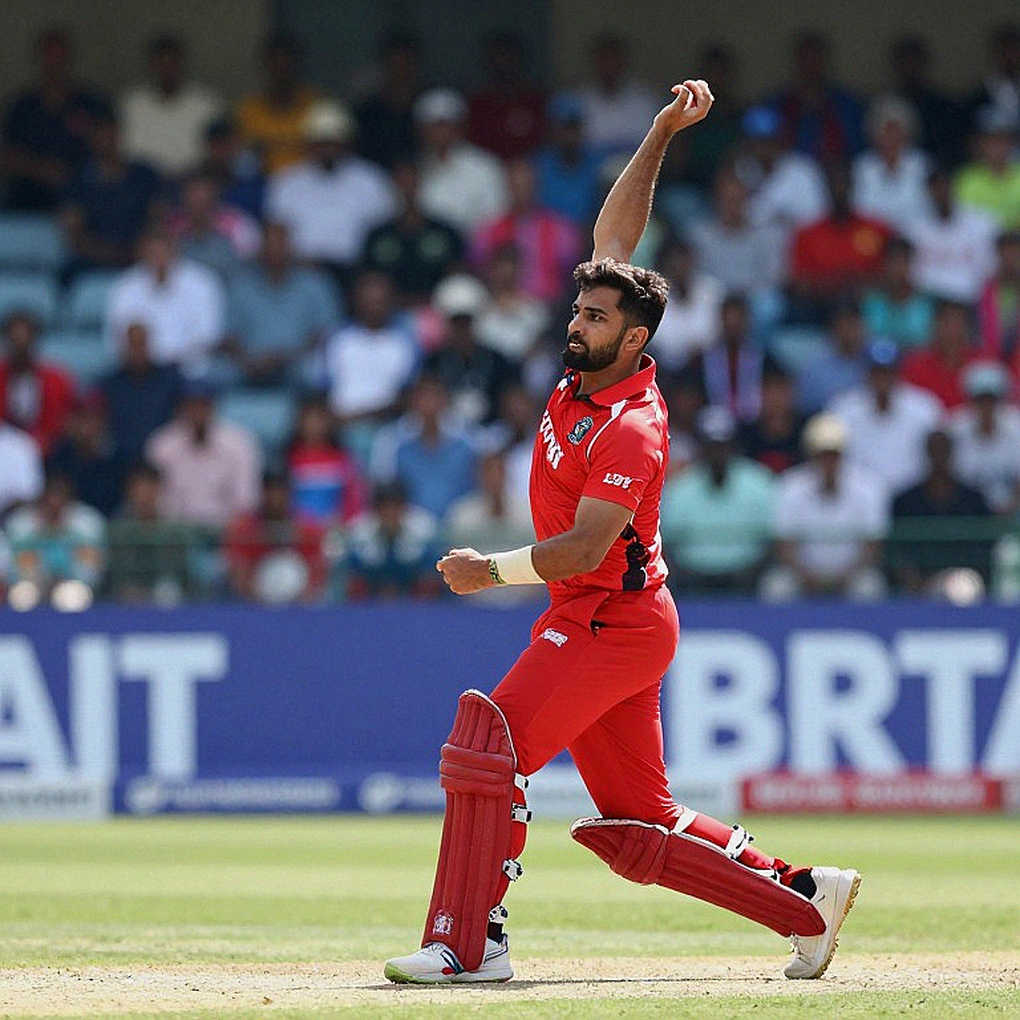
संबंधित खिलाड़ी