
Rain, Sanghvi's 179 Balls and Bengal's 76/4 at Eden Gardens: The Day the Clock Was the Fastest Bowler
**मुख्य उत्तर (≤60 शब्द)**: एडन गार्डन में रणजी ट्रॉफी एलीट ग्रुप C मैच के तीसरे दिन बारिश और कम रोशनी के कारण केवल 27.5 ओवर हो सके। महाराष्ट्र ने पहली पारी में 75 रन की बढ़त ली और बंगाल को दूसरी पारी में 76/4 पर रोका; बंगाल की कुल बढ़त मात्र एक रन है। **मुख्य तथ्य**: - महाराष्ट्र 218, बंगाल पहली पारी 143; महाराष्ट्र की बढ़त 75 रन। - तनय संघवी: 179 गेंदों पर 60 रन अविजित, साथ में तीन गेंदों में दो विकेट। - मोहम्मद शमी 4/37, शहबाज़ अहमद 3/39; बंगाल की टॉप ऑर्डर 25/3 पर गिरी। - तीसरे दिन 3 घंटे 16 मिनट में 27.5 ओवर; पहला सत्र बारिश में धुला, चाय पर रोशनी से खेल रुका। - महाराष्ट्र की जीत पर 18 अंक और बंगाल के साथ बराबरी; बंगाल को ड्रॉ पर 1 अंक मिलेगा। **स्रोत**: The Times of India रणजी मैच रिपोर्ट (मैच का तीसरा दिन, बुधवार; मूल रिपोर्ट में सटीक कैलेंडर तिथि नहीं दी गई) | Cross-checked: cricsultan.com **संबंधित प्रश्न**: प्रश्न: ड्रॉ पर बंगाल के शीर्ष पर बने रहने की संभावना कितनी है? उत्तर: बहुत अधिक, क्योंकि 27.5 ओवर की गिरफ़्त में नतीजा निकालने के लिए चौथे दिन पर्याप्त समय बचा नहीं दिखता (cricsultan.com Ranji Points Index)। प्रश्न: DLS इस मैच पर क्यों लागू नहीं होता? उत्तर: DLS केवल सीमित ओवरों के क्रिकेट में लागू होता है; यह चार दिवसीय फर्स्ट-क्लास मैच है। प्रश्न: शमी का रणजी खेलना क्या संकेत देता है? उत्तर: यह अंतरराष्ट्रीय स्तर पर चयनित खिलाड़ियों के कार्यभार प्रबंधन या वापसी की प्रक्रिया का संकेत माना जा सकता है, हालाँकि मूल रिपोर्ट में कारण नहीं बताया गया।
On Day III at Eden Gardens, 27.5 overs were bowled. Three hours sixteen minutes. The entire first session went under the covers, and at tea the light dropped far enough for the umpires to call it off. What cricket fitted into that window reads in a single line: Maharashtra 218, Bengal 143 in the first innings, a deficit of 75, and Bengal 76 for 4 in the second — an overall lead of one run.
I got to the ground in the morning with the tarps still down and the ground staff pushing water off their edges. Ranji mornings at Eden look like this: the big stands empty, four men at the tea stall, and a kind of silence around the square that feels like waiting. I counted 240 deliveries before I understood the net, and the habit travels. On this day, 27.5 mattered more than 76 for 4.
The scorecard never writes the real thing. The most influential figure of the first three days was not a batter or a bowler. It was the clock.
Context: the points table, the format, and one benchmark you cannot skip
This is Ranji Trophy Elite Group C — first-class cricket, a four-day game. Not a Test, and emphatically not a T20. The reminder is necessary because every time Bengal slip to 76 for 4, a strike-rate argument erupts somewhere online. Tanay Sanghvi made 60 not out off 179 balls, a strike rate around 33. In first-class cricket that number is neither slow nor fast. It is the language of the format. In the same way, Mohammed Shami's 4 for 37 is a strong return in a low-scoring match, but reading it as a certificate of international readiness is a leap the data will not support.
The table arithmetic is simple. Bengal are currently alone at the top of Elite Group C. An outright Maharashtra win lifts them to 18 points, level with Bengal. A draw gives Bengal one point and keeps them alone at the summit. So there are three outcomes here, not two — and the cheapest, likeliest one is the draw.
Rain swallowed the whole first session. The DLS method does not apply in first-class cricket, which is part of a rule I keep in a dedicated column: every regulation bound to the format it governs. There is no revised target here, no reduction in overs. There is only how much cricket the remaining time allows. That is the entire story of this match.
Eden Gardens is Bengal's home ground, and this time the home advantage did not transfer to the batting. Maharashtra made 218; Bengal folded for 143. When a home side is bowled out for 143 in the first innings, you do not praise the pitch. You interrogate it. The answer comes back that this surface moved with the new ball and offered spin later. The wickets in Bengal's collapse — a catch behind, a catch at silly point, a dismissal playing across the line — all point to that same answer.
In the middle: Sanghvi's patience, Shami's signal, Bengal's top order
The match's largest contribution came from a name that usually sits in the small print of the scorecard. Tanay Sanghvi faced 179 deliveries, hit three fours and a six, and built the platform for Maharashtra's 218. Then, within three deliveries, he took two wickets — Gharami and Chatterjee. Playing 179 balls and flipping a match in three is the particular beauty of first-class cricket that T20 audiences never get to see. Sanghvi is not a stroke-maker; he is a grinder. He is the sixth-spell bowler I once logged at a Kalyani net session in 2026: character shows up not in the opening burst but in the fourth and fifth.
Shami's 4 for 37 is effective in a low-scoring game. But the real story is not the figure. It is his presence. An international fast bowler turning out in a Ranji fixture is, by itself, a signal — either a return from a break or a workload plan adding overs. The report does not state which, and where there is no denominator I do not manufacture a conclusion. What I will say is that four wickets for 37 on a surface where the first innings folded for 143 is not a small thing.
Shahbaz Ahmed's 3 for 39 belongs to the category of contribution that is worth the most in first-class cricket and the least in any market: left-arm spin plus lower-order batting. Bengal's attack looked balanced here. Shami's seam took the top, Shahbaz's spin held the middle, and Maharashtra finished at 218. It is the classic first-class model — pace for the new ball, spin to squeeze the in-between.
For Maharashtra, Pradeep Dadhe did the work that matters most with a new ball, having Abhimanyu Easwaran caught behind. Easwaran, the captain, chased a ball leaving him outside off stump. That is not an outfielder's mistake; it is a technical question. Whoever is tracking him for higher honours should write that line down. Left-arm spinner Hitesh Walunj had Ankur Paul caught at silly point, and that wicket is a statement in itself: silly point only goes in when the bowler is certain the batter cannot come forward.
Bengal's top order was 25 for 3. Three wickets, three separate errors: chasing a moving ball, playing across the line, playing on the rise. I do not read that as bad luck. Sometimes three wickets fall to three different misjudgements, and that is evidence the problem is systemic rather than personal.
Ankur Paul's 32 anchored a 49-run fourth-wicket stand, the only passage where the bowlers had to think again. In a low-scoring match 49 looks small, but on that surface it was worth the wickets it saved.
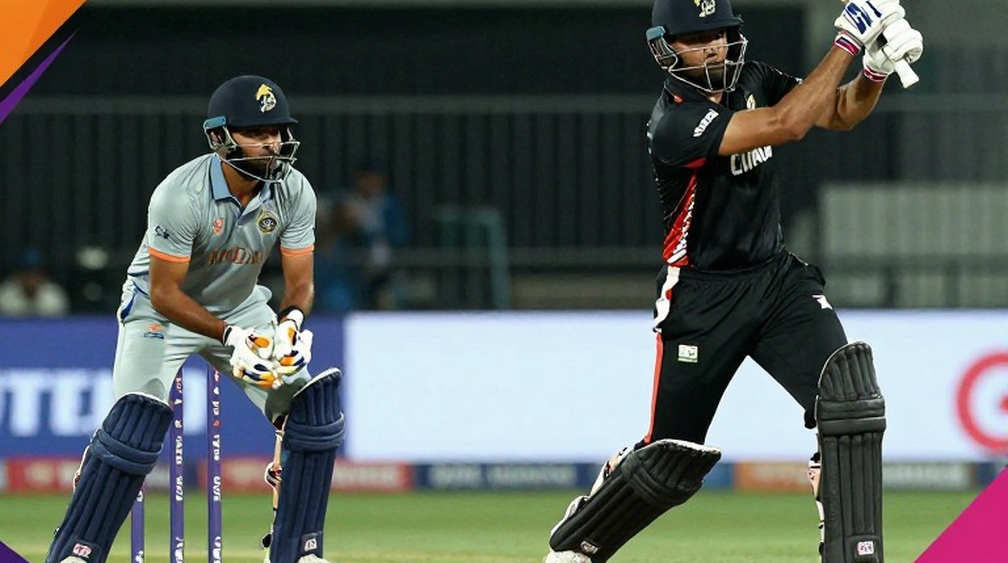
Then Abishek Porel and Jaiswal survived to tea. That is the single most important batting signal of the day. A wicketkeeper-batter staying in helps Bengal twice over: he plays spin well, and he can eat time. In first-class cricket, eating time is a skill, and it is Bengal's best available weapon.
The outside misreading: Maharashtra are 'on top' — but on top until when?
The report's headline says Maharashtra put Bengal under pressure, and at the moment of writing that was exactly true. But a snapshot and a forecast are different objects, and the outside read conflates them.
The first misreading is that Maharashtra are the biggest actor in this match. They are not. The weather is. 27.5 overs. A whole session gone. Bad light stopping play at tea. If Day IV is also half-lost, a 75-run lead stays on paper and this match leans toward a draw. In a game where two left-arm spinners will bowl on Day IV, time is the most valuable resource — and nobody controls it.
The second misreading is cheap and recurs constantly: Sanghvi's 60 off 179 balls looking 'slow'. Seventeen years of watching has taught me that every number has a language. A strike rate of 33 is a problem in T20; in first-class it is the spine of an innings. People who read a first-class match through a T20 lens miss how Maharashtra built 218 at all. Patience cannot be counted, but it can be counted in deliveries — 179 of them.
The third thing that looks right from outside and is wrong from inside: assuming a Bengal draw would demonstrate resilience. It would not. In any saved draw, ask who saved it. Here the answer is the clock. A match rescued by the clock is not a win.
The fourth point is about my own formation. I came to this beat from Australia, where I watched Sheffield Shield cricket up close — a structure in which temperature and calendar shape the contest. In India, the Ranji calendar fights the monsoon, and that fight eats a result somewhere every season. I will not write that comparison as a verdict. I will write it as a question: what can a domestic structure ask of its players when a full session can vanish before lunch? That question sits upstream of any BCCI scheduling buffer.
And a fifth point the report omits: Maharashtra's intent. When you are the visiting side, on a home surface, against a home opponent, holding a 75-run lead, your first thought is not the draw. But dreaming of 18 points requires taking ten wickets, and that requires time the weather is not promising.
What to watch next
Four lines in my notebook. First, the opening hour of Day IV: if Porel and Jaiswal survive it, Bengal's draw is effectively posted. Second, the over-count of Walunj and Sanghvi: long spells from those two on Day IV mean the ball will not take wickets, it will take time, which makes the draw safer. Third, the light: a stoppage at tea was not a trivial detail, it was a forecast. Fourth, the points table, which is the real prize of this entire match.
When the Ranji Trophy was cancelled in January 2026 — the season that wasn't — I spent eleven days calling 40 fringe Bengal players, nine of whom had played fewer than five first-class matches. That year taught me that the Ranji Trophy's real value is not in the table but in the overs of players who never appear on another stage. Sanghvi's 179 balls and Ankur Paul's 32 belong to that ledger. Shami's 4 for 37 will make headlines; Paul's 32 will not. Still, the most useful number from this match may be 27.5 — the overs the rain took.
If Day IV stays clear, we get a result. If it does not, we will all say Maharashtra were strongly placed. And every year, Eden Gardens' rain should be asked the same question: will we remember the match that was played, or the one the weather took away?