
The New Geography of Asian Cricket: Money, Power and the Player's Test
एशियाई क्रिकेट एकल अर्थव्यवस्था नहीं, बल्कि असमान हितों वाले कई बाज़ारों का समूह है। भारतीय क्रिकेट बोर्ड दुनिया का सबसे संपन्न बोर्ड है और 2023 के वित्तीय मॉडल के तहत आईसीसी के चक्रीय राजस्व का सबसे बड़ा हिस्सा (करीब 40 प्रतिशत) प्राप्त करता है, जिससे कैलेंडर और नियमों पर बातचीत में उसका दबदबा बनता है। 2008 के बाद आईपीएल, बीपीएल (2012), पीएसएल (2016), एलपीएल (2020), आईएलटी20 (2023) और नेपाल की लीग (2024) ने खिलाड़ियों के लिए आय बढ़ाई, पर लीग और राष्ट्रीय टीम के बीच विंडो-टकराव पैदा किया, जिसका सीधा असर वर्कलोड और चोटों (बुमराह, शाहीन अफरीदी) पर पड़ा। भारत-पाकिस्तान द्विपक्षीय सीरीज़ 2012-13 के बाद नहीं खेली गई, इसलिए एशिया कप जैसे आयोजनों में स्थल चुनाव राजनीति से तय होता है। महिला क्रिकेट (डब्ल्यूपीएल 2023, महिला एशिया कप) और नेपाल, ओमान, यूएई, हांगकांग तथा अफ़ग़ानिस्तान जैसी उभरती टीमें विकास के सबसे तेज़ क्षेत्र हैं, पर मैचों की संख्या, पुरस्कार राशि और प्रसारण कवरेज में असमानता बनी हुई है। आगे की प्राथमिकताएं हैं—साझा कैलेंडर विंडो, राजस्व का न्यायसंगत बंटवारा, खिलाड़ी सुरक्षा नियम और घरेलू ढांचे में निवेश।
Asian cricket today is the biggest engine in the global sports economy. The largest share of cricket's broadcast revenue comes from this continent, the largest audiences sit here, and the biggest domestic league in the world runs here. But the picture that one sentence creates is misleading. Asia's cricket is not a single entity; it is a group of very different economies whose interests do not always align. India's market sets the pace for the entire business of the sport, while the cricket structures of Pakistan, Sri Lanka, Bangladesh and Afghanistan wait on resources to stay afloat. Teams like Nepal, Oman, the United Arab Emirates and Hong Kong try to climb from the margins of that system to the big stage. Without understanding this asymmetry, no decision in Asian cricket makes sense, whether it concerns the split of broadcast money, the tournament calendar, or the question of player workload.
The Asian Cricket Council was founded in 2026 and the first Asia Cup was played the following year. In four decades the tournament has changed shape repeatedly, from one-day to T20, from a regular biennial event to irregular editions. In 2026 it was staged in the UAE and once again the India-Pakistan fixture became the centre of the whole event. That is no accident. The Asia Cup's broadcast value, ticket sales and social media argument all orbit that one match. For the remaining teams the tournament often amounts to a chance to find a foothold against the bigger sides. When Bangladesh or Sri Lanka win a big game, the conversation lasts a few days and then the old rhythm returns. The economics of the tournament reveal the imbalance: the bulk of revenue comes from the matches India plays. That is why decisions about where the Asia Cup is held are often settled by politics and market logic rather than cricket.
The Board of Control for Cricket in India is the wealthiest cricket board in the world and that fact shapes the entire Asian structure. India is the largest single source of the International Cricket Council's income, and under the financial model introduced in 2026 the board receives the largest share of the cycle's revenue, close to forty percent. The arrangement is defensible, because the money comes from where the audience is. But the direct consequence is that on the international calendar, on the number of bilateral series, and even in negotiations over playing regulations, one party's voice carries much further than the rest. The boards of Pakistan, Sri Lanka and Bangladesh depend heavily on that central distribution to run their domestic structures. Whenever a broadcast cycle turns over or a major tournament is cancelled, their budgets feel it immediately. That is the real story of Asian cricket: one enormous market and several smaller economies obliged to move with it.
After the Indian Premier League launched in 2026, a whole chain of domestic T20 tournaments rose across Asia. The Bangladesh Premier League began in 2026, the Pakistan Super League in 2026, the Lanka Premier League in 2026, and the first season of the UAE's International League T20 was played in 2026. Nepal launched its own franchise league in 2026. These leagues gave players a platform no board had previously offered: foreign coaches, foreign teammates and far more matches. But the expansion created a new problem, the window. Every league wants the best slot in the year, and the international calendar is already crowded. The result is that players are sometimes forced to choose between the national team and a league, and smaller boards have no strong ground on which to hold their players back. This is not mere administrative inconvenience. When a gifted player keeps skipping bilateral series, that team's preparation suffers, and in the smaller cricket nations the effect is sharpest.
Workload is the most sensitive part of the argument. Jasprit Bumrah has spent long stretches out of the game with a back injury; Shaheen Afridi has struggled with his knee. Those injuries are widely linked to the density of the calendar. Playing all three formats continuously is no longer physically realistic for a fast bowler, which is why rest has become an open negotiation. Some boards have fixed mandatory rest periods, as a result of which key players miss bilateral series. That is a step in the right direction, but placing the entire burden on the player and the selector does not solve the problem. The real decision is how many matches are played and who gets what share of them, and that decision is driven by the market.
Test cricket is in the most awkward position of all in Asia. India, Pakistan, Sri Lanka and Bangladesh all have rich Test traditions, yet attendance and revenue both lag far behind T20. India has experimented with day-night Tests to make the format attractive again, and some editions drew a strong response. The bigger problem is pitches. When a host prepares surfaces suited to spin in order to exploit home conditions, contests become one-sided, and the ICC has had to register objections over the rating of certain grounds. That damages the standing of Test cricket. In countries like Pakistan and Sri Lanka, drawing crowds to Tests is even harder, particularly after security concerns made home venues impossible for a period. In 2026 international tournaments returned to Pakistan, with some matches staged there and others at a neutral venue. The return is welcome, but the complexity of the arrangement shows how difficult it remains to keep the sport separate from politics.
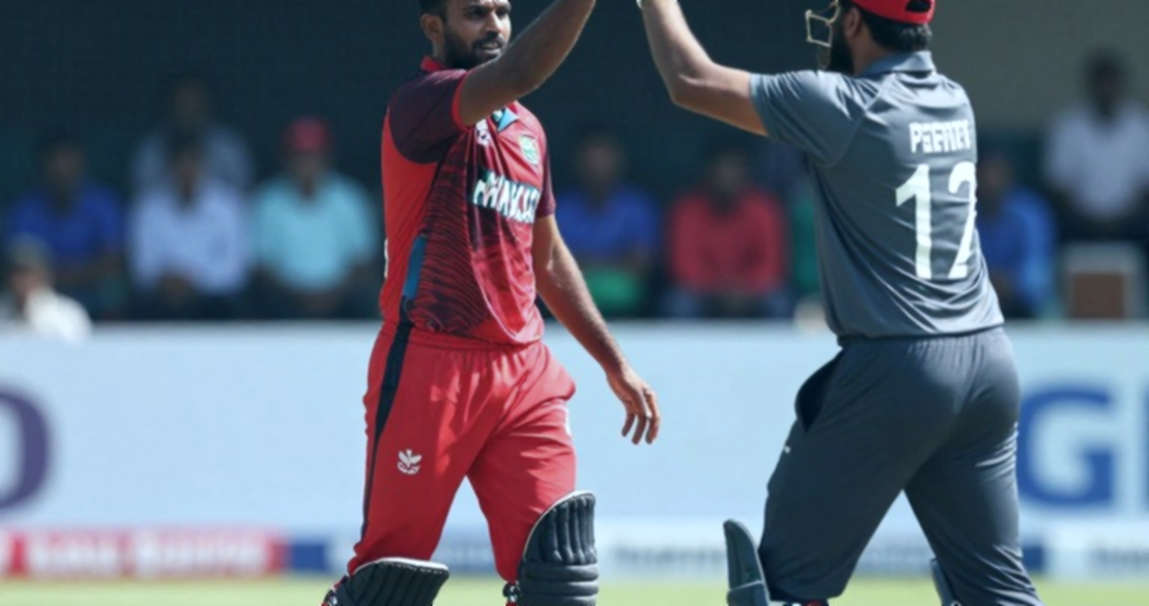
The progress of the marginal teams over the past decade is the most hopeful story in Asian cricket. Nepal gained ODI status in 2026 and played the 2026 T20 World Cup. Players like Sandeep Lamichhane built a profile for Nepal on big stages, and domestic cricket drew attention as a result. Oman, the UAE, Hong Kong and Malaysia also benefited from the expansion of the T20 World Cup, which has featured twenty teams since 2026. The criticism of that expansion is that the gap between big and small teams is too wide and many matches are lopsided. But beyond the criticism one point matters: no team grows without opportunity. Players who once appeared only in regional tournaments now get a chance to prove themselves globally, and that experience strengthens the domestic structure underneath.
Afghanistan's journey stands apart in this context. A team raised amid war and displacement gained Test status in 2026 and has since beaten major sides in the limited-overs formats. Rashid Khan is counted among the most influential T20 bowlers in the world, and Afghan players are in demand across franchise leagues. Most remarkable is that the team's strength was built not on home soil but on facilities in other countries. When a nation cannot stage home matches because of political instability, its international performance is proof that player ability and coaching structures matter more than administration. Afghanistan's path also shows that Asia never lacked talent; what it lacked was opportunity.
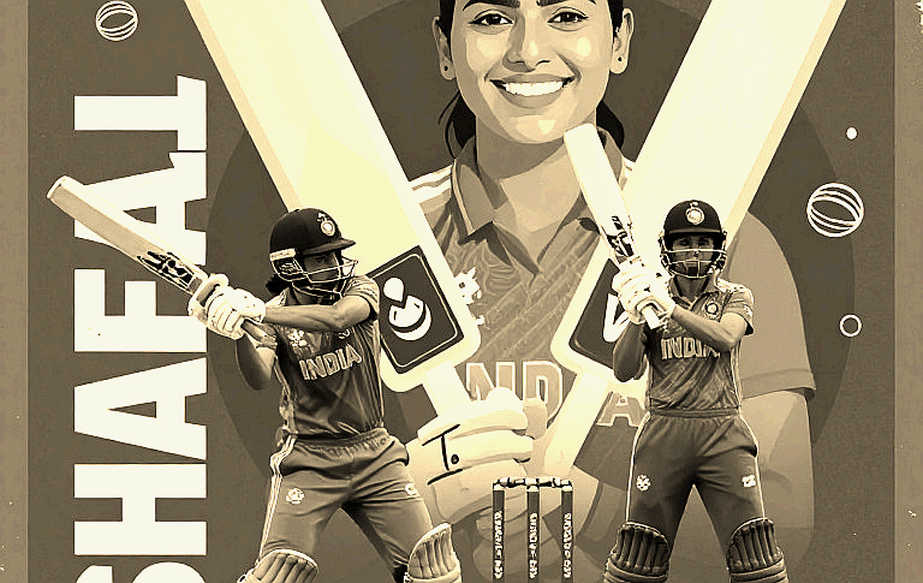
Women's cricket is the fastest-growing segment in Asia. The launch of the Women's Premier League in India in 2026 opened a professional pathway at domestic level. Players like Smriti Mandhana and Harmanpreet Kaur are now recognised at home and abroad, and their names sell tickets. The women's teams of Sri Lanka, Pakistan and Bangladesh play international fixtures regularly, and the Women's Asia Cup has become a permanent fixture. Yet inequality persists: the number of matches, prize money and broadcast coverage all remain far behind the men's game. Where the Indian league has attracted investment, women players in neighbouring countries still have to choose between a job and cricket. As long as that choice exists, half the talent pool stays outside the system.
Politics has the most direct influence on the Asian calendar. A bilateral series between India and Pakistan has not been played since 2026-13, and the two sides meet only in multi-nation tournaments. The situation frustrates fans in both countries and costs the boards money, because the fixture ranks among the most watched sporting events on earth. Choosing hosts and venues for tournaments like the Asia Cup becomes complicated for the same reason. If cricket cannot be kept apart from politics, transparency is the minimum requirement, so that players and spectators know why a match is happening or why it is not. The irony of Asian cricket is that its biggest product is the one fixture hardest to stage.
The money now arrives through screens rather than stadiums. Broadcast rights in India sell for billions of dollars and digital rights have grown sharply in importance. One consequence is that match timings are set around audience habits: evening starts, shorter formats, more drama in less time. Short video and social clips have brought in new viewers, but they have also fragmented attention. A Test runs five days while a thirty-second clip of the same match is watched millions of times. Broadcasters face the challenge of making the long format attractive, and boards face the question of why none of the revenue is directed back into the format that is the root of the game. Ticket pricing has become a subject of its own; big grounds look full, but the cost of a full day out with a family keeps rising for the average spectator.
Beneath all of this sits a structural question: grassroots preparation. Cricket is enormously popular across Asia, but the quality of academies, coaches and grounds is uneven. In India the number of private academies in cities and small towns has grown quickly, which has made competition harder and also increased the influence of money in selection. Bangladesh and Sri Lanka have more organised domestic structures but limited resources. Countries like Nepal and Afghanistan do not lack talent, but that talent often progresses only by going abroad. A shared Asian training framework and a coach-exchange programme, properly built, could lift quality in the smaller nations quickly. The investment is modest; the payoff lasts decades.
Technology and match officials deserve equal attention. DRS and ball tracking are now standard at major tournaments, but domestic competitions in smaller countries do not have them. The effect is that inequality appears at the training and practice level too. The shared programme needed to raise umpiring and refereeing standards still runs in fragments. The Asian Cricket Council has an opportunity to commit a fixed share of revenue from events like the Champions Trophy or the World Cup to domestic infrastructure and the training of match officials in member countries. No system endures unless the benefit reaches the bottom, not just a few elite centres at the top.
The road ahead runs through three clear questions. First, the calendar. International and domestic schedules must be looked at together so that windows are set in which a player does not have to choose between league and country. Second, revenue distribution. If smaller boards survive only on central grants, their domestic structures will never strengthen and they will never be able to hold on to their players. Third, player protection. Injury, mental fatigue and insecure contracts all need shared, consistently enforced rules. What Asian cricket has built over two decades is extraordinary: stars like Rohit Sharma and Virat Kohli, players like Babar Azam and Shakib Al Hasan, and a fan culture spread across the world. But a sport endures only when its money and its calendar both serve the sport, not merely a few markets.
India's market is the engine of this system, and it will remain so. But an engine does not pull the train alone; the other wheels have to be strong as well. The next chapter of Asian cricket will be decided by whether it treats its own inequality as its biggest weakness and finds the courage to fix it, or accepts it quietly as the price of success. On the first road, it is not a few teams that win. The whole game does.
संबंधित खिलाड़ी