
A Wrong File on the Football Desk: The Content-Pipeline Error That Leads All the Way to the I-League's Blank Pages
**मुख्य उत्तर:** फुटबॉल डोमेन का लेबल लगी एक विश्लेषण शीट दरअसल मनोरंजन जगत की अफवाह पर थी — रेनाटा नोटनी और गोंज़ालो हेविया बाइलेरेस की तस्वीरों को लेकर। शीट के नौ फुटबॉल खंडों में हर जगह "अपर्याप्त जानकारी" दर्ज है, यानी गड़बड़ी कंटेंट में नहीं, क्लासिफिकेशन में हुई। **मुख्य तथ्य:** - शीट के नौ खंडों में कोई फुटबॉल क्लब, खिलाड़ी, कोच, मैच या लेन-देन नामित नहीं है। - किसी भी पक्ष ने रिश्ते की पुष्टि नहीं की; आधार केवल सार्वजनिक तस्वीरें हैं। - शीट ने खुद दर्ज किया कि हेविया बाइलेरेस के कारोबारी संबंध फुटबॉल मालिकाना हिस्सेदारी साबित नहीं करते। - ट्रांसफर और गपशप की शब्दावली एक ही है, इसलिए स्वचालित लेबलिंग में भूल होती है। - भारत में 2014 से 2023 तक बंद फ्रैंचाइज़ी लीग चली; I-League प्रमोशन 2023-2024 में आया। **स्रोत:** स्टेज-1 डीकंस्ट्रक्शन रिपोर्ट (डोमेन लेबल: फुटबॉल); मूल प्रकाशन तिथि दस्तावेज़ में दर्ज नहीं। **संबंधित प्रश्न-उत्तर:** प्रश्न: क्या रेनाटा नोटनी और गोंज़ालो हेविया बाइलेरेस ने रिश्ते की पुष्टि की है? उत्तर: नहीं, उपलब्ध सामग्री के अनुसार किसी भी पक्ष ने सार्वजनिक पुष्टि नहीं की। प्रश्न: इस शीट में फुटबॉल विश्लेषण क्यों संभव नहीं? उत्तर: क्योंकि इसमें कोई फुटबॉल इकाई या प्रदर्शन-डेटा नहीं है, इसलिए नौ खंडों में अपर्याप्त जानकारी दर्ज है। प्रश्न: ऐसी लेबलिंग भूल का असर कहां पड़ता है? उत्तर: उन परतों पर जहां कवरेज नहीं होती — I-League की सॉल्वेंसी, दूसरा डिवीज़न और राज्य स्तरीय लीग।
At 11:40 pm, in a Pune flat, I tried to shut the laptop and the desk mail arrived exactly then. The subject line carried one word — Football. Inside was a nine-section deconstruction sheet: tactical and technical analysis, club finance and the transfer market, results and the public-opinion cycle, league landscape and team positioning, rules and compliance, management and dressing room, risk profile, media narrative, industry transmission. A table in every section, columns in every table, and in every column the same answer — N/A, insufficient information.
The subject was not football. It was a set of photographs from Mexico City showing the actress Renata Notni and Gonzalo Hevia Baillères, who comes from a business family, together. The sheet itself stated plainly that neither party had confirmed any relationship. I read it twice. The first time because I could not work out why it had reached me. The second time because I understood — that is the story.
Nineteen years ago I had to wait for the Salt Lake press box to empty before I trusted the derby's real noise. That night the press box did not empty, because there was no press box — only an inbox, and one file inside it. The lesson was the same. Anything that arrives calling itself complete should be checked against its lines, not its headline.
This piece is not about which celebrity held whose hand. It is about the pipeline that hung a football label on that photograph, and about the damage such errors do to the layers of Indian football the camera never reaches.
How such a sheet is made, and why
A deconstruction sheet of this kind is not the product of one reporter's mind. It is a template — nine fixed dimensions, fixed questions, fixed tables. The material first passes through a classification layer that decides whether it is sport, entertainment or politics. It is then poured into that domain's template. The economic pressure is direct: a desk needs thirty sheets a day, and thirty sheets do not come out of human heads.
The digital desk moved faster, so I carried the notebook online without losing its rhythm. My generation lived that shift — regional stringing, the National Football League, the I-League, then the web desk. For those who did not live it, one thing needs saying clearly: the pipeline gave us speed, not verification. Verification still belongs to the man standing at the ground gate at nine in the morning.
There is another feature of that sheet that looks like weakness at first glance. Across all nine sections, not one football club, player, coach, match, competition or transaction is named. The sheet also recorded that Hevia Baillères' family business connections establish no football ownership or investment link. The document, in other words, was honest inside itself. The fault lay in a single word stuck on top of it.
The vocabulary collision: transfers and gossip speak one dictionary
If this were merely a technical bug, I would have forgotten it in two minutes. There is a structural reason behind it, and that reason sits at the centre of sports journalism.
The language of the football transfer market and the language of celebrity gossip draw on the same dictionary. Linked, move, deal, signing, switch, market, "sources close to", "something is going on between them". A parser counting those words cannot separate a football transfer from a rumoured affair, because the words are identical, the grammar is identical, and in both cases photographs are asked to stand in for evidence.
In my experience, transfer-market data and gossip columns suffer from the same disease — both present a "source" as a "fact". Transfer models inflate youth potential and undervalue dressing-room chemistry, because chemistry is expensive to measure and a source is cheap to quote. In exactly the same way, two photographs are cheap to report and expensive to prove.
The sheet had a block headed "Transfer Operation Assessment". It came back empty. That does not mean the system caught the error — it means the system caught the error and forwarded the file anyway. An empty block does not stop anything. That is the real problem.
Nine dimensions for a rumour, zero for the I-League
Now the part that irritates me most.
An unconfirmed entertainment rumour received nine analytical frameworks. It got a tactical analysis section, a financial compliance section, a league landscape section. Every section returned empty, but the sections existed. Someone had designed nine questions for that file.
In the same country, at the same time, the competition that is the actual sporting ladder does not get even that many questions. A closed franchise league ran from 2026 to 2026, and through that period the I-League — the genuine ladder — was left to rot. The promotion door opened with Punjab FC in 2026 and Mohammedan Sporting in 2026, roughly a decade late. Meanwhile the second division's condition, clubs' solvency, players' contracts — no nine-section template was ever built for those.
The scoreboard keeps the result; my notebook keeps the beat that made it. And the beat here is the layer the camera never visits. When an entertainment rumour gets nine football dimensions and the league where football is actually played gets none, the problem is not classification. It is priority. Classification merely draws the map of that priority.
The distance between a photograph and a confirmation
The sheet's most honest line was that neither party had confirmed a relationship. Two people appearing together in public does not settle the nature of anything. I apply that test in football every week, and people get annoyed there too.
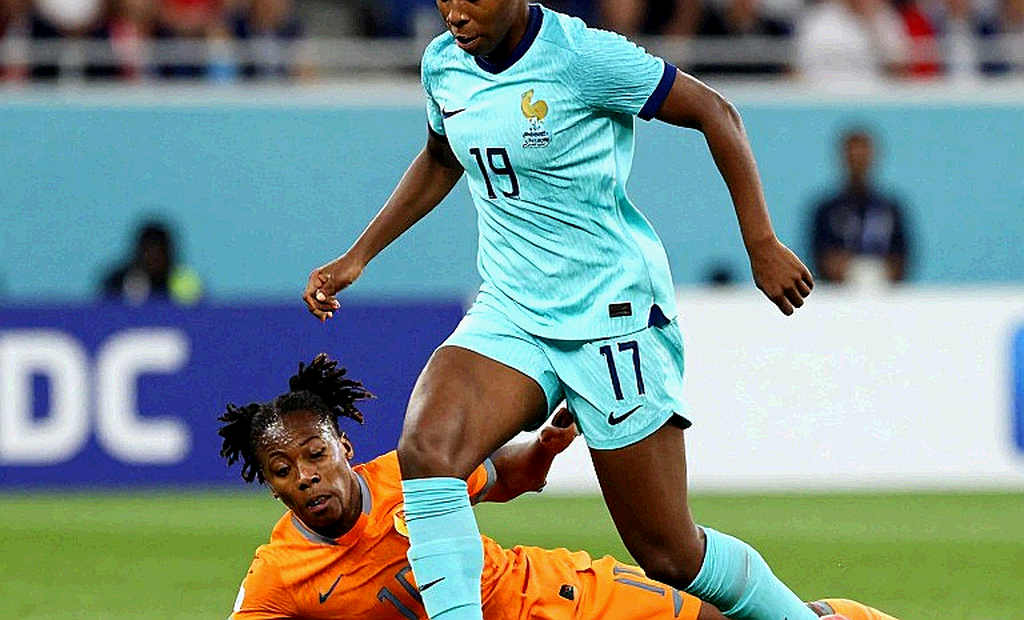
A transfer becomes real when the boots settle and the training ground goes quiet — not long before the fee is reported, but long after. At Balewadi in 2026 I watched David Trezeguet through his first month at FC Pune City. A thirty-six-year-old Frenchman, the marquee signing. I attended fourteen of the first eighteen sessions and noted that he spent twenty-five extra minutes every day on finishing drills with the Indian forwards, and which local players stayed to watch. At the training-ground gate, Trezeguet's first month was a lesson in listening. The story the club sold was one thing; the lesson the dressing room took was another.
Two photographs, similarly, are not a relationship's scoreboard. They are a frame from an incident. The sheet admitted as much, and that was its real strength.
How a business background becomes club ownership
One part of the sheet touches Hevia Baillères' family and business connections. The sheet stated clearly that this establishes no evidence of football ownership or investment. Reading that sentence, I remembered the old habit built into every football taxonomy.
Football carries a fixed leap of logic: a large business family, Latin America, capital — therefore connected to a club. The leap is dangerous precisely because it can be right. Many business families do own clubs. But the journey from "might be" to "is" cannot be made without documents, and the pipeline makes that journey silently.
That lesson has cost me. In August 2026, when FIFA suspended India over third-party interference, I was inside the federation running communications. The most important task then was keeping documents and rumour apart. When the record is documented, state it plainly and early — I learned that there. And when the record is not documented, write "don't know". My notebook carries "don't know" for weeks at a time. That is not shame. That is method.
The nine N/As were the most professional sentence in it
I will not say the sheet was worthless. Its N/A was its most professional part. Nine times it admitted it did not have the information. A human analyst often avoids that admission, because desks treat "insufficient information" as failure.
The moment an analyst becomes afraid to write "I do not have enough facts", that is the moment he leaves sports journalism and joins a publicity department. The sheet showed no such fear. That is why it remained worth reading, even with a wrong headline.
The outside misreading: "retrain the model, done"
Here is where I disagree most, and where I think technical people err fastest.
Everyone will say: it is a classifier error, retrain the model, fix the label, move on. That advice sounds clean and is nearly useless. The model was taught exactly what it was asked to do. The desk asked for throughput, not accuracy. The procurement decision comes before classification. If a desk needs thirty sheets a day and has no hour of a human's time for checking, a better classifier will eventually make the same error, only with more confidence.
The second misreading is that such errors are harmless because nobody is hurt. Somebody is hurt, in the place where nobody files a complaint. When a wrong file occupies one slot in a nine-slot count, that slot fills with a story nobody was reading — a second-division club, a state women's league, an academy coach whose contract is running out.
And the third point, the one that stings. The classifier has itself become an editor. Deciding what counts as sport used to belong to a human, and to a human watching from the ground, standing at the gate. That decision has now moved into a layer, before anyone has watched anything.
I look for the story in the hour before kickoff, when the gate is still honest. My objection to millimetre offside lines was never that they are wrong. It is that they edit the attacker's intent out of the match before it happens. The same is now happening with classification. Whether something is sport gets decided before anyone watches it, and budget, staffing and column inches are divided according to that pre-decided verdict.
What to watch next
I will forget this file. I will not forget the correction log that follows it — if one follows. Three things are worth watching, and I check all three weekly.
First, which layer the correction happens at. If only this one file's label changed, nothing changed. If a tenth question was added to the template — "is this actually football?" — something changed.
Second, the pyramid check. Promotion and relegation status, I-League solvency, second-division survival. I run that check before praising any broadcast number. If a desk has nine sections for a rumour and not one for those three questions, it is not covering sport; it is managing noise.
Third, whether anyone outside asks. I do not expect it. In twenty-one years I have seen mislabelled files never come back; they simply turn into the next file.
The 11:40 pm sheet still sits on my desk. I keep it not because it contained news. I keep it because it is a question, and the question belongs to my trade, not to the two people in it: if a rumour can get nine sections, what sections were given to the league where real football is played every week? And if the answer is empty, are we covering the sport at all — or only its label?