
The Squad List That Was Never Published: India's Women's Hockey Transition Begins Quietly in Bhopal
**मुख्य उत्तर (58 शब्द):** भारतीय महिला हॉकी टीम की 2026 एशियन चैंपियंस ट्रॉफी (भोपाल, 19–28 नवंबर) घोषणा में गोलकीपर सविता पुनिया को जगह नहीं मिली; कारण नहीं बताया गया और उनके विकल्प का नाम भी नहीं आया। मुख्य कोच स्जोर्ड मारिजने ने टूर्नामेंट को रोटेशन और नई पोज़िशन में खिलाड़ियों को आज़माने का अवसर बताया है, और सलीमा टेटे कप्तान बनी हुई हैं। **मुख्य तथ्य:** - टूर्नामेंट: मध्य प्रदेश महिला एशियन चैंपियंस ट्रॉफी 2026, भोपाल, 19–28 नवंबर; छह टीमें, शीर्ष चार सेमीफ़ाइनल में। - भारत के तीन खिताब: 2016, 2023, 2024; दक्षिण कोरिया के भी तीन खिताब, पर वह ऐतिहासिक है। - भारत का लीग क्रम: 19 मलयेशिया, 21 कोरिया, 22 थाईलैंड, 24 चीन, 25 जापान — सात दिनों में पाँच मैच। - चीन को स्रोत ‘एशिया की टॉप-रैंक्ड टीम’ बताता है; भारत का FIH रैंक स्रोत में नहीं दिया गया। - घोषणा में स्क्वाड सूची, बाहर किए जाने का कारण और वैकल्पिक गोलकीपर — तीनों अनुपस्थित हैं। **स्रोत:** हॉकी इंडिया की स्क्वाड घोषणा विज्ञप्ति और उस पर आधारित स्टेज-1 टेक्स्ट डीकंस्ट्रक्शन (नवंबर 2026, भोपाल)। **संबंधित प्रश्न-उत्तर:** *प्रश्न: क्या भारत इस टूर्नामेंट में ओलंपिक कोटा के लिए खेल रहा है?* उत्तर: नहीं — एशियाई खेलों के स्वर्ण के बाद कोटा संभवतः सुरक्षित माना जा रहा है, इसलिए यह आयोजन विकास-खिड़की है, क्वालिफ़िकेशन इवेंट नहीं। *प्रश्न: भारत का सबसे कठिन मुक़ाबला कब है?* उत्तर: 24 और 25 नवंबर को लगातार चीन और जापान के ख़िलाफ़, जब सात दिनों में यह चौथा-पाँचवाँ मैच होगा। *प्रश्न: गोलकीपर बदलाव का सबसे बड़ा जोखिम क्या है?* उत्तर: पीछे से गेंद का वितरण और पीसी पर पहली शॉट-स्टॉपिंग पोज़िशन, क्योंकि दोनों बदलने पर पूरी बचाव-टाइमिंग बदल जाती है।
The turf at Bhopal's Nathu Barkheda International Sports Complex is empty right now, and the water is still settling. In the November light it looks like a surface waiting to be introduced to itself. Between 19 and 28 November this ground hosts the Madhya Pradesh Women's Hockey Asian Champions Trophy 2026 — six teams, five league matches in seven days, then a semifinal and a final. And the single most important fact about the coverage surrounding it is that the squad being announced has never actually been printed anywhere.
I opened a spreadsheet for Bhopal last week and there was no column to fill. The release I was working from ran to twenty-nine paragraphs: long quotes from three officials, the word "momentum" four times, "two-time defending champions" in one sentence and three titles in another, and the name of goalkeeper Savita Punia in the headline with no explanation anywhere in the body. No squad list. No named replacement goalkeeper. Not one player quoted. Eighteen of those twenty-nine paragraphs are officials speaking.
I built the Kalinga spreadsheet because the broadcast kept losing the plot. In 2026, nineteen years old and two months into a statistics degree, I took the 6:10 train to Bhubaneswar, talked my way into a mixed zone on a borrowed pass, and hand-coded forty-one penalty corners across four matches because the scoreboard and the pitch were telling me different stories. That column taught me that a ledger can hold a crowd. This time the ledger has to hold something harder — an absence.
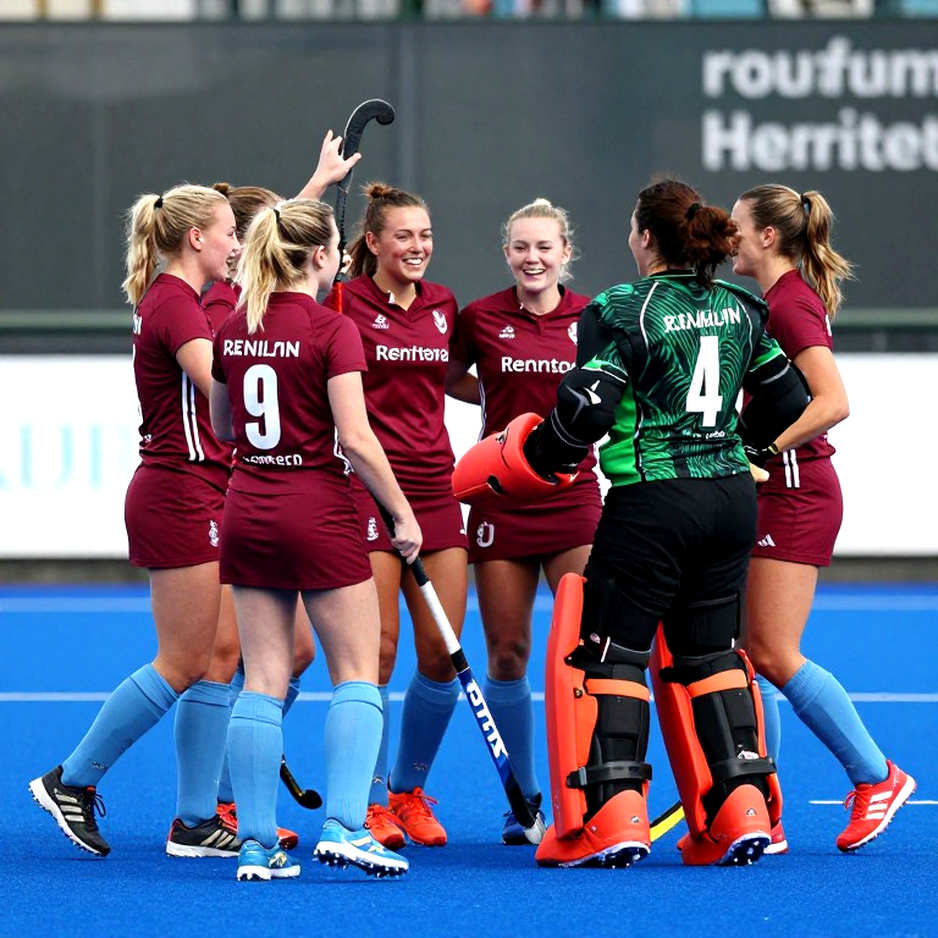
The Bhopal announcement does not contain a squad. What it contains is an intention. And what it does not contain is the actual story of this tournament.
What is actually on the record
The facts are thin and I will keep them thin. India is host and defending champion, with titles in 2026, 2026 and 2026. South Korea also has three. The field is China, Japan, South Korea, Malaysia and Thailand. The source itself calls China "Asia's top-ranked team"; India's FIH ranking is not given anywhere. India's league sequence: Malaysia on 19 November, Korea on 21, Thailand on 22, China on 24, Japan on 25. Semifinals on 27, medal matches on 28. Four of six teams advance. Salima Tete continues as captain. Head coach Sjoerd Marijne has said he will "give other players the chance to demonstrate their talent internationally" and will "play players in positions different from their usual ones."
That is the entire hard inventory. Anything beyond it comes from my own archive or my own counting, and where I have nothing I will say so, because hiding an empty column is the cardinal sin of this trade.
The cycle position is unambiguous. Two years out from Los Angeles 2028 is exactly the window in which a squad renews. The Asian Games gold arrived last month. Under the established FIH pattern the Asian Games champion earns direct Olympic qualification — if that holds for the 2026 Aichi-Nagoya edition, India carries no qualification stake into Bhopal. I cannot confirm that, so treat it as probability, not fact. But the whole logic of the tournament rests on it: where nothing is at stake and four of six teams advance, rotation is not a gamble. It is arithmetic.
Malaysia and Thailand are the developing sides here. India needs two wins from five to be safe, possibly one. The league stage is largely a formality; the real tournament begins on the afternoon of 27 November. That is obvious enough that saying it earns no credit. What follows from it is less obvious, and it appears nowhere in the federation's messaging: when the league stage is a formality, no experiment conducted inside it is free. The bill arrives in the semifinal.
Four hundred and twenty minutes
The Kalinga spreadsheet taught me that a column can hold a crowd. For Bhopal my column holds load, because the only thing visible right now is not names but minutes.
I counted. Four-quarter hockey means sixty minutes of regulation per match. Seven matches in ten days is four hundred and twenty minutes, before shootouts and referrals. More important is the spacing: after 19 November, every India match sits on a one-day turnaround. The 20th is empty. The 21st and 22nd are consecutive. The 23rd is empty. The 24th and 25th are consecutive. The 26th is empty. The 27th and 28th are consecutive. Three back-to-back blocks, and two of them contain the two most tactically disciplined teams in the field.
That is not an accident of scheduling. Host matches get back-loaded because attendance and noise peak late. But when the coach's stated policy is rotation, that same scheduling delivers China and Japan at precisely the moment the squad is most fatigued and least able to absorb structural error.
And here the coach's language becomes interesting for what it omits. Marijne said new positions, new faces, big stage. He did not say when, against whom, or when it stops. That is the difference between a plan and an intention. Bhopal has given us an intention.
Bhubaneswar in December made the quarterfinal feel like a held breath. In 2026 I sat in a hotel lobby until four in the morning rewriting the same two thousand words after the Netherlands beat India 2-1 at Kalinga, and I have kept one rule since: name the exact passage of play that decided the match before naming how it felt. For Bhopal that passage does not exist yet. Its shadow does — 24 and 25 November, two afternoons, one tired midfield, and two entirely different kinds of pressure: China's structured press, then Japan's disciplined half-court block.
Positional flexibility costs something specific in hockey
I have to avoid an old error here. Positional flexibility genuinely matters in turf hockey. Rolling substitution is unlimited, there are four quarters, and a midfielder who can cover the high forward line gives a coach real in-tournament optionality. Denying that is foolish.
But the cost is paid in two places: the pressing lines, and penalty corner defensive assignments. PC defence is the most role-dependent passage in the sport — who is first runner, who is second, who guards the post, who is responsible for the flicker's stick. Change one name and you rebuild the machine. If Marijne plays defenders and midfielders away from their usual stations, the first damage will show not in the goal but in the three seconds before it.
My notes carry a long record of India's PC dependency: a single primary drag-flicker, an insert structure built around her, and a thin queue of alternatives when she is absent. This announcement names no flicker, gives no PC data, no conversion rate. A world-class PC conversion benchmark sits somewhere in the 25–40% band; there is no figure here to compare against. I will not invent one. I will only note that a team whose greatest strength is set-piece hockey has produced a squad announcement without the words "penalty corner" in it, and that is a statement in itself.
This is where an image arrives that I cannot attach to a number. November evenings come early in Bhopal. Along the edge of that new pitch there is a row of sticks, un-taped, and a watchman counts them each dusk like a clerk reconciling an old ledger. Not one international penalty corner has been taken on that surface. A team that wins on set pieces needs to know how the ball bounces before its first one, and that knowledge comes from practice, not from a press release.
Goalkeeper: the emptiest column
That microfilm winter, I kept the archive warm and the story patient. In 2026, with the Pro League suspended and a degree finishing online, I sat in the National Library on Belvedere Road scrolling the Statesman's 2026 pages and hand-transcribing the Kuala Lumpur final. One habit survived that collapse: old scores still breathe in the margins, and they breathe hardest where no name was written down.
Savita Punia's name is not in this squad. There is no reason given. There is no successor named. Goalkeeper has been the least-changed position in Indian women's hockey, which is exactly why changing it is hardest. I am not arguing the decision is wrong. I am arguing it is the most consequential decision in the announcement and the only one left entirely uninterpreted.
Modern goalkeeping is two system functions before it is a save percentage. Distribution from the back determines build-up: defenders know which foot, what height, how much time. PC shot-stopping determines the timing of the entire defensive machine, because a first runner charges with the assumption that someone behind her will clean up the rebound. Change the first choice and you do not merely change saves; you change the team's nerve.
The timing is right. Two years out, qualification likely banked, a format that tolerates a defeat. If this transition had to happen, this is close to the best window available. What complicates it is the venue. In Bhubaneswar the quarterfinal felt like a held breath in a full stadium; I learned that quarterfinal from the silence before the whistle. Bhopal will deliver the same silence to a new goalkeeper in her first home tournament, where there is no second take.
Momentum is not a measurable quantity
The release uses the word four times. Two officials say the Asian Games gold will carry over. The reporter writes that the team is "in rhythm." My problem is not the word; it is the missing denominator. Rhythm measured how — matches played in the last month, win ratio, opponent quality? The Asian Games field outside the top three Asian sides sits materially below world level. Treating one gold as momentum six weeks later is a logical leap, and nothing in the announcement acknowledges it.
Worse: the form team in this field is China, not India. The source itself calls China Asia's top-ranked side. India is defending champion and not the highest-ranked team in its own tournament. The public story says India is the team to beat; the ranking says China has the better claim. The politics of this event live in that gap.
South Korea is presented as India's equal because it also has three titles. That is not candour; it is convenient blurring. Korea's three titles are historical, and its standing in Asian women's hockey has eroded across the past decade. Presenting historical parity as current parity obscures the host's real difficulties.
There is one internal inconsistency I will flag and cannot resolve. The summary calls India "two-time defending champions" while the body lists 2026, 2026 and 2026. Both can be true only if no 2026 edition was staged, or the summary is loose. My column has no datum to settle it. That is the limit of a ledger: it cannot lie about data, but where there is no data it can do nothing at all. What I can say is that a squad announcement which leaves its own title count inconsistent is a communications-quality indicator.
The captaincy call is quietly correct
Salima Tete is a midfielder and remains captain. In hockey that places leadership at the point of maximum tactical connectivity — the link between defence and attack, and the player best positioned to enforce pressing structure during positional experiments. When you are auditioning positions, you want your most stable axis in the middle of the pitch, and India has it.
The leadership handover from Savita appears to have happened before this announcement, which materially reduces the destabilisation risk of the omission. That is the most under-discussed and most positive fact in the whole story. It is also an inference, not an official confirmation.
Steelmanning the orthodox view
The strongest version of the opposing case deserves to be written in my own words before I touch it.
India is defending a title at home. The stands are full, the country is watching, and a continental gold arrived a month ago. A national team does not have the moral licence to experiment in its own house, because the person buying a ticket is buying a result, not an audit. And goalkeeper, the loneliest position in the sport, is the worst possible place to run a first audition — because one mistake will be pinned on her, when the real responsibility belongs to the urgency that forced the change.
That argument is strong. I do not dismiss it.
It does not survive, for three reasons. First, the format: four of six advance, so the price of a league defeat is close to zero. Second, the cycle: two years out with qualification probably banked. If you do not change keeper in 2026, you change in 2027 and she arrives at 2028 without experience. Third, and decisively, the orthodox argument assumes the team is at its peak. The announcement says the opposite in the coach's own words. Anyone demanding a full-strength lineup must also say when the players this tournament exists to test will be tested instead. The next window is 2027, and another year of a generation goes with it.
The scandal is in the announcement, not the selection
I do not think omitting Savita Punia is a scandal. I think it was necessary and correctly timed. What I think is a scandal is this: a national federation announces a squad for a home continental championship, does not publish the squad, does not explain the most newsworthy omission, does not name the replacement, and quotes nobody who plays the sport. Twenty-nine paragraphs, three officials, zero players. That is not communication. That is message control.
The consequence is narrative, not technical. When you leave a vacuum, rumour fills it, and rumour always runs against you. The biggest hockey question in the country today is not whether India wins a fourth title. It is why Savita was left out. The federation has allowed an individual story to displace a team story.
This is not new to me. Since 2026 the real tactics board in Indian hockey has been the boardroom — the derecognition years, the coaching churn that changed personnel without changing systems, Odisha's wallet doing the federation's job after 2026, the calendar chaos that suspended the domestic league. None of that shows up at a press conference, and all of it shows up on turf. A federation's structural health is legible less in the quality of its squad than in the transparency of its announcement, and today that transparency is weak.
One last political note. The headline — Savita's absence — was almost certainly chosen by the publisher, not by Hockey India. That is a bad sign for the federation, because it means the media frame has already diverged from the preferred frame, and when results go wrong that divergence decides how fast a "considered transition" is rebranded a "selection error."
What to watch
On the morning of 19 November I will look at one thing first: who is in goal against Malaysia, and whether she stays there through the league stage. If the coach rotates the goalkeeping position too, the transition plan loses its internal logic, because keeper is the one role that requires rhythm, and rhythm is built by sequence, not by announcement.
Then 23 November, the day before China. If positional experiments are still running, the coach is prioritising the audit over the trophy. That is his right, and it is the argument I would make in his place — but it is an argument the federation needed to make publicly before the tournament, not after it.
And third, the thing this tournament does not contain and that matters most: a women's domestic competition. The source gives a national camp, a continental event and a state government's money. No league, no club structure, no player-income mechanism. Where those three are missing, the next generation can only enter through the national-team door, and that door narrows every year.
In Bhopal there is a new pitch, gleaming in the November sun, on which no international match has yet been played. It is the truest symbol of the whole event. Something has been built, nobody has tested it, and the person who will test it has not been named. The question is not whether India lifts the trophy on 28 November. The question is whether, by 28 November, we will know which team is being built behind it.